


Symptoms, treatments, and recommendations for treating oriental moths
Oriental Moth
Grapholita Molesta
Pathogen:
Type:
Insect
Risk:
HIGH

Melocotón, durazno o nectarina
Polillas

WHO CAUSES IT?
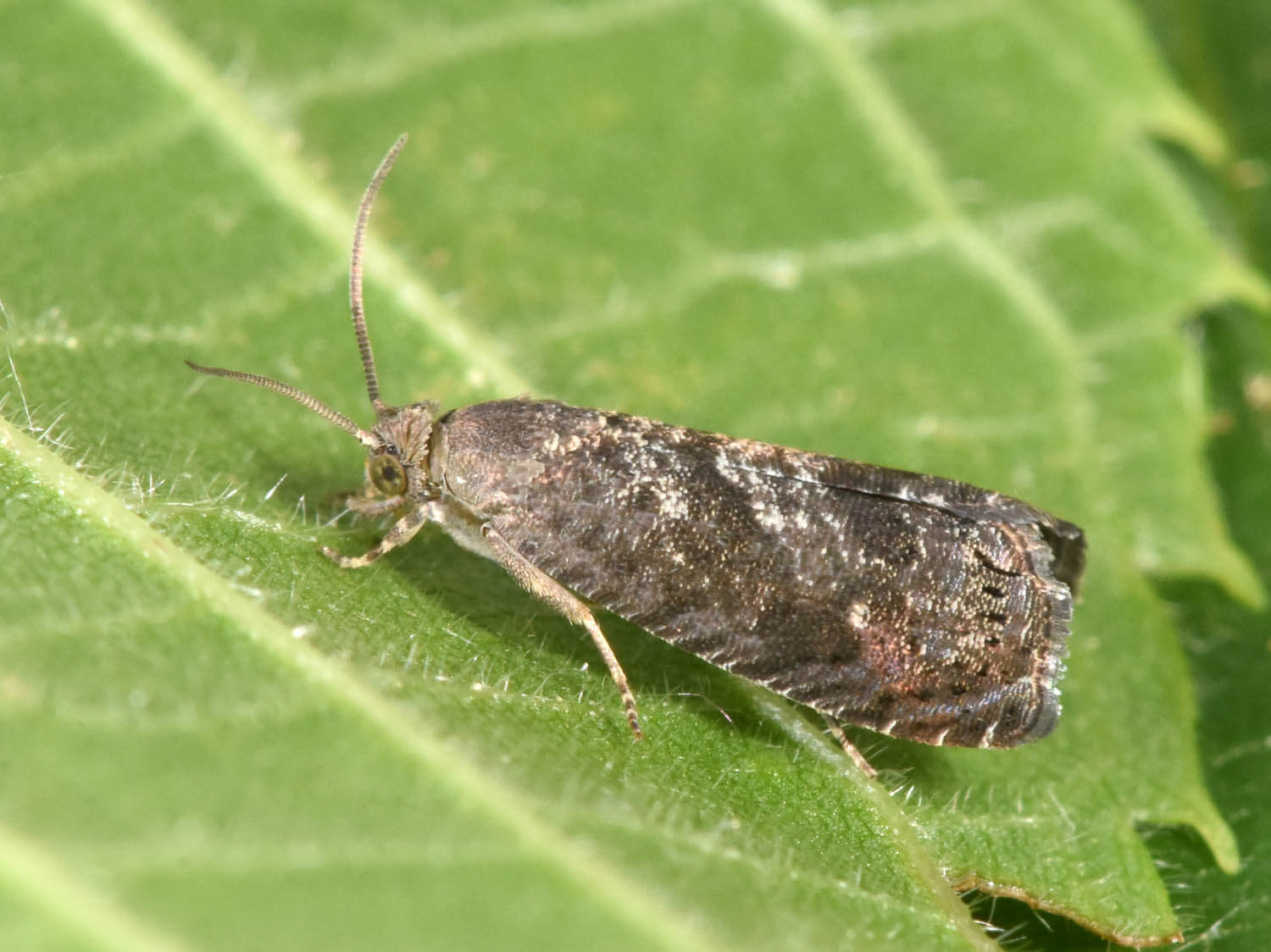
The pathogen Grapholita molesta, commonly known as the oriental fruit moth, is a lepidopteran belonging to the Tortricidae family. The adults are small gray moths, which emerge from chrysalises in spring and search for hosts to lay their eggs. Females lay their eggs on the leaves, shoots and fruits of trees. The larvae that hatch are white-pink with a black head and quickly begin feeding on plant tissue. Initially they attack young shoots, causing them to wither and later move to the fruits, where they dig tunnels that destroy them from the inside. The larva goes through five larval stages before pupating. Pupation can occur in the bark of the tree or in the soil, depending on environmental conditions. This insect can have several generations a year, especially in warm climates, which increases its capacity to damage crops.

SYMPTOMS
In peach, peach or nectarine, the oriental moth produces a disease that affects both young shoots and fruits, causing serious economic losses. The larvae penetrate the shoots, causing their death, and subsequently feed on the inside of the fruits, completely destroying them and causing them to fall prematurely.
- Withering of young shoots
- Loss of leaves in affected shoots
- Internal damage to the fruits
- Premature fruit drop
- Tunnels inside the fruits
- Presence of larval excrement on the fruits
- Decrease in production and quality of fruits


TEMPERATURE AND HUMIDITY
20-30°C
50-70%

TRANSMISSION ROUTES
Flying adults, wind, movement of infested fruits, transport of infected plants, contaminated growing tools
Do you want to remove this disease? Choose how you want to treat it.

TREATMENTS
Chemical treatments
• (E)-5-DECEN-1-OL 1.1% (5.4mg/diffuser) + (E)-5-DECEN-1-YL ACETATE 18.7% (92.2mg/diffuser) + E- 8-DODECENYLACETATE 2.2% (10.7mg/diffuser) + Z-8-dodecen-1-ol 0.3% (1.3mg/diffuser) + Z-8-DODECENYLACETATE 33.4% (164.8mg/diffuser) diffuser) [VP] P/P
• (E)-5-DECEN-1-YL ACETATE 17.48% + (E)-5-DECEN-1-OL 3.63% + MIXTURE OF (E)-8-DODECEN-1-YL ACETATE + ( Z)-8-DODECEN-1-YL ACETATE + (Z)-8-DODECEN-1-OL 12.5% [AE] P/P
• (Z)-8-DODECEN-1-YL ACETATE 76 g/Kg + (E)-8-DODECEN-1-YL ACETATE 4.8 g/Kg + (Z)-8-DODECEN-1-OL 0, 8 g/Kg [AE] P/P
• (Z/E)-8 DODECENYL ACETATE 90.93% + Z-8-DODECEN-1-OL 0.67% (240 MG AS A MIXTURE OF BOTH S.A./DIFFUSER) [VP] P/P
• ACETAMIPRID 20% [SL] P/V
• (E/Z)-8-dodecen-1-yl acetate 96.2 g/Kg + 51 g/Kg of the mixture of (E)-5-decen-1-yl acetate and (E)-5- decen-1-ol + n-hexadecyl acetate 35.6 g/Kg (1050 mg s.a./diffuser) [VP] P/P
• (Z)-8-DODECEN-1-YL ACETATE 11.63% + (E)-8-DODECEN-1-YL ACETATE 0.75% + (Z)-8-DODECEN-1-YL 0, 12% [AE] P/P
• (Z)-8-DODECEN-1-YL ACETATE 4.65% + (E)-8-DODECEN-1-YL ACETATE 0.3% + Z-8-dodecen-1-ol 0.05% [VP] P/P
• CHLORANTRANILIPROL 20% [SC] P/V
• CHLORANTRANILIPROLE 5.17% [SC] P/V
• DELTAMETHRIN 1.57% [SC] P/V
• DELTAMETHRIN 10% [EC] P/V
• DELTAMETHRIN 2.5% [EC] P/V
• DELTAMETHRIN 2.5% [EW] P/V
• LAMBDA CYHALOTHRIN 1.5% [CS] P/V
• LAMBDA CYHALOTHRIN 10% [CS] P/V
• LAMBDA CYHALOTHRIN 2.5% [WG] P/P
• Mixture of (E)-8-Dodecen-1-yl acetate + (Z)-8-Dodecen-1-yl acetate + (Z)-8-Dodecen-1-ol [AE] P/V
• MIXTURE OF (E/Z)-8-DODECEN-1-YL ACETATE + (Z)-8-DODECEN-1-OL 10% [CS] P/P
• MIXTURE OF (Z,E)-8-DODECEN-1-YL ACETATE + (Z)-8-DODECEN-1-OL 0.358 g/diffuser [VP] P/P
• SPINETORAM 25% [WG] P/P
Authorized treatments in organic farming
• (E)-5-DECEN-1-OL 1.1% (5.4mg/diffuser) + (E)-5-DECEN-1-YL ACETATE 18.7% (92.2mg/diffuser) + E- 8-DODECENYLACETATE 2.2% (10.7mg/diffuser) + Z-8-dodecen-1-ol 0.3% (1.3mg/diffuser) + Z-8-DODECENYLACETATE 33.4% (164.8mg/diffuser) diffuser) [VP] P/P
• (E)-5-DECEN-1-YL ACETATE 17.48% + (E)-5-DECEN-1-OL 3.63% + MIXTURE OF (E)-8-DODECEN-1-YL ACETATE + ( Z)-8-DODECEN-1-YL ACETATE + (Z)-8-DODECEN-1-OL 12.5% [AE] P/P
• (Z)-8-DODECEN-1-YL ACETATE 76 g/Kg + (E)-8-DODECEN-1-YL ACETATE 4.8 g/Kg + (Z)-8-DODECEN-1-OL 0, 8 g/Kg [AE] P/P
• (Z/E)-8 DODECENYL ACETATE 90.93% + Z-8-DODECEN-1-OL 0.67% (240 MG AS A MIXTURE OF BOTH S.A./DIFFUSER) [VP] P/P
• LAMBDA CYHALOTHRIN 1.5% [CS] P/V
• LAMBDA CYHALOTHRIN 10% [CS] P/V
• LAMBDA CYHALOTHRIN 2.5% [WG] P/P
• Mixture of (E)-8-Dodecen-1-yl acetate + (Z)-8-Dodecen-1-yl acetate + (Z)-8-Dodecen-1-ol [AE] P/V
• MIXTURE OF (E/Z)-8-DODECEN-1-YL ACETATE + (Z)-8-DODECEN-1-OL 10% [CS] P/P
• MIXTURE OF (Z,E)-8-DODECEN-1-YL ACETATE + (Z)-8-DODECEN-1-OL 0.358 g/diffuser [VP] P/P
Biological control
• BACILLUS THURINGIENSIS AIZAWAI 50% [WG] P/P
• BACILLUS THURINGIENSIS KURSTAKI (ABTS-351 strain, 640 g/kg) (32 MILLION CLU/g) 64% [WP] P/P
• BACILLUS THURINGIENSIS KURSTAKI (ABTS-351 strain) (32 MILLION CLU/g) 54% (540 g/kg) [WG] P/P
• BACILLUS THURINGIENSIS KURSTAKI (ABTS-351 strain) (32 MILLION CLU/g) 54% [WG] P/P
• BACILLUS THURINGIENSIS KURSTAKI (ABTS-351 strain) 54[WG] P/P
• BACILLUS THURINGIENSIS KURSTAKI (Strain EG 2348) 22.6% (24 x 10E6 UI/g) [SC] P/V
• BACILLUS THURINGIENSIS KURSTAKI (STRAIN PB 54) (16x10E6 I.U./G) 8% [WP] P/P
• BACILLUS THURINGIENSIS KURSTAKI (STRAIN PB 54) (16x10E6 IU/G) 9.74% [SC] P/V
• BACILLUS THURINGIENSIS KURSTAKI (STRAIN PB 54) 32% (32 MILLION IU/G) [WP] P/P
• BACILLUS THURINGIENSIS KURSTAKI (Strain SA-11) 85% (32 MILLION IU/G) [WG] P/P
• BACILLUS THURINGIENSIS KURSTAKI (EG 2348) (24x106 I.U./G) 18.3% [SC] P/V
• BACILLUS THURINGIENSIS KURSTAKI (EG 2348) 37.5% [WP] P/P
• CYDIA POMONELLA GRANULOVIRUS (MEXICAN ISOLATE) 90.9% (1X10e13 GRANULES/L) [SC] P/V
• CYDIA POMONELLA GRANULOVIRUS (R5 ISOLATE) 90.9% (1 X 10E13 GV/L) [SC] P/V
• CYDIA POMONELLA GRANULOVIRUS (CpGV V22) (3 X 10E13 GRANULES/L) 52% [SC] P/V
• STEINERNEMA FELTIAE (Parasitoid and predatory nematodes)
Recommendations
- Regularly monitor trees for signs of infestation, especially during the growing season.
- Install pheromone traps to capture adults and reduce the population.
- Apply specific insecticide treatments during times of greatest moth activity.
- Maintain good orchard hygiene, eliminating fallen fruits and pruning remains to reduce pupation sites.
- Implement an integrated pest management program that includes the use of natural enemies such as parasitoids and predators.
- Carry out training and maintenance pruning to improve aeration and sun exposure, reducing humidity that favors the development of larvae.
- Use protective nets to prevent adults from laying eggs on trees.
- Apply biological treatments with Bacillus thuringiensis during the first stages of larval development.
- Rotate the insecticides used to avoid the development of resistance in the moth population.
- Promote biodiversity in the garden to attract natural predators of the oriental moth.





*The recommended treatments are recommendations based on the authorities' databases and do not replace in any way the guidelines established by the legislation of each country.
*Products shown are recommendations and not our own products. As Amazon Associates, we earn revenue from purchases of recommended products.

TREATMENTS
Homemade remedies
There are no home treatments
Natural allies
Chemical treatments
There are no treatments for this disease. Treatments are directed at the insect vectors that transmit it. See insect treatments.

RECOMMENDATIONS

REPELLENT PLANTS
EFFECTIVE PRODUCTS TO ELIMINATE THIS DISEASE
*The recommended treatments are recommendations based on the authorities' databases and do not replace in any way the guidelines established by the legislation of each country.
*Products shown are recommendations and not our own products. As Amazon Associates, we earn revenue from purchases of recommended products.



Explore more tools
Services
Contact
Legal
©2026 by ZERIMAR S.A.R.L. All rights reserved