


Fruit moths: symptoms, prevention and treatment
Moths
Different species
Pathogen:
Type:
Insect
Risk:
HIGH
Frutos
Polillas

WHO CAUSES IT?
Fruit moths belong primarily to different species of Lepidoptera whose larvae feed on plant tissues and can cause direct damage and significant production losses. Among the most agriculturally important species are various moths from the families Tortricidae, Pyralidae, Gelechiidae, and other Lepidoptera families. The adults are small to medium-sized moths that reproduce and lay their eggs on fruits, leaves, shoots, or structures near the crop, depending on the species. After hatching, the larvae are responsible for most of the damage. Newly hatched larvae can move across the fruit's surface before penetrating the tissues, entering directly through vulnerable areas or taking advantage of wounds and small lesions. Once inside, they excavate galleries and feed on the pulp, seeds, or other internal structures. During their development, they go through several larval stages, progressively increasing in size and feeding capacity. Mature larvae generally leave the fruit or seek a sheltered place to pupate. Pupation can occur in the soil, among plant debris, under the bark, in crevices, on plant structures, in rolled leaves, or even on equipment and materials near the crop, depending on the species. After pupating, the adult emerges, reproduces, and lays new eggs. Depending on the species and climatic conditions, several generations can occur during a single growing season, allowing populations to increase rapidly when temperatures are favorable and susceptible fruit is plentiful. Some species spend unfavorable periods as eggs, larvae, pupae, or adults in sheltered locations, resuming activity later when environmental conditions are suitable. Adult dispersal occurs primarily by flight, while eggs, larvae, and pupae can be accidentally transported on contaminated fruit, plant material, boxes, packaging, machinery, and other materials. High temperatures within the appropriate range for each species can accelerate development and reduce the time required to complete a generation. The continuous availability of fruit, the absence of control measures, and favorable environmental conditions can favor overlapping generations and increasing pest pressure during the season.

SYMPTOMS
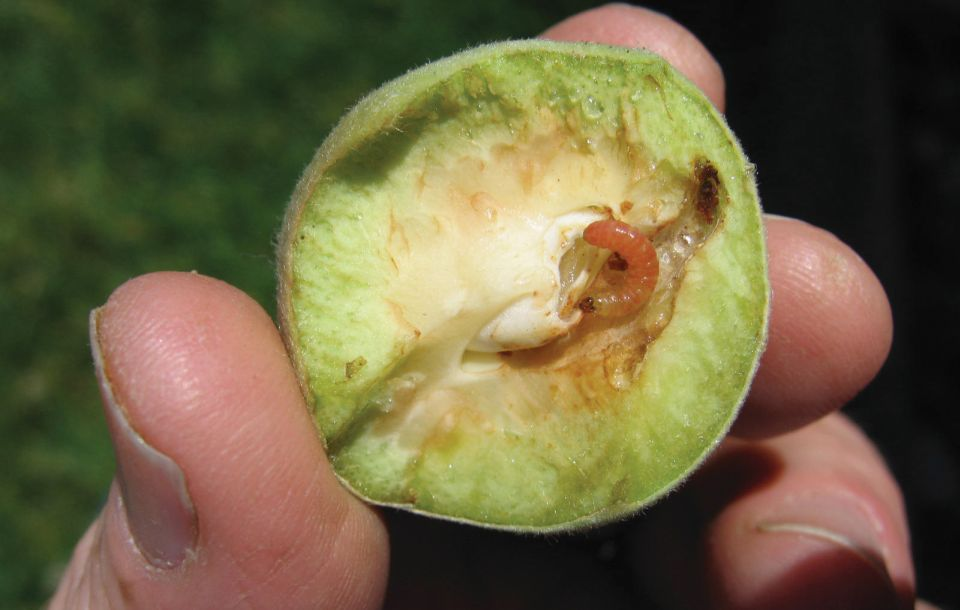
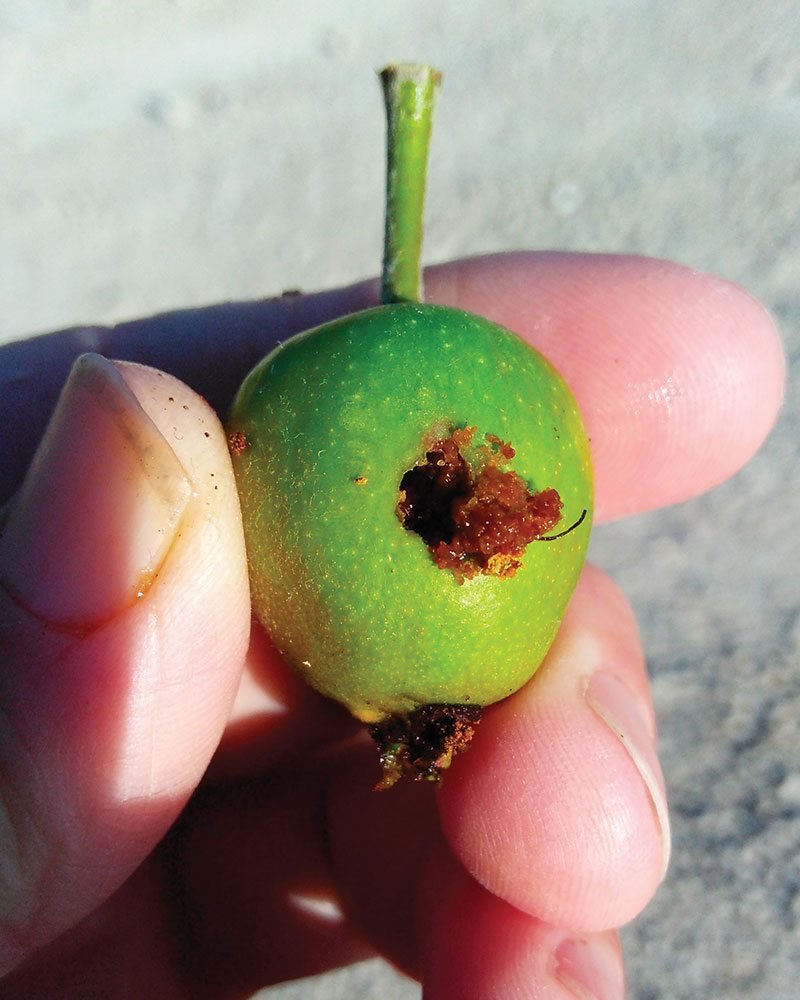
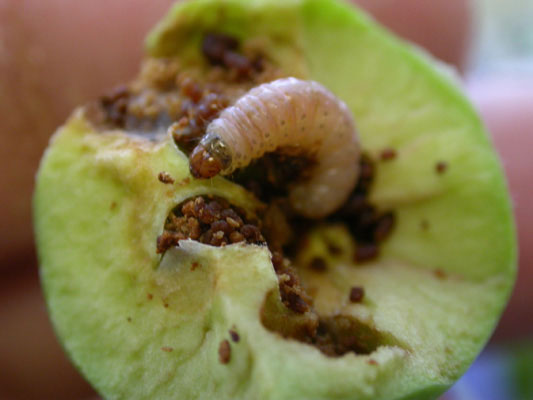
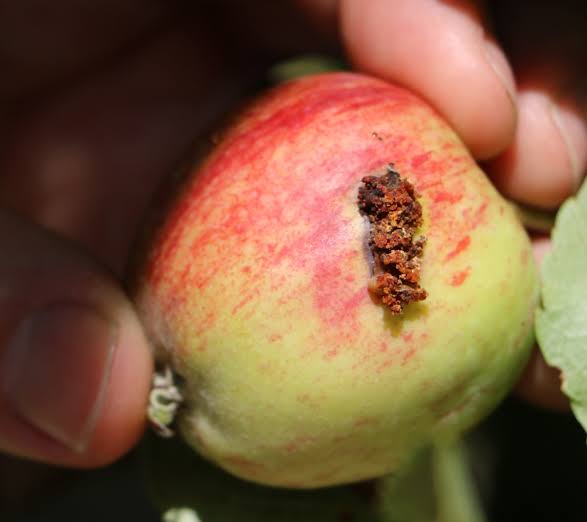
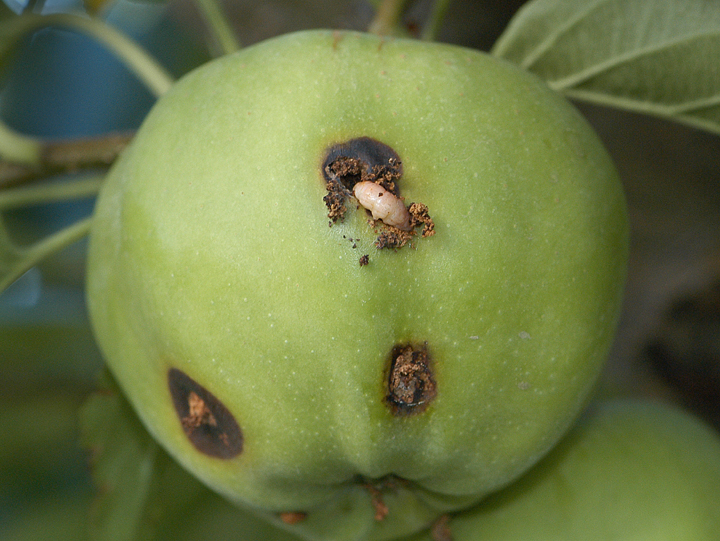
Moths can cause significant damage to fruit, primarily due to larval feeding and penetration. Damage typically begins after egg-laying and subsequent hatching. The larvae can burrow into the fruit and develop galleries inside. The larval entry can produce small perforations accompanied by excrement, feeding debris, and damaged tissue. As the larvae progress, the galleries can reach internal areas and affect the pulp, seeds, or structures near the stem, depending on the species. The resulting wounds also facilitate the entry of fungi and bacteria, potentially leading to secondary rots that accelerate deterioration. In fruit affected during the early stages of development, damage can cause deformities, premature fruit drop, or stunted growth. In fruit nearing or already ripe, the galleries and rots can considerably reduce its commercial quality and hinder storage and transport. The presence of larvae inside the fruit can also lead to its rejection during selection and marketing processes. The disease or problem can manifest itself through:
• Entry holes made by larvae in the fruit.
• Small visible holes in the epidermis.
• Presence of excrement or feeding debris around the entry points.
• Galleries excavated in the pulp and other internal tissues.
• Presence of larvae inside the fruit.
• Damage to seeds or internal structures.
• Localized tissue destruction.
• Loss of firmness around the affected areas.
• Deformities and alterations in fruit growth.
• Premature fruit drop in severely affected fruit.
• Appearance of secondary rots around the galleries.
• Exudation of liquids or substances from damaged tissues in certain species. • Presence of molted skin, silk, or pupal remains in protected areas of the fruit or plant.
• Accelerated deterioration during storage.
• Loss of commercial quality and increased percentage of rejected fruit.


TEMPERATURE AND HUMIDITY
20–30 °C
60–90 %

TRANSMISSION ROUTES
Adult flight, eggs transported with plant material, larvae present in fruit, pupae in plant debris, infested fruit, contaminated plant material, collection boxes, contaminated packaging, agricultural machinery, contaminated tools, transport of infested fruit.
Do you want to remove this disease? Choose how you want to treat it.

TREATMENTS
Chemical treatments
• AZADIRACTIN 1%
• Azadirachtin 2.6%
Authorized treatments in organic farming
• Azadirachtin 1%
• Azadirachtin 2.6%
• Moth Traps
Biological control
• BACILLUS THURINGIENSIS KURSTAKI (Strain EG 2348) 22.6% (24 x 10E6 UI/g)
• BACILLUS THURINGIENSIS AIZAWAI 50%
• BACILLUS THURINGIENSIS KURSTAKI (ABTS-351 strain, 640 g/kg) (32 MILLION CLU/g) 64%
• BACILLUS THURINGIENSIS KURSTAKI (ABTS-351 strain) 54%
• BACILLUS THURINGIENSIS KURSTAKI (Strain EG 2348) 22.6% (24 x 10E6 UI/g)
• BACILLUS THURINGIENSIS KURSTAKI (Strain SA-11) 85% (32 MILLION I.U./G)
• BACILLUS THURINGIENSIS KURSTAKI (EG 2348) (24x106 I.U./G) 18.3%
• BACILLUS THURINGIENSIS KURSTAKI (EG 2348) 37.5%
Recommendations
• Regularly monitor adult populations using appropriate monitoring traps for each species.
• Use traps with specific sex pheromones when available for the moth species present.
• Record captures to detect periods of peak adult activity and anticipate egg-laying.
• Regularly inspect fruit for eggs, perforations, galleries, excrement, and other signs of infestation.
• Remove and destroy affected fruit to prevent larvae from completing their development and producing new generations.
• Avoid leaving fallen or infested fruit on the ground that may contain larvae or pupae.
• Remove mummified or abandoned fruit that could act as a reservoir for the pest.
• Keep the plot clear of plant debris and materials that could provide protected areas for pupation.
• Control weeds and spontaneous vegetation when they may provide shelter or alternative food sources for certain species. • Reduce the available hiding places for larvae and pupae around plants.
• Use appropriate netting or physical barriers when technically feasible and compatible with the crop.
• Promote the conservation of natural enemies through integrated pest management that reduces unnecessary insecticide applications.
• Protect and promote populations of parasitoids and natural predators of eggs and larvae.
• Avoid unnecessary insecticide treatments that can eliminate beneficial organisms and cause imbalances in the agricultural ecosystem.
• Use mating disruption methods when available and authorized for the species and crop.
• Apply mass trapping techniques when appropriate and authorized for the pest.
• Coordinate control measures at the plot level and, when possible, with neighboring farms to prevent rapid recolonization.
• Remove or properly manage pruning materials and residues that may contain pupae. • Inspect boxes, tools, machinery, and materials used in infested plots before moving them to pest-free areas.
• Avoid transporting infested fruit to warehouses, processing centers, or pest-free plots.
• Apply the authorized phytosanitary treatments for the crop and the identified moth species, strictly adhering to the label instructions.
• Adjust the application timing to the pest's susceptible stage, as the effectiveness of many insecticides can decrease once the larvae are protected inside the fruit.
• Prioritize applications based on population monitoring and the intervention thresholds established for each crop and species.
• Alternate active ingredients belonging to different modes of action to reduce selection pressure on populations.
• Avoid repeated applications of insecticides belonging to the same IRAC group during consecutive generations.
• Respect the recommended doses and avoid doses lower than authorized, which could favor the survival of less susceptible individuals.
• Limit the number of applications of each action group during the growing season.
• Integrate chemical control with traps, monitoring, cultural practices, biological control, and biotechnical methods.
• Pay particular attention to flight and egg-laying periods to intervene before the larvae penetrate deeply into the fruit.
• Maintain post-treatment monitoring to verify its effectiveness and detect any control failures or decreased sensitivity.





*The recommended treatments are recommendations based on the authorities' databases and do not replace in any way the guidelines established by the legislation of each country.
*Products shown are recommendations and not our own products. As Amazon Associates, we earn revenue from purchases of recommended products.

TREATMENTS
Homemade remedies
There are no home treatments
Natural allies
Chemical treatments
There are no treatments for this disease. Treatments are directed at the insect vectors that transmit it. See insect treatments.

RECOMMENDATIONS

REPELLENT PLANTS
EFFECTIVE PRODUCTS TO ELIMINATE THIS DISEASE
*The recommended treatments are recommendations based on the authorities' databases and do not replace in any way the guidelines established by the legislation of each country.
*Products shown are recommendations and not our own products. As Amazon Associates, we earn revenue from purchases of recommended products.



Explore more tools
Services
Contact
Legal
©2026 by ZERIMAR S.A.R.L. All rights reserved