


Symptoms, treatments, and recommendations for treating large raspberry aphids
Large Raspberry Aphid
Amphorophora Idaei
Pathogen:
Type:
Insect
Risk:
HIGH
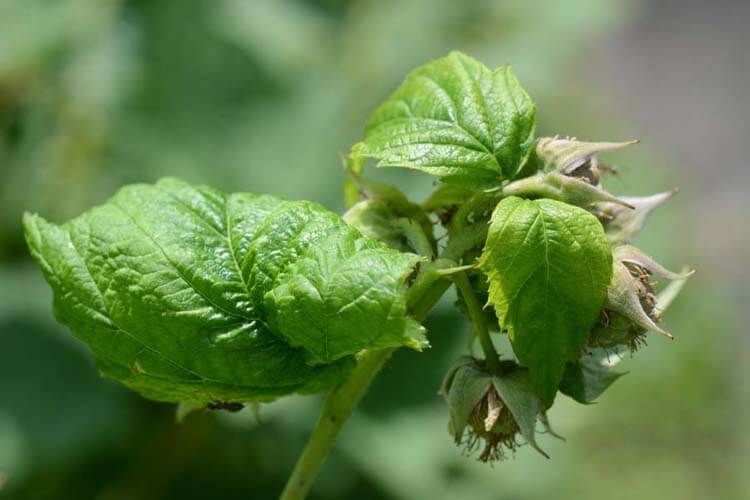
Frambuesa
Pulgones
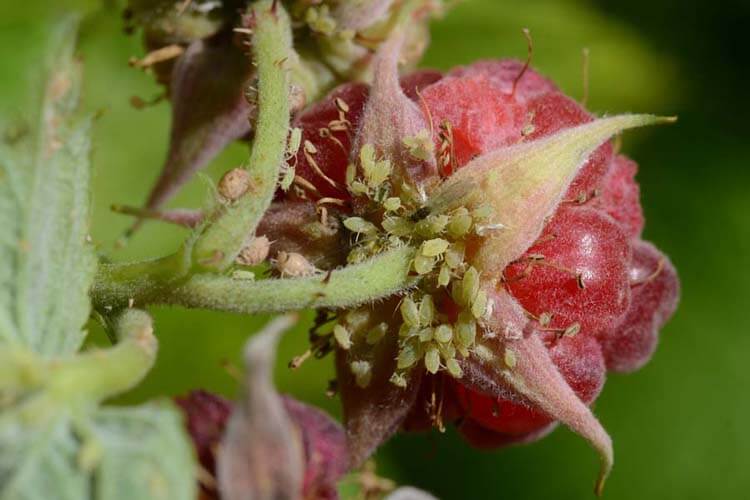

WHO CAUSES IT?
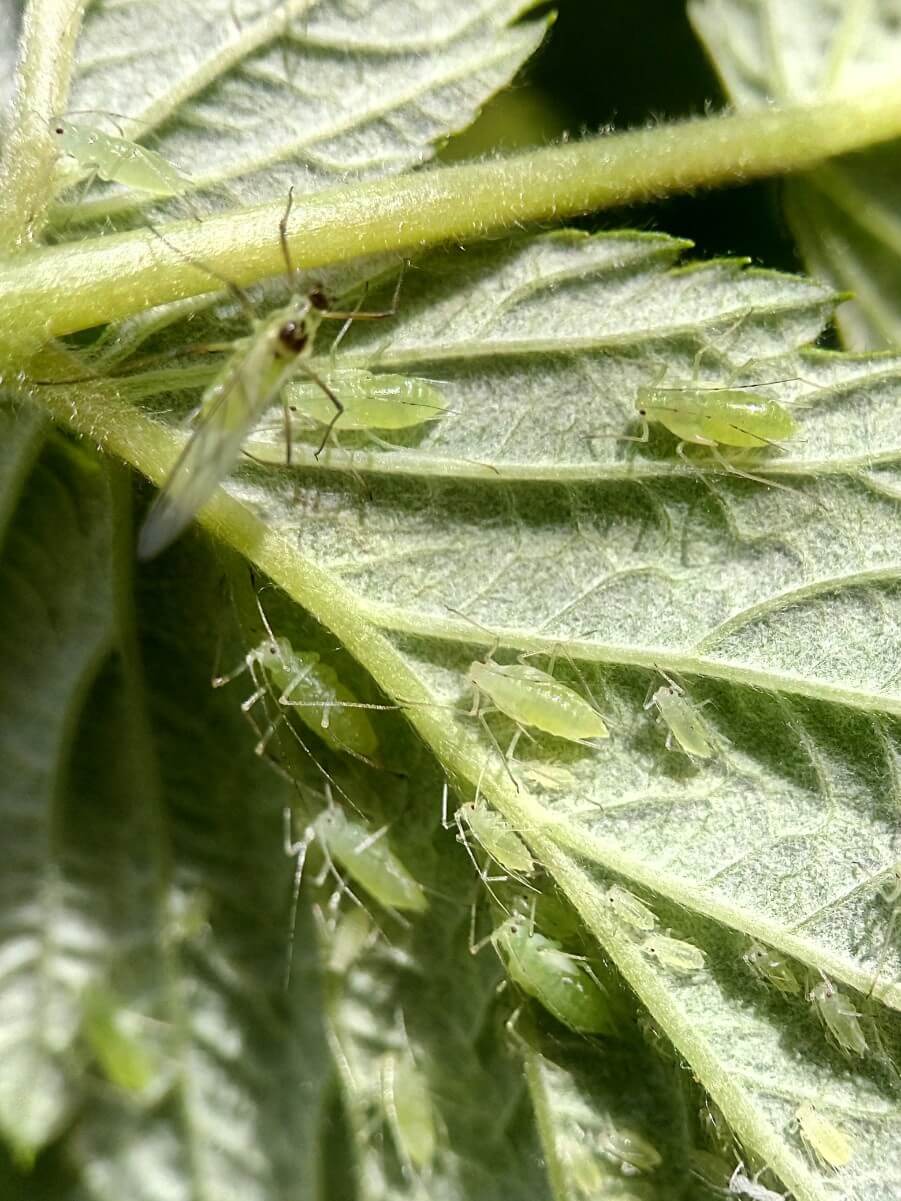
Amphorophora idaei, known as the large raspberry aphid, is a small, green insect that feeds on plant sap. This aphid has several generations per year, depending on climatic conditions. Parthenogenic adult females produce live young without the need for fertilization. These hatchlings go through several molts before becoming adults, which can be winged or wingless. The winged forms disperse to colonize new plants, while the wingless forms remain on the same plant, multiplying rapidly. In autumn, parthenogenic females give rise to sexual females that mate with males, producing winter-hardy eggs. These eggs hatch in spring, starting the new cycle.

SYMPTOMS
The large raspberry aphid causes significant damage to raspberries, affecting both plant growth and fruit quality. Feeding of Amphorophora idaei causes weakening of the plant and the transmission of phytopathogenic viruses, such as pollen necrosis virus and raspberry stunt virus.
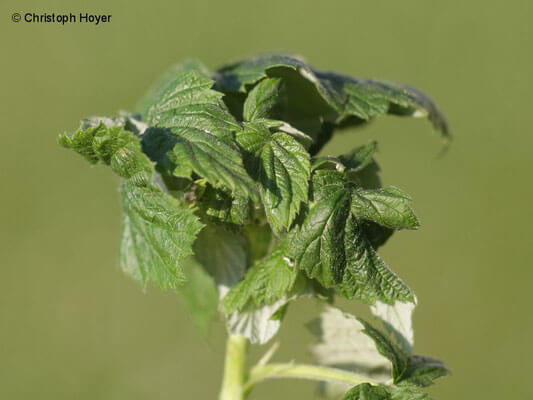
- Curled and deformed leaves.
- New shoots weakened and slow growing.
- Presence of sticky molasses on the leaves and fruits.
- Appearance of black mold (sooty mold) on the molasses.
- Reduction in the quality and size of the fruits.
- Potential transmission of viruses that cause additional diseases in the plant.


TEMPERATURE AND HUMIDITY
15°C - 25°C
60% - 80%

TRANSMISSION ROUTES
Wind, direct contact between plants, insect vectors, contaminated tools, transport of infected plant material
Do you want to remove this disease? Choose how you want to treat it.

TREATMENTS
Chemical treatments
• RAPE OIL 1.53% [AL] P/V
• PARAFFIN OIL (CAS [8042-47-5]) 54.6% [EW] P/V
• PARAFFIN OIL (CAS [97862-82-3]) 80% [EC] P/V
• AZADIRACTIN 1% (AS AZADIRACTIN A) [EC] P/V
• Azadirachtin 2.6% (AS AZADIRACTIN A) [EC] P/V
• FLUPYRADIFURONE 20% [SL] P/V
• LAMBDA CYHALOTHRIN 10% [CS] P/V
• MALTODEXTRIN 47.6% [SL] P/V
• PYRETHRINS 4.65% (as pyrethrum extract) [EC] P/V
• POTASSIUM SALTS OF FATTY ACIDS C14-C20 48% [EW] P/V
• ADHESIVE TRAP
• CHROMATIC TRAP
Authorized treatments in organic farming
• RAPE OIL 1.53% [AL] P/V
• PARAFFIN OIL (CAS [8042-47-5]) 54.6% [EW] P/V
• PARAFFIN OIL (CAS [97862-82-3]) 80% [EC] P/V
• AZADIRACTIN 1% (AS AZADIRACTIN A) [EC] P/V
• Azadirachtin 2.6% (AS AZADIRACTIN A) [EC] P/V
• LAMBDA CYHALOTHRIN 10% [CS] P/V
• MALTODEXTRIN 47.6% [SL] P/V
• PYRETHRINS 4.65% (as pyrethrum extract) [EC] P/V
• POTASSIUM SALTS OF FATTY ACIDS C14-C20 48% [EW] P/V
• ADHESIVE TRAP
• CHROMATIC TRAP
Biological control
• ADALIA BIPUNCTATA
• APHELINUS ABDOMINALIS
• APHIDIUS COLEMANI
• APHIDIUS ERVI
• APHIDOLETES APHIDIMYZA
• APHISIUS SP. (WASPS)
• BEAUVERIA BASSIANA (STRAIN ATCC 74040) 2.3% (2.3X10E7 VIABLE SPORES/ML) [OD] P/V
• BEAUVERIA BASSIANA (GHA STRAIN) 10.7% (2.26X10E13 CONIDIAS/L) [OD] P/V
• BEAUVERIA BASSIANA (GHA STRAIN) 22% (4.4 x 10E10 CONIDIAS/G) [WP] P/P
• CHRYSOPERLA CARNEA
• EPISYRPHUS BALTEATUS (HYRPHID)
• HIPPODAMIA VARIEGATA
• MACROLOPHUS PYGMAEUS
• PRAON VOLUCRE
• RHOPALOSIPHUM PADI
• SCYMNUS NUBILUS
• SPHAEROPHORIA RUEPPELLII (SYRPHID)
Recommendations
- Regularly monitor raspberry plants to detect the presence of aphids early.
- Use plants resistant to Amphorophora idaei whenever possible.
- Carry out preventive treatments with horticultural oils or insecticidal soaps to control aphid populations.
- Encourage the presence of natural enemies, such as ladybugs and lacewings, which prey on aphids.
- Apply specific insecticides when aphid populations exceed economic damage thresholds.
- Maintain good crop hygiene, eliminating plant remains and weeds that can serve as a refuge for aphids.
- Carry out adequate crop rotation to avoid the accumulation of pests.
- Use yellow sticky traps to monitor and control winged aphid populations.
- Avoid excessive use of nitrogen fertilizers, which can promote the growth of tender shoots that are attractive to aphids.





*The recommended treatments are recommendations based on the authorities' databases and do not replace in any way the guidelines established by the legislation of each country.
*Products shown are recommendations and not our own products. As Amazon Associates, we earn revenue from purchases of recommended products.

TREATMENTS
Homemade remedies
There are no home treatments
Natural allies
Chemical treatments
There are no treatments for this disease. Treatments are directed at the insect vectors that transmit it. See insect treatments.

RECOMMENDATIONS

REPELLENT PLANTS
EFFECTIVE PRODUCTS TO ELIMINATE THIS DISEASE
*The recommended treatments are recommendations based on the authorities' databases and do not replace in any way the guidelines established by the legislation of each country.
*Products shown are recommendations and not our own products. As Amazon Associates, we earn revenue from purchases of recommended products.



Explore more tools
Services
Contact
Legal
©2026 by ZERIMAR S.A.R.L. All rights reserved