


Symptoms, treatments and recommendations for treating aphids
Aphid
Aphis Gosypii , Myzus Persicae
Pathogen:
Type:
Insect
Risk:
HIGH
Apio
Pulgones

WHO CAUSES IT?
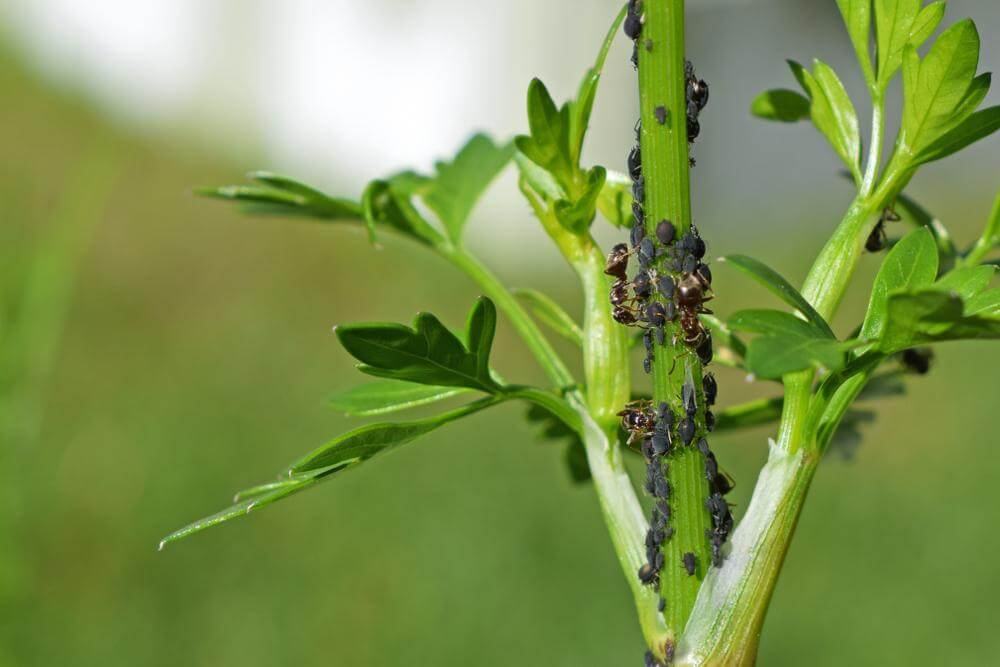
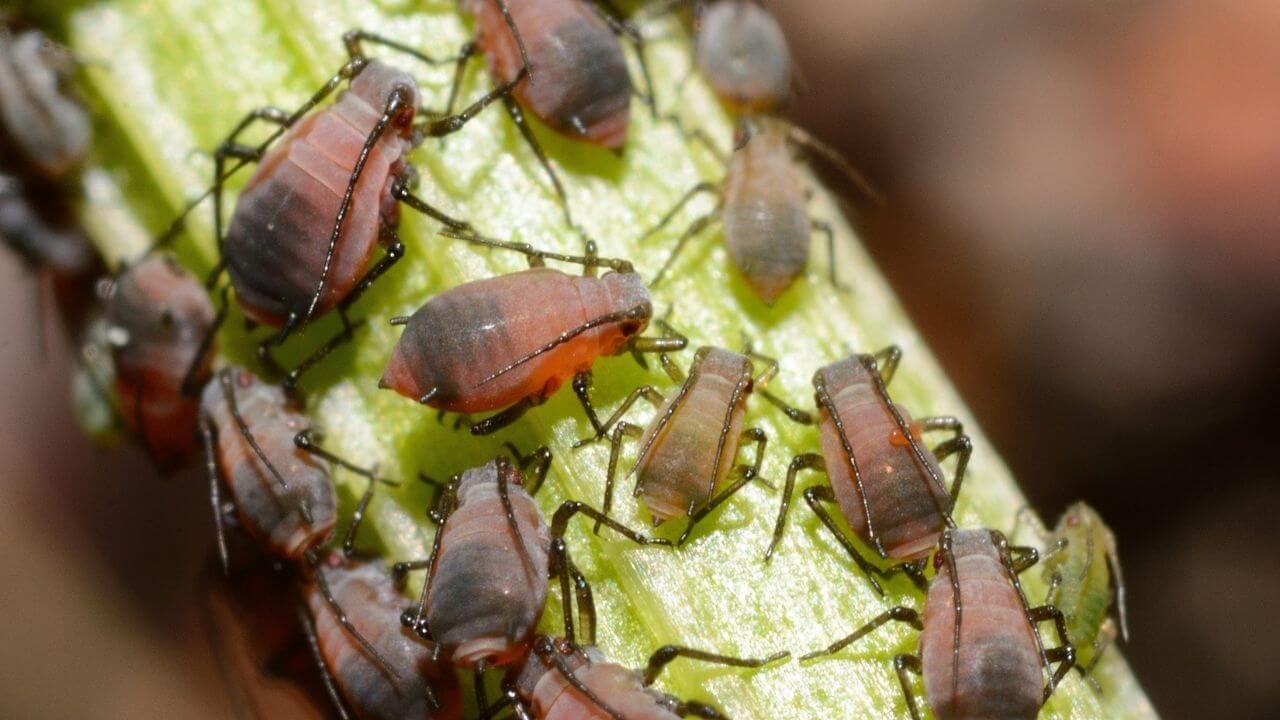
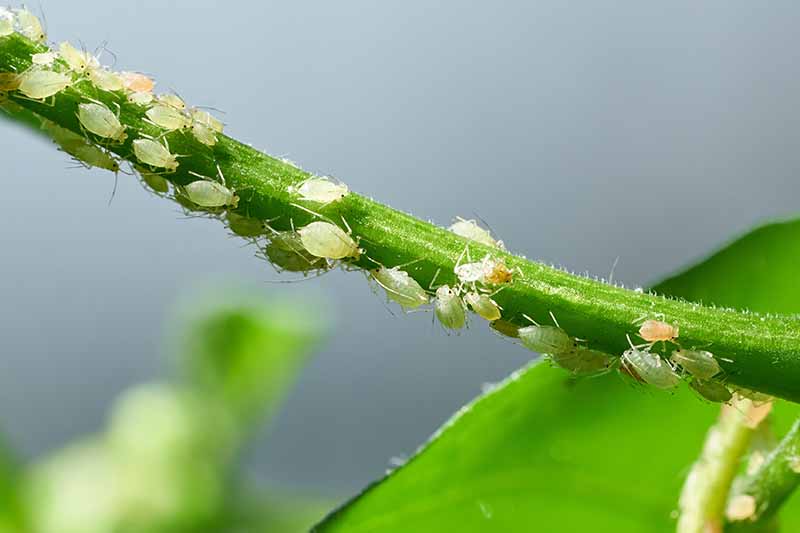
Aphis gossypii and Myzus persicae are two species of aphids that affect celery. Both aphids have a similar morphology: small, soft, oval-shaped bodies that can vary in color from light green to yellow, black or even pink. Aphis gossypii, known as the cotton aphid, is polyphagous and attacks various plants, while Myzus persicae, the peach aphid, is equally versatile. Parthenogenetic females produce live offspring without the need for males, allowing rapid proliferation. Under favorable conditions, a single female can produce dozens of offspring in a few days. Aphids go through several nymphal stages before becoming winged or wingless (wingless) adults. The winged adults can disperse to new plants, facilitating infestation in large crop areas.

SYMPTOMS
In celery, infestation by Aphis gossypii and Myzus persicae can cause significant damage that affects the quality and yield of the crop. These aphids feed by sucking sap from leaves and tender stems, weakening the plant and reducing its growth. In addition, they are vectors of various phytopathogenic viruses.
- Rolled and deformed leaves.
- Yellow and chlorotic Taches on the leaves.
- Secretion of molasses, which favors the growth of sooty fungus.
- Decrease in plant vigor and growth.
- Transmission of viruses that can cause mosaics and deformations.
- Presence of visible colonies of aphids on the leaves and stems.


TEMPERATURE AND HUMIDITY
15-25°C
60-80%

TRANSMISSION ROUTES
Direct contact, Wind, Cultivation tools, Infested plants, Plant transport, Soil movement
Do you want to remove this disease? Choose how you want to treat it.

TREATMENTS
Chemical treatments
• PARAFFIN OIL (CAS [8042-47-5]) 54.6% [EW] P/V
• AZADIRACTIN 1% (AS AZADIRACTIN A) [EC] P/V
• Azadirachtin 2.6% (AS AZADIRACTIN A) [EC] P/V
• CYPERMETHRIN 50% [EC] P/V
• DELTAMETHRIN 1.57% [SC] P/V
• DELTAMETHRIN 10% [EC] P/V
• DELTAMETHRIN 2.5% [EC] P/V
• MALTODEXTRIN 47.6% [SL] P/V
• PYRETHRINS 2% (PYRETHRE EXTR.) [EC] P/V
• PYRETHRINS 2% [EC] P/V
• PYRETHRINS 4% (PYRETHHRINE EXTR.) [EC] P/V
• PYRETHRINS 4% [EC] P/V
• POTASSIUM SALTS OF UNSATURATED FATTY ACIDS C7-C18 & C18 (CAS [67701-09-1] 515g/L [SL] P/V
• POTASSIUM SALTS OF FATTY ACIDS C14-C20 48% [EW] P/V
• POTASSIUM SALTS OF VEGETABLE FATTY ACIDS 13.04% [SL] P/V
• SPIROTETRAMAT 10% [SC] P/V
• ADHESIVE TRAP
• CHROMATIC TRAP
Authorized treatments in organic farming
• PARAFFIN OIL (CAS [8042-47-5]) 54.6% [EW] P/V
• AZADIRACTIN 1% (AS AZADIRACTIN A) [EC] P/V
• Azadirachtin 2.6% (AS AZADIRACTIN A) [EC] P/V
• MALTODEXTRIN 47.6% [SL] P/V
• PYRETHRINS 2% (PYRETHRE EXTR.) [EC] P/V
• PYRETHRINS 2% [EC] P/V
• PYRETHRINS 4% (PYRETHHRINE EXTR.) [EC] P/V
• PYRETHRINS 4% [EC] P/V
• POTASSIUM SALTS OF UNSATURATED FATTY ACIDS C7-C18 & C18 (CAS [67701-09-1] 515g/L [SL] P/V
• POTASSIUM SALTS OF FATTY ACIDS C14-C20 48% [EW] P/V
• POTASSIUM SALTS OF VEGETABLE FATTY ACIDS 13.04% [SL] P/V
• ADHESIVE TRAP
• CHROMATIC TRAP
Biological control
• ADALIA BIPUNCTATA
• APHELINUS ABDOMINALIS
• APHIDIUS COLEMANI
• APHIDIUS ERVI
• APHIDOLETES APHIDIMYZA
• APHISIUS SP. (WASPS)
• BEAUVERIA BASSIANA (STRAIN ATCC 74040) 2.3% (2.3X10E7 VIABLE SPORES/ML) [OD] P/V
• BEAUVERIA BASSIANA (GHA STRAIN) 10.7% (2.26X10E13 CONIDIAS/L) [OD] P/V
• BEAUVERIA BASSIANA (GHA STRAIN) 22% (4.4 x 10E10 CONIDIAS/G) [WP] P/P
• CHRYSOPERLA CARNEA
• EPISYRPHUS BALTEATUS (HYRPHID)
• HIPPODAMIA VARIEGATA
• MACROLOPHUS PYGMAEUS
• PRAON VOLUCRE
• RHOPALOSIPHUM PADI
• SCYMNUS NUBILUS
• SPHAEROPHORIA RUEPPELLII (SYRPHID)
Recommendations
- Regularly monitor crops to detect the early presence of aphids.
- Encourage the presence of natural enemies such as ladybugs, lacewings and parasitoid wasps.
- Avoid excessive use of nitrogen fertilizers, which can promote the growth of aphid populations.
- Implement crop rotation to break the life cycle of aphids.
- Use yellow sticky traps to monitor and control winged aphid populations.
- Apply insecticidal soap or horticultural oils to affected areas to control infestations.
- Consider using trap crops that attract aphids away from celery.
- Carry out treatments with specific insecticides, respecting the action thresholds and avoiding resistance.





*The recommended treatments are recommendations based on the authorities' databases and do not replace in any way the guidelines established by the legislation of each country.
*Products shown are recommendations and not our own products. As Amazon Associates, we earn revenue from purchases of recommended products.

TREATMENTS
Homemade remedies
There are no home treatments
Natural allies
Chemical treatments
There are no treatments for this disease. Treatments are directed at the insect vectors that transmit it. See insect treatments.

RECOMMENDATIONS

REPELLENT PLANTS
EFFECTIVE PRODUCTS TO ELIMINATE THIS DISEASE
*The recommended treatments are recommendations based on the authorities' databases and do not replace in any way the guidelines established by the legislation of each country.
*Products shown are recommendations and not our own products. As Amazon Associates, we earn revenue from purchases of recommended products.



Explore more tools
Services
Contact
Legal
©2026 by ZERIMAR S.A.R.L. All rights reserved