


Symptoms, treatments and recommendations for treating septoria
Septoria
Septoria Sp.
Pathogen:
Type:
Fungus
Risk:
HIGH
Cereales de invierno
Septoriosis

WHO CAUSES IT?
Septoria sp. It is a phytopathogenic fungus that mainly affects winter cereals, including wheat. This fungus has a great ability to persist in crop remains and soil, which allows it to survive in unfavorable conditions. During planting seasons, sexual spores (ascospores) and asexual spores (pycnidiospores) are released from infected crop residues and are dispersed by wind and rain, facilitating their arrival on new plants. Once on the leaves of the cereal, the spores germinate when humidity conditions are adequate, forming structures called pycnidia, where more spores develop. These new spores are released through openings in the pycnidia and are dispersed again by splashing water or contact with other leaves, repeating the infectious cycle throughout the growing season. Septoria sp. It is capable of causing multiple cycles of infection in a single year, which increases the severity of the disease and its impact on crop yield.

SYMPTOMS
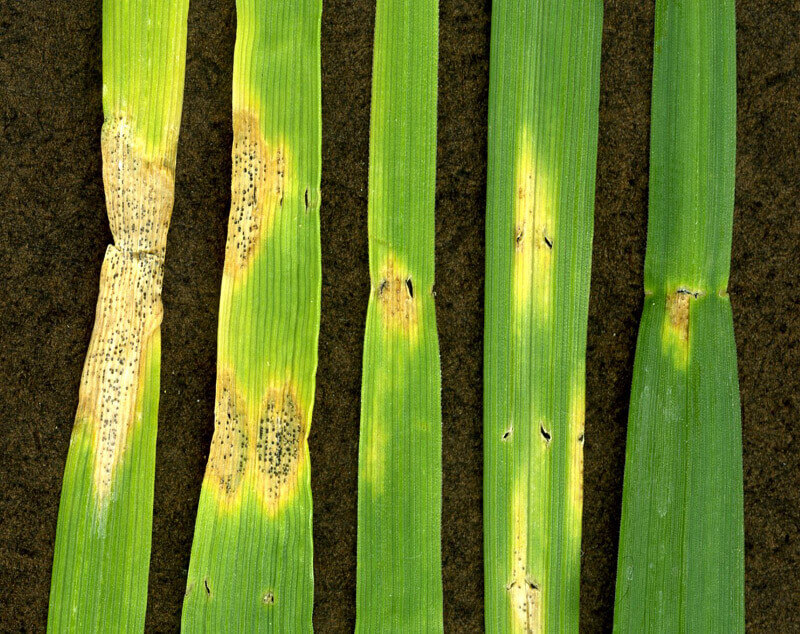
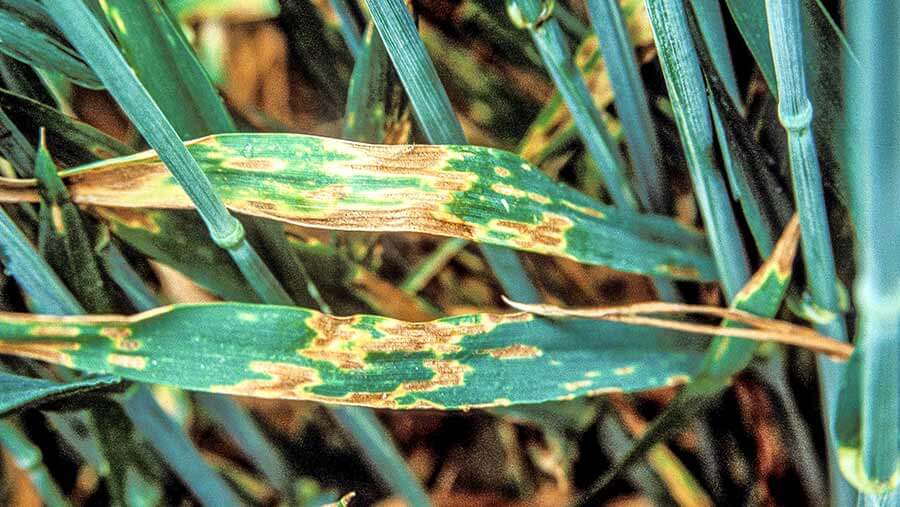
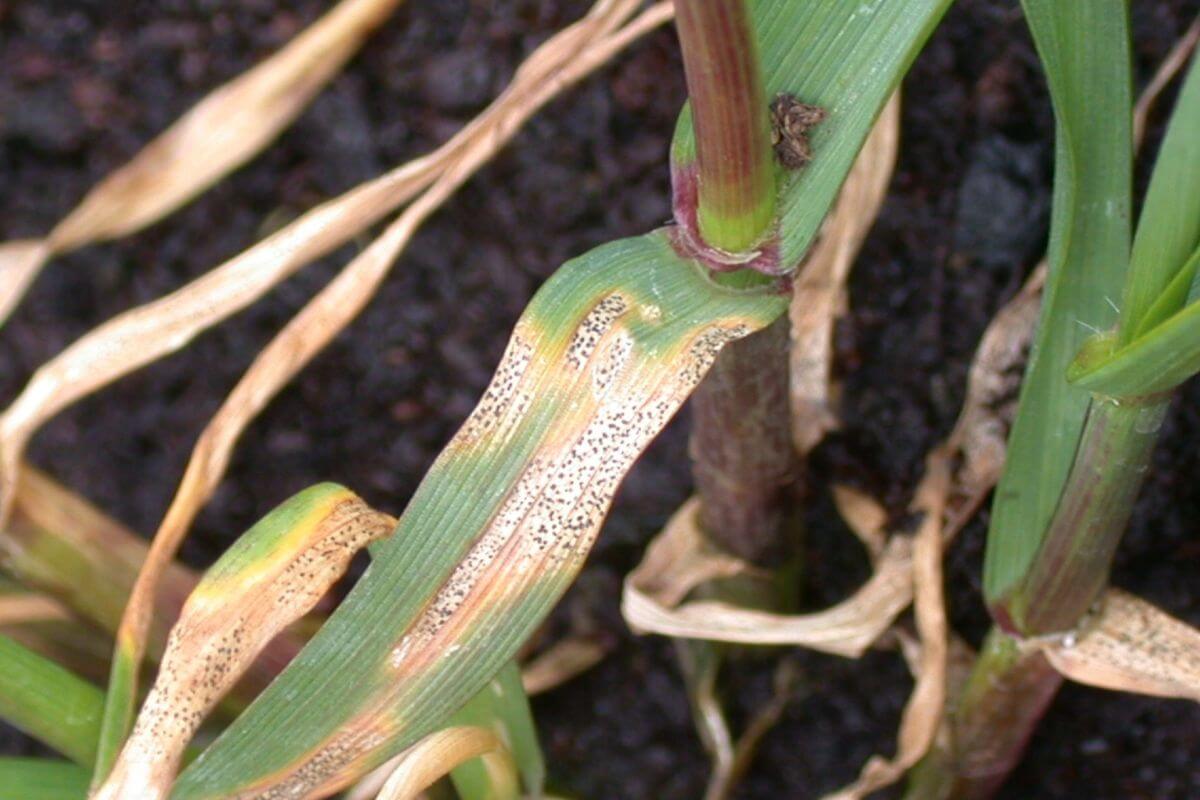
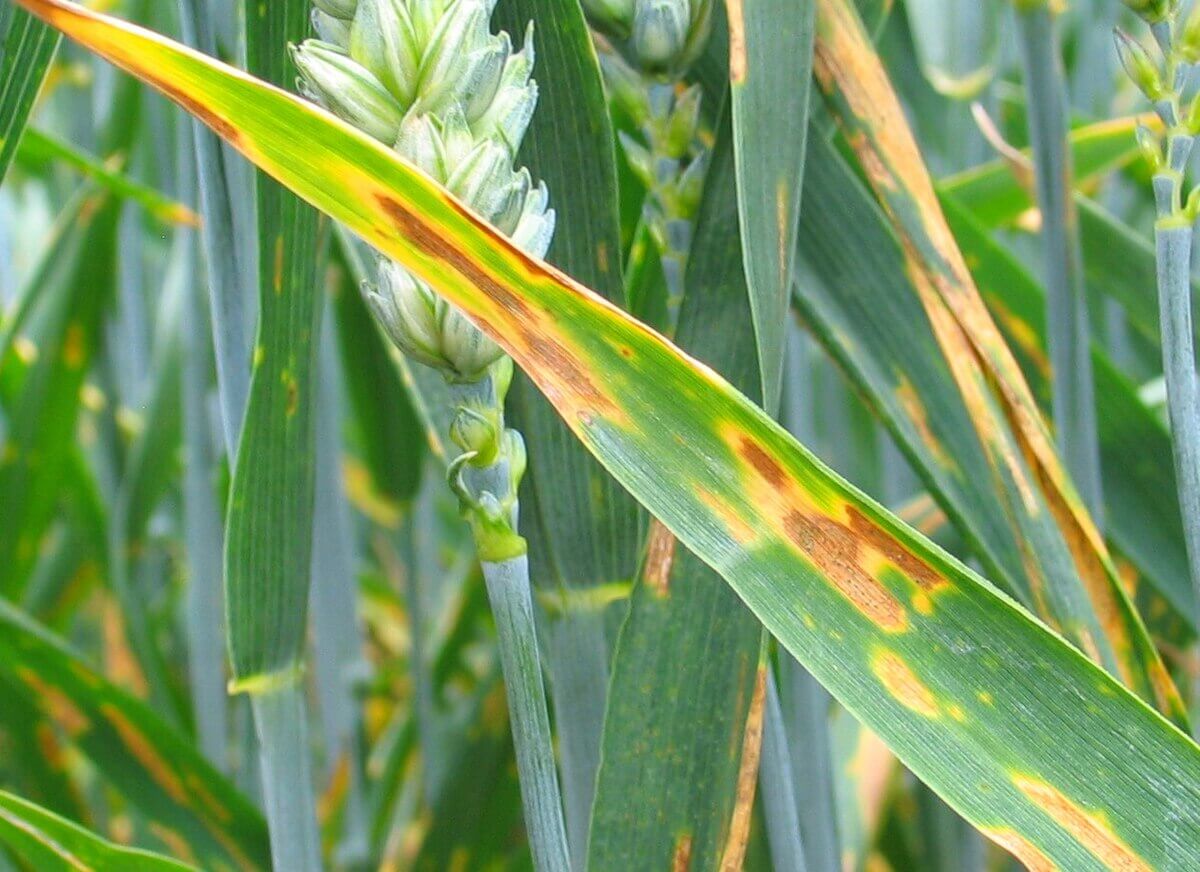
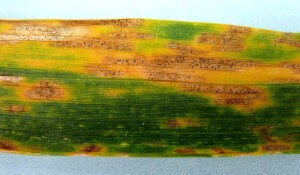
Septoria is one of the most common and devastating diseases in winter cereals, mainly affecting the leaves and, in severe cases, the spikes of the crop. The fungus infects the lower leaves first, and as the disease progresses, it spreads to the upper leaves, causing premature yellowing and a decrease in photosynthesis. Affected leaves show small chlorotic Taches that gradually darken and develop pycnidia inside, causing necrosis of large areas of leaf tissue. In advanced stages, the reduction of green leaf area seriously affects grain filling, reducing both the quality and quantity of the final product.
- Small chlorotic Taches that turn brown
- Appearance of dark pycnidia within the Taches
- Necrosis of large areas of the leaves
- Yellowing and premature death of leaves
- Significant loss of photosynthetic capacity
- Reduction in grain yield and quality


TEMPERATURE AND HUMIDITY
15°C - 20°C
85% - 100%

TRANSMISSION ROUTES
Spores carried by wind, spores dispersed by water splashes, contact between infected and healthy leaves, infected crop residues
Do you want to remove this disease? Choose how you want to treat it.

TREATMENTS
Chemical treatments
• AZOXISTROBIN 25% [SC] P/V
• DIFENOCONAZOLE 25% [EC] P/V
• PROTHIOCONAZOLE 25% [EC] P/V
• TEBUCONAZOLE 25% [EW] P/V
Authorized treatments in organic farming
-
Biological control
-
Recommendations
- Use cereal varieties resistant to Septoria sp., prioritizing those with high tolerance to foliar diseases.
- Implement an adequate crop rotation that does not include susceptible hosts, to reduce inoculum pressure on the soil.
- Avoid dense planting to improve air circulation between plants, which reduces high humidity conditions favorable for the pathogen.
- Plant early to prevent young plants from becoming infected in the first rains of the season.
- Remove residues from previous crops or carry out deep tillage to bury infected remains, minimizing the source of inoculum.
- Apply broad-spectrum preventive fungicides in the early phases of crop development, especially in favorable conditions for the fungus.
- Constantly monitor crops to detect the first signs of infection and apply curative fungicides if necessary.





*The recommended treatments are recommendations based on the authorities' databases and do not replace in any way the guidelines established by the legislation of each country.
*Products shown are recommendations and not our own products. As Amazon Associates, we earn revenue from purchases of recommended products.

TREATMENTS
Homemade remedies
There are no home treatments
Natural allies
Chemical treatments
There are no treatments for this disease. Treatments are directed at the insect vectors that transmit it. See insect treatments.

RECOMMENDATIONS

REPELLENT PLANTS
EFFECTIVE PRODUCTS TO ELIMINATE THIS DISEASE
*The recommended treatments are recommendations based on the authorities' databases and do not replace in any way the guidelines established by the legislation of each country.
*Products shown are recommendations and not our own products. As Amazon Associates, we earn revenue from purchases of recommended products.



Explore more tools
Services
Contact
Legal
©2026 by ZERIMAR S.A.R.L. All rights reserved