

Platanera
How to recognize and combat black palm weevils in banana plantations
Black banana weevil
Insect
Type:
Risk to the plant:
CRITICAL
Cosmopolites sordidus
Pathogen:
Picudos


WHO CAUSES IT?
Cosmopolites sordidus, known as the black banana weevil, is a beetle of the Curculionidae family that mainly attacks banana trees. Adults are black or dark brown insects, with an elongated body and a characteristic elongated face. They are nocturnal and hide during the day at the base of the pseudostem or in nearby plant remains. Females deposit eggs in small holes made at the base of the pseudostem or in exposed roots. After hatching, the larvae, with a whitish body and no legs, begin to feed on the internal tissue of the plant, excavating galleries that weaken its structure. The larval phase is the most destructive and can last several weeks before the larvae transform into pupae within cavities inside the stem. Finally, adults emerge, which can live for several months and restart the reproductive process. Due to its cryptic behavior and its ability to passively disperse through the transport of infected plant material, it is a difficult pest to eradicate.
.png)
SYMPTOMS
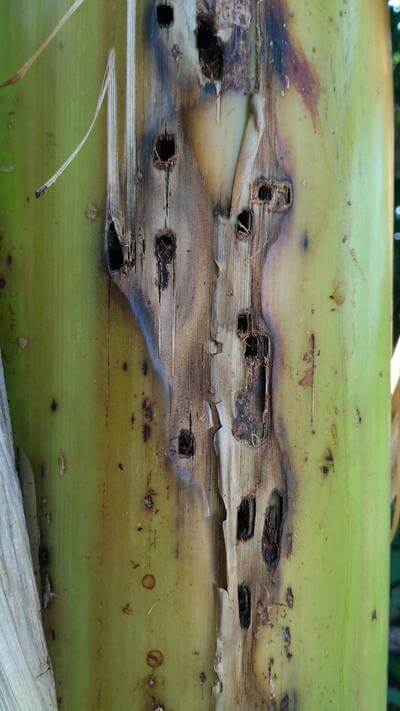
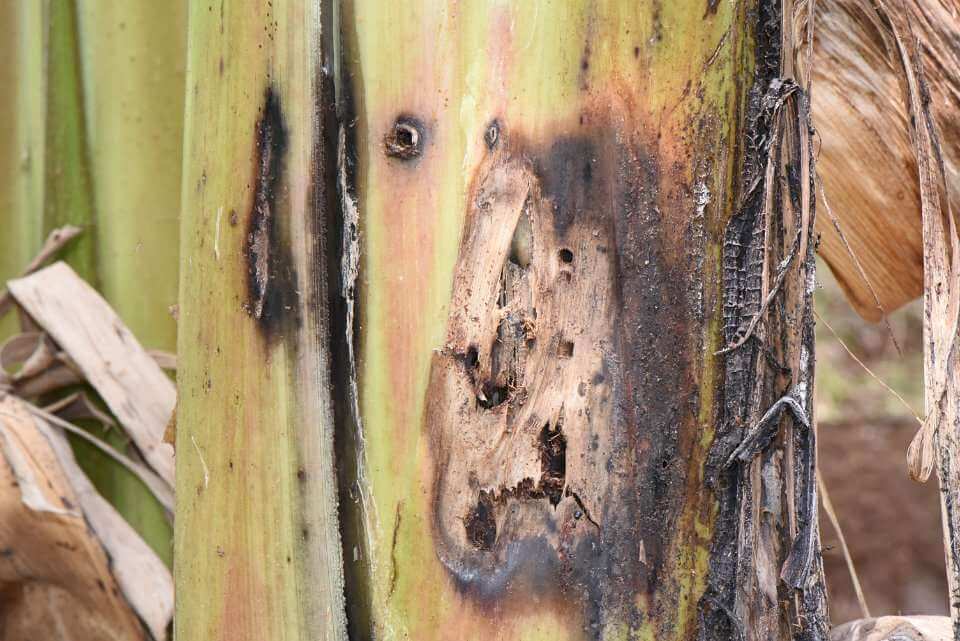
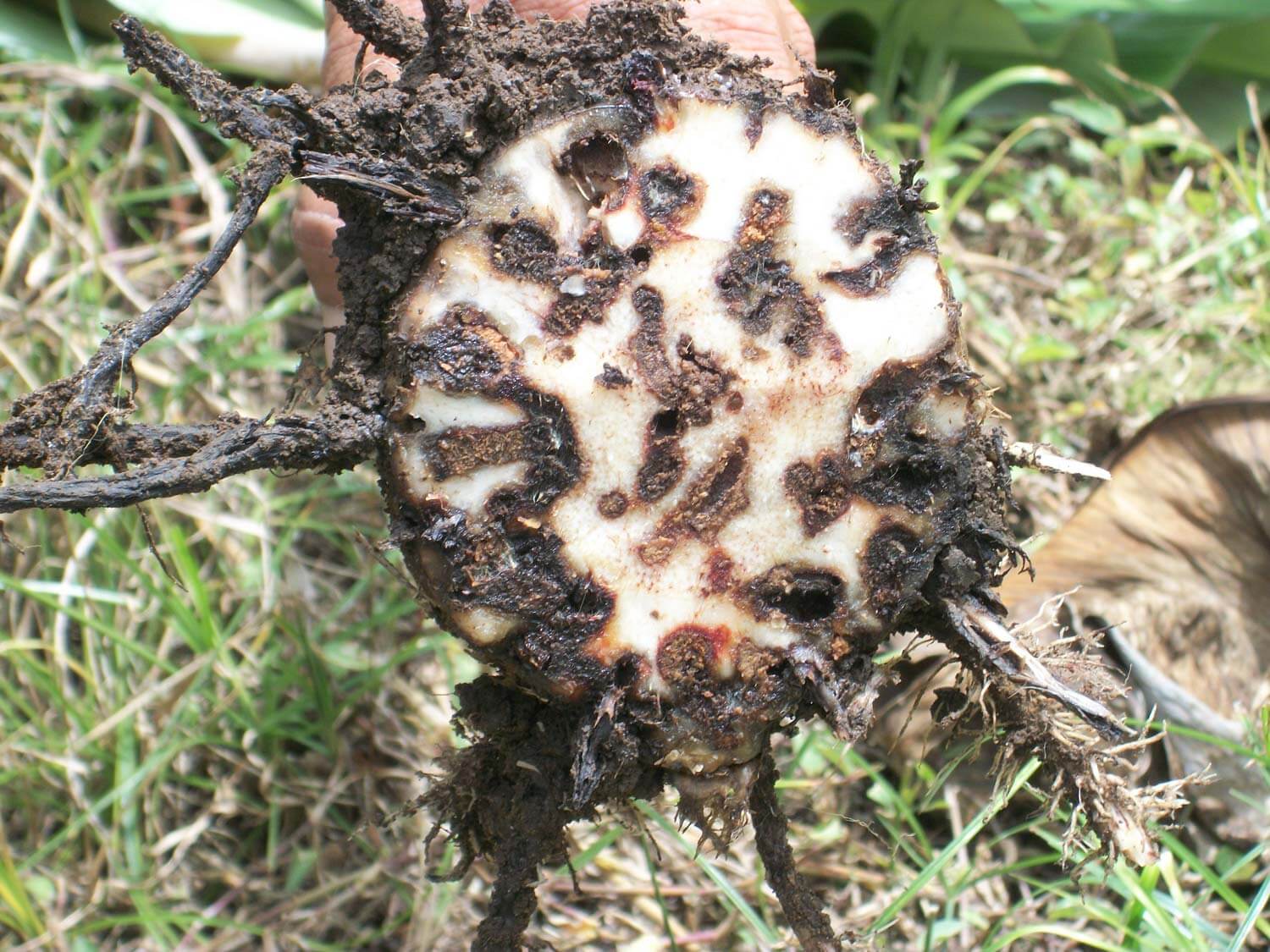
The banana tree infested by the black weevil experiences a progressive decrease in its vigor due to the internal destruction of its tissues. The formation of galleries in the pseudostem compromises the stability of the plant, increasing the risk of overturning. In addition, internal wounds caused by the larvae facilitate the entry of secondary pathogens, which aggravates the damage.
- Holes at the base of the pseudostem with dark exudates.
- Progressive wilting of the lower leaves.
- Reduced growth and lower fruit production.
- Pseudostem weakened and prone to fracture.
- Presence of larvae and galleries inside the stem.
- Premature death of the plant in severe infestations.


DEVELOPMENT CONDITIONS
Temperature:
24°C - 30°C
Humidity:
75% - 90%

HOW IS IT SPREAD?
Movement of contaminated plant material, soil adhered to tools or machinery, passive dispersal by wind, active movement of adults in the crop

HOW TO ELIMINATE IT?
Home treatments
There are no home treatments
Natural allies
Chemical treatments
There are no treatments for this disease. Treatments are directed at the insect vectors that transmit it. See insect treatments.
RECOMMENDED PRODUCTS TO ELIMINATE THE PEST
Sponsored link
Sponsored link


Sponsored link
Sponsored link
Sponsored link


Sponsored link
Sponsored link
Effective against all types of fungi

Sponsored link


Sponsored link
Sponsored link

Sponsored link


Sponsored link

REPELLENT PLANTS

RECOMMENDATIONS
OTHER PESTS THAT MAY INTEREST YOU


DID YOU LIKE IT?
Now you can always have it on your mobile, without ads and totally FREE. TRY idMicrobe NOW!


