

Remolacha de mesa
How to recognize and combat moderate beet yellows virus
Beet Moderate Yellowness Virus
Virus
Type:
Risk to the plant:
INTERMEDIATE
Beet Mild Yellowing Virus (Bmyv)
Pathogen:

Virus


WHO CAUSES IT?
Beet Mild Yellowing Virus (BMYV) is a virus that primarily affects beet plants, causing a disease known as beet mild yellowing virus. This virus belongs to the Polerovirus genus, within the Luteoviridae family. BMYV is a positive-sense single-stranded RNA virus. Its cycle begins when an aphid, the main vector, feeds on an infected plant, thus acquiring the virus. Aphids transmit the virus to new plants during feeding. Within the beet plant, BMYV replicates in phloem cells and moves through the vascular system, interfering with nutrient transport and causing the characteristic symptoms of the disease. Viral replication and spread are facilitated by proteins encoded by the virus, which contributes to the spread of the pathogen within the plant.
.png)
SYMPTOMS
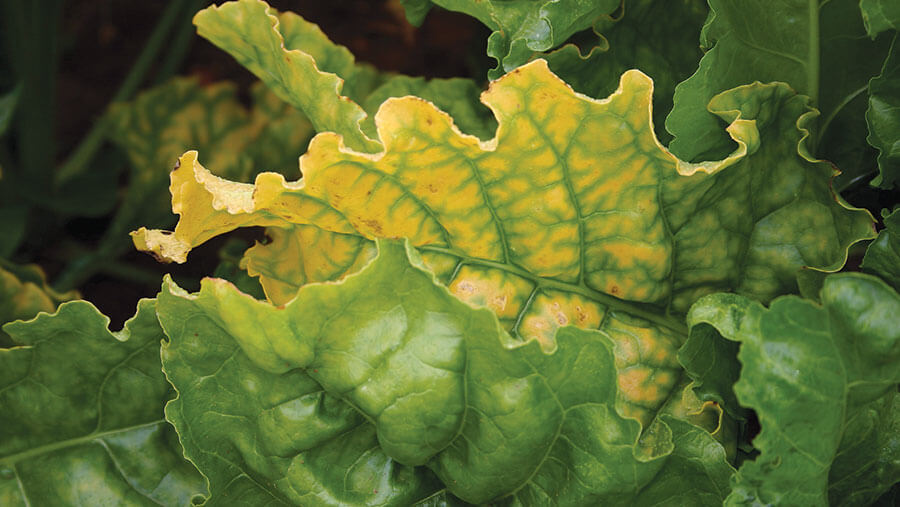
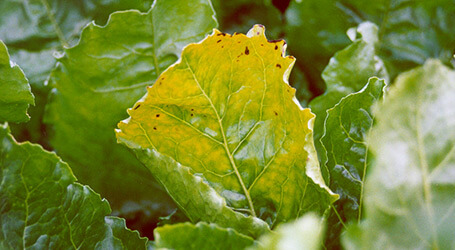
The beet moderate yellowness virus produces a series of symptoms in beet plants that affect their development and yield. The first signs of the disease include slight yellowing of the leaves, which may go unnoticed in the early stages. As the infection progresses, the yellowing spreads and may intensify, affecting plant growth and productivity. Infected plants may also exhibit leaf curling and a general reduction in vigor.
- Slight yellowing of the leaves
- Extension of yellowing throughout the plant
- Leaf curling
- Reduction of plant vigor
- Decreased growth
- Lower crop yield


DEVELOPMENT CONDITIONS
Temperature:
18°C - 24°C
Humidity:
65% - 80%

HOW IS IT SPREAD?
Aphids, infected plant sap, contaminated tools, infected seeds

HOW TO ELIMINATE IT?
Home treatments
There are no home treatments
Natural allies
Chemical treatments
There are no treatments for this disease. Treatments are directed at the insect vectors that transmit it. See insect treatments.
RECOMMENDED PRODUCTS TO ELIMINATE THE PEST
Sponsored link
Sponsored link
Sponsored link


Sponsored link
Sponsored link
Sponsored link
Sponsored link


Sponsored link
Sponsored link
Effective against all types of fungi

Sponsored link
Sponsored link


Sponsored link
Sponsored link

Sponsored link
Sponsored link


Sponsored link

REPELLENT PLANTS

RECOMMENDATIONS
OTHER PESTS THAT MAY INTEREST YOU


DID YOU LIKE IT?
Now you can always have it on your mobile, without ads and totally FREE. TRY idMicrobe NOW!


