

Vid
How to recognize and combat erinosis in grapevines
Erinosis
Insect
Type:
Risk to the plant:
INTERMEDIATE
Colomerus Vitis (Eriophyes Vitis)
Pathogen:
Ácaros


WHO CAUSES IT?
Colomerus vitis (previously known as Eriophyes vitis) is a microscopic mite that belongs to the family Eriophyidae, and is one of the most harmful pests of grapevines. This mite is elongated in shape, with two pairs of legs located on the front of its body, and its size is so small that it is difficult to detect it with the naked eye. During the winter, the adult mites take refuge under the scales of the vine buds, where they remain inactive until temperatures begin to rise in spring. At this point, they emerge and begin feeding on the young shoots of the plant. The females lay their eggs on the underside of the leaves, and in a few days the larvae hatch, also beginning to feed on the vine tissues. Colomerus vitis goes through several generations a year, being especially active in the phases of greatest growth of the vine. Its reproductive cycle is rapid, which favors the proliferation of this pest during the warm months, generating large populations in a short time.
.png)
SYMPTOMS
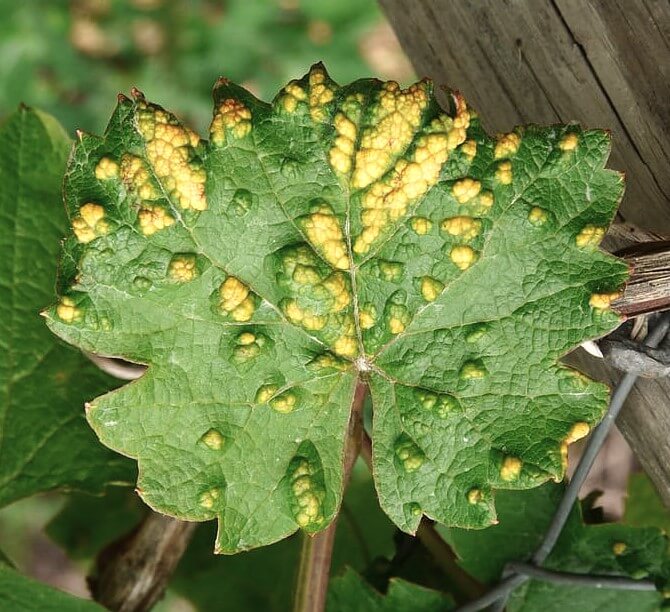
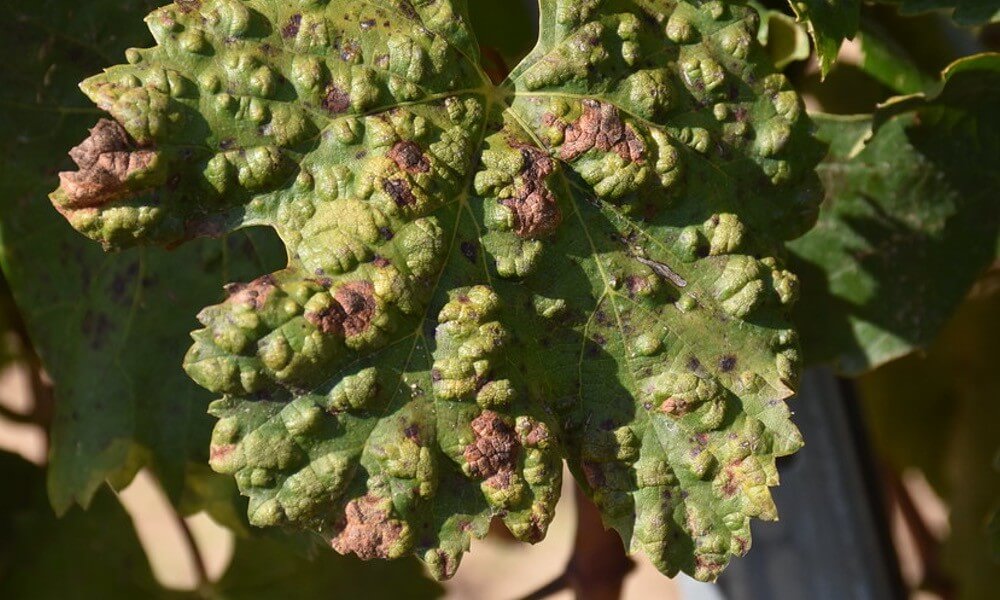
Erinosis is the disease caused by Colomerus vitis in the vine, and is characterized by the appearance of galls and deformations on the leaves and other plant tissues. These mites feed on cellular content, injecting substances that cause a hypertrophied reaction in the vine tissues. This interferes with photosynthesis and respiration of the plant, which can considerably reduce its vigor and, consequently, the quality and quantity of production.
- Formation of galls or bumps on the underside of the leaves.
- Leaves with a rough and deformed appearance.
- Presence of a cottony layer on the gills, produced by the mite.
- Loss of vigor in the plant and less growth of the shoots.
- Decrease in the production of clusters due to the affectation of leaves and young shoots.
- In severe cases, premature defoliation and weakening of the plant.



DEVELOPMENT CONDITIONS
Temperature:
18-28°C
Humidity:
60-80%

HOW IS IT SPREAD?
Wind, Contaminated plant material, Agricultural tools, Direct contact between plants

HOW TO ELIMINATE IT?
Home treatments
There are no home treatments
Natural allies
Chemical treatments
There are no treatments for this disease. Treatments are directed at the insect vectors that transmit it. See insect treatments.
RECOMMENDED PRODUCTS TO ELIMINATE THE PEST
Sponsored link
Sponsored link


Sponsored link
Sponsored link
Sponsored link


Sponsored link
Sponsored link
Effective against all types of fungi

Sponsored link


Sponsored link
Sponsored link

Sponsored link


Sponsored link

REPELLENT PLANTS

RECOMMENDATIONS
OTHER PESTS THAT MAY INTEREST YOU


DID YOU LIKE IT?
Now you can always have it on your mobile, without ads and totally FREE. TRY idMicrobe NOW!


