

Calabaza
How to recognize and combat root-knot nematodes in squash
Root-Knot Nematodes
Nematode
Type:
Risk to the plant:
HIGH
Meloidogyne Spp.
Pathogen:
Nematodos


WHO CAUSES IT?
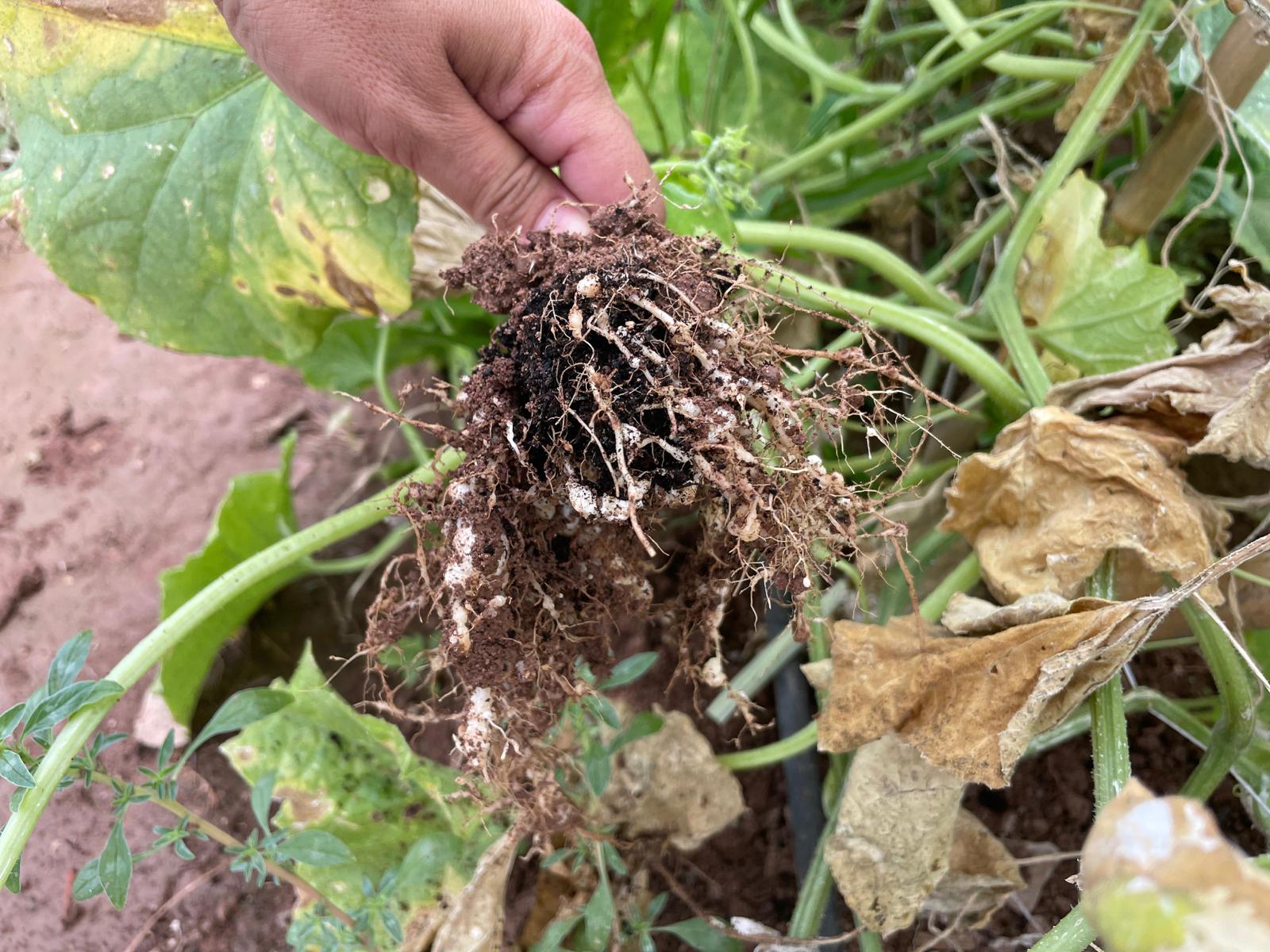
Meloidogyne spp., commonly known as root-knot nematodes, are microscopic nematodes that parasitize a wide variety of plants. These pathogens have a complex interaction with their hosts. Adult females insert themselves into the roots of plants and deposit their eggs in an external gelatinous matrix. The larvae emerge from the eggs and move through the soil in search of new roots. Once the larvae penetrate the roots, they feed on the vascular tissue, causing the formation of characteristic galls or nodules. These galls interfere with the transport of water and nutrients in the plant, weakening it significantly. Females continue their reproductive cycle within the galls, while second-generation larvae search for new roots to infest, thus perpetuating the infection cycle.
.png)
SYMPTOMS
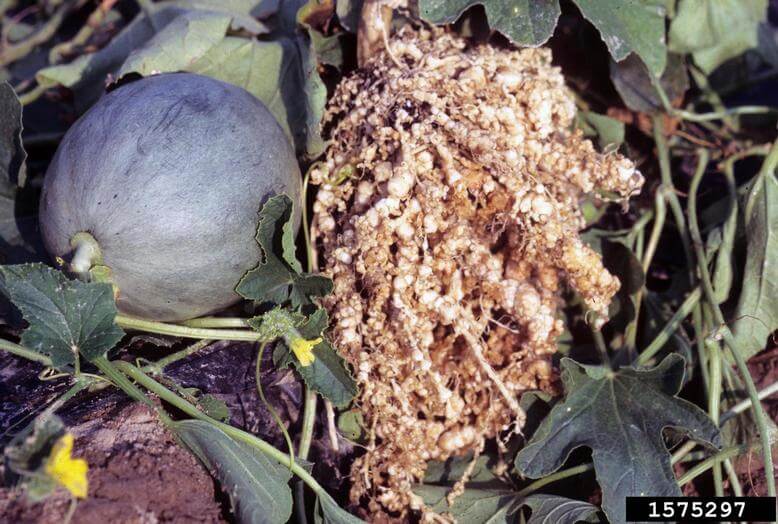
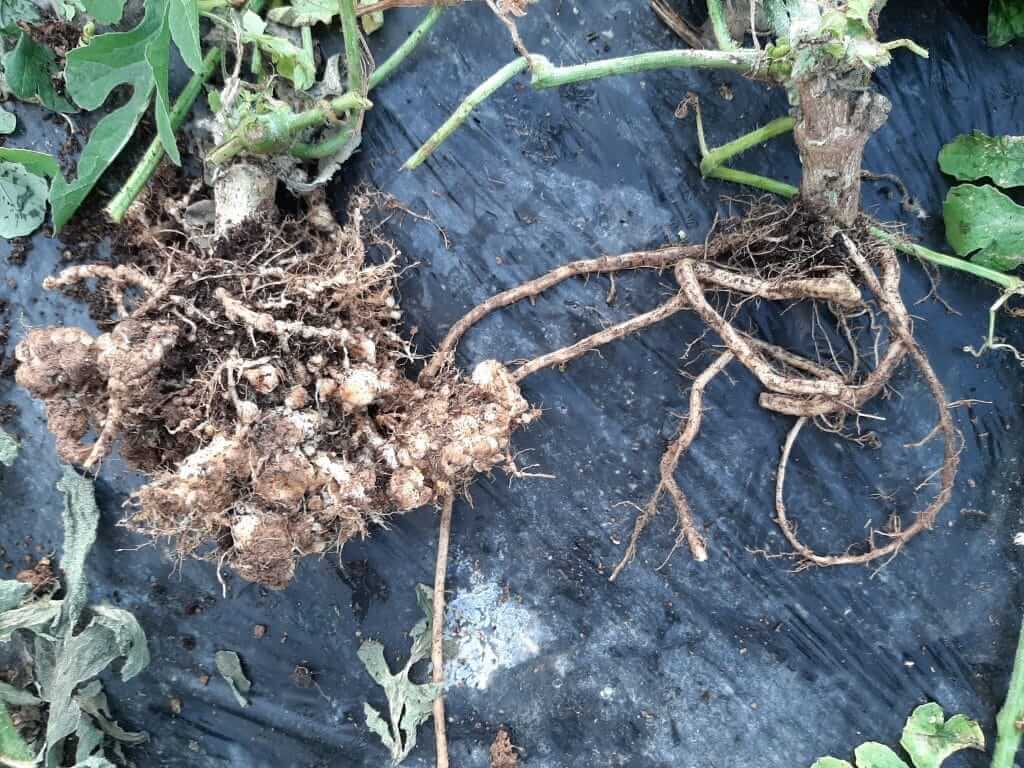
In pumpkins, root-knot nematodes cause a disease that manifests itself through a series of symptoms that affect both the root system and the general growth of the plant. Symptoms include the formation of galls on the roots, which can be seen with the naked eye. These galls obstruct the absorption of water and nutrients, leading to poor growth and the appearance of other symptoms. Infected plants may show chlorosis, reduction in leaf size and general wilting, especially during periods of water stress. Plants may also have lower yields and lower quality fruits.
- Formation of galls on the roots
- Poor growth
- Chlorosis (yellowing of leaves)
- Reduction in the size of the leaves
- General wilting
- Lower yield and lower quality fruits


DEVELOPMENT CONDITIONS
Temperature:
25-30°C
Humidity:
50-80%

HOW IS IT SPREAD?
Contaminated soil, Irrigation water, Agricultural tools, Infected plant material, Agricultural machinery, Earthworks

HOW TO ELIMINATE IT?
Home treatments
There are no home treatments
Natural allies
Chemical treatments
There are no treatments for this disease. Treatments are directed at the insect vectors that transmit it. See insect treatments.
RECOMMENDED PRODUCTS TO ELIMINATE THE PEST
Sponsored link
Sponsored link


Sponsored link
Sponsored link
Sponsored link


Sponsored link
Sponsored link
Effective against all types of fungi

Sponsored link


Sponsored link
Sponsored link

Sponsored link


Sponsored link

REPELLENT PLANTS

RECOMMENDATIONS
OTHER PESTS THAT MAY INTEREST YOU


DID YOU LIKE IT?
Now you can always have it on your mobile, without ads and totally FREE. TRY idMicrobe NOW!


