

Trigo
How to recognize and combat yellow rust in wheat
Yellow Rust
Fungus
Type:
Risk to the plant:
INTERMEDIATE
Puccinia Striiformis F.Sp. Tritici
Pathogen:

Royas


WHO CAUSES IT?
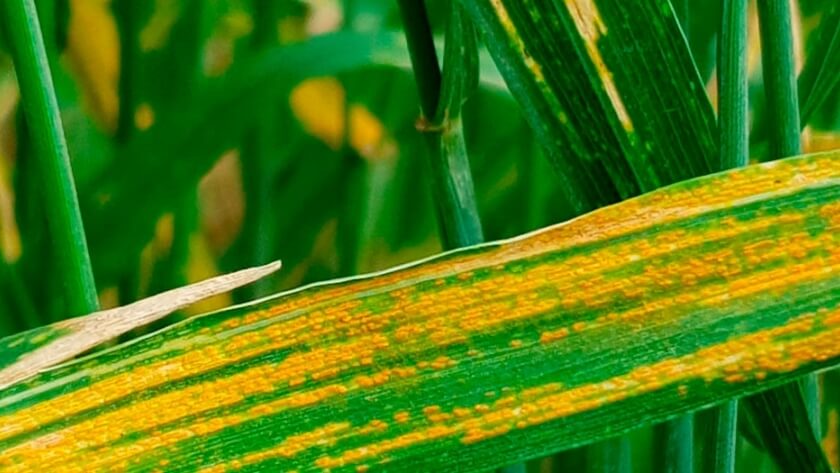
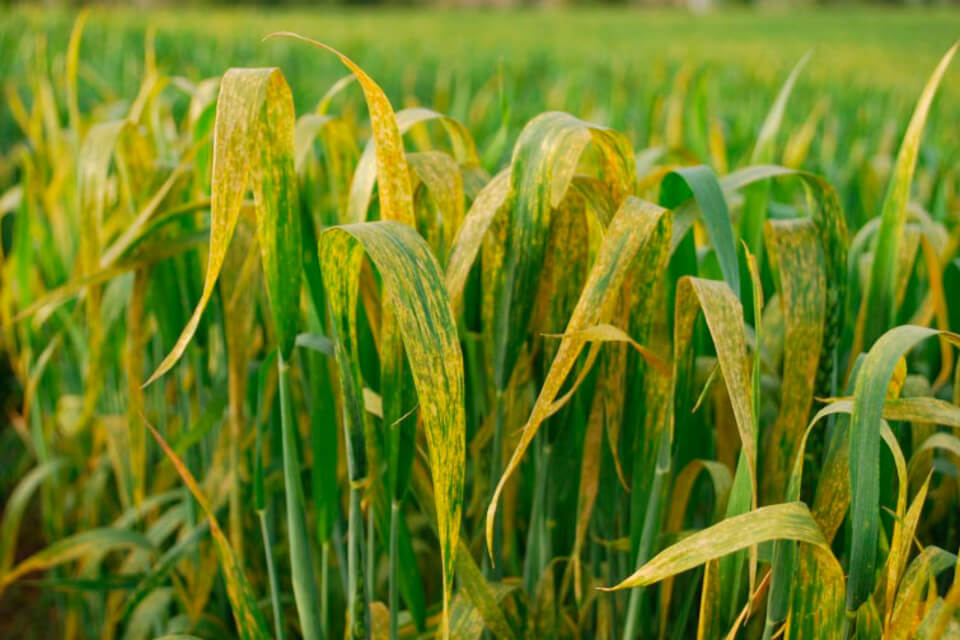
The pathogen known as "yellow rust" is a fungal disease that affects various cereal crops, including wheat. This fungus, scientific name Puccinia striiformis f. sp. tritici, is characterized by a yellowish appearance on the infected leaves, forming elongated Taches that can merge and cover large areas of the plant. These Taches usually contain spores that, when dispersed, spread the disease to other nearby plants.
.png)
SYMPTOMS
In wheat, yellow rust causes significant damage by weakening the plant and reducing its capacity for photosynthesis. Symptoms include pale yellow Taches on the leaves, accompanied by a yellow or orange powder that corresponds to the spores of the fungus. Over time, these Taches can coalesce, forming larger areas of yellow on the leaves, which can lead to premature defoliation and, in severe cases, a decrease in crop yield.


DEVELOPMENT CONDITIONS
Temperature:
10°C - 20°C
Humidity:
75% - 95%

HOW IS IT SPREAD?
Wind, direct contact with infected plants, transport of spores by animals or agricultural equipment.

HOW TO ELIMINATE IT?
Home treatments
There are no home treatments
Natural allies
Chemical treatments
There are no treatments for this disease. Treatments are directed at the insect vectors that transmit it. See insect treatments.
RECOMMENDED PRODUCTS TO ELIMINATE THE PEST
Sponsored link
Sponsored link


Sponsored link
Sponsored link
Sponsored link


Sponsored link
Sponsored link
Effective against all types of fungi

Sponsored link


Sponsored link
Sponsored link

Sponsored link


Sponsored link

REPELLENT PLANTS

RECOMMENDATIONS
OTHER PESTS THAT MAY INTEREST YOU


DID YOU LIKE IT?
Now you can always have it on your mobile, without ads and totally FREE. TRY idMicrobe NOW!


