

Podredumbre gris
Gray Rot
Botrytis Cinerea
Pathogen:
Fungus
Type:
Risk to the plant:
HIGH

DESCRIPTION
WHO CAUSES IT?
Botrytis cinerea is a fungal pathogen that affects a wide range of plants, including blueberries. This fungus produces conidia and grayish mycelium visible to the naked eye. Under favorable conditions of humidity and temperature, the conidia germinate and the mycelium invades the plant tissues, causing necrosis and decomposition of the cells. During the winter, the fungus can survive on plant remains such as sclerotia or mycelium in a dormant state. In the spring, spores are dispersed by wind, irrigation water or growing tools, infecting new plant tissues. The spores germinate quickly in high humidity conditions, and the fungus produces enzymes that break down plant cell walls, making it easier to invade and spread. Infection can occur at any stage of plant development, from flowers to ripe fruits.
SYMPTOMS
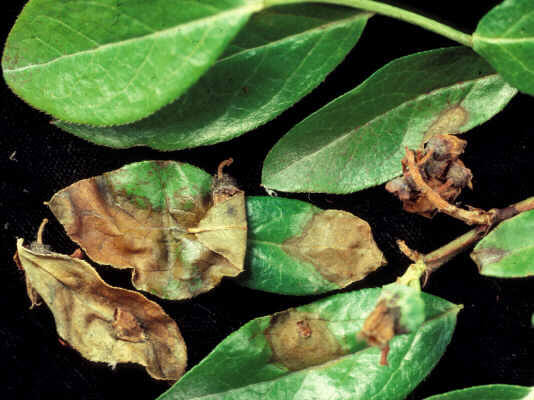
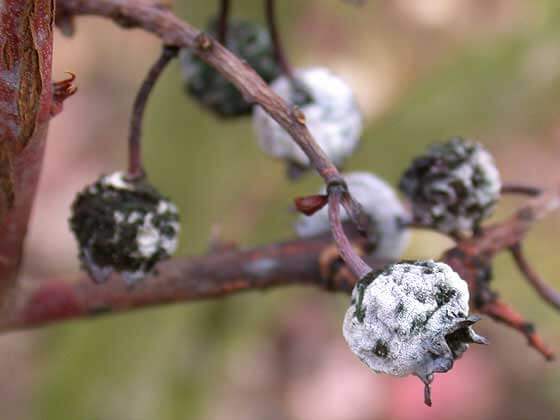
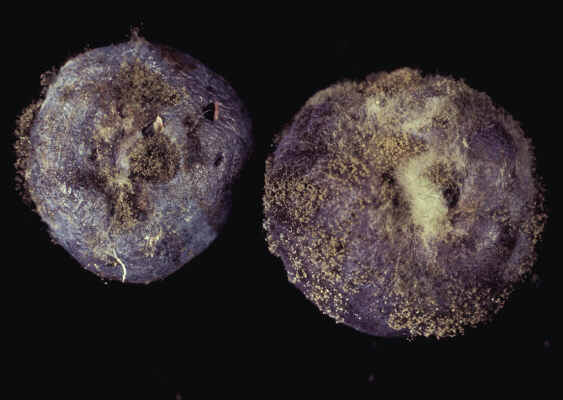
In blueberries, Botrytis cinerea causes the disease known as gray rot, which can result in significant losses in fruit production and quality. Symptoms include watery Taches on fruits and a characteristic gray mold coating on the surface of affected areas.
- Appearance of brown and watery Taches on the fruits.
- Decomposition of the affected tissues.
- Presence of gray, spongy mold on the surface of the fruits.
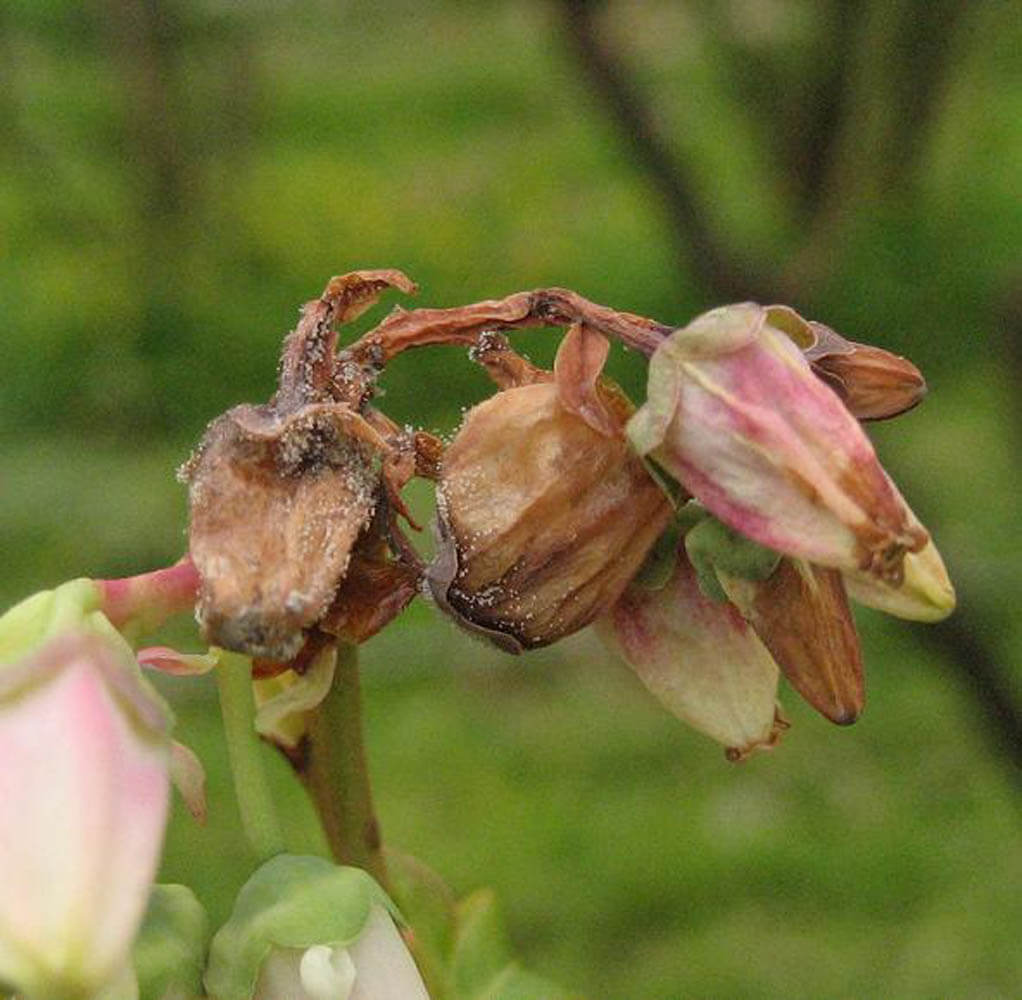
- Withering and falling of flowers.
- Discoloration of the leaves near the affected areas.
- Regressive death of young branches.
- Loss of firmness and flavor in infected fruits.
- Necrosis of floral and fruit tissues.


TEMPERATURE AND HUMIDITY
18°C - 25°C
90% - 100%

HOW IS IT SPREAD?
Wind, irrigation water, contaminated cultivation tools, direct contact between plants, insect vectors, infected plant remains

HOW TO REMOVE IT?
Home remedies
There are no home treatments
Chemical treatments
• CIPRODINIL 37.5% + FLUDIOXONIL 25% [WG] P/P
• EUGENOL 3.3% + GERANIOL 6.6% + THYMOL 6.6% [CS] P/V
• PHENHEXAMIDE 50% [SC] P/V
• PHENHEXAMIDE 50% [WG] P/P
• PHENPIRAZAMINE 50% [WG] P/P
• FLUOPYRAM 25% + TRIFLOXISTROBIN 25% [SC] P/V
• LAMINARIN 4.5% [SL] P/S
• COPPER OXYCHLORIDE 35% (exp. in Cu) [WG] P/P
• PIRACLOSTROBIN 6.7% + BOSCALIDE 26.7% (I) [WG] P/P
Authorized treatments in organic farming
• EUGENOL 3.3% + GERANIOL 6.6% + THYMOL 6.6% [CS] P/V
• LAMINARIN 4.5% [SL] P/S
• COPPER OXYCHLORIDE 35% (exp. in Cu) [WG] P/P
Insect allies
PREDATORY MITES
LADYBUGS
LACEWINGS
PARASITIC WASPS
HOVERFLIES OR PARASITIC FLIES
PREDATORY BUGS
There are no natural allies
Mycodiplosis oidii (predatory mosquito)
EFFECTIVE PRODUCTS TO ELIMINATE THIS DISEASE
Sponsored link
Sponsored link


Sponsored link
Sponsored link
Sponsored link


Sponsored link
Sponsored link
Effective against all types of fungi

Sponsored link


Sponsored link
Sponsored link

Sponsored link


Sponsored link
- Maintain adequate ventilation in crops to reduce humidity.
- Avoid excessive watering and waterlogging of the soil.
- Carry out training and maintenance pruning to improve air circulation.
- Remove and destroy infected plant remains to reduce the source of inoculum.
- Apply specific fungicides preventively and at key moments of plant development.
- Use anti-frost nets to protect plants in critical periods.
- Implement crop rotations to reduce disease pressure.
- Monitor the weather and adjust management practices to reduce conditions favorable to the fungus.
- Promote the use of blueberry varieties resistant to Botrytis.
- Regularly monitor plants to detect symptoms early and act quickly.
Recommendations

Enjoy idMicrobe TOTALLY FREE, with no trial periods.


