top of page
Recognize and eliminate pests and diseases from your plants with idMicrobe

The Guide to Caring for Your Plants

Learn to recognize pests and how to combat them

Guide to plant diseases and professional and home treatments - IdMicrobe

The Guide to Caring for Your Plants

Learn to recognize pests and how to combat them

Orugas o gusanos

Cacoecia, capua, or carnation worm: what it is, how it originates, and how to eliminate it effectively.

Cacoecia, Capua, Or Carnation Worm

Cacoecimorpha Pronubana

Pathogen:

Insect

Type:

Risk to the plant:

HIGH
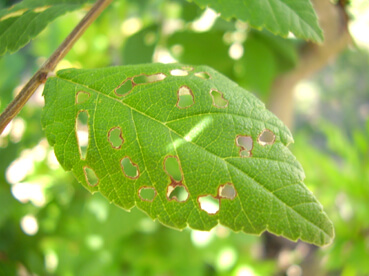
Cacoecia, capua, or carnation worm: what it is, how it originates, and how to eliminate it effectively.
Cacoecia, capua, or carnation worm in pear trees | idMicrobe

Don’t know which pest or disease your plant has?

Correctly identifying the problem is key to saving the plant.


A plant expert analyzes the photos and sends you a clear diagnosis within 24 hours, explaining the causes and the most effective solutions step by step.

1709890758744.png

DESCRIPTION

WHO CAUSES IT?

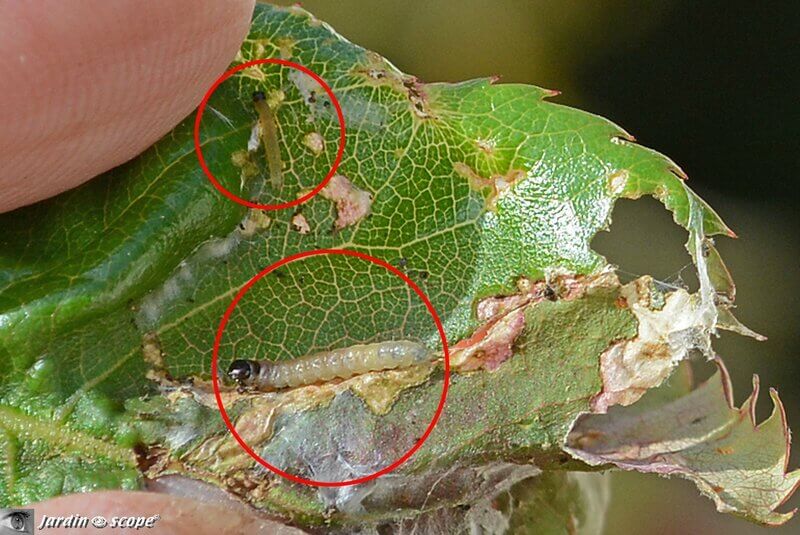
Cacoecimorpha pronubana, commonly known as the cacoecia or carnation worm, is a lepidopteran belonging to the Tortricidae family. Adults are small brown moths with forewings characterized by dark transverse bands. Females lay eggs in groups on the surface of pear leaves. The eggs hatch into larvae that feed on leaf tissue, rolling up the leaves to create a protective shelter. The larvae go through five instars before reaching maturity, at which point they descend to the ground or seek refuge in the bark to pupate. The pupal phase lasts between two and four weeks, depending on environmental conditions, after which the adults emerge to start a new cycle. In temperate climate regions, Cacoecimorpha pronubana may have two to three generations per year, while in warmer climates, generations may increase to four.

SYMPTOMS

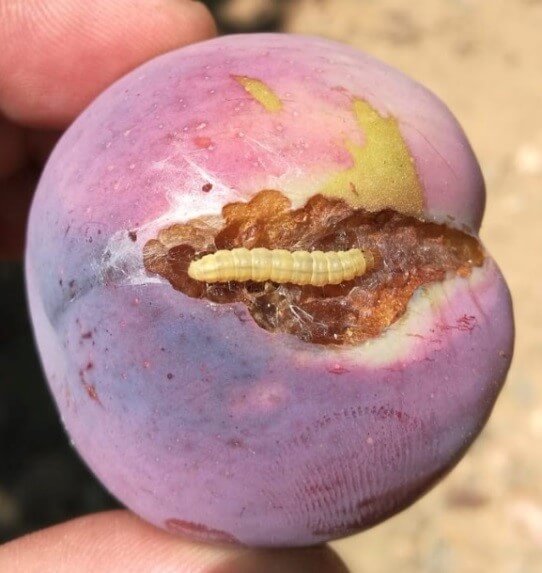
The infestation of Cacoecimorpha pronubana in the pear tree causes various damages that affect both the growth of the tree and the quality of the fruits. The larvae feed on foliage and young shoots, which can cause deformed leaves and stunted growth. In addition, the fruits can be attacked, presenting scars and dents that reduce their commercial value and storage capacity.

- Rolled and damaged leaves.
- Presence of larvae and excrement on the leaves.
- Deformations and delayed growth in new shoots.
- Scars and dents on the fruits.
- Premature fall of damaged fruits.
- Lower quality and size of the fruits.
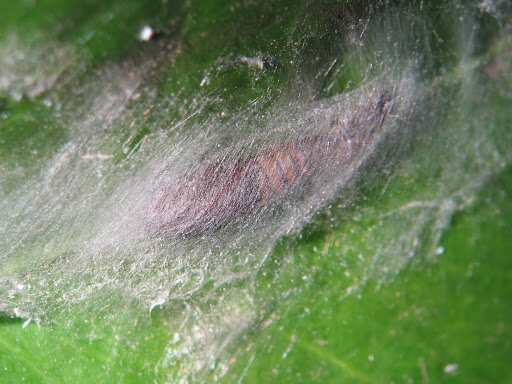
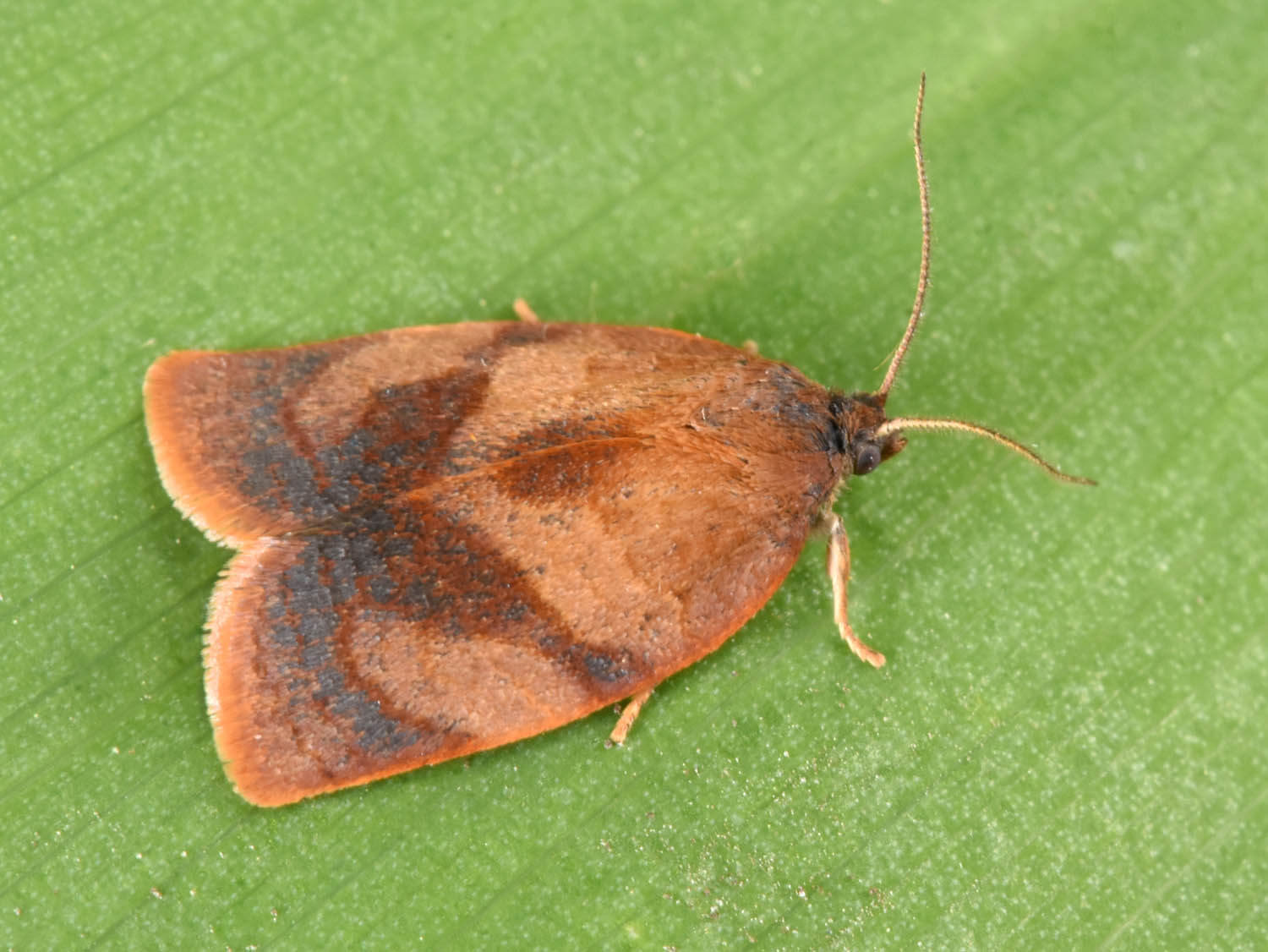
Cacoecia, capua, or carnation worm: Symptoms and damage in pear trees
Damage caused by Cacoecia, capua, or carnation bollworm in pear trees
Cacoecia, capua, or carnation worm in pear trees: How to recognize and treat it effectively

Don’t know which pest or disease your plant has?

A plant expert reviews your photos and sends you a clear diagnosis within 24 hours, with step-by-step solutions.

1709890758650.png

TEMPERATURE AND HUMIDITY

15°C - 30°C

50% - 80%

1709890758697.png

HOW IS IT SPREAD?

Wind, Mobility of adults, Infected plant material, Transport of infested fruits

1709890758673.png

HOW TO REMOVE IT?

Home remedies

BONE MEAL OR GROUND FISH SHELLS

RUSTY NAILS OR IRON SHAVINGS

BANANA PEELS

EPSOM SALTS (MAGNESIUM SULFATE)

SOLUTION WITH HOUSEHOLD BORAX

GROUND OR BOILED EGGSHELLS

COMPOST WITH ONION OR GARLIC SCRAPS

VEGETABLE COOKING WATER

WOOD ASH

WATER WITH VINEGAR OR LEMON (VERY DILUTED)

GARLIC INFUSION

USED COFFEE OR TEA

BANANA AND EGGSHELL INFUSION

POTATO OR LEGUME COOKING WATER

COMPOST FROM FRESH GREEN LEAVES

COMPOST OR WELL-AGED MANURE

DILUTED MILK (1:10)

BANANA TEA

LEAF COMPOST

NETTLE SLURRY

POTASSIUM SOAP AND NEEM OIL SOLUTION

POTASSIUM SOAP SOLUTION + NEEM OIL + DIATOMACEOUS EARTH

BAKING SODA AND NEUTRAL SOAP SOLUTION

GARLIC INFUSION WITH NEUTRAL SOAP

CHROMATIC OR ADHESIVE TRAPS

DILUTED MILK

HORSETAIL INFUSION

TRUNK WHITEWASHING

DIATOMACEOUS EARTH

WOOD ASH

NETTLE SLURRY

CUT THE AFFECTED BRANCHES AND APPLY CINNAMON

GARLIC AND CINNAMON INFUSION

INFUSION OF WORMWOOD, CHILI OR CHILLI

CLEAN THE AFFECTED AREA AND APPLY ASH PASTE WITH GARLIC OR CINNAMON

GARLIC AND MINT INFUSION

LIGHT TRAPS

APPLY CINNAMON POWDER

PITFALL TRAPS

CRUSHED EGG SHELLS

CLEAN AND SEAL THE WOUND WITH CLAY, CINNAMON AND GARLIC PASTE

GARLIC INFUSION

MATURE COMPOST

TRAPS WITH VINEGAR AND SOAP

SEAL HOLES WITH ASH PASTE AND CRUSHED GARLIC

VINEGAR AND BAKING SODA SOLUTION

ANT TRAP

TAPE TRAP

PHEROMONE TRAP

ALCOHOL TRAPS

FUNNEL TRAP

There are no home treatments

Chemical treatments

• AZADIRACTIN 1% (AS AZADIRACTIN A) [EC] P/V
• Cacoecimorpha pronubana (Pheromone)
• DELTAMETHRIN 1.57% [SC] P/V
• DELTAMETHRIN 2.5% [EC] P/V
• ESFENVALERATE 2.5% [EC] P/V
• LAMBDA CYHALOTHRIN 1.5% [CS] P/V
• LAMBDA CYHALOTHRIN 10% [CS] P/V
• LAMBDA CYHALOTHRIN 2.5% [WG] P/P
• LAMBDA CYHALOTHRIN 5% [EG] P/P

Authorized treatments in organic farming

• AZADIRACTIN 1% (AS AZADIRACTIN A) [EC] P/V
• Cacoecimorpha pronubana (Pheromone)
• LAMBDA CYHALOTHRIN 1.5% [CS] P/V
• LAMBDA CYHALOTHRIN 10% [CS] P/V
• LAMBDA CYHALOTHRIN 2.5% [WG] P/P
• LAMBDA CYHALOTHRIN 5% [EG] P/P

Insect allies

PREDATORY MITES

LADYBUGS

LACEWINGS

PARASITIC WASPS

HOVERFLIES OR PARASITIC FLIES

PREDATORY BUGS

There are no natural allies

Mycodiplosis oidii (predatory mosquito)

EFFECTIVE PRODUCTS TO ELIMINATE THIS DISEASE

Sponsored link

Your product

Your product

Your products closer to your customers

Sponsored link

Sponsored link

Sponsored link

Insecticidal soap

Insecticidal soap

Home treatment. Eco-friendly

Sponsored link

Bacillus Thuringiensis BT Organic Worm & Caterpillar Control

Bacillus Thuringiensis BT Organic Worm & Caterpillar Control

Eco-friendly. Respectful of animals, the environment, and people.

Sponsored link

Fruit fly traps

Fruit fly traps

Non-Toxic. Reusable. For indoor and outside

Sponsored link

Treatment against snails and slugs

Treatment against snails and slugs

Granulated bait, attractive, safe and fast.

Sponsored link

Sponsored link

Sponsored link

Your product

Your product

Your products closer to your customers

Sponsored link

Sponsored link

Sponsored link

Natural Pesticide, Fungicide, Miticide, Insecticide, Spider Mites, Powdery Mildew, Botrytis and Mold

Natural Pesticide, Fungicide, Miticide, Insecticide, Spider Mites, Powdery Mildew, Botrytis and Mold

100% ecological fungicide

Sponsored link

Nematodes - Biological Pest Control for Fungus Gnats, Thrips, & Whiteflies

Nematodes - Biological Pest Control for Fungus Gnats, Thrips, & Whiteflies

Biological Pest Control for Fungus Gnats, Thrips, & Whiteflies

Sponsored link

Light traps for insects

Light traps for insects

Solar trap for outside

Sponsored link

Sponsored link

Effective against all types of fungi

Sponsored link

Anti-ant adhesive tape

Anti-ant adhesive tape

Tree protection. Easy to use.

Sponsored link

Your product

Your product

Your products closer to your customers

Sponsored link

Sponsored link

Adhesive traps for insects

Adhesive traps for insects

For orchards, terraces and flower pots.

Sponsored link

Insecticide, fungicide, acaricide and nematicide spraying

Insecticide, fungicide, acaricide and nematicide spraying

100% organic. For indoor and outdoor use

Sponsored link

Lime for whitewashing

Lime for whitewashing

Insect Barrier/Repellent

Sponsored link

Fungus Gnat Killer & Bug Spray

Fungus Gnat Killer & Bug Spray

For outdoor and indoor use. Pet friendly

Sponsored link

Sponsored link

Sponsored link

Mature compost. Worm castings

Mature compost. Worm castings

100% Natural. Soil Restorative

Sponsored link

Your product

Your product

Your products closer to your customers

Sponsored link

Sponsored link

100% organic diatomaceous earth

100% organic diatomaceous earth

Natural insecticide against insects

Sponsored link

Beetle traps

Beetle traps

Ideal for ornamentals, flowers and shrubs.

Sponsored link

Trap for Tuta absoluta

Trap for Tuta absoluta

Attracts and traps tomato moths

Sponsored link

Snail and slug traps

Snail and slug traps

Ideal for orchards, gardens and pots.

Sponsored link

Copper-based fungicide - Curative and preventive

Copper-based fungicide - Curative and preventive

Effective against all types of fungi

Sponsored link

- Regularly monitor trees for the presence of eggs, larvae or initial damage.
- Use pheromone traps to capture adults and reduce the pest population.
- Implement biological control programs through the introduction of specific parasitoids and natural predators of Cacoecimorpha pronubana.
- Apply insecticide treatments at critical times, especially during the first larval stages.
- Promote cultural practices such as pruning and elimination of affected parts to reduce the habitat of the larvae.
- Practice integrated pest management, combining biological, cultural and chemical methods to minimize the use of insecticides.
- Keep the garden clean and free of weeds that could serve as a refuge for the larvae.
- Promote biodiversity in the garden to increase the presence of natural enemies of the pest.
- Apply preventive treatments at times of highest risk of infestation, based on monitoring and environmental conditions.

Recommendations

Recognize and eliminate pests and diseases from your plants with idMicrobe

Enjoy idMicrobe TOTALLY FREE, with no trial periods.

button_google_play_EN.png
boton_mobile_Version_EN.jpg
bottom of page