

Ácaros
Mites
Calepitrimerus Vitis (Epitrimerus / Phyllocoptes Vitis)
Pathogen:
Insect
Type:
Risk to the plant:
HIGH


DESCRIPTION
WHO CAUSES IT?
Calepitrimerus vitis, also known as the vine mite, is a microscopic mite that belongs to the Eriophyidae family. This pathogen is an arthropod that is found mainly in vineyards, where its activity is closely linked to the vegetative cycle of the plant. Adults are elongated and extremely small, measuring just about 0.15 mm in length, which makes them practically invisible to the naked eye. They develop mainly in the buds of the vine during the winter, where they remain dormant until climatic conditions are favorable. During spring, they begin to emerge and feed on the young tissues of the vine, affecting leaves, buds and sometimes even the forming clusters. This feeding process, in addition to causing direct damage, also causes deformations and alterations in the plant. Its development cycle includes several stages, from egg, larva, protonymph, deutonymph and adult, with one generation approximately every month in optimal conditions.
SYMPTOMS
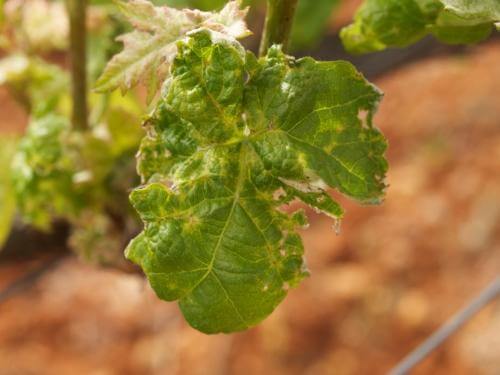
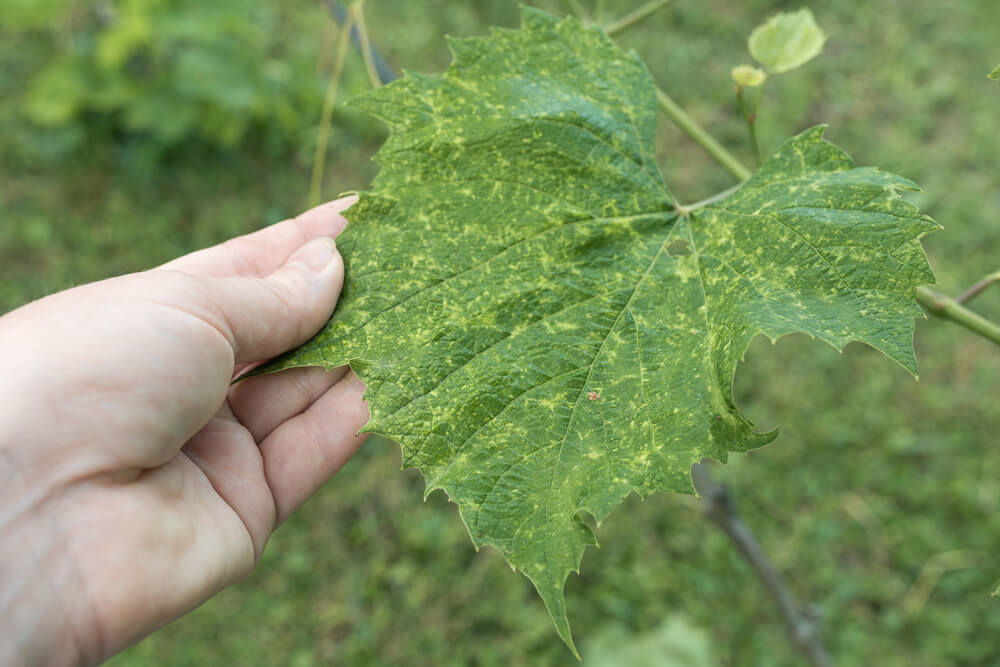
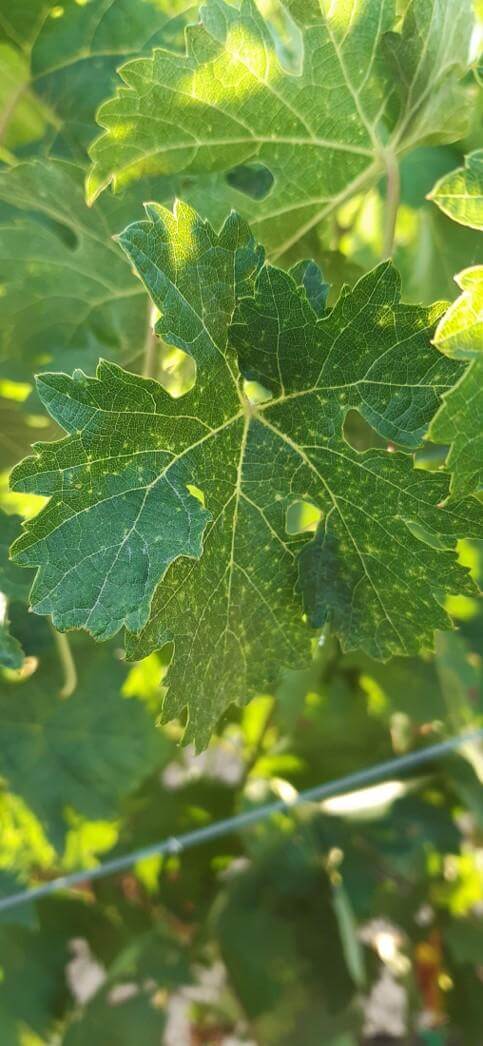
The disease caused by Calepitrimerus vitis on the vine is known to cause weakened growth and malformations in the leaves and shoots. The damage caused by this mite can seriously affect the productive capacity of the plant, especially if populations are high and control measures are not taken in time. The mite feeds on young tissues, which interferes with the normal development of plant structures. The affected leaves have dents, chlorotic Taches and curl upwards. In more severe cases, grape production may be reduced due to interference with photosynthesis and general weakening of the plant.
- Leaves with dents and yellowish Taches.
- Rolling of the leaves upwards.
- Weak and malformed shoots.
- Loss of vigor in the plant.
- Reduction in grape production.
- Premature wear of the affected buds.


TEMPERATURE AND HUMIDITY
18-28°C
50-80%

HOW IS IT SPREAD?
Wind, Contaminated pruning tools, Contact between plants, Infected plant material

HOW TO REMOVE IT?
Home remedies
There are no home treatments
Chemical treatments
• RAPE OIL 77.7% [EC] P/V
• ORANGE OIL 60g/L [ME] P/S
• PARAFFIN OIL (CAS [64742-46-7]) 79% [EC] P/V
• PARAFFIN OIL (CAS [64742-46-7]) 80% [EC] P/V
• PARAFFIN OIL (CAS [8042-47-5]) 54.6% [EW] P/V
• PARAFFIN OIL (CAS [8042-47-5]) 79% [EC] P/V
• PARAFFIN OIL (CAS [97862-82-3]) 40% [EW] P/V
• Paraffin oil 65.4% [EW] P/V
• SULFUR 70% [SC] P/V
• SULFUR 72% [SC] P/V
• SULFUR 80% [DP] P/P
• SULFUR 80% [SC] P/V
• SULFUR 80% [WG] P/P
• SULFUR 80% [WP] P/P
• SULFUR 90% [DP] P/P
• SULFUR 98.5% [DP] P/P
• SULFUR 99% [DP] P/P
• PHENPIROXIMATE 6.24% + HEXITIAZOX 3.12% [SC] P/V
• HEXITIAZOX 10% [WP] P/P
• HEXITIAZOX 25.13% [SC] P/V
• HEXITIAZOX 25.87% [SC] P/V
• HEXITIAZOX 25% [SC] P/V
• LAMBDA CYHALOTHRIN 10% [CS] P/V
• MALTODEXTRIN 47.6% [SL] P/V
• POTASSIUM SALTS OF FATTY ACIDS C14-C20 48% [EW] P/V
• SPIROTETRAMAT 10% [SC] P/V
• TAU-FLUVALINATE 24% [EW] P/V
Authorized treatments in organic farming
• RAPE OIL 77.7% [EC] P/V
• ORANGE OIL 60g/L [ME] P/S
• PARAFFIN OIL (CAS [64742-46-7]) 79% [EC] P/V
• PARAFFIN OIL (CAS [64742-46-7]) 80% [EC] P/V
• PARAFFIN OIL (CAS [8042-47-5]) 54.6% [EW] P/V
• PARAFFIN OIL (CAS [8042-47-5]) 79% [EC] P/V
• PARAFFIN OIL (CAS [97862-82-3]) 40% [EW] P/V
• Paraffin oil 65.4% [EW] P/V
• SULFUR 70% [SC] P/V
• SULFUR 72% [SC] P/V
• SULFUR 80% [DP] P/P
• SULFUR 80% [SC] P/V
• SULFUR 80% [WG] P/P
• SULFUR 80% [WP] P/P
• SULFUR 90% [DP] P/P
• SULFUR 98.5% [DP] P/P
• SULFUR 99% [DP] P/P
• LAMBDA CYHALOTHRIN 10% [CS] P/V
• MALTODEXTRIN 47.6% [SL] P/V
• POTASSIUM SALTS OF FATTY ACIDS C14-C20 48% [EW] P/V
Insect allies
PREDATORY MITES
LADYBUGS
LACEWINGS
PARASITIC WASPS
HOVERFLIES OR PARASITIC FLIES
PREDATORY BUGS
There are no natural allies
Mycodiplosis oidii (predatory mosquito)
EFFECTIVE PRODUCTS TO ELIMINATE THIS DISEASE
Sponsored link
Sponsored link
Sponsored link


Sponsored link
Sponsored link
Sponsored link
Sponsored link


Sponsored link
Sponsored link
Effective against all types of fungi

Sponsored link
Sponsored link


Sponsored link
Sponsored link

Sponsored link
Sponsored link


Sponsored link
- Carry out periodic monitoring of the buds during the winter to detect the early presence of the mite.
- Keep the plant well nourished and avoid water stress so that it is more resistant to pests.
- Prune regularly to eliminate affected parts of the plant, preventing the mite from spreading to new areas.
- Apply horticultural oils during the winter rest of the vine to reduce the population of mites in the buds.
- Use specific acaricidal products when a high mite population is detected, always following the manufacturer's instructions to ensure correct application.
- Alternate different types of acaricides to avoid the development of resistance in mite populations.
- Promote biological control by introducing natural predators of mites in the vineyard.
Recommendations

Enjoy idMicrobe TOTALLY FREE, with no trial periods.


