


Phytophthora
Crown rot: what it is, how it occurs, and how to eliminate it effectively
Crown Rot
Phytophthora Cactorum / Fusarium Oxysporum F. Sp. Fragariae / Rhizoctonia Sp.
Pathogen:
Oomycete
Type:
Risk to the plant:
CRITICAL

DESCRIPTION
WHO CAUSES IT?
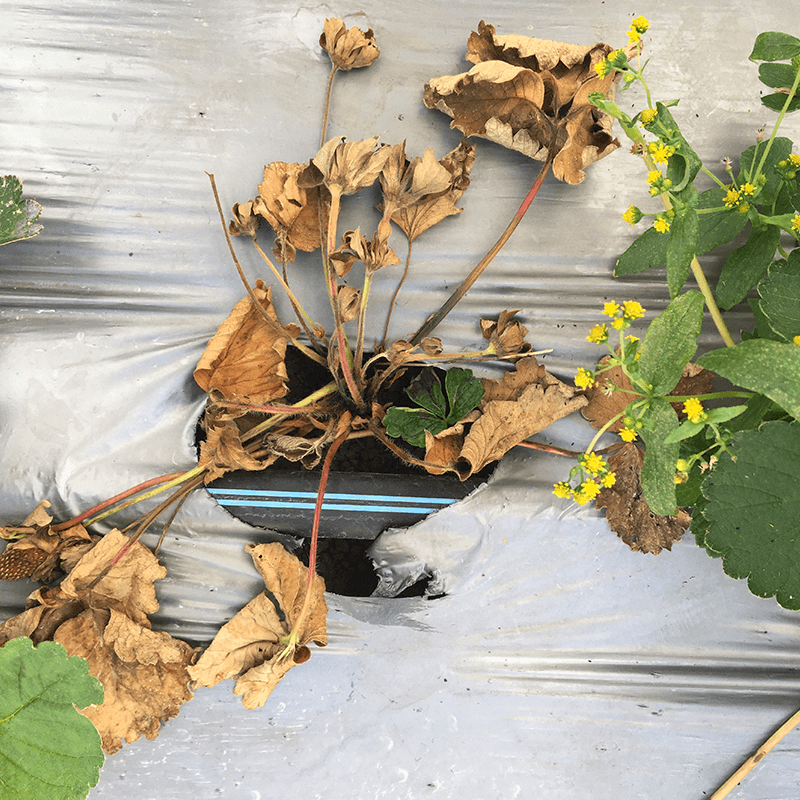
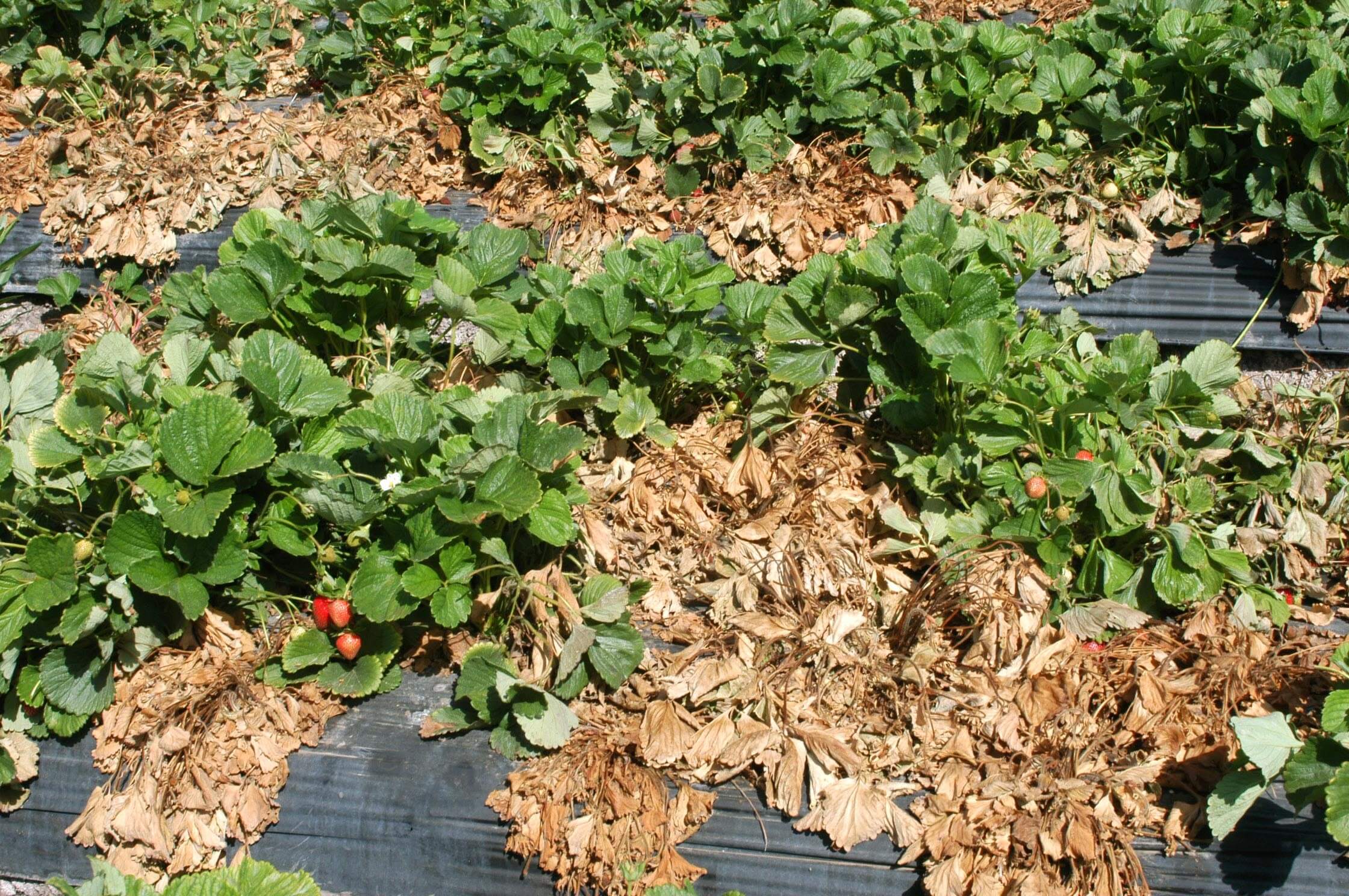
Crown rot, caused by fungi such as Fusarium, Phytophthora and Rhizoctonia, is a disease that affects strawberry plants. These fungi are soil pathogens that can survive for long periods in adverse conditions. They have the ability to infect the roots and crown of the plant, leading to tissue decomposition and, consequently, weakening and death of the plant.
SYMPTOMS
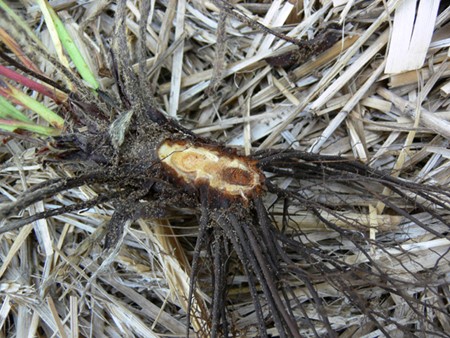
The disease manifests itself with the appearance of symptoms such as rotting of the roots and crown of the plant. The roots may become brown and soft, while the crown may show necrotic lesions and rot. This leads to widespread wilting of the plant, as well as a decrease in fruit production. In advanced stages, the plant may die due to collapse of the root system.


TEMPERATURE AND HUMIDITY
15°C - 30°C
70% - 90%

HOW IS IT SPREAD?
Contaminated soil, irrigation water, infected plant material, cultivation tools, biotic vectors (such as insects), plant residues.

HOW TO REMOVE IT?
Home remedies
There are no home treatments
Chemical treatments
• CAPTAN 47.5% [SC] P/V
• FOSETIL-AL 80% [WG] P/P
• POTASSIUM PHOSPHONATES 50.4% (exp. as phosphorous acid) [SL] P/V
• POTASSIUM PHOSPHONATES 51% (Exp. as phosphorous acid) [SL] P/V
• METALAXIL 25% [WP] P/P
• COPPER OXYCHLORIDE 30% (EXPR. IN CU) [WP] P/P
• COPPER OXYCHLORIDE 35% (EXPR. IN CU) [WG] P/P
• COPPER OXYCHLORIDE 50% (EXPR. IN CU) [WG] P/P
• COPPER OXYCHLORIDE 52% (EXPR. IN CU) [SC] P/V
• CUPROCALCIC SULFATE 12.4% (EXPR. IN CU) [SC] P/V
• CUPROCALCIC SULFATE 20% (EXPR. IN CU) [WG] P/P
Authorized treatments in organic farming
• COPPER OXYCHLORIDE 30% (EXPR. IN CU) [WP] P/P
• COPPER OXYCHLORIDE 35% (EXPR. IN CU) [WG] P/P
• COPPER OXYCHLORIDE 50% (EXPR. IN CU) [WG] P/P
• COPPER OXYCHLORIDE 52% (EXPR. IN CU) [SC] P/V
• CUPROCALCIC SULFATE 12.4% (EXPR. IN CU) [SC] P/V
• CUPROCALCIC SULFATE 20% (EXPR. IN CU) [WG] P/P
Insect allies
PREDATORY MITES
LADYBUGS
LACEWINGS
PARASITIC WASPS
HOVERFLIES OR PARASITIC FLIES
PREDATORY BUGS
There are no natural allies
Mycodiplosis oidii (predatory mosquito)
EFFECTIVE PRODUCTS TO ELIMINATE THIS DISEASE

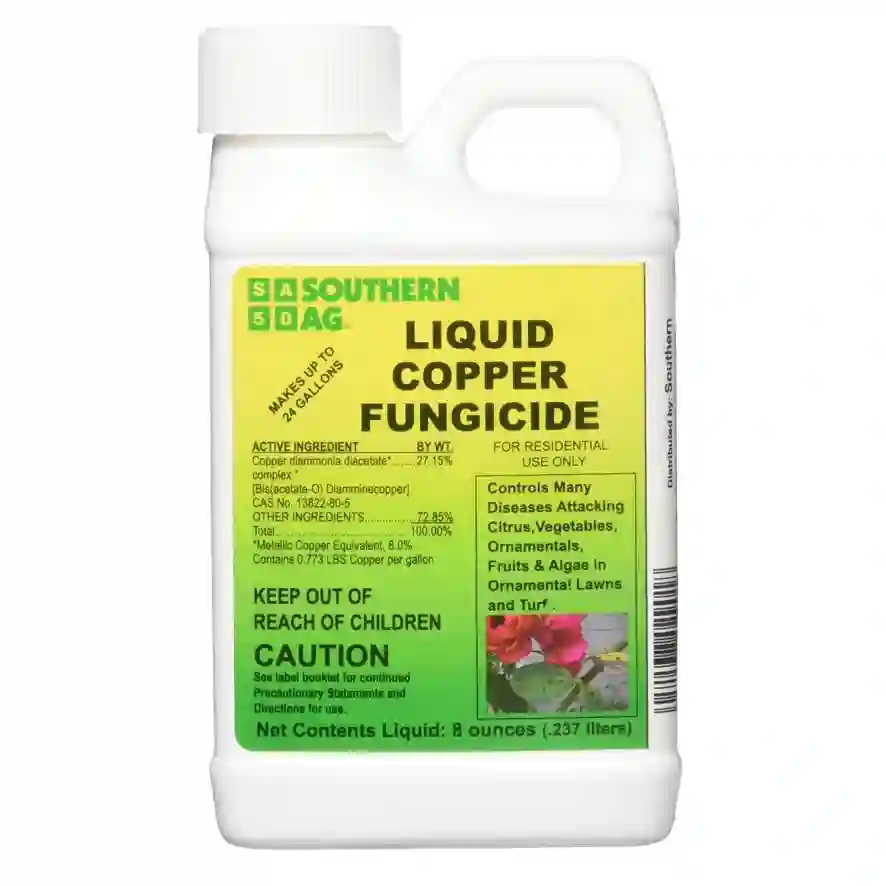


To prevent crown rot in strawberry plantations, it is crucial to practice proper soil management, ensuring good drainage and avoiding waterlogging. Additionally, crop rotation is recommended to reduce the accumulation of pathogens in the soil and the use of healthy, disease-free plant material. It is also important to avoid water stress and maintain an adequate nutritional balance in plants.
To control the disease once it has appeared, specific fungicide treatments applied to the soil or plants can be used, following the recommendations for use. Furthermore, it is essential to eliminate and destroy affected plants to prevent the spread of pathogenic fungi in the plantation.
Recommendations



Explore more tools
Services
Contact
Legal
©2023 por ZeriMar Laboratoire. Todos os direitos reservados.