

Minadores
Minelayer
Phyllocnistis Citrella
Pathogen:
Insect
Type:
Risk to the plant:
INTERMEDIATE

DESCRIPTION
WHO CAUSES IT?
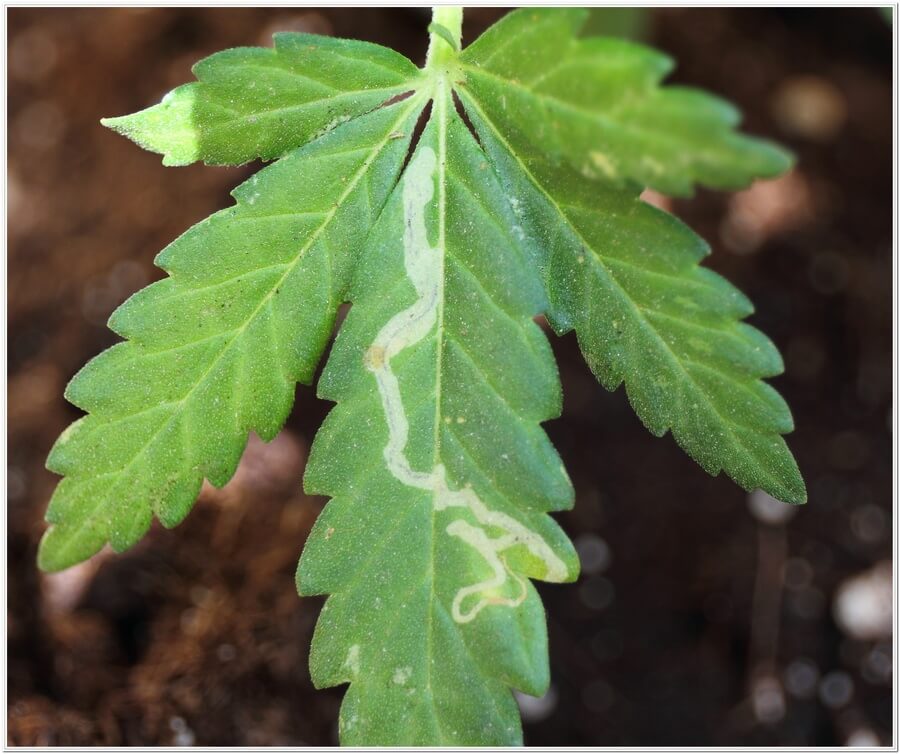
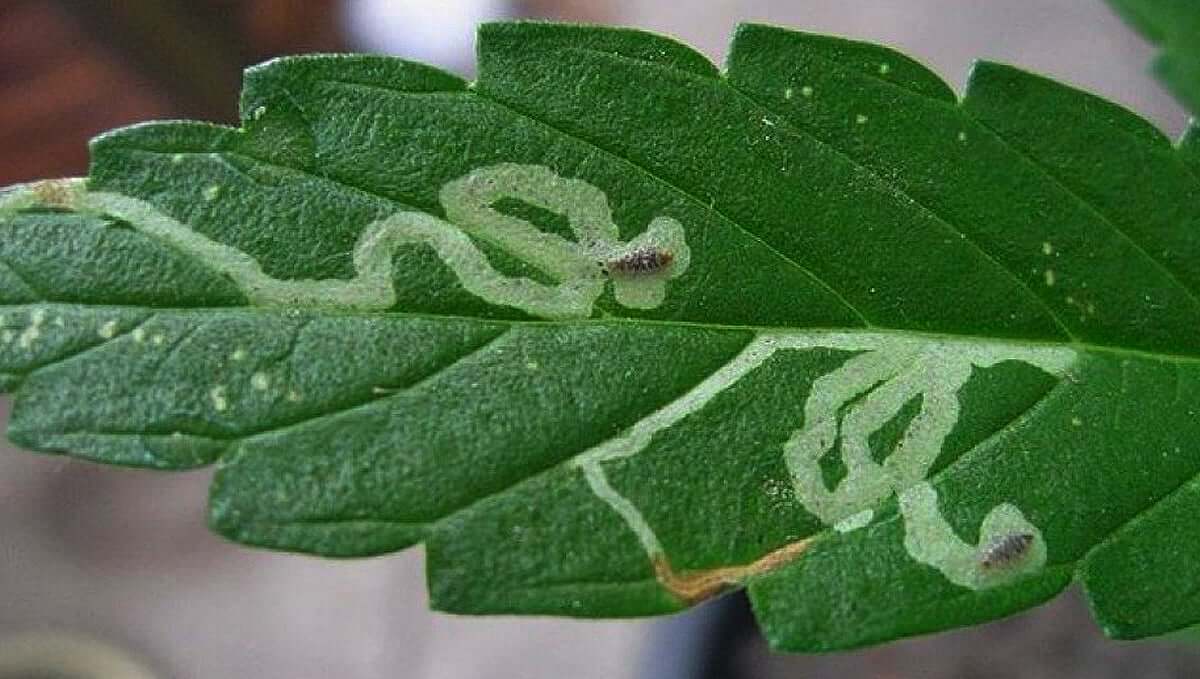
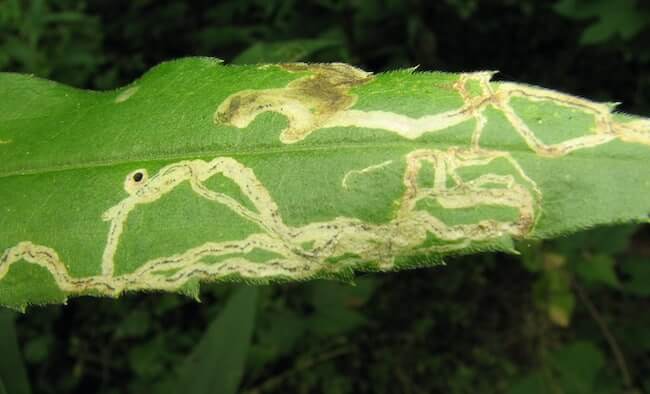
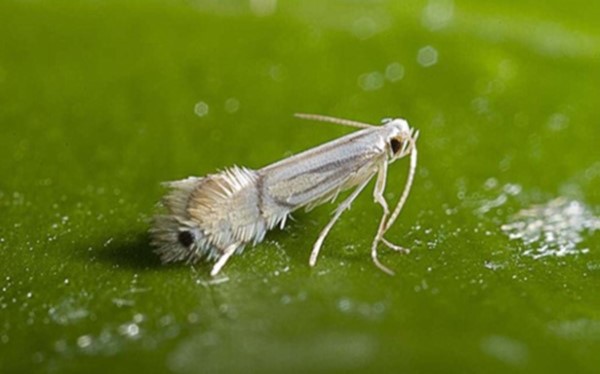
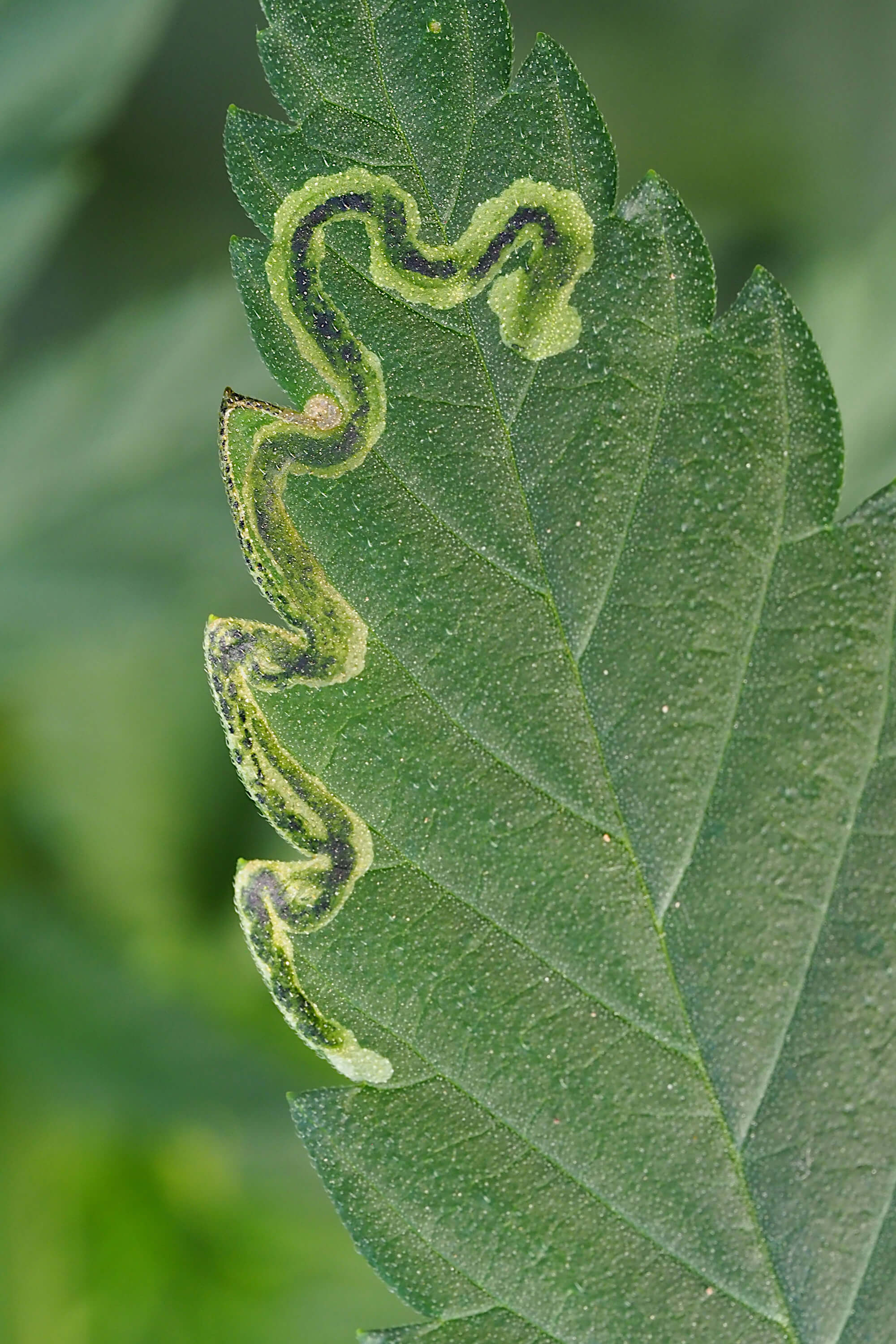
The leaf miner is a common pest on cannabis plants, caused by the larvae of various insects, such as flies, that feed on the internal tissues of the leaves. These larvae, when feeding, create galleries or tunnels inside the leaves, which can weaken the plant and make it more susceptible to other diseases and pests.
SYMPTOMS
Symptoms of leafminer attack on cannabis include the presence of small galleries or tunnels visible on the inside of the leaves, which resemble sinuous or serpentine lines. Additionally, discolored, dry or necrotic areas may be observed around the galleries, as well as a decrease in overall plant health and vigor.

TEMPERATURE AND HUMIDITY
20°C - 28°C
50% - 70%

HOW IS IT SPREAD?
Active flight, transport of plant material, previous infestation in the soil.

HOW TO REMOVE IT?
Home remedies
There are no home treatments
Chemical treatments
• AZADIRACTIN 1% (AS AZADIRACTIN A) [EC] P/V
• Azadirachtin 2.6% (AS AZADIRACTIN A) [EC] P/V
• DELTAMETHRIN 2.5% [EC] P/V
• DELTAMETHRIN 2.5% [EW] P/V
• LAMBDA CYHALOTHRIN 1.5% [CS] P/V
• LAMBDA CYHALOTHRIN 10% [CS] P/V
• LAMBDA CYHALOTHRIN 2.5% [WG] P/P
Authorized treatments in organic farming
• AZADIRACTIN 1% (AS AZADIRACTIN A) [EC] P/V
• Azadirachtin 2.6% (AS AZADIRACTIN A) [EC] P/V
• LAMBDA CYHALOTHRIN 1.5% [CS] P/V
• LAMBDA CYHALOTHRIN 10% [CS] P/V
• LAMBDA CYHALOTHRIN 2.5% [WG] P/P
Insect allies
PREDATORY MITES
LADYBUGS
LACEWINGS
PARASITIC WASPS
HOVERFLIES OR PARASITIC FLIES
PREDATORY BUGS
There are no natural allies
Mycodiplosis oidii (predatory mosquito)
EFFECTIVE PRODUCTS TO ELIMINATE THIS DISEASE
Sponsored link

Sponsored link


Sponsored link
Sponsored link
Sponsored link


Sponsored link
Sponsored link
Effective against all types of fungi

Sponsored link


Sponsored link
Sponsored link

Sponsored link


Sponsored link
To prevent and control the leafminer in cannabis crops, it is important to implement integrated pest management measures. This includes regularly inspecting plants for early signs of infestation, manually removing larvae and affected leaves, using sticky traps to monitor and capture adults, encouraging plant diversity to attract natural enemies of the leafminer. , and the selective application of insecticides when necessary.
Recommendations

Enjoy idMicrobe TOTALLY FREE, with no trial periods.


