

Moscas de la fruta
Fruit Fly
Drosophila Suzukii
Pathogen:
Insect
Type:
Risk to the plant:
CRITICAL

DESCRIPTION
WHO CAUSES IT?
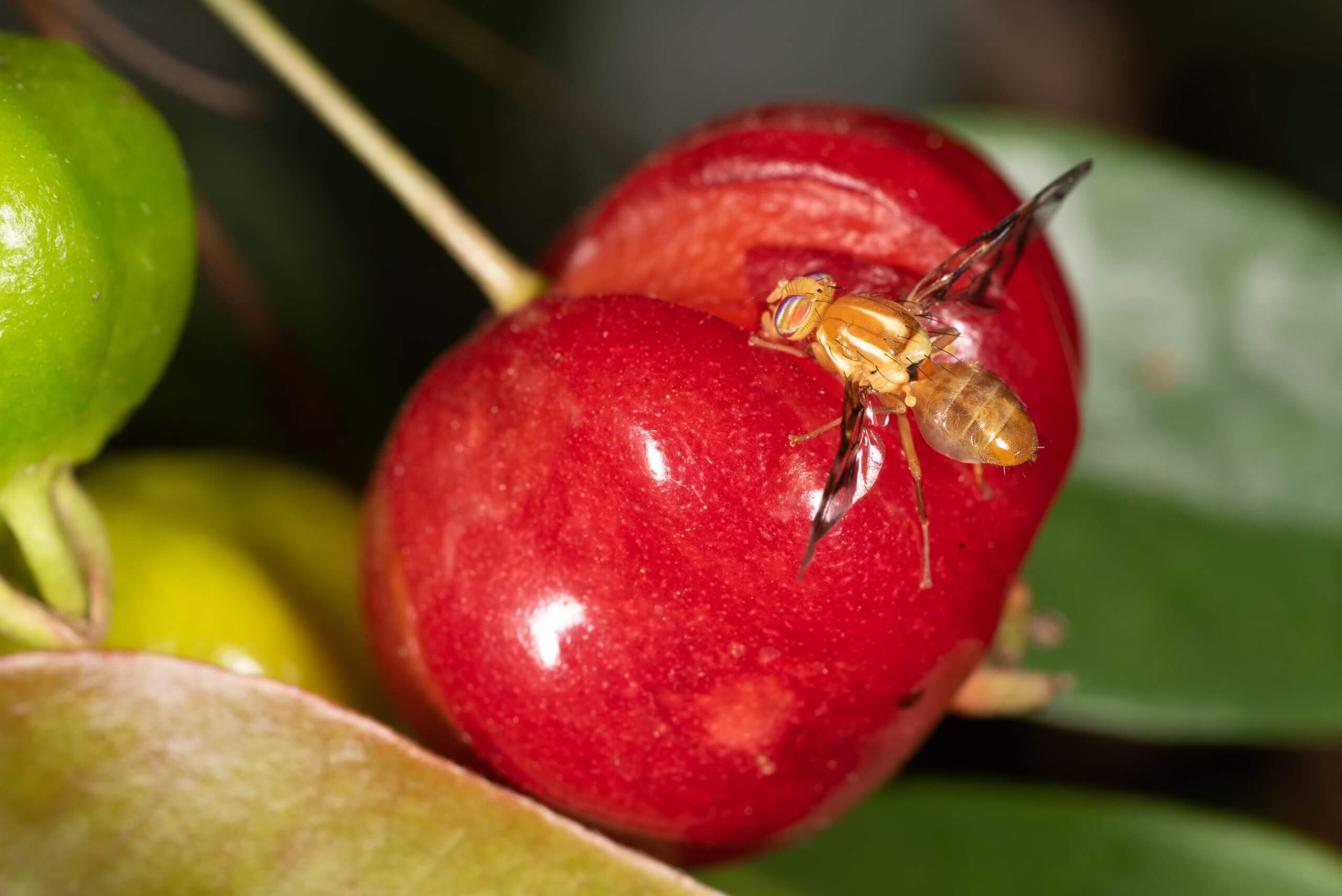
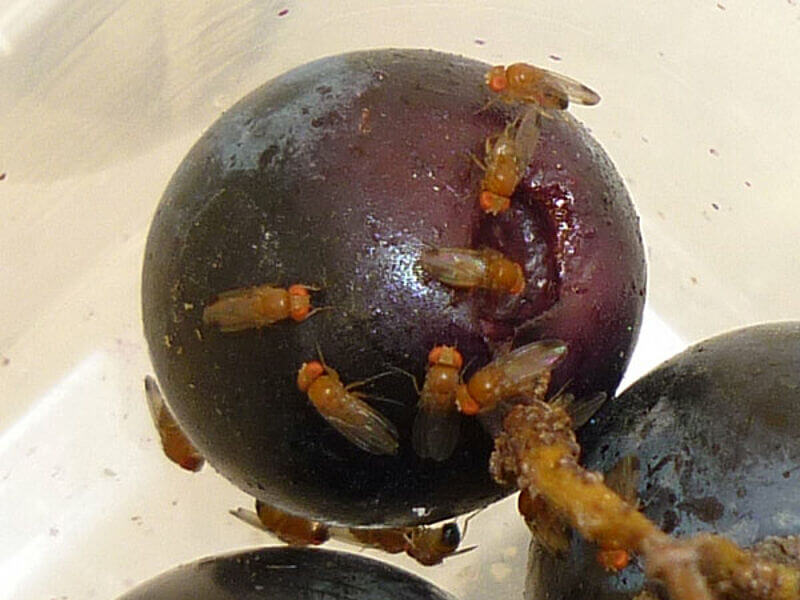
Drosophila suzukii, commonly known as the fruit fly, is a small fly in the family Drosophilidae. Unlike other Drosophila species, which generally attack overripe or decaying fruits, Drosophila suzukii has the ability to infest healthy, ripe fruits. Adult females lay their eggs on the surface of fruits using a toothed ovipositor that pierces the skin of the fruit. Once the eggs hatch, the larvae feed on the inside of the fruit, causing considerable damage. These larvae go through several stages of growth before turning into pupae. Pupae can be found both in the fruit and in the soil. Finally, adult flies emerge from the pupae and restart the cycle. Drosophila suzukii can complete its development in as little as one to two weeks under optimal conditions, allowing for multiple generations per season.
SYMPTOMS
The infestation of Drosophila suzukii in the cherry tree results in the disease known as fruit fly, which seriously affects the quality and yield of the fruits. This disease can cause significant economic losses due to depreciation of damaged fruits and reduced harvest.
- Appearance of small holes on the surface of the cherries.
- Development of soft and decomposed areas around oviposition sites.
- Presence of small white larvae inside the fruits.
- Premature fall of affected fruits.
- Rapid decomposition of infested fruit.


TEMPERATURE AND HUMIDITY
20°C - 30°C
60% - 90%

HOW IS IT SPREAD?
Wind, Movement of infested fruits, Contaminated agricultural tools, Transport of contaminated soil

HOW TO REMOVE IT?
Home remedies
There are no home treatments
Chemical treatments
• PARAFFIN OIL (CAS [64742-46-7]) 79% [EC] P/V
• Drosophila suzukii attractant
• DELTAMETHRIN 0.015g/trap [RB] P/P
• DELTAMETHRIN 1.5% [EW] P/V
• DELTAMETHRIN 1.57% [SC] P/V
• DELTAMETHRIN 2.5% [EC] P/V
• Drosophila suzukii (Pheromone)
• EMAMECTIN BENZOATE 0.95% [WG] P/P
• LAMBDA CYHALOTHRIN 10% [CS] P/V
• PYRETHRINS 4.65% (as pyrethrum extract) [EC] P/V
• POTASSIUM SALTS OF FATTY ACIDS C14-C20 48% [EW] P/V
• SPINETORAM 25% [WG] P/P
• SPINOSAD 48% [SC] P/V
• TRAPS
• TRAPS FOR DROSOPHILA SUZUKII
Authorized treatments in organic farming
• PARAFFIN OIL (CAS [64742-46-7]) 79% [EC] P/V
• Drosophila suzukii attractant
• DELTAMETHRIN 0.015g/trap [RB] P/P
• Drosophila suzukii (Pheromone)
• LAMBDA CYHALOTHRIN 10% [CS] P/V
• PYRETHRINS 4.65% (as pyrethrum extract) [EC] P/V
• POTASSIUM SALTS OF FATTY ACIDS C14-C20 48% [EW] P/V
• SPINOSAD 48% [SC] P/V
• TRAPS
• TRAPS FOR DROSOPHILA SUZUKII
Insect allies
PREDATORY MITES
LADYBUGS
LACEWINGS
PARASITIC WASPS
HOVERFLIES OR PARASITIC FLIES
PREDATORY BUGS
There are no natural allies
Mycodiplosis oidii (predatory mosquito)
EFFECTIVE PRODUCTS TO ELIMINATE THIS DISEASE
Sponsored link
Sponsored link


Sponsored link
Sponsored link
Sponsored link


Sponsored link
Sponsored link
Effective against all types of fungi

Sponsored link


Sponsored link
Sponsored link

Sponsored link


Sponsored link
- Install monitoring traps with specific attractants to detect the early presence of Drosophila suzukii.
- Use fine nets around fruit trees to prevent flies from entering.
- Harvest ripe fruits early and frequently to reduce the opportunity for oviposition.
- Eliminate and destroy fallen and damaged fruits to prevent them from serving as a reservoir for the pathogen.
- Apply insecticide treatments selectively and timely, following local recommendations for integrated pest management.
- Maintain good hygiene in the garden, including cleaning the soil and removing crop remains.
- Implement cultural management techniques, such as tree pruning to improve air circulation and reduce humidity in the foliage.
- Promote the presence of natural predators and parasitoids that can help control Drosophila suzukii populations.
Recommendations

Enjoy idMicrobe TOTALLY FREE, with no trial periods.


