

Oídio
Powdery Mildew
Podosphaera Xanthii / Sphaerotheca Fuliginea
Pathogen:
Fungus
Type:
Risk to the plant:
HIGH
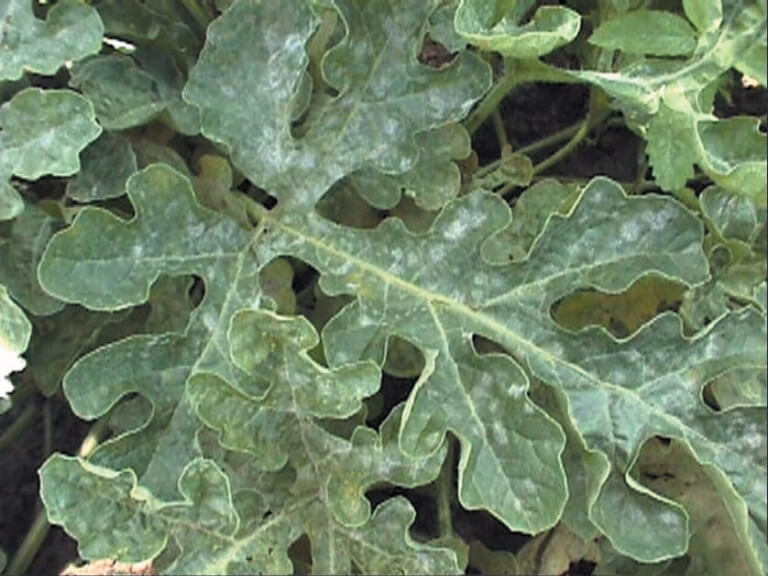
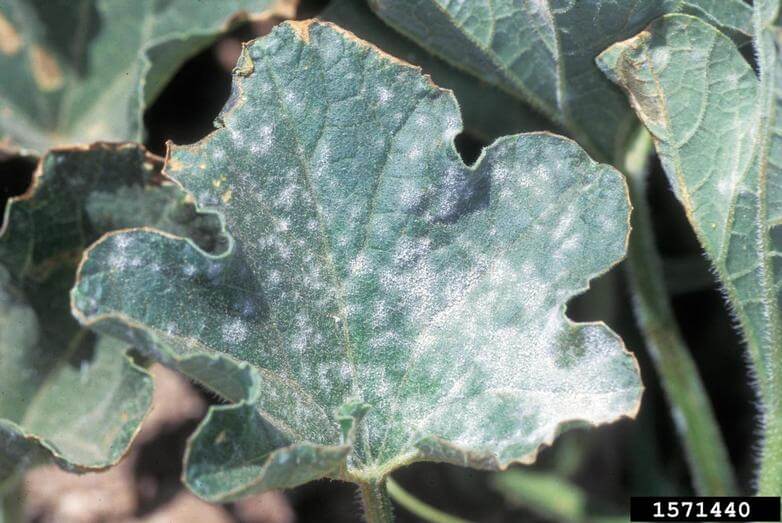

DESCRIPTION
WHO CAUSES IT?
Podosphaera xanthii and Sphaerotheca fuliginea are two species of fungi responsible for causing powdery mildew in various cucurbits, including pumpkin. These pathogens develop mainly in conditions of high humidity and moderate temperatures, and their cycle begins with the germination of conidia that adhere to the surface of the leaves. The spores germinate and form haustoria that penetrate the epidermal cells of the plant to extract nutrients. The mycelium of the fungus spreads over the surface of the leaves and produces new conidia in chains that are dispersed by the wind to other parts of the plant or to nearby plants. Podosphaera xanthii and Sphaerotheca fuliginea can survive on plant debris and in plant buds during the winter, resuming their activity in the spring. The development of these fungi is favored by warm and dry climates during the day and humid at night, which facilitates their spread and the rapid appearance of symptoms.
SYMPTOMS
Powdery mildew caused by Podosphaera xanthii and Sphaerotheca fuliginea is a disease that severely affects pumpkins, covering the leaves, stems and fruits with a characteristic white powder. This mycelial layer reduces photosynthesis, weakening the plant and affecting its development and productivity. In severe cases, it can lead to premature defoliation and a significant decrease in fruit yield and quality.
- Appearance of white powdery Taches on leaves, stems and fruits
- Yellowish and deformed leaves
- Delay in plant growth
- Premature defoliation
- Reduction in the size and quality of the fruits
- General weakening of the plant


TEMPERATURE AND HUMIDITY
20°C - 30°C
60% - 80%

HOW IS IT SPREAD?
Wind, contact between plants, contaminated agricultural tools, crop remains, infected seedlings

HOW TO REMOVE IT?
Home remedies
There are no home treatments
Chemical treatments
• ORANGE OIL 6% [SL] P/V
• ORANGE OIL 60g/L [ME] P/S
• AZOXISTROBIN 25% [SC] P/V
• SULFUR 80% [DP] P/P
• SULFUR 80% [SC] P/V
• SULFUR 80% [WG] P/P
• SULFUR 98.5% [DP] P/P
• SULFUR 99% [DP] P/P
• BUPIRIMATE 25% [EC] P/V
• CIFLUFENAMID 10% [SC] P/V
• COS-OGA 1.25% [SL] P/V
• EUGENOL 3.3% + GERANIOL 6.6% + THYMOL 6.6% [CS] P/V
• FLUXAPYROXAD 7.5% + DIFENOCONAZOLE 5% [SC] P/V
• POTASSIUM HYDROGEN CARBONATE 85% [SP] P/P
• Penconazole 10% [EC] P/V
• PENCONAZOLE 20% [EW] P/V
• TEBUCONAZOLE 25% [EW] P/V
• TETRACONAZOLE 10% [EC] P/V
• TETRACONAZOLE 12.5% [ME] P/V
• TETRACONAZOLE 4% [ME] P/V
Authorized treatments in organic farming
• ORANGE OIL 6% [SL] P/V
• ORANGE OIL 60g/L [ME] P/S
• SULFUR 80% [DP] P/P
• SULFUR 80% [SC] P/V
• SULFUR 80% [WG] P/P
• SULFUR 98.5% [DP] P/P
• SULFUR 99% [DP] P/P
• COS-OGA 1.25% [SL] P/V
• EUGENOL 3.3% + GERANIOL 6.6% + THYMOL 6.6% [CS] P/V
• POTASSIUM HYDROGEN CARBONATE 85% [SP] P/P
Insect allies
PREDATORY MITES
LADYBUGS
LACEWINGS
PARASITIC WASPS
HOVERFLIES OR PARASITIC FLIES
PREDATORY BUGS
There are no natural allies
Mycodiplosis oidii (predatory mosquito)
EFFECTIVE PRODUCTS TO ELIMINATE THIS DISEASE
Sponsored link
Sponsored link
Sponsored link


Sponsored link
Sponsored link
Sponsored link
Sponsored link


Sponsored link
Sponsored link
Effective against all types of fungi

Sponsored link
Sponsored link


Sponsored link
Sponsored link

Sponsored link
Sponsored link


Sponsored link
- Use varieties resistant to powdery mildew to minimize the impact of the disease.
- Apply preventive treatments with specific fungicides before symptoms appear.
- Implement an adequate crop rotation to avoid the accumulation of the fungus in the soil.
- Avoid sprinkler irrigation and opt for drip irrigation to reduce humidity in the foliage.
- Promote good air circulation in the field through adequate separation between plants.
- Remove and destroy the remains of infected plants at the end of the season to reduce the source of inoculum.
- Regularly monitor crops to detect the presence of the fungus early and apply timely treatments.
- Use biological products such as sulfur and potassium bicarbonate as less aggressive control measures.
- Maintain an integrated pest management program that includes appropriate cultural and chemical practices.
Recommendations

Enjoy idMicrobe TOTALLY FREE, with no trial periods.


