

Moteado
Scabies Or Mottling
Venturia Inaequalis
Pathogen:
Fungus
Type:
Risk to the plant:
HIGH

DESCRIPTION
WHO CAUSES IT?
Venturia inaequalis is an ascomycete fungus that causes the disease known as scab or mottle in pome fruit trees, especially apple and pear trees. During the winter, the fungus remains dormant on fallen leaves and infected buds. With the arrival of spring and increased humidity, ascospores develop within the pseudothecia formed on dead leaves. Ascospores are released and dispersed by wind and rain, infecting young shoots, leaves and flowers of the host. Primary infection occurs when ascospores land on moist plant tissue and germinate, penetrating through the cuticle. Subsequently, the fungus produces conidia in the infected tissues, which are responsible for secondary infections, continuing the cycle throughout the growing season.
SYMPTOMS
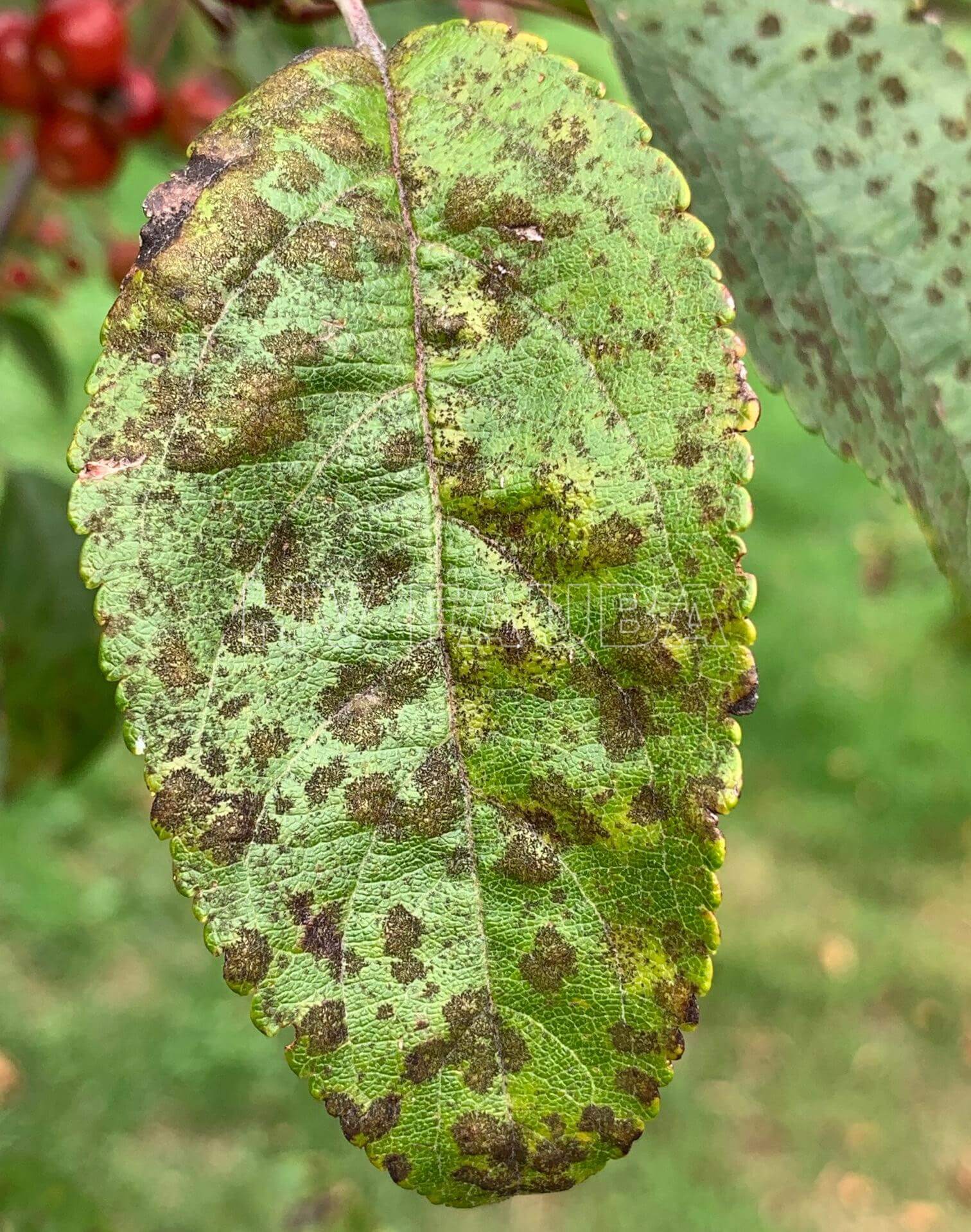
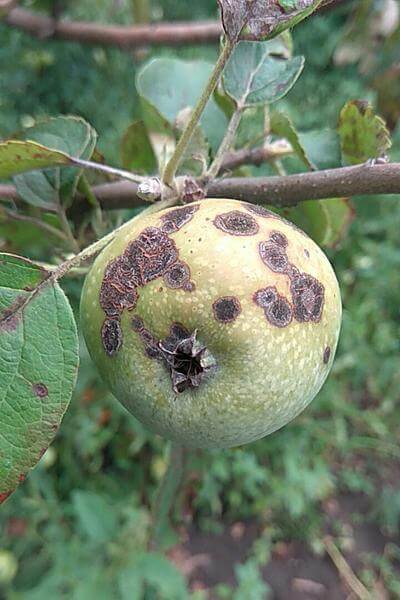
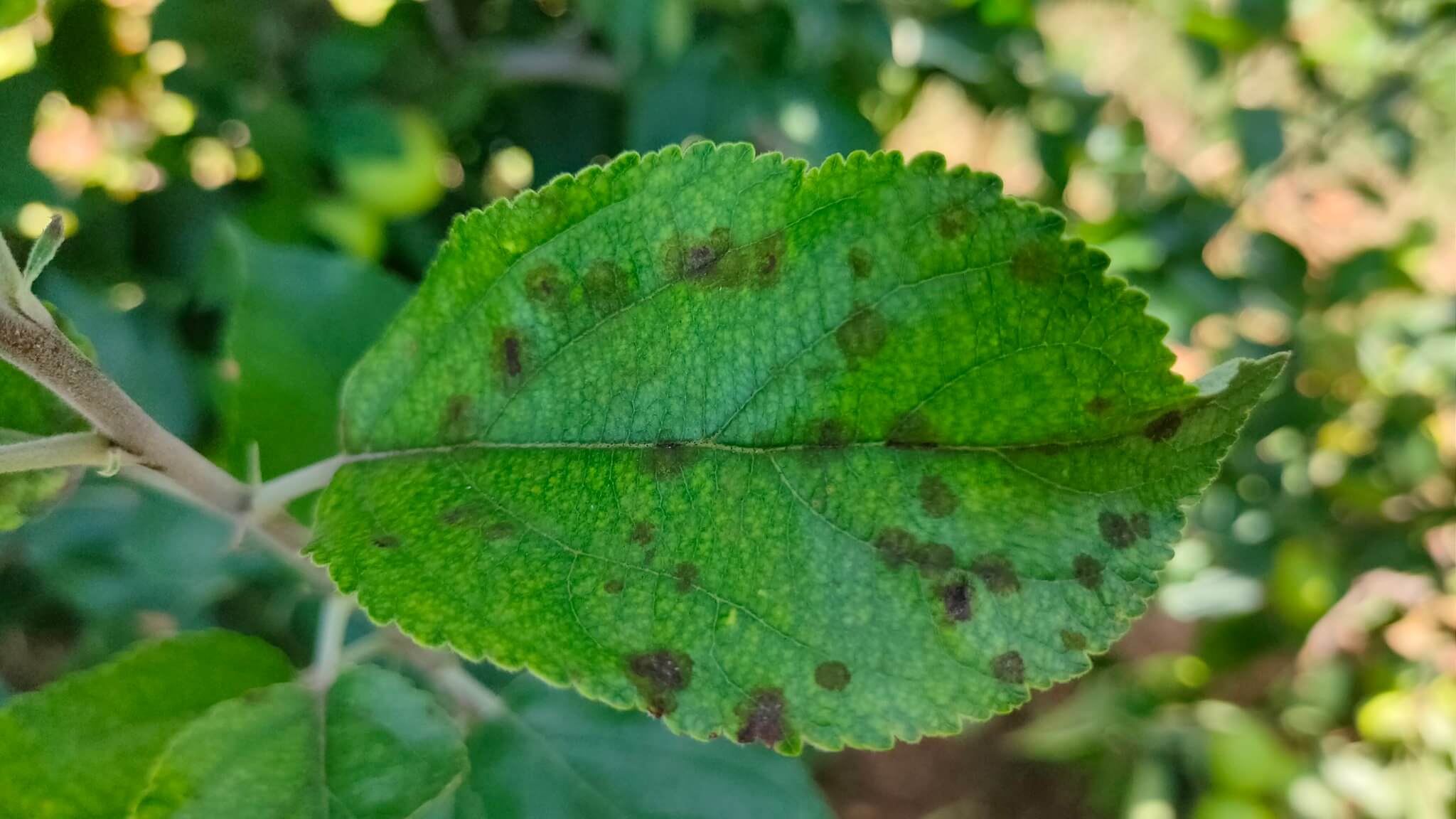
The disease caused by Venturia inaequalis in pome fruit trees manifests itself through lesions and Taches on leaves, flowers, fruits and young shoots, significantly affecting the quality and yield of the crop. The Taches begin as dark, oily Taches that expand and become necrotic, causing deformities and weakening of the affected tissue. In severe cases, the infection can cause premature dropping of leaves and fruits, drastically reducing the tree's productivity.
- Dark and oily Taches on leaves.
- Necrotic lesions on leaves and fruits.
- Deformation of leaves and fruits.
- Premature fall of leaves and fruits.
- Young shoots with Taches and necrosis.
- Flowers with dark Taches that may not bear fruit.
- Fruits with scars and corky areas.
- General reduction in tree vigor.


TEMPERATURE AND HUMIDITY
15°C - 25°C
70% - 90%

HOW IS IT SPREAD?
Wind, rain, pruning tools, insects, direct contact between plants, infected fallen leaves

HOW TO REMOVE IT?
Home remedies
There are no home treatments
Chemical treatments
• SULFUR 70% [SC] P/V
• SULFUR 72% [SC] P/V
• CAPTAN 47.5% [SC] P/V
• CAPTAIN 80% [WG] P/P
• CIPRODINIL 37.5% + FLUDIOXONIL 25% [WG] P/P
• Cyprodinil 50% [WG] P/P
• Ditianone 12.5% + Potassium phosphonates 56.1% [SC] P/V
• DITHIANONE 70% [WG] P/P
• DODINA 40% [SC] P/V
• DODINA 54.4% [SC] P/S
• FLUXAPYROXAD 30% [SC] P/V
• POTASSIUM PHOSPHONATES 50.4% (exp. as phosphorous acid) [SL] P/V
• POTASSIUM HYDROGEN CARBONATE 0.425% [AL] P/V
• POTASSIUM HYDROGEN CARBONATE 99% [SP] P/P
• CUPRIC HYDROXIDE 13.6% (EXPR. IN CU) + COPPER OXYCHLORIDE 13.6% (EXPR. IN CU) [SC] P/V
• CUPRIC HYDROXIDE 20% (EXPR. IN CU) [WG] P/P
• CUPRIC HYDROXIDE 25% (EXPR. IN CU) [WG] P/P
• CUPRIC HYDROXIDE 35% (EXPR. IN CU) [WG] P/P
• CUPRIC HYDROXIDE 36% (EXPR. IN CU) [SC] P/V
• CUPRIC HYDROXIDE 40% (EXPR. IN CU) [WG] P/P
• CUPRIC HYDROXIDE 50% (EXPR. IN CU) [WG] P/P
• CUPRIC HYDROXIDE 50% (EXPR. IN CU) [WP] P/P
• METIRAM 70% [WG] P/P
• COPPER OXYCHLORIDE 14% (exp. in Cu) + CUPRIC HYDROXIDE 14% (exp. in Cu) [WG] P/P
• COPPER OXYCHLORIDE 25% (EXPR. IN CU) [WG] P/P
• COPPER OXYCHLORIDE 30% (EXPR. IN CU) [WP] P/P
• COPPER OXYCHLORIDE 35% (exp. in Cu) [WG] P/P
• COPPER OXYCHLORIDE 35% (EXPR. IN CU) [WG] P/P
• COPPER OXYCHLORIDE 37.5% (EXPR. IN CU) [WG] P/P
• COPPER OXYCHLORIDE 38% (EXPR. IN CU) [SC] P/V
• COPPER OXYCHLORIDE 50% (EXPR. IN CU) [WG] P/P
• COPPER OXYCHLORIDE 50% (EXPR. IN CU) [WP] P/P
• COPPER OXYCHLORIDE 52% (EXPR. IN CU) [SC] P/V
• COPPER OXYCHLORIDE 70% (EXPR. IN CU) [SC] P/V
• COPPER OXYCHLORIDE 70% [SC] P/V
• CUPROUS OXIDE 75% (EXPR. IN CU) [WG] P/P
• CUPROCALCIC SULFATE 12.4% (EXPR. IN CU) [SC] P/V
• CUPROCALCIC SULFATE 20% (EXPR. IN CU) [WG] P/P
• CUPROCALCIC SULFATE 20% (EXPR. IN CU) [WP] P/P
• CUPROCALCIC SULFATE 20% (EXPR. IN CU) [WG] P/P
• CUPROCALCIC SULFATE 20% [WP] P/P
• TEBUCONAZOLE 25% [WG] P/P
Authorized treatments in organic farming
• SULFUR 70% [SC] P/V
• SULFUR 72% [SC] P/V
• POTASSIUM HYDROGEN CARBONATE 0.425% [AL] P/V
• POTASSIUM HYDROGEN CARBONATE 99% [SP] P/P
• CUPRIC HYDROXIDE 13.6% (EXPR. IN CU) + COPPER OXYCHLORIDE 13.6% (EXPR. IN CU) [SC] P/V
• CUPRIC HYDROXIDE 20% (EXPR. IN CU) [WG] P/P
• CUPRIC HYDROXIDE 25% (EXPR. IN CU) [WG] P/P
• CUPRIC HYDROXIDE 35% (EXPR. IN CU) [WG] P/P
• CUPRIC HYDROXIDE 36% (EXPR. IN CU) [SC] P/V
• CUPRIC HYDROXIDE 40% (EXPR. IN CU) [WG] P/P
• CUPRIC HYDROXIDE 50% (EXPR. IN CU) [WG] P/P
• CUPRIC HYDROXIDE 50% (EXPR. IN CU) [WP] P/P
• COPPER OXYCHLORIDE 14% (exp. in Cu) + CUPRIC HYDROXIDE 14% (exp. in Cu) [WG] P/P
• COPPER OXYCHLORIDE 25% (EXPR. IN CU) [WG] P/P
• COPPER OXYCHLORIDE 30% (EXPR. IN CU) [WP] P/P
• COPPER OXYCHLORIDE 35% (exp. in Cu) [WG] P/P
• COPPER OXYCHLORIDE 35% (EXPR. IN CU) [WG] P/P
• COPPER OXYCHLORIDE 37.5% (EXPR. IN CU) [WG] P/P
• COPPER OXYCHLORIDE 38% (EXPR. IN CU) [SC] P/V
• COPPER OXYCHLORIDE 50% (EXPR. IN CU) [WG] P/P
• COPPER OXYCHLORIDE 50% (EXPR. IN CU) [WP] P/P
• COPPER OXYCHLORIDE 52% (EXPR. IN CU) [SC] P/V
• COPPER OXYCHLORIDE 70% (EXPR. IN CU) [SC] P/V
• COPPER OXYCHLORIDE 70% [SC] P/V
• CUPROUS OXIDE 75% (EXPR. IN CU) [WG] P/P
• CUPROCALCIC SULFATE 12.4% (EXPR. IN CU) [SC] P/V
• CUPROCALCIC SULFATE 20% (EXPR. IN CU) [WG] P/P
• CUPROCALCIC SULFATE 20% (EXPR. IN CU) [WP] P/P
• CUPROCALCIC SULFATE 20% (EXPR. IN CU) [WG] P/P
• CUPROCALCIC SULFATE 20% [WP] P/P
Insect allies
PREDATORY MITES
LADYBUGS
LACEWINGS
PARASITIC WASPS
HOVERFLIES OR PARASITIC FLIES
PREDATORY BUGS
There are no natural allies
Mycodiplosis oidii (predatory mosquito)
EFFECTIVE PRODUCTS TO ELIMINATE THIS DISEASE
Sponsored link
Sponsored link


Sponsored link
Sponsored link
Sponsored link


Sponsored link
Sponsored link
Effective against all types of fungi

Sponsored link


Sponsored link
Sponsored link

Sponsored link


Sponsored link
- Select varieties of pome fruit trees that are resistant or less susceptible to Venturia inaequalis.
- Carry out adequate tree pruning to improve air circulation and reduce humidity in the foliage.
- Collect and destroy fallen leaves during the fall to eliminate sources of inoculum for the fungus.
- Apply protective fungicides preventively in critical periods of spring when conditions are favorable for infection.
- Constantly monitor the climate and apply timely fungicide treatments in conditions of high humidity and optimal temperature.
- Implement irrigation practices that prevent moisture accumulation in the foliage, such as drip irrigation.
- Use traps or physical barriers to limit the spread of spores from nearby inoculum sources.
- Promote biodiversity in the garden, since more diverse ecosystems can be more resistant to pathogen infections.
- Rotate fungicide products used to prevent the development of fungal resistance.
- Establish an integrated pest management program that includes regular monitoring and rapid corrective actions when symptoms are detected.
Recommendations

Enjoy idMicrobe TOTALLY FREE, with no trial periods.


