

Seca de ramas y brotes
Drying Of Branches Or Dieback
Botryosphaeria Sp.
Pathogen:
Fungus
Type:
Risk to the plant:
CRITICAL
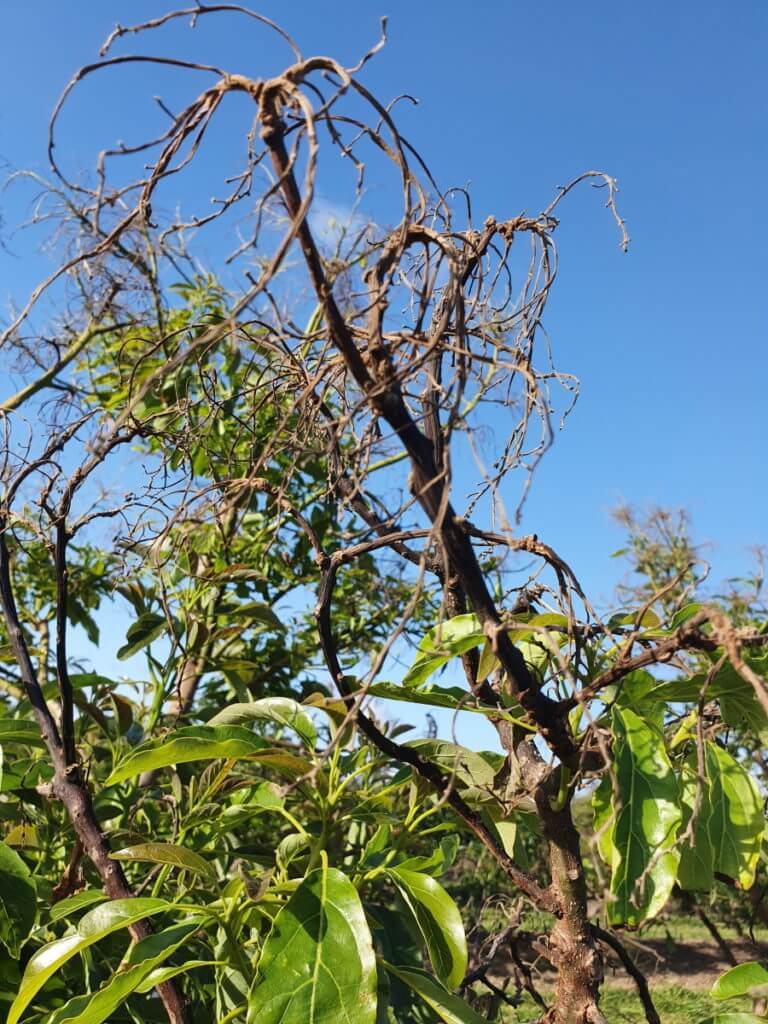
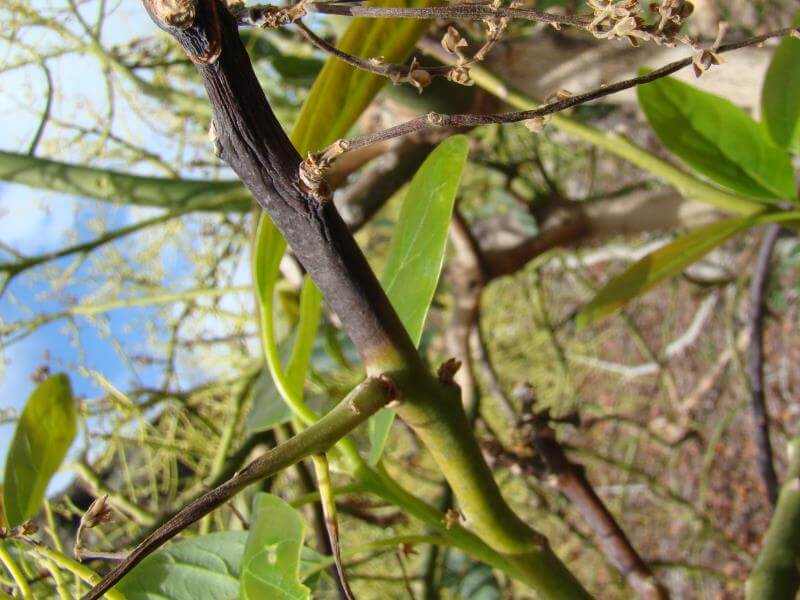

DESCRIPTION
WHO CAUSES IT?
Botryosphaeria sp. It is a genus of pathogenic fungi that affects various plant species, including avocado. This fungus is known for its ability to survive in plant remains and woody tissues. The sporangia produce spores that are released and dispersed by wind and water. When the spores find a wound or cut on the plant, they germinate and colonize the internal tissues. The fungus develops specialized structures, such as mycelium and pycnidia, that allow it to invade woody tissues, causing necrosis and cellular degradation. Infection can persist for long periods, especially under favorable conditions of high humidity and moderate temperatures. Botryosphaeria sp. It reproduces both asexually, through the production of conidia, and sexually, through ascospores that develop in structures known as perithecia.
SYMPTOMS
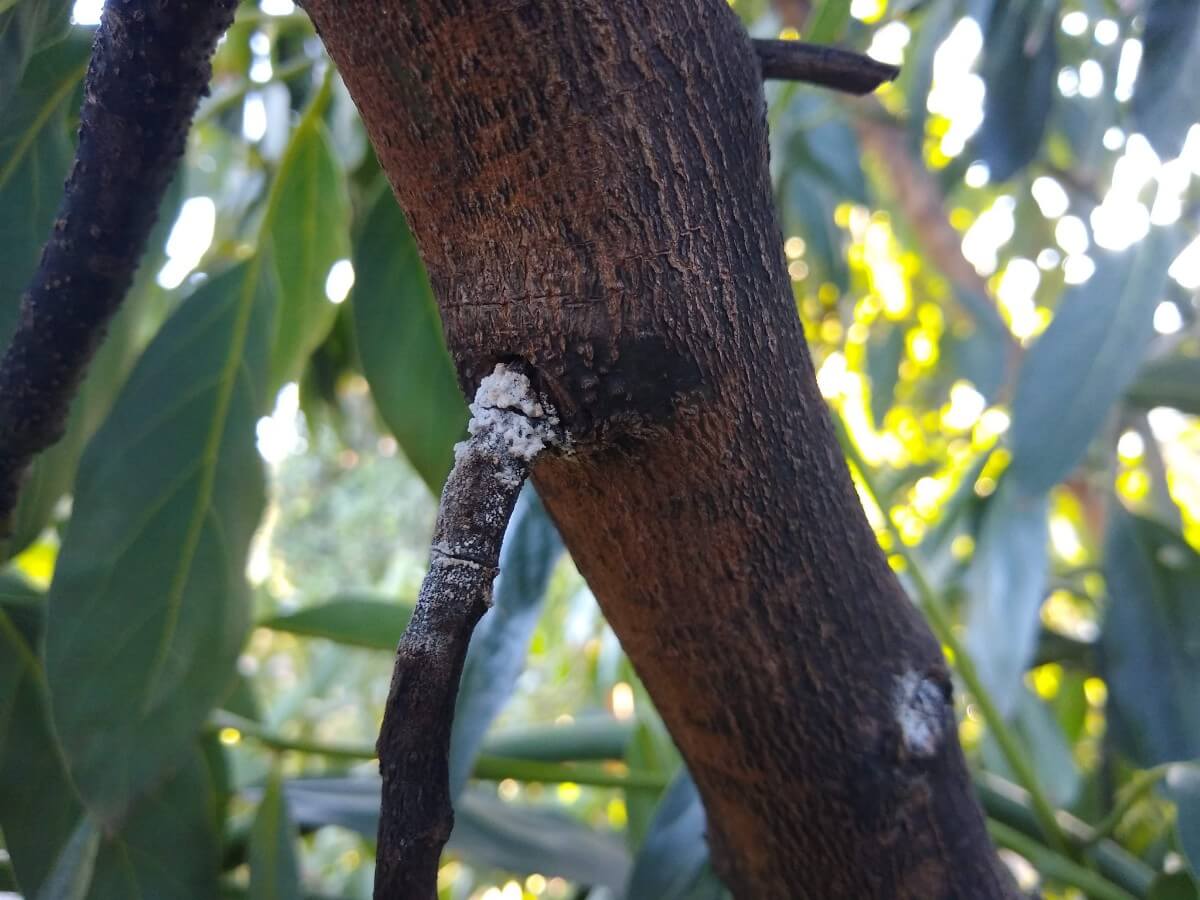
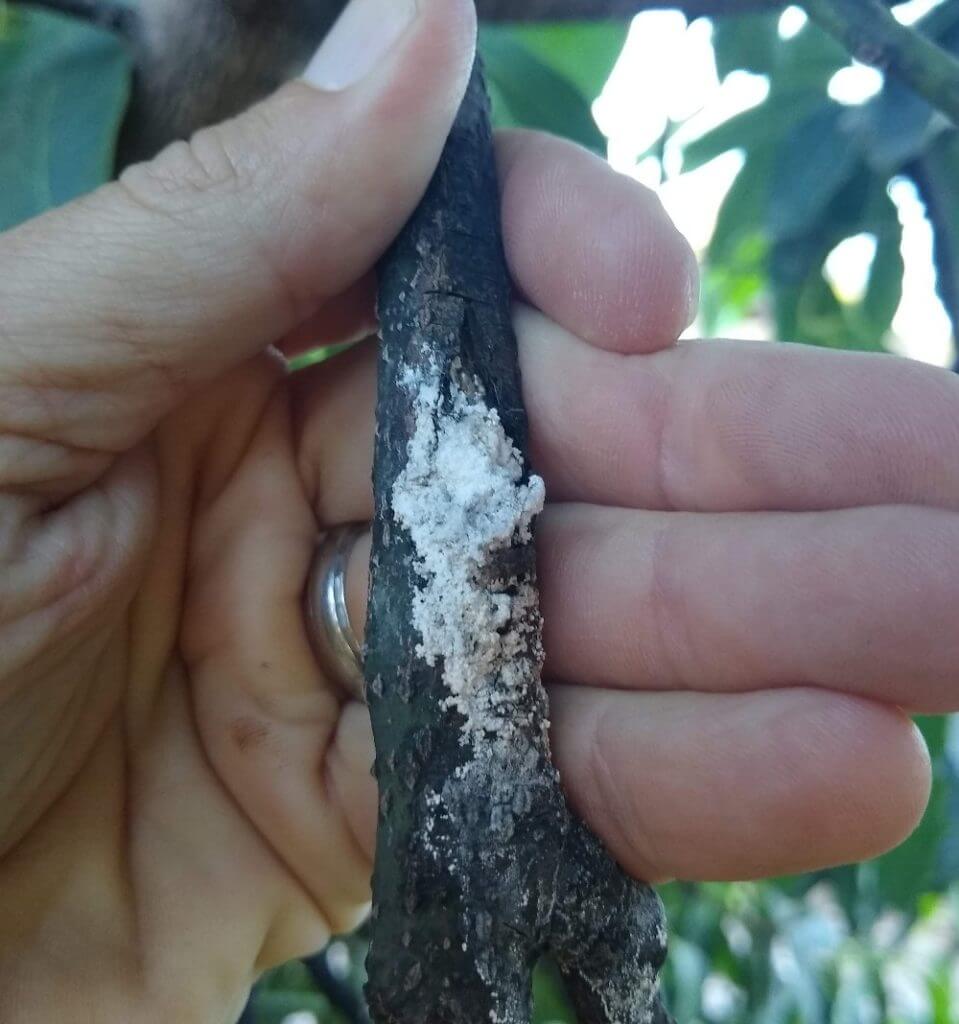
Branch drying or dieback caused by Botryosphaeria sp. In avocado it is a devastating disease that mainly affects the branches and trunk of the tree. The infection begins in wounds or damaged areas of the cortex, where the fungus penetrates and spreads through the vascular system. This causes obstruction of the conductive vessels, preventing the flow of nutrients and water, which leads to the progressive death of the affected branches.
- Branch dieback
- Necrotic lesions in the cortex
- Dark sap exudation
- Cracking and drying of the bark
- Withering of leaves and branches
- Loss of vigor and productivity of the tree


TEMPERATURE AND HUMIDITY
20-28°C
60-80%

HOW IS IT SPREAD?
Wind, Water, Contaminated tools, Infected plant material

HOW TO REMOVE IT?
Home remedies
There are no home treatments
Chemical treatments
There are no effective treatments against this pathogen. It is recommended to cut infected branches and remove them. In the case of severe infections, it is recommended to remove the tree. It is important to disinfect tools after contact with an infected tree.
Authorized treatments in organic farming
There are no effective treatments against this pathogen. It is recommended to cut infected branches and remove them. In the case of severe infections, it is recommended to remove the tree. It is important to disinfect tools after contact with an infected tree.
Insect allies
PREDATORY MITES
LADYBUGS
LACEWINGS
PARASITIC WASPS
HOVERFLIES OR PARASITIC FLIES
PREDATORY BUGS
There are no natural allies
Mycodiplosis oidii (predatory mosquito)
EFFECTIVE PRODUCTS TO ELIMINATE THIS DISEASE
Sponsored link

Sponsored link


Sponsored link
Sponsored link
Sponsored link


Sponsored link
Sponsored link
Effective against all types of fungi

Sponsored link


Sponsored link
Sponsored link

Sponsored link


Sponsored link
- Carry out sanitary pruning to eliminate infected branches and reduce the spread of the fungus.
- Disinfect pruning tools to prevent the transmission of spores.
- Apply preventive fungicides in periods of highest risk of infection.
- Avoid injuries to trees, especially during pruning and crop management.
- Maintain adequate ventilation and humidity management in the orchard to reduce favorable conditions for the fungus.
- Regularly monitor trees to detect early signs of the disease and act in a timely manner.
- Implement integrated pest management (IPM) practices to strengthen the overall health of the tree and its resistance to diseases.
Recommendations

Enjoy idMicrobe TOTALLY FREE, with no trial periods.


