

Trips
Thrips
Thrips
Pathogen:
Insect
Type:
Risk to the plant:
HIGH
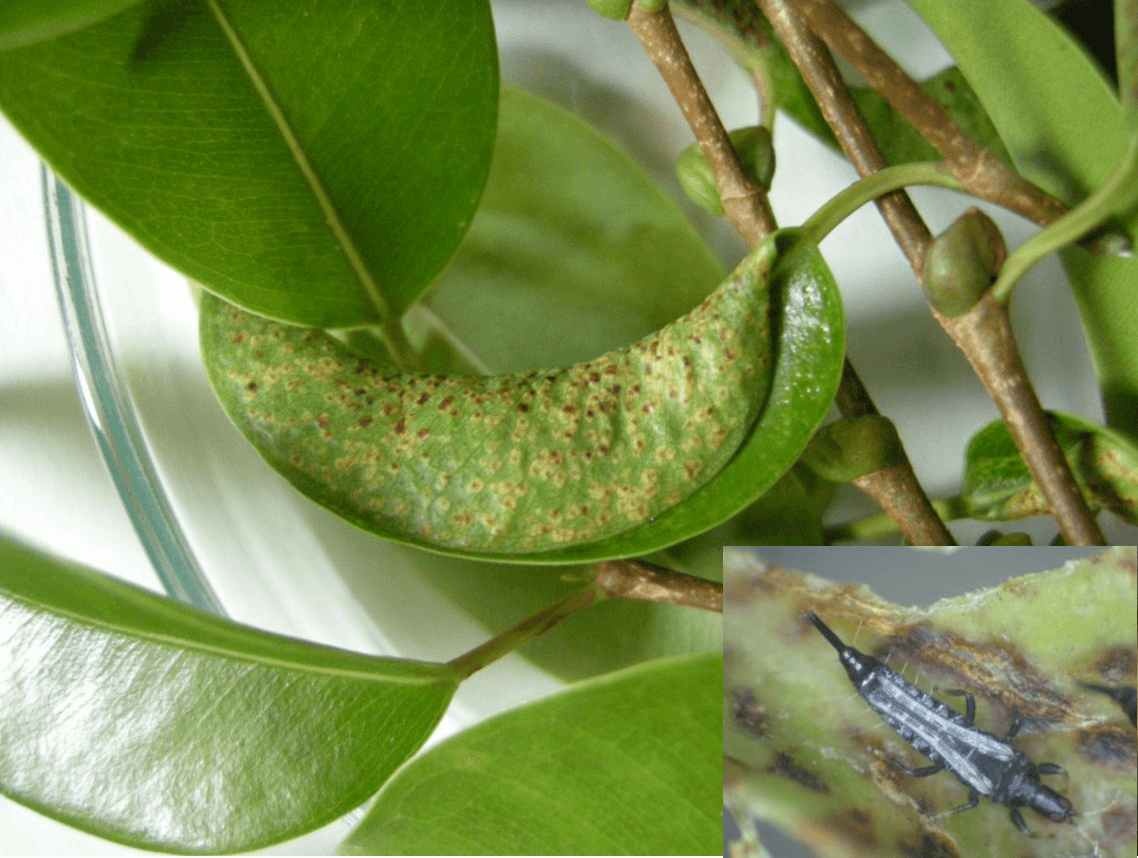

DESCRIPTION
WHO CAUSES IT?
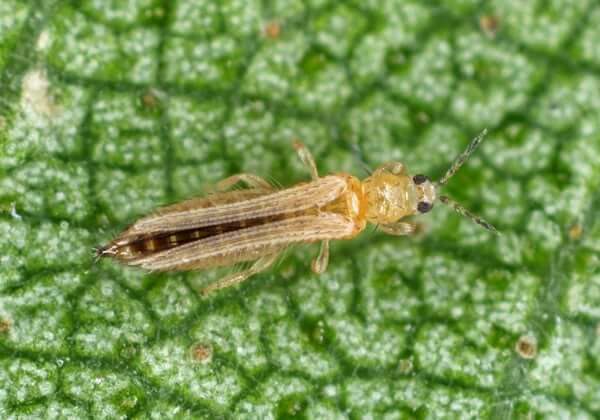
Thrips are small insects belonging to the order Thysanoptera, known for their ability to damage various plants. They measure approximately 1-2 mm in length and have elongated bodies with fringed wings. Thrips go through several stages of development: egg, larva, pupa and adult. Adult females lay their eggs within plant tissue, where larvae emerge and begin feeding on plant sap. The larvae develop in the same tissue before falling to the ground to pupate. Adults emerge and can quickly disperse to new plants. Thrips are capable of reproducing asexually (parthenogenesis) and sexually, allowing them to quickly adapt to different environments. Their entire life cycle can be as short as two weeks under favorable conditions, allowing multiple generations in a single growing season.
SYMPTOMS
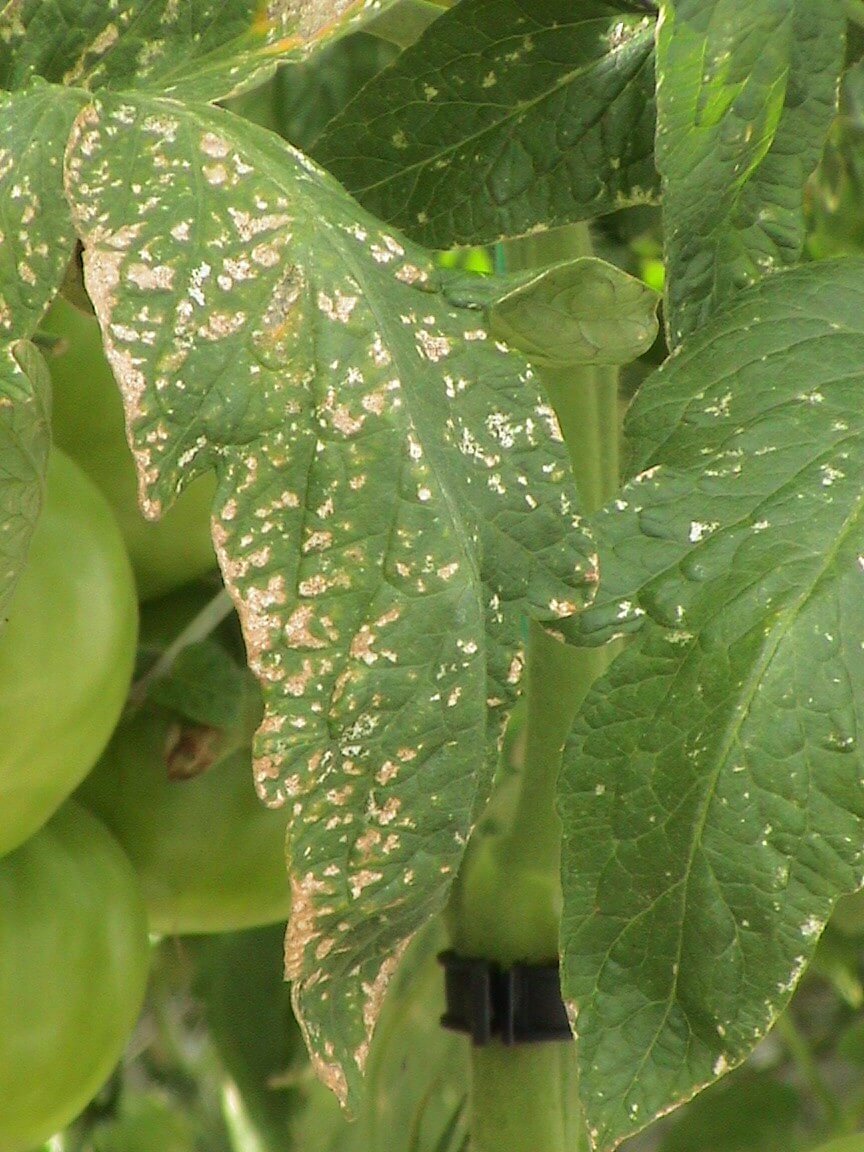
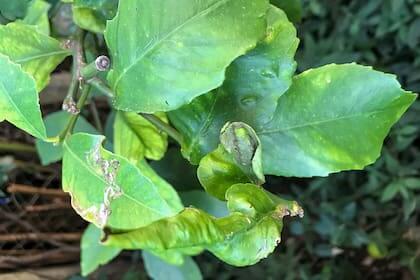
Thrips infestation in plants causes a disease that is characterized by various symptoms that affect the health and productivity of the plants. Thrips pierce plant cells to feed, resulting in silvery or discolored Taches on leaves and flowers. This feeding can also induce the deformation of leaves and fruits, and the appearance of black Taches that are their excrement. In addition, thrips can transmit phytopathogenic viruses, aggravating the damage.
- Silvery or discolored Taches on leaves and flowers.
- Deformation of leaves and fruits.
- Black dots (excrement) on the surface of the leaves.
- Reduction in plant growth.
- Premature fall of leaves and flowers.
- Transmission of phytopathogenic viruses.
- Tissue necrosis.
- Wilting and general weakening of the plant.


TEMPERATURE AND HUMIDITY
20°C - 30°C
50% - 80%

HOW IS IT SPREAD?
Wind, infected plants, contaminated tools, direct contact between plants, transfer of plant material, contaminated crop surfaces, movements of personnel and machinery in crops

HOW TO REMOVE IT?
Home remedies
There are no home treatments
Chemical treatments
• ABAMECTIN 0.0015% + PYRETHRINS 0.02% [AL] P/V
• RAPE OIL 1.53% [AL] P/V
• RAPE OIL 848.24 g/l [EC] P/V
• ORANGE OIL 6% [SL] P/V
• ORANGE OIL 60g/L [ME] P/S
• ACETAMIPRID 0.005% [AL] P/V
• AZADIRACTIN 1% (AS AZADIRACTIN A) [EC] P/V
• Azadirachtin 2.6% (AS AZADIRACTIN A) [EC] P/V
• CYPERMETHRIN 10% [EC] P/V
• CYPERMETHRIN 5% [EC] P/V
• CYPERMETHRIN 50% [EC] P/V
• DELTAMETHRIN 1.5% [EW] P/V
• DELTAMETHRIN 1.57% [SC] P/V
• DELTAMETHRIN 10% [EC] P/V
• DELTAMETHRIN 2.5% [EC] P/V
• DELTAMETHRIN 2.5% [EW] P/V
• FORMETANATE 50% [SP] P/P
• LAMBDA CYHALOTHRIN 0.0015% [ME] P/V
• LAMBDA CYHALOTHRIN 1.5% [CS] P/V
• LAMBDA CYHALOTHRIN 10% [CS] P/V
• LAMBDA CYHALOTHRIN 5% [EG] P/P
• PYRETHRINS 1.9% [EC] P/V
• PYRETHRINS 4.65% (as pyrethrum extract) [EC] P/V
• PYRETHRINS 4% (PYRETHHRINE EXTR.) [EC] P/V
• PYRETHRINS 5% [SC] P/V
• POTASSIUM SALTS OF FATTY ACIDS C14-C20 48% [EW] P/V
• POTASSIUM SALTS OF VEGETABLE FATTY ACIDS 13.04% [SL] P/V
• SPINETORAM 2.5% [SC] P/V
• SPINOSAD 12% [SC] P/V
• SPINOSAD 48% [SC] P/V
• TAU-FLUVALINATE 24% [EW] P/V
• ADHESIVE TRAP
• CHROMATIC TRAP
Authorized treatments in organic farming
• RAPE OIL 1.53% [AL] P/V
• RAPE OIL 848.24 g/l [EC] P/V
• ORANGE OIL 6% [SL] P/V
• ORANGE OIL 60g/L [ME] P/S
• AZADIRACTIN 1% (AS AZADIRACTIN A) [EC] P/V
• Azadirachtin 2.6% (AS AZADIRACTIN A) [EC] P/V
• LAMBDA CYHALOTHRIN 0.0015% [ME] P/V
• LAMBDA CYHALOTHRIN 1.5% [CS] P/V
• LAMBDA CYHALOTHRIN 10% [CS] P/V
• LAMBDA CYHALOTHRIN 5% [EG] P/P
• PYRETHRINS 1.9% [EC] P/V
• PYRETHRINS 4.65% (as pyrethrum extract) [EC] P/V
• PYRETHRINS 4% (PYRETHHRINE EXTR.) [EC] P/V
• PYRETHRINS 5% [SC] P/V
• POTASSIUM SALTS OF FATTY ACIDS C14-C20 48% [EW] P/V
• POTASSIUM SALTS OF VEGETABLE FATTY ACIDS 13.04% [SL] P/V
• SPINOSAD 12% [SC] P/V
• SPINOSAD 48% [SC] P/V
• ADHESIVE TRAP
• CHROMATIC TRAP
Insect allies
PREDATORY MITES
LADYBUGS
LACEWINGS
PARASITIC WASPS
HOVERFLIES OR PARASITIC FLIES
PREDATORY BUGS
There are no natural allies
Mycodiplosis oidii (predatory mosquito)
EFFECTIVE PRODUCTS TO ELIMINATE THIS DISEASE
Sponsored link

Sponsored link


Sponsored link
Sponsored link
Sponsored link


Sponsored link
Sponsored link
Effective against all types of fungi

Sponsored link


Sponsored link
Sponsored link

Sponsored link


Sponsored link
- Regularly monitor plants to detect the presence of thrips in their initial stages.
- Use blue or yellow sticky traps to capture adult thrips and reduce the population.
- Implement crop rotation to interrupt the life cycle of the pathogen.
- Encourage the presence of natural enemies such as predatory mites, lacewings and ladybugs.
- Avoid excessive use of insecticides that can kill the natural enemies of thrips.
- Maintain good crop hygiene, eliminating plant debris and weeds that could serve as a refuge for thrips.
- Apply mineral oils or insecticidal soaps to suffocate thrips.
- Use anti-insect meshes in greenhouses and protected growing areas.
- Apply specific phytosanitary treatments following technical recommendations and local regulations.
- Improve growing conditions, avoiding water stress and maintaining an adequate level of fertilization to strengthen plants.
Recommendations

Enjoy idMicrobe TOTALLY FREE, with no trial periods.


