


Bacteriosis
Crown gall: what it is, how it originates, and how to eliminate it effectively
Crown Gall
Agrobacterium Tumefaciens
Pathogen:
Bacterium
Type:
Risk to the plant:
HIGH
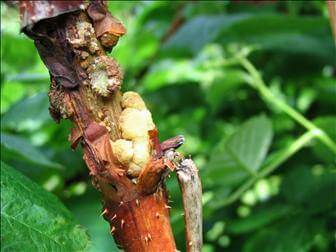
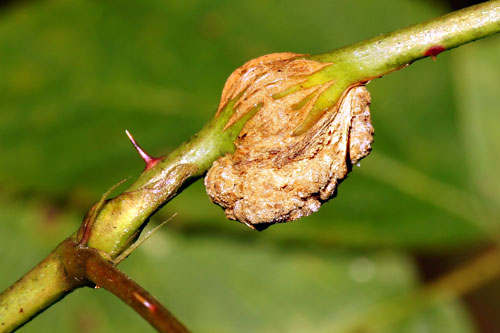

DESCRIPTION
WHO CAUSES IT?
Agrobacterium tumefaciens is a gram-negative bacteria commonly found in soil and infected plant tissues. This bacterium is known for its ability to transfer a segment of plasmid DNA (T-DNA) into plant cells, inducing the formation of tumors known as galls. The infection begins when the bacteria detects wounds on the plant, which release phenolic compounds that act as signals for the attraction and activation of A. tumefaciens. Once attached to the plant cells, the bacteria transfers the T-DNA of the Ti plasmid (tumor-inducing) to the plant genome. This T-DNA contains genes that induce the production of phytohormones and opins, which not only promote uncontrolled cell proliferation, forming galls, but also produce specific metabolites that benefit the bacteria. The bacteria can survive in the soil for several years, waiting for opportunities to infect new plants through wounds or microlesions.
SYMPTOMS
The disease caused by Agrobacterium tumefaciens on blackberries is known as crown gall, and it mainly affects the lower part of the stem and roots of the plants. This disease considerably weakens plants, affecting their ability to absorb water and nutrients, which can lead to a significant reduction in productivity and overall plant health.
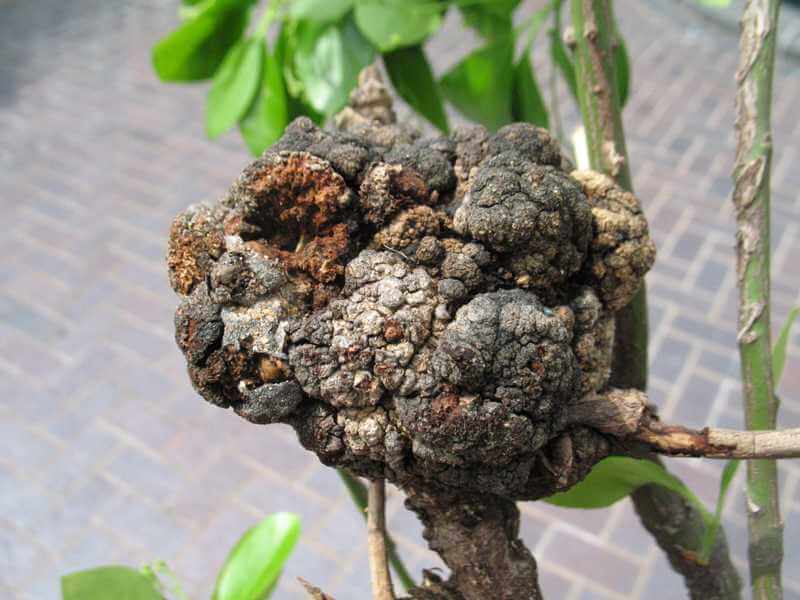
- Formation of tumors or galls at the base of the stem and roots.
- Abnormal and deformed growth in the affected areas.
- General decay of the plant.
- Reduction in plant vigor and growth.
- Chlorosis in the leaves due to poor absorption of nutrients.
- Wilting under water stress conditions.
- In severe cases, death of the plant.


TEMPERATURE AND HUMIDITY
20°C a 28°C
70% a 85%

HOW IS IT SPREAD?
Contaminated soil, Pruning tools, Irrigation water, Infected plants, Earthworks, Infected plant remains

HOW TO REMOVE IT?
Home remedies
There are no home treatments
Chemical treatments
• COPPER OXYCHLORIDE 35% (exp. in Cu) [WG] P/P
• CUPROCALCIC SULFATE 12.4% (EXPR. IN CU) [SC] P/V
Authorized treatments in organic farming
• COPPER OXYCHLORIDE 35% (exp. in Cu) [WG] P/P
• CUPROCALCIC SULFATE 12.4% (EXPR. IN CU) [SC] P/V
Insect allies
PREDATORY MITES
LADYBUGS
LACEWINGS
PARASITIC WASPS
HOVERFLIES OR PARASITIC FLIES
PREDATORY BUGS
There are no natural allies
Mycodiplosis oidii (predatory mosquito)
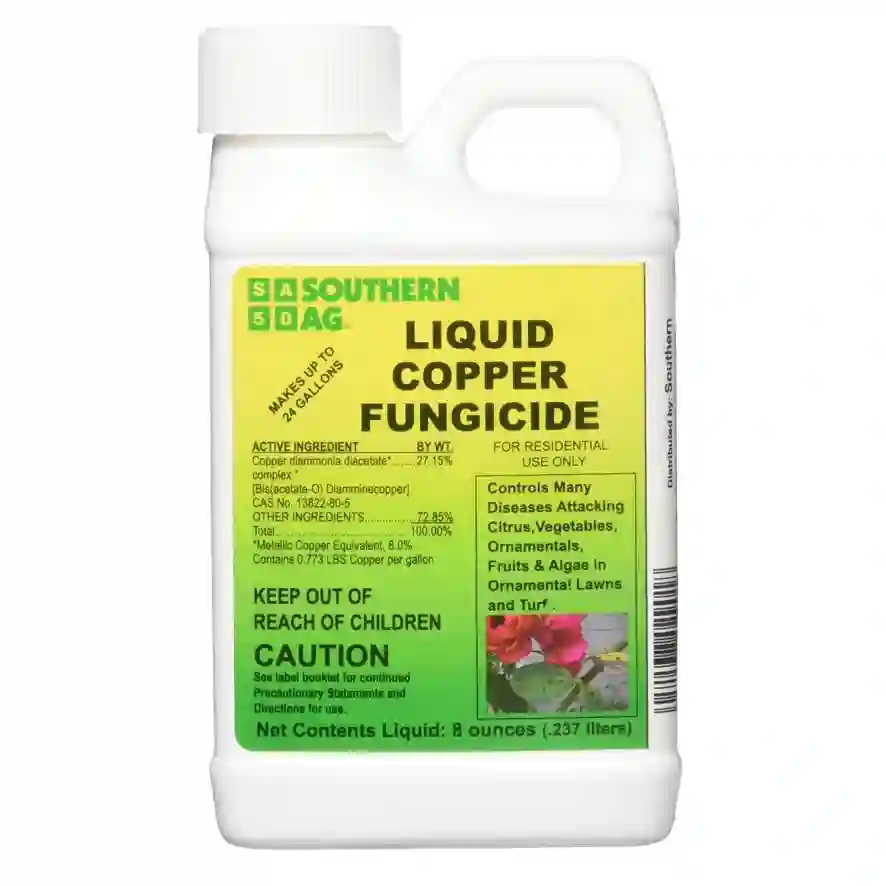
EFFECTIVE PRODUCTS TO ELIMINATE THIS DISEASE



- Avoid wounds on plants during agricultural practices to reduce entry points for bacteria.
- Use disease-free and certified planting material.
- Implement crop rotation practices to reduce the presence of bacteria in the soil.
- Apply disinfection treatments to tools and equipment before using them in different plants.
- Improve soil drainage to reduce excessive moisture that favors infection.
- Remove and destroy infected plants to prevent the spread of the bacteria.
- Use biological agents that compete with A. tumefaciens in the soil.
- Use varieties of plants that are less susceptible to infection by this bacteria.
Recommendations



Explore more tools
Services
Contact
Legal
©2023 por ZeriMar Laboratoire. Todos os direitos reservados.