

Botrytis
Botrytis or gray mold
Botrytis cinerea
Pathogen:
Fungus
Type:
Risk to the plant:
HIGH

DESCRIPTION
WHO CAUSES IT?
Botrytis cinerea is a widespread phytopathogenic fungus and one of the main agents responsible for rot in numerous crops. It is a necrotrophic fungus, capable of colonizing living plant tissues and obtaining nutrients as it causes the death of infected cells. It can develop on a wide variety of plant debris and plant organs, where it produces abundant mycelium and reproductive structures. Dispersal occurs primarily through conidia, which are produced in large quantities on affected tissues and can be transported by air currents, water splashes, rain, tools, insects, and tissue contact. Conidia can remain on plant surfaces until they find favorable conditions for germination. Germination and subsequent infection are especially favored by the presence of free water or very high ambient humidity and moderate temperatures. Penetration can occur directly through susceptible tissues, but wounds, cuts, abrasions, insect damage, and weakened tissues constitute important entry points. Once infection begins, the fungus develops hyphae that spread through the tissues, progressively destroying plant cells and causing necrotic and subsequently rotten areas. On infected tissues, it can produce new conidiophores and conidia, generating a continuous source of inoculum capable of colonizing other plant organs. Botrytis cinerea can also survive unfavorable periods through resistant structures, especially sclerotia, and through mycelium present in infected plant debris. Crop debris, affected fruit, and dead tissue can act as important reservoirs of the fungus between growing seasons. The disease can develop rapidly when moderate temperatures, high humidity, poor ventilation, and prolonged water exposure on the tissues coincide. Therefore, removing infected tissues, reducing humidity, and preventing wounds are essential to limiting the production and spread of inoculum.
SYMPTOMS
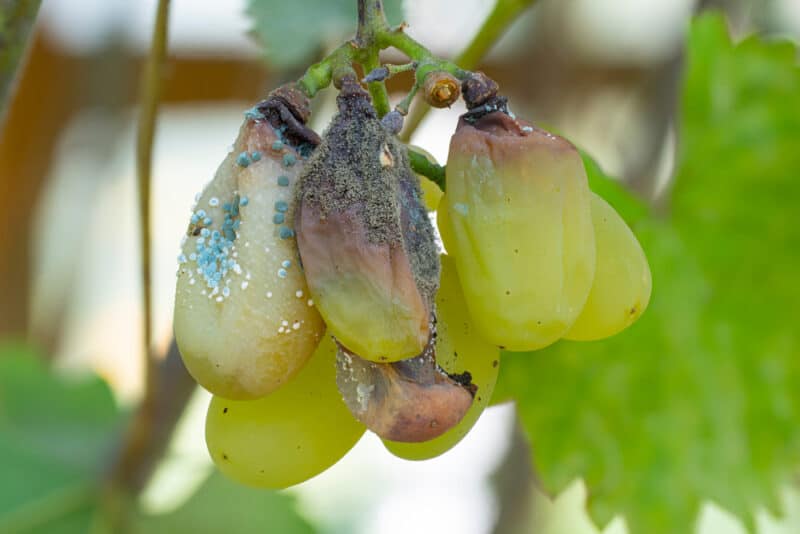
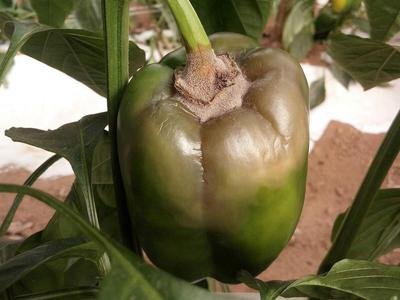
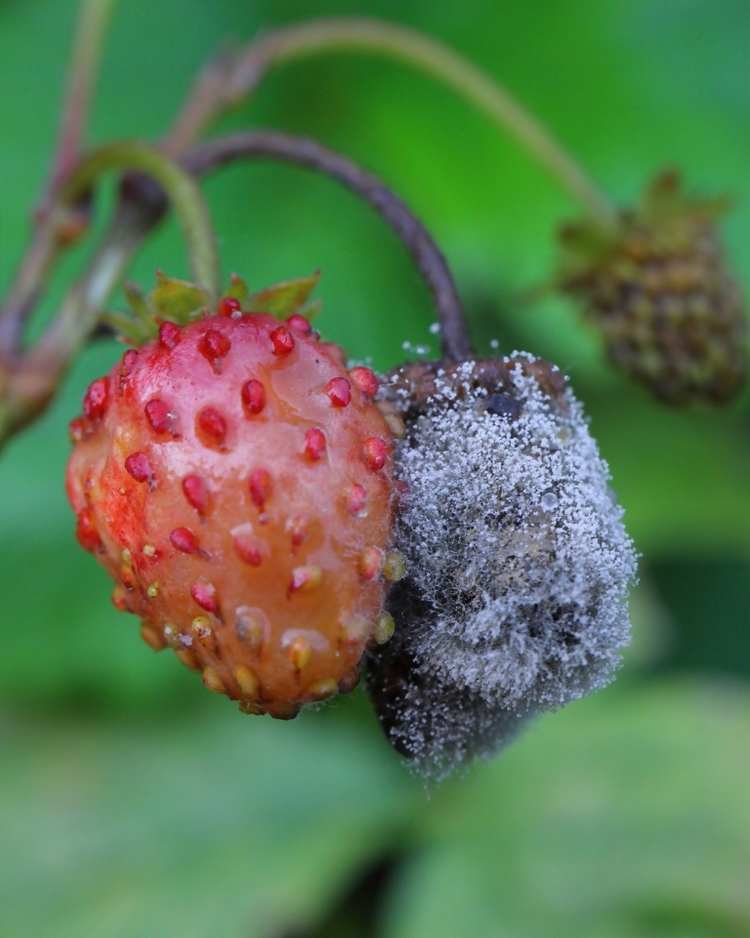
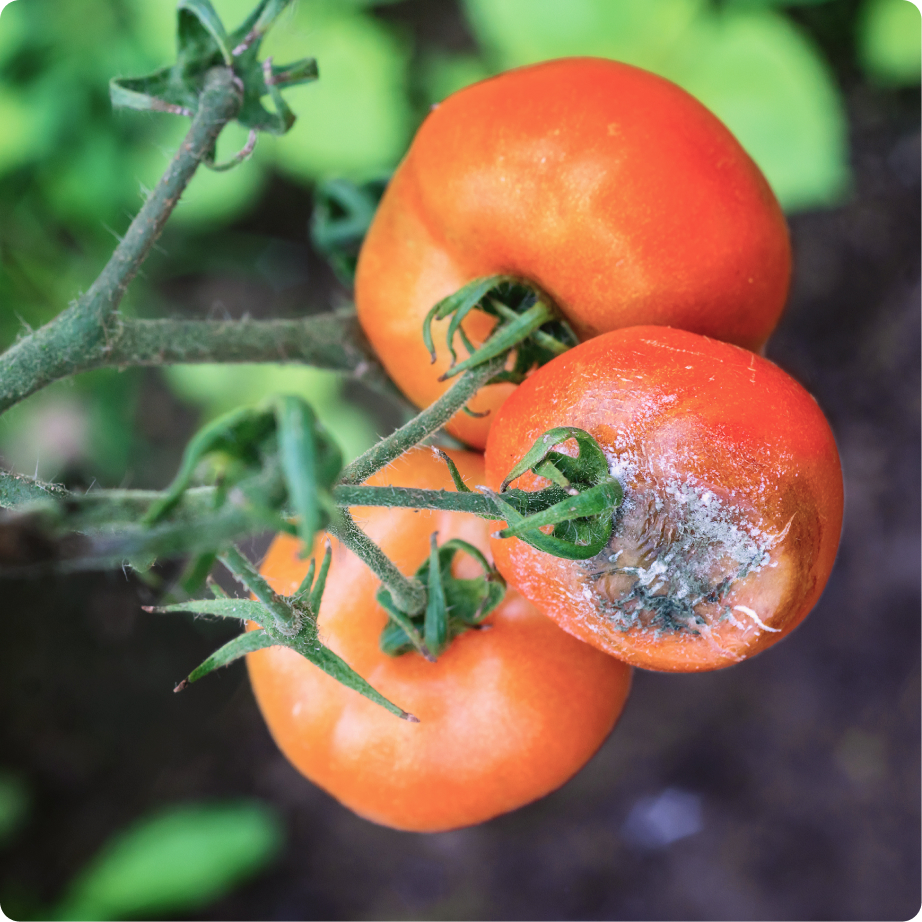
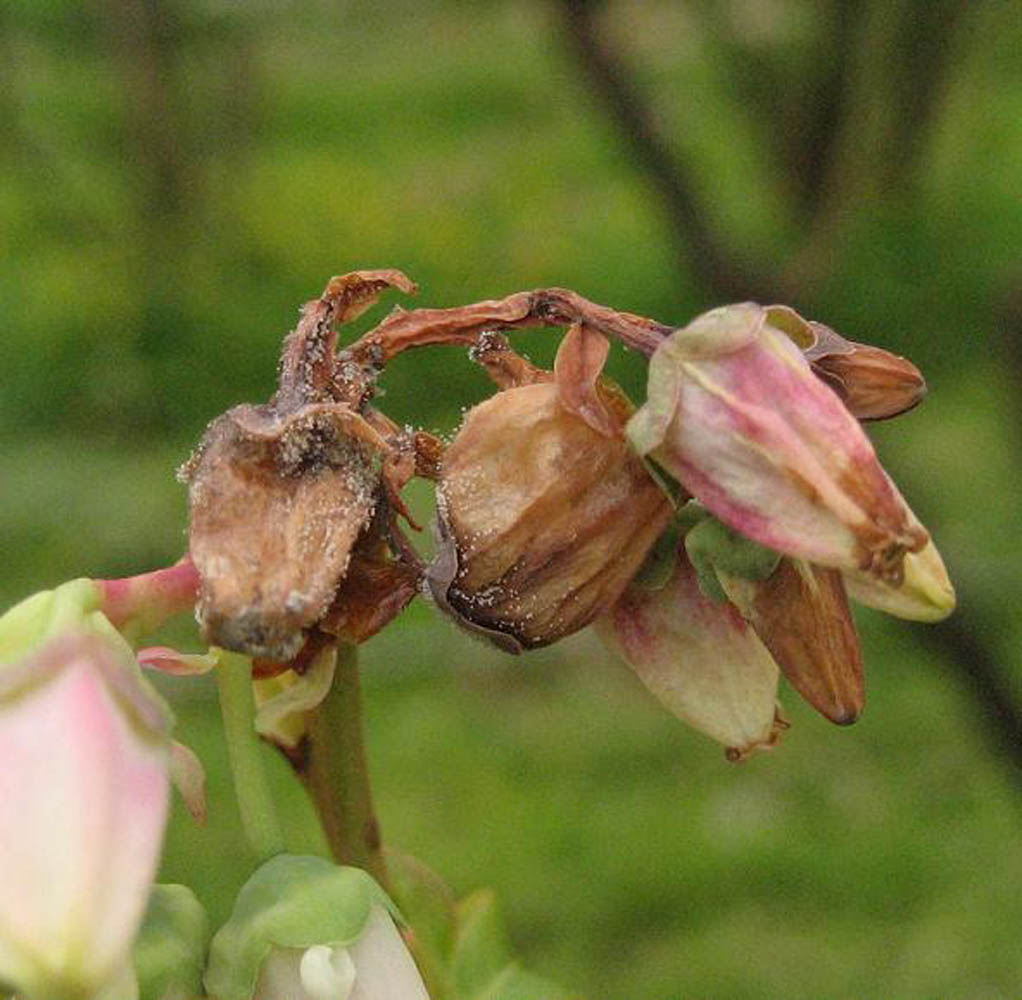
Botrytis, or gray mold, causes progressive degradation of fruit, which can begin in small wounds, weakened areas, or points of contact between fruits. Initially, water-soaked spots or discolored areas may appear, later turning brown or grayish. As the infection progresses, the tissues soften, lose their firmness, and rot develops, which can spread rapidly throughout the fruit. Under high humidity conditions, a characteristic mass of gray mycelium and sporulation appears on the affected areas, responsible for the gray mold appearance. The fruit can become completely spoiled and lose its commercial value. The disease can develop both before and after harvest, being especially problematic during transport and storage, where an infected fruit can contaminate other nearby fruit. Wounds caused during harvesting, handling, or transport considerably increase the risk of infection and spread of the disease. Among the most common manifestations are:
• Appearance of small, water-soaked or translucent spots.
• Appearance of small, water-soaked or translucent spots. • Formation of brown or tan lesions that progressively increase in size.
• Softening and loss of firmness of the fruit tissues.
• Development of progressive wet rot.
• Appearance of white or grayish mycelium on the affected areas.
• Formation of a characteristic gray sporulation mass on the fruit surface.
• Rapid spread of the rot to nearby tissues.
• Collapse and complete deterioration of the fruit in advanced infections.
• Appearance of mummified or dehydrated fruit when environmental conditions become unfavorable for active development.
• Contamination of healthy fruit in direct contact with affected fruit.
• Development of infections during transport and storage.
• Significant reduction in fruit quality and shelf life.
• Appearance of secondary rots associated with wounds and damaged tissues.

TEMPERATURE AND HUMIDITY
15-25 °C
90-100 %

HOW IS IT SPREAD?
Airborne conidia, Rain, Irrigation water, Water splashes, Insects, Contact between fruits, Contact between plant tissues, Contaminated tools, Infected plant debris, Infected plant material

HOW TO REMOVE IT?
Home remedies
There are no home treatments
Chemical treatments
• AZOXISTROBIN 25% [SC] P/V
• CAPTAN 47.5% [SC] P/V
• CIPRODINIL 37.5% + FLUDIOXONIL 25% [WG] P/P
• PHENHEXAMIDE 50% [SC] P/V
• PHENHEXAMIDE 50% [WG] P/P
• FOLPET 50% [SC] P/V
• FOLPET 80% [WG] P/P
• POTASSIUM HYDROGEN CARBONATE 0.425% [AL] P/V
• POTASSIUM HYDROGEN CARBONATE 85% [SP] P/P
• LAMINARIN 4.5% [SL] P/S
• COPPER OXYCHLORIDE 35% (exp. in Cu) [WG] P/P
• COPPER OXYCHLORIDE 35% (EXPR. IN CU) [WG] P/P
• PIRACLOSTROBIN 6.7% + BOSCALIDE 26.7% ( ) [WG] P/P
• PIRACLOSTROBIN 6.7% + BOSCALIDE 26.7% (I) [WG] P/P
Authorized treatments in organic farming
• POTASSIUM HYDROGEN CARBONATE 0.425% [AL] P/V
• POTASSIUM HYDROGEN CARBONATE 85% [SP] P/P
• LAMINARIN 4.5% [SL] P/S
• COPPER OXYCHLORIDE 35% (exp. in Cu) [WG] P/P
• COPPER OXYCHLORIDE 35% (EXPR. IN CU) [WG] P/P
Insect allies
PREDATORY MITES
LADYBUGS
LACEWINGS
PARASITIC WASPS
HOVERFLIES OR PARASITIC FLIES
PREDATORY BUGS
There are no natural allies
Mycodiplosis oidii (predatory mosquito)
EFFECTIVE PRODUCTS TO ELIMINATE THIS DISEASE
Sponsored link

Sponsored link
Sponsored link
Sponsored link
Sponsored link
Sponsored link
Sponsored link
Sponsored link
Sponsored link
Sponsored link


Sponsored link
Sponsored link
Effective against all types of fungi

Sponsored link
Sponsored link
Sponsored link
Sponsored link
Sponsored link
Sponsored link
Sponsored link
Sponsored link


Sponsored link
Sponsored link

Sponsored link
Sponsored link
Sponsored link
Sponsored link
Sponsored link
Sponsored link
Sponsored link
Sponsored link


Sponsored link
Sponsored link
Sponsored link
Sponsored link
Sponsored link
Sponsored link
Sponsored link
Sponsored link
Sponsored link
Sponsored link


Sponsored link
• Remove and dispose of affected fruit as soon as possible to reduce sources of inoculum within the crop.
• Remove dead or infected plant debris that may promote the survival and multiplication of the fungus.
• Avoid excessive humidity and improve ventilation of the vegetation to reduce the time the fruit remains wet.
• Avoid sprinkler irrigation when it may prolong the presence of water on the fruit.
• Irrigate preferably at times that allow for rapid drying of the vegetation.
• Avoid wounds and damage during cultivation, harvesting, and handling of the fruit.
• Control pests that may cause wounds on the fruit and facilitate the entry of the fungus.
• Maintain adequate spacing and ventilation between fruits when growing conditions allow.
• Periodically inspect the fruit to detect the first lesions and quickly remove affected specimens.
• Handle the fruit carefully during harvesting to avoid bruising, cuts, and abrasions. • Keep tools, containers, and surfaces used during harvesting and handling clean.
• Avoid storing damaged, wet, or infected fruit for extended periods.
• Maintain adequate ventilation and humidity during storage and transport.
• Apply authorized fungicides when there is a high risk of infection, especially during periods favorable for fungal development.
• Alternate fungicides with different modes of action when repeated treatments are necessary, avoiding the continuous use of products belonging to the same group.
• Respect the doses, intervals, and maximum number of applications established on the label of plant protection products.
• Combine chemical treatments with cultural and sanitary measures to reduce disease pressure and decrease dependence on fungicides.
Recommendations

Enjoy idMicrobe TOTALLY FREE, with no trial periods.


