

Oídio
Powdery mildew: what it is, how it develops, and how to effectively eliminate it from fruit
Powdery mildew
Podosphaera sp., Erysiphe sp.
Pathogen:
Fungus
Type:
Risk to the plant:
HIGH

DESCRIPTION
WHO CAUSES IT?
Podosphaera sp. and Erysiphe sp. are phytopathogenic fungi belonging to the powdery mildew group, specialized in developing primarily on the surface of plant tissues. They are biotrophic organisms, meaning they require living tissue to obtain the nutrients they need and, in general, do not need to penetrate deeply into the tissues to develop. The hyphae grow on the plant surface and form specialized structures called appressoria, through which they establish contact with cells and develop haustoria that penetrate them to extract nutrients. Under favorable conditions, the fungus produces abundant mycelium and reproductive structures on the affected surface, responsible for the characteristic whitish, powdery appearance. Asexual reproduction is of great epidemiological importance, as numerous conidia are produced that detach easily and are transported by air currents to new tissues. These conidia can germinate rapidly when they encounter suitable temperature and humidity conditions, creating new points of infection. As colonies develop, new reproductive structures form, allowing for successive generations of the pathogen during the same favorable period. Furthermore, certain species can produce survival sexual structures, such as cleistothecia or chasmothecia, which contain ascospores and enable the fungus to survive during unfavorable periods. These structures can remain on plant debris or infected tissues and subsequently release spores capable of initiating new infections. The high production of conidia, their ease of airborne dispersal, and their ability to establish new colonies quickly allow these pathogens to spread rapidly when environmental conditions are favorable.
SYMPTOMS
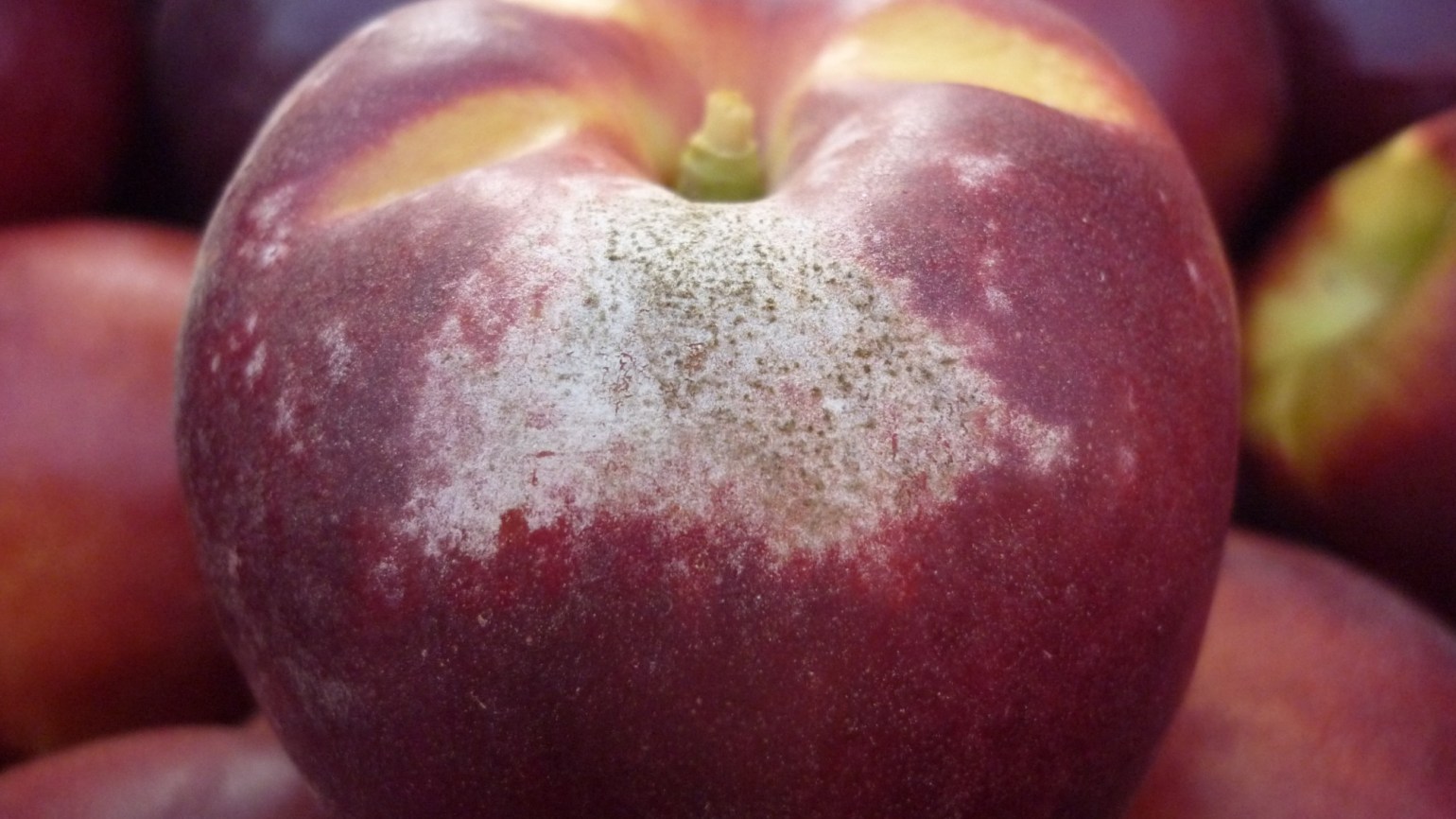
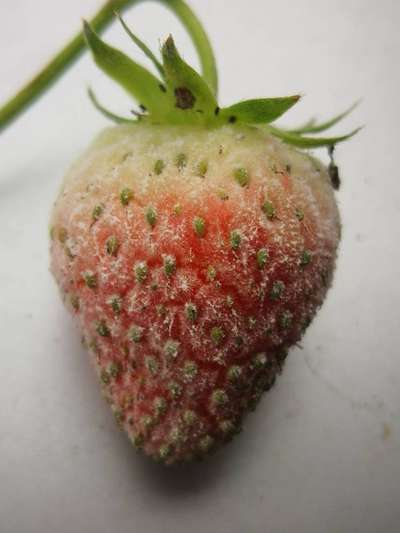
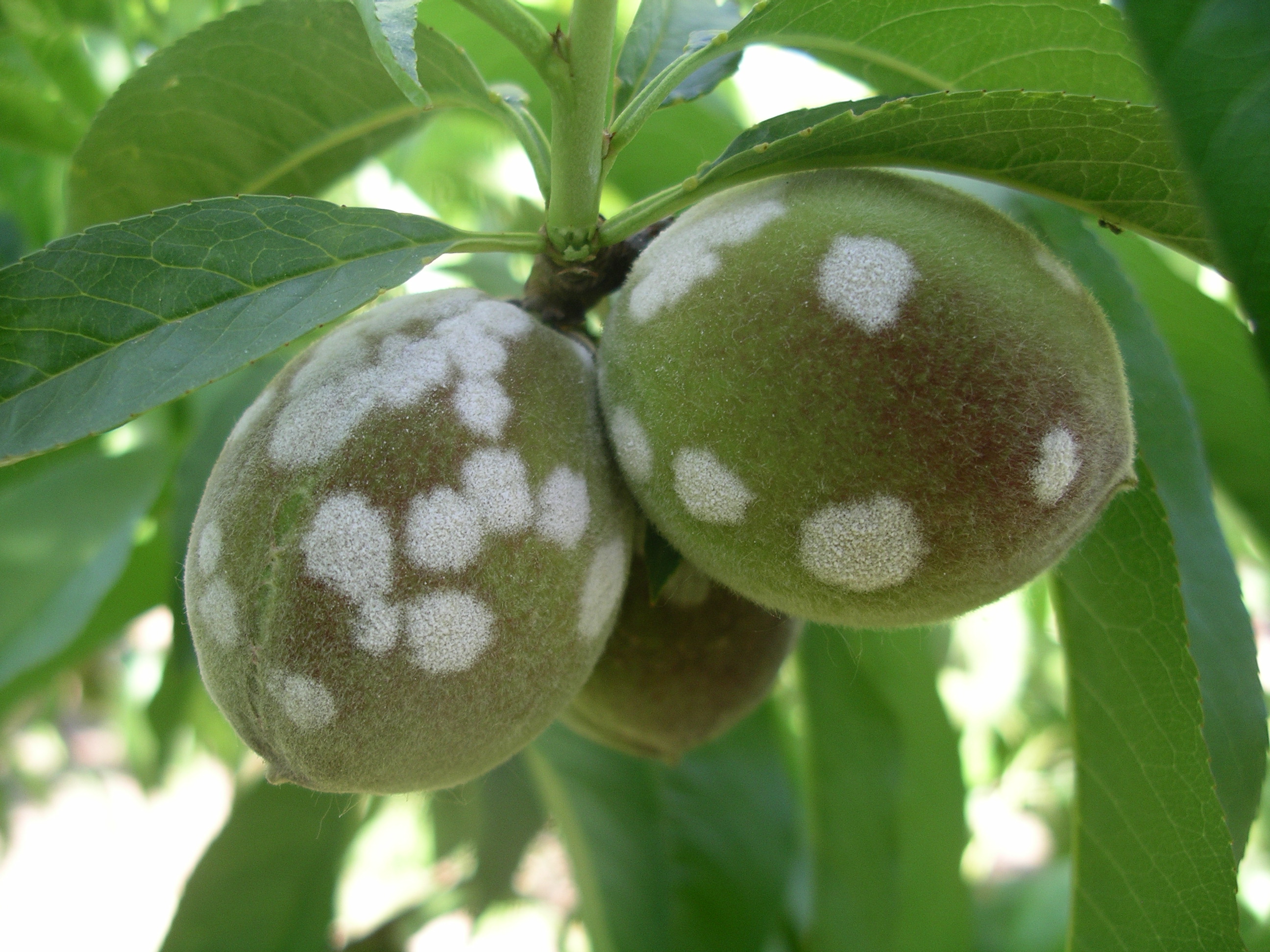
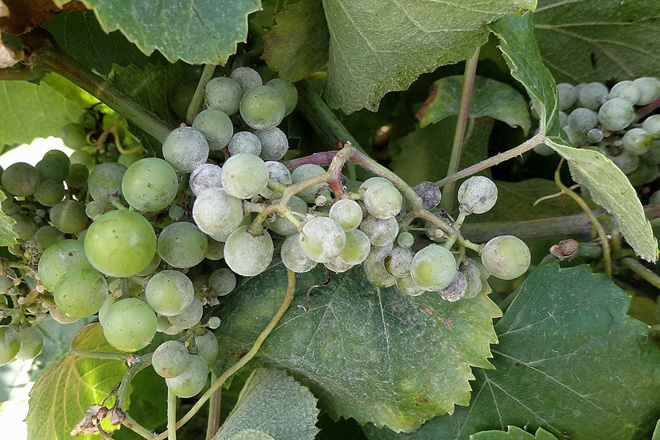
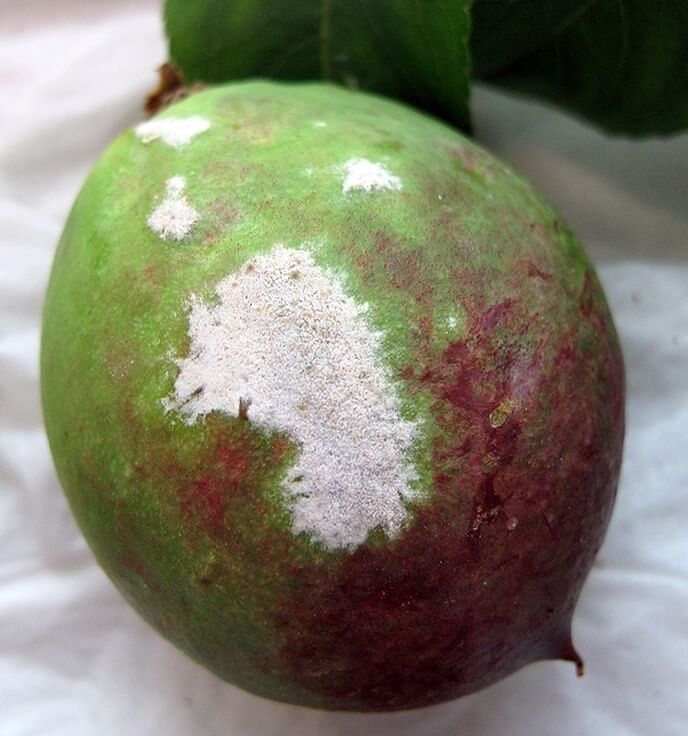
Powdery mildew causes a disease easily recognizable by the formation of a whitish, powdery, mealy coating on the surface of the fruit. The infection can begin with small, isolated colonies that subsequently increase in size and can eventually cover a significant portion of the surface. As the disease progresses, the affected tissues may exhibit developmental alterations, loss of commercial quality, and surface damage that contributes to fruit deterioration. In severe infestations, the infection can cause deformities, reduced growth, and uneven ripening, as well as considerably decreasing the commercial value of the harvest. In certain fruits, colonization during the early stages of development can cause permanent damage to the epidermis, while later infections may manifest primarily as whitish coatings and surface lesions.
• Appearance of whitish, powdery spots or colonies on the surface of the fruit.
• Formation of white or grayish mycelium that can progressively spread across the epidermis.
• Abundant presence of white powder due to spore production on affected tissues.
• Development of discolored, yellowish, or brownish areas around colonized zones.
• Fruit deformation or irregular growth when infection occurs during early stages of development.
• Formation of surface lesions, russeting, cracks, or epidermal alterations in certain crops and under certain conditions.
• Reduction in the visual and commercial quality of the fruit.
• Uneven ripening and reduced normal development when the infection is severe.
• Necrosis and tissue deterioration in severe infestations or when lesions persist for extended periods.
• Appearance of new colonies on nearby fruit due to the airborne dispersal of conidia.

TEMPERATURE AND HUMIDITY
15-28 °C
60-90 %

HOW IS IT SPREAD?
Air, Conidia, Spores, Contact with infected tissues, Infected plant debris, Infected plant material

HOW TO REMOVE IT?
Home remedies
There are no home treatments
Chemical treatments
• ORANGE OIL 6% [SL] P/V
• ORANGE OIL 60g/L [ME] P/S
• AZOXISTROBIN 25% [SC] P/V
• SULFUR 80% [SC] P/V
• SULFUR 80% [WG] P/P
• SULFUR 80% [WP] P/P
• CIFLUFENAMID 10% [SC] P/V
• POTASSIUM HYDROGEN CARBONATE 85% [SP] P/P
• METRAPHENONE 50% [SC] P/V
• TETRACONAZOLE 10% [EC] P/V
• TETRACONAZOLE 12.5% [ME] P/V
• TETRACONAZOLE 4% [ME] P/V
Authorized treatments in organic farming
• Orange Oil 6% [SL] w/v
• Orange Oil 60g/L [ME] w/v
• Sulfur 80% [SC] w/v
• Sulfur 80% [WG] w/w
• Sulfur 80% [WP] w/w
• Potassium Bicarbonate 85% [SP] w/w
Insect allies
PREDATORY MITES
LADYBUGS
LACEWINGS
PARASITIC WASPS
HOVERFLIES OR PARASITIC FLIES
PREDATORY BUGS
There are no natural allies
Mycodiplosis oidii (predatory mosquito)
EFFECTIVE PRODUCTS TO ELIMINATE THIS DISEASE
Sponsored link

Sponsored link
Sponsored link
Sponsored link
Sponsored link
Sponsored link
Sponsored link
Sponsored link
Sponsored link
Sponsored link


Sponsored link
Sponsored link
Effective against all types of fungi

Sponsored link
Sponsored link
Sponsored link
Sponsored link
Sponsored link
Sponsored link
Sponsored link
Sponsored link


Sponsored link
Sponsored link

Sponsored link
Sponsored link
Sponsored link
Sponsored link
Sponsored link
Sponsored link
Sponsored link
Sponsored link


Sponsored link
Sponsored link
Sponsored link
Sponsored link
Sponsored link
Sponsored link
Sponsored link
Sponsored link
Sponsored link
Sponsored link


Sponsored link
• Maintain good ventilation in the crop to reduce the duration of favorable conditions around the fruit.
• Avoid excessive plant density and carry out pruning or other necessary interventions to improve air circulation.
• Avoid excessive shading, especially in crops with very dense vegetation.
• Frequently monitor the fruit to detect the first whitish colonies before the disease spreads.
• Remove and dispose of severely affected tissues and fruit, when feasible, to reduce the amount of available inoculum.
• Avoid excessive nitrogen fertilization, as excessively tender vegetative growth can favor the establishment and development of powdery mildew.
• Maintain balanced plant nutrition, avoiding imbalances that increase tissue susceptibility.
• Use varieties or cultivars with tolerance or resistance to powdery mildew when available.
• Avoid creating excessively favorable microclimates through improper vegetation management.
• Apply preventative treatments to crops and during historically favorable periods when there is a high risk of infection.
• Begin phytosanitary control at the first sign of infection and do not wait for colonies to cover a large area.
• Alternate active ingredients belonging to different action groups to reduce selection pressure on the pathogen.
• Do not make repeated applications of products with the same mechanism of action when effective alternatives exist.
• Respect the doses, intervals, and application conditions indicated on the label of each authorized product.
• Combine, when permitted and technically appropriate, fungicides with different modes of action with multi-site products.
• Avoid unnecessary treatments when there is no real risk of infection, thus reducing the pathogen's exposure to fungicides.
• Alternate chemical applications with cultural practices and other available control tools.
• Remove infected plant debris when it could constitute a source of inoculum for the next crop.
• Control weeds that may act as a reservoir for the pathogen when they are susceptible and located near the crop.
• Pay special attention to periods with moderate temperatures and environmental conditions favorable for the production and dispersal of conidia.
• Periodically review the effectiveness of applied treatments and detect any loss of susceptibility in the pathogen.
• Integrate preventive, cultural, varietal, and phytosanitary measures into an integrated pest management strategy instead of relying exclusively on fungicides.
Recommendations

Enjoy idMicrobe TOTALLY FREE, with no trial periods.


