

Alternariosis
Alternariosis
Alternaria Sp.
Pathogen:
Fungus
Type:
Risk to the plant:
INTERMEDIATE


DESCRIPTION
WHO CAUSES IT?
Alternaria sp. is a genus of fungi that includes several phytopathogenic species that affect a wide range of plants, including chard. These fungi are saprophytic and necrotrophic, capable of surviving on plant remains in the soil or on infected seeds during unfavorable periods. Alternaria produces conidia in long chains that are easily dispersed by wind, water, and physical contact. These conidia germinate in conditions of high humidity, penetrating the plant tissue through wounds or directly through the stomata. Once inside the plant, the fungus produces toxins that kill cells and feed on dead material, forming characteristic necrotic Taches. Alternaria development is favored by warm, humid environments, allowing for multiple cycles of infection during a growing season.
SYMPTOMS
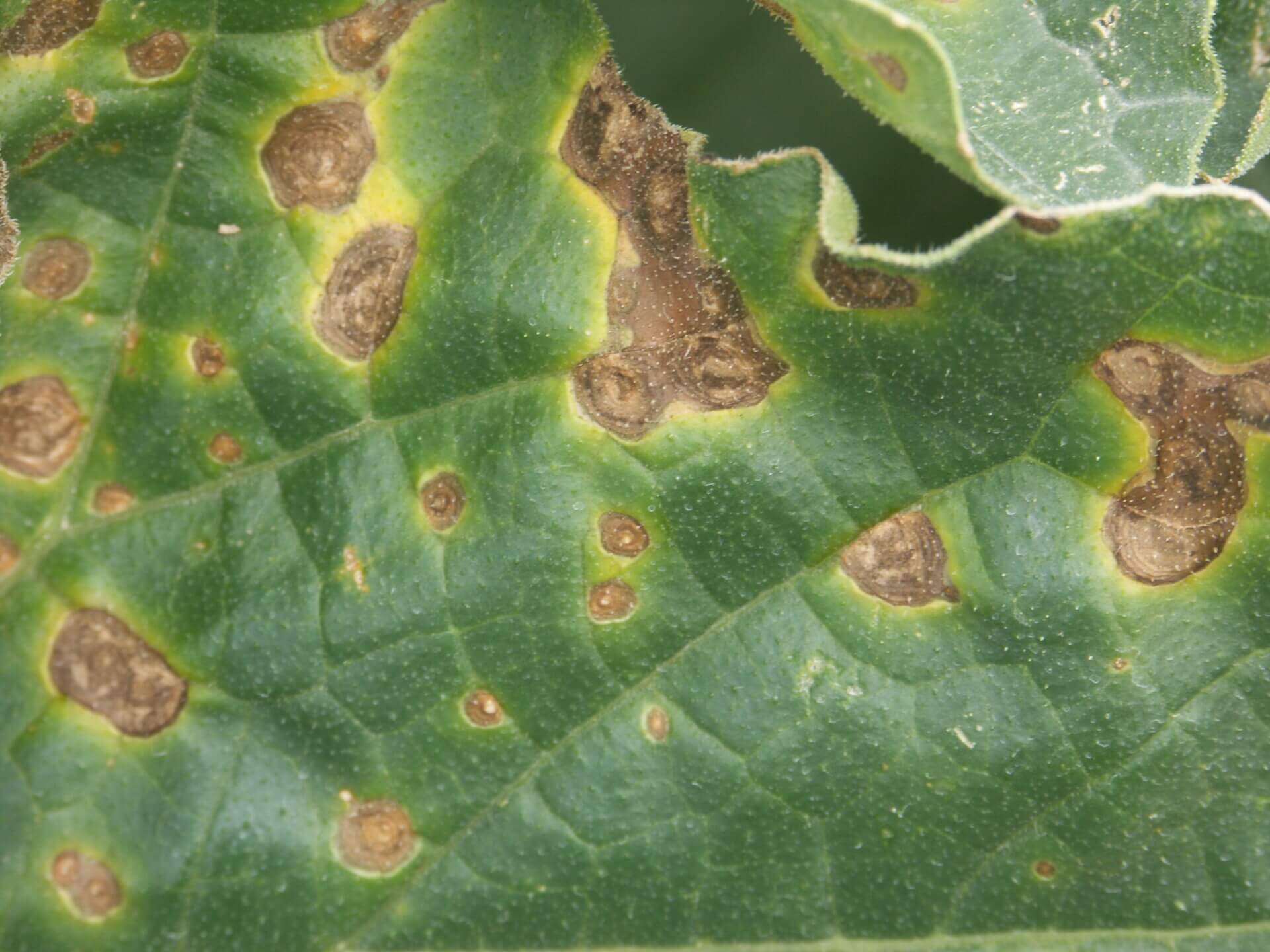
In chard, Alternaria sp. It causes a disease known as alternariosis, which mainly affects the leaves, reducing photosynthesis and product quality. The infection begins with small dark Taches on the leaves that quickly enlarge and may merge, forming large necrotic areas. The lesions usually have a yellow border and, in high humidity conditions, may have a hairy appearance due to sporulation of the fungus.
• Small dark Taches on the leaves.
• Taches that enlarge and merge forming large necrotic areas.
• Lesions with yellow border.
• Hairy appearance in high humidity conditions.
• Reduction in photosynthesis.
• Loss of product quality.



TEMPERATURE AND HUMIDITY
20ºC - 30ºC
80% - 100%

HOW IS IT SPREAD?
Wind, water, direct contact, gardening tools, infected seeds.

HOW TO REMOVE IT?
Home remedies
There are no home treatments
Chemical treatments
• AZOXISTROBIN 25% [SC] P/V
• FLUDIOXONIL 50% [WG] P/P
• FLUXAPYROXAD 7.5% + DIFENOCONAZOLE 5% [SC] P/V
• COPPER OXYCHLORIDE 35% (exp. in Cu) [WG] P/P
• COPPER OXYCHLORIDE 50% (EXPR. IN CU) [WP] P/P
• COPPER OXYCHLORIDE 52% (EXPR. IN CU) [SC] P/V
• COPPER OXYCHLORIDE 70% (EXPR. IN CU) [SC] P/V
• PIRACLOSTROBIN 6.7% + BOSCALIDE 26.7% (I) [WG] P/P
• CUPROCALCIC SULFATE 20% (EXPR. IN CU) [WP] P/P
Treatments allowed in organic farming
• COPPER OXYCHLORIDE 35% (exp. in Cu) [WG] P/P
• COPPER OXYCHLORIDE 50% (EXPR. IN CU) [WP] P/P
• COPPER OXYCHLORIDE 52% (EXPR. IN CU) [SC] P/V
• COPPER OXYCHLORIDE 70% (EXPR. IN CU) [SC] P/V
• CUPROCALCIC SULFATE 20% (EXPR. IN CU) [WP] P/P
Insect allies
PREDATORY MITES
LADYBUGS
LACEWINGS
PARASITIC WASPS
HOVERFLIES OR PARASITIC FLIES
PREDATORY BUGS
There are no natural allies
Mycodiplosis oidii (predatory mosquito)
EFFECTIVE PRODUCTS TO ELIMINATE THIS DISEASE
Sponsored link
Sponsored link


Sponsored link
Sponsored link
Sponsored link


Sponsored link
Sponsored link
Effective against all types of fungi

Sponsored link


Sponsored link
Sponsored link

Sponsored link


Sponsored link
• Use certified and pathogen-free seeds.
• Implement a crop rotation, avoiding sowing chard in the same place for several seasons.
• Eliminate plant debris and weeds that may harbor the fungus.
• Apply specific fungicides preventively and following local recommendations.
• Maintain adequate spacing between plants to improve air circulation and reduce leaf humidity.
• Water in the morning hours to allow the leaves to dry during the day.
• Regularly monitor plants to detect and remove infected leaves in time.
• Promote the use of chard varieties resistant to Alternaria.
Recommendations

Enjoy idMicrobe TOTALLY FREE, with no trial periods.


