

Alternariosis
Alternariosis
Alternaria Sp.
Pathogen:
Fungus
Type:
Risk to the plant:
HIGH
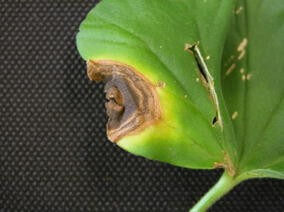
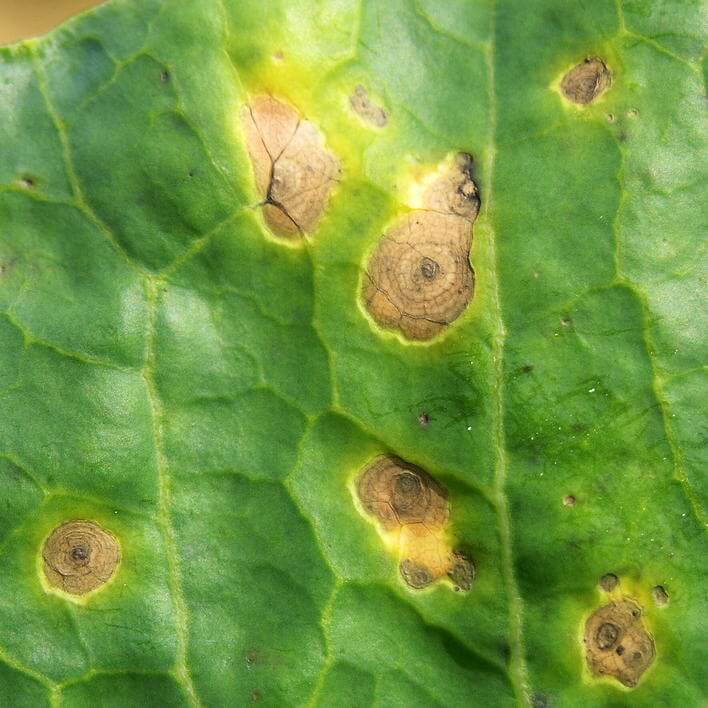

DESCRIPTION
WHO CAUSES IT?
Alternaria sp. It is a genus of filamentous fungi that includes several plant pathogenic species. These fungi reproduce using asexual spores known as conidia, which are dispersed by wind, water, and direct contact. Alternaria can survive on infected plant debris and in soil for long periods. Under favorable conditions, spores germinate and penetrate plant tissues through wounds or stomata. The fungus produces toxins that kill plant cells, allowing the pathogen to feed on dead tissues. Alternaria is especially active in conditions of high humidity and moderate to warm temperatures, which facilitates its spread and the initiation of new infections. This pathogen has the ability to form spores rapidly, allowing it to multiply and cause epidemics in a short period of time.
SYMPTOMS
Alternariosis is a disease that affects various plants, manifesting mainly in the leaves, stems and fruits.
- Appearance of brown or black Taches on the leaves, often with yellow edges.
- Necrotic lesions that can expand and join together, causing large areas of dead tissue.
- Dark, sunken Taches on the stems and fruits, which can lead to rot.
- Premature defoliation, especially in high humidity conditions.
- Reduction in the photosynthetic capacity of the plant, weakening it and reducing its performance.
- Appearance of dark mold in affected areas.
- Decomposition and premature fruit fall.
- Discoloration and wilting in advanced stages of infection.
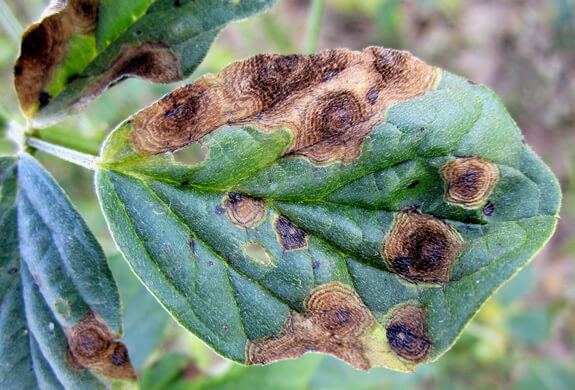
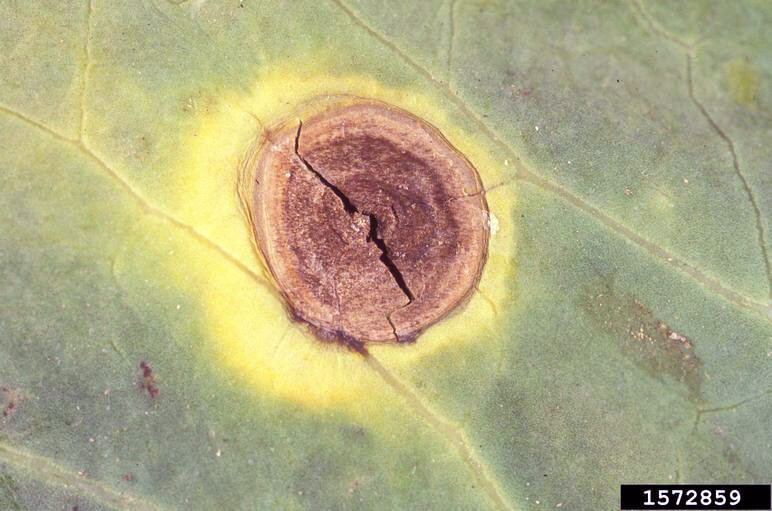


TEMPERATURE AND HUMIDITY
18°C - 25°C
80% - 90%

HOW IS IT SPREAD?
Wind, water, contaminated garden tools, direct contact with infected plants, insect vectors, infected seeds

HOW TO REMOVE IT?
Home remedies
There are no home treatments
Chemical treatments
• AZOXISTROBIN 25% [SC] P/V
• CIPRODINIL 37.5% + FLUDIOXONIL 25% [WG] P/P
• DIFENOCONAZOLE 1.67% [EC] P/V
• FOLPET 50% [SC] P/V
• FOLPET 80% [WG] P/P
• CUPRIC HYDROXIDE 50% (EXPR. IN CU) [WP] P/P
• METIRAM 70% [WG] P/P
• COPPER OXYCHLORIDE 30% (EXPR. IN CU) [WP] P/P
• COPPER OXYCHLORIDE 35% (exp. in Cu) [WG] P/P
• COPPER OXYCHLORIDE 35% (EXPR. IN CU) [WG] P/P
• COPPER OXYCHLORIDE 38% (EXPR. IN CU) [SC] P/V
• COPPER OXYCHLORIDE 50% (EXPR. IN CU) [WP] P/P
• COPPER OXYCHLORIDE 52% (EXPR. IN CU) [SC] P/V
• PIRACLOSTROBIN 6.7% + BOSCALIDE 26.7% ( ) [WG] P/P
• PIRACLOSTROBIN 6.7% + BOSCALIDE 26.7% (I) [WG] P/P
• CUPROCALCIC SULFATE 20% (EXPR. IN CU) [WG] P/P
• CUPROCALCIC SULFATE 20% (EXPR. IN CU) [WP] P/P
• TRIBASIC COPPER SULFATE 19% (EXPR. IN CU) [SC] P/V
Treatments allowed in organic farming
• CUPRIC HYDROXIDE 50% (EXPR. IN CU) [WP] P/P
• COPPER OXYCHLORIDE 30% (EXPR. IN CU) [WP] P/P
• COPPER OXYCHLORIDE 35% (exp. in Cu) [WG] P/P
• COPPER OXYCHLORIDE 35% (EXPR. IN CU) [WG] P/P
• COPPER OXYCHLORIDE 38% (EXPR. IN CU) [SC] P/V
• COPPER OXYCHLORIDE 50% (EXPR. IN CU) [WP] P/P
• COPPER OXYCHLORIDE 52% (EXPR. IN CU) [SC] P/V
• CUPROCALCIC SULFATE 20% (EXPR. IN CU) [WG] P/P
• CUPROCALCIC SULFATE 20% (EXPR. IN CU) [WP] P/P
• TRIBASIC COPPER SULFATE 19% (EXPR. IN CU) [SC] P/V
Insect allies
PREDATORY MITES
LADYBUGS
LACEWINGS
PARASITIC WASPS
HOVERFLIES OR PARASITIC FLIES
PREDATORY BUGS
There are no natural allies
Mycodiplosis oidii (predatory mosquito)
EFFECTIVE PRODUCTS TO ELIMINATE THIS DISEASE
Sponsored link

Sponsored link


Sponsored link
Sponsored link
Sponsored link


Sponsored link
Sponsored link
Effective against all types of fungi

Sponsored link


Sponsored link
Sponsored link

Sponsored link


Sponsored link
- Remove and destroy the remains of infected plants to reduce the source of inoculum.
- Implement a crop rotation to avoid the accumulation of pathogens in the soil.
- Use Alternaria-resistant plant varieties when available.
- Apply fungicides preventively in conditions favorable for the development of the disease.
- Maintain good soil drainage and avoid overwatering to reduce humidity around the plants.
- Ensure adequate ventilation between plants through pruning and proper spacing.
- Regularly monitor plants to detect signs of infection early and act quickly.
- Avoid overhead irrigation, which can wet the leaves and facilitate the dispersion of spores.
Recommendations

Enjoy idMicrobe TOTALLY FREE, with no trial periods.


