

Alternariosis
Alternariosis
Alternaria Sp.
Pathogen:
Fungus
Type:
Risk to the plant:
INTERMEDIATE


DESCRIPTION
WHO CAUSES IT?
Alternaria sp. It is a genus of phytopathogenic fungi that affects a wide variety of plants. Fungi of the genus Alternaria produce elongated, multicellular spores, known as conidia, which are spread mainly by wind and water. These spores germinate in conditions of high humidity and moderate temperatures, penetrating the leaf tissues through stomata or wounds in the plant. During its development, Alternaria can produce toxins that weaken plant cells, facilitating the invasion of the fungus into surrounding tissues. Infections usually start on older leaves and progressively spread to younger ones. This pathogen can survive on plant remains in the soil or on infected seeds, persisting from one season to the next. Sporulation increases under favorable temperature and humidity conditions, accelerating the spread of the disease throughout the crop.
SYMPTOMS
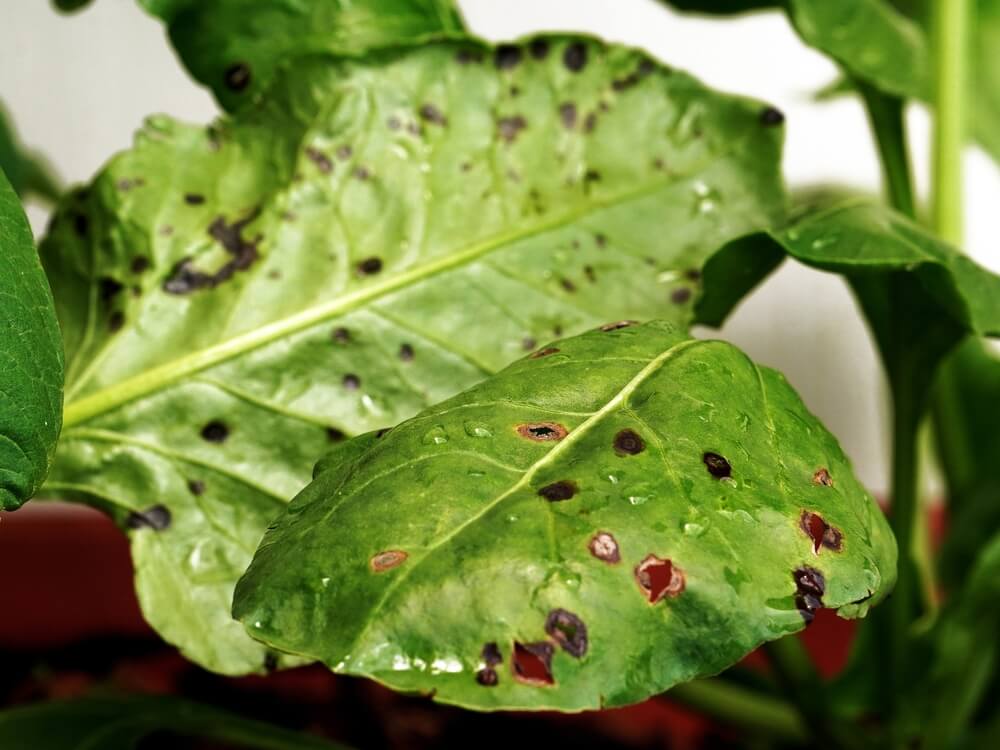
In spinach and the like, Alternaria sp. It causes a disease known as alternariosis, which manifests itself mainly in the leaves and can significantly reduce the quality and yield of the crop. Affected plants show circular or irregular dark brown or black Taches, surrounded by a yellowish halo. These Taches can coalesce, resulting in extensive necrosis and premature leaf drop. The severity of the disease increases under humid conditions, affecting both seedlings and mature plants, which can compromise the harvest.
- Brown to black Taches on the leaves.
- Yellow halo around the Taches.
- Loss of leaves due to necrosis.
- Reduction in the commercial quality of the leaves.
- Premature defoliation in severe infections.


TEMPERATURE AND HUMIDITY
15-25°C
70-90%

HOW IS IT SPREAD?
Irrigation water, wind, infected plant remains, contaminated seeds, contaminated agricultural tools

HOW TO REMOVE IT?
Home remedies
There are no home treatments
Chemical treatments
• AZOXISTROBIN 25% [SC] P/V
• FLUDIOXONIL 50% [WG] P/P
• FLUXAPYROXAD 7.5% + DIFENOCONAZOLE 5% [SC] P/V
• COPPER OXYCHLORIDE 35% (exp. in Cu) [WG] P/P
• COPPER OXYCHLORIDE 50% (EXPR. IN CU) [WP] P/P
• COPPER OXYCHLORIDE 52% (EXPR. IN CU) [SC] P/V
• COPPER OXYCHLORIDE 70% (EXPR. IN CU) [SC] P/V
• PIRACLOSTROBIN 6.7% + BOSCALIDE 26.7% (I) [WG] P/P
• CUPROCALCIC SULFATE 20% (EXPR. IN CU) [WP] P/P
Treatments allowed in organic farming
• COPPER OXYCHLORIDE 35% (exp. in Cu) [WG] P/P
• COPPER OXYCHLORIDE 50% (EXPR. IN CU) [WP] P/P
• COPPER OXYCHLORIDE 52% (EXPR. IN CU) [SC] P/V
• COPPER OXYCHLORIDE 70% (EXPR. IN CU) [SC] P/V
• CUPROCALCIC SULFATE 20% (EXPR. IN CU) [WP] P/P
Insect allies
PREDATORY MITES
LADYBUGS
LACEWINGS
PARASITIC WASPS
HOVERFLIES OR PARASITIC FLIES
PREDATORY BUGS
There are no natural allies
Mycodiplosis oidii (predatory mosquito)
EFFECTIVE PRODUCTS TO ELIMINATE THIS DISEASE
Sponsored link
Sponsored link


Sponsored link
Sponsored link
Sponsored link


Sponsored link
Sponsored link
Effective against all types of fungi

Sponsored link


Sponsored link
Sponsored link

Sponsored link


Sponsored link
- Use certified, pathogen-free seeds to avoid the introduction of the fungus into crops.
- Implement crop rotation with plants not susceptible to Alternaria sp. to reduce the presence of the pathogen in the soil.
- Remove and destroy the remains of infected crops, as these can serve as a source of inoculum for future infections.
- Avoid sprinkler irrigation, since water favors the spread of spores and infection on the leaves.
- Improve ventilation between plants through adequate distancing, which helps reduce foliar humidity.
- Apply specific fungicides at the first signs of infection, prioritizing products with different modes of action to avoid resistance.
- Promote comprehensive management of crop health through frequent monitoring for early detection of symptoms.
- Maintain a balanced fertilization program to ensure that plants have robust natural defenses against pathogen attack.
Recommendations

Enjoy idMicrobe TOTALLY FREE, with no trial periods.


