

Araña roja
Red Spider
Tetranychus Urticae
Pathogen:
Insect
Type:
Risk to the plant:
HIGH

DESCRIPTION
WHO CAUSES IT?
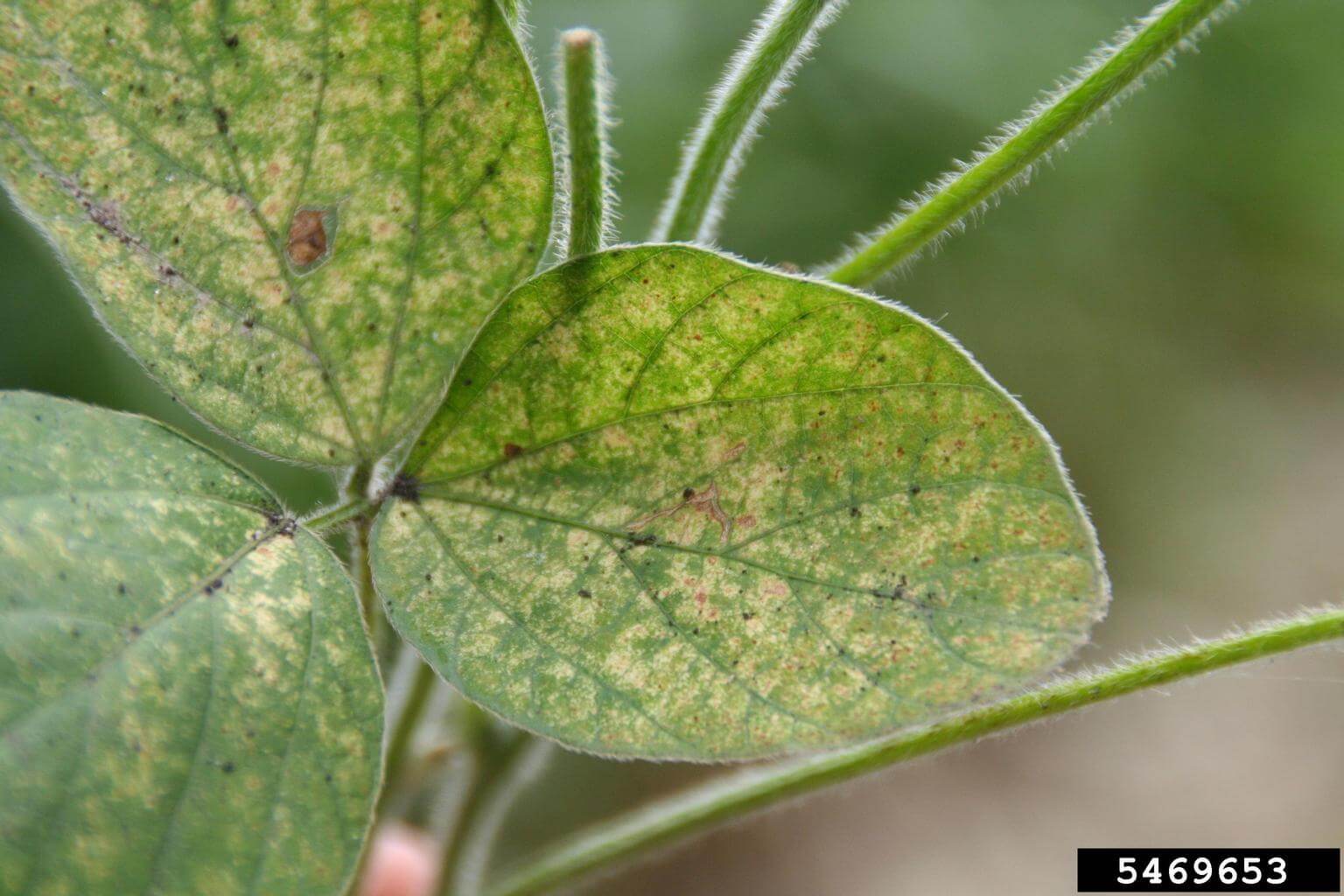
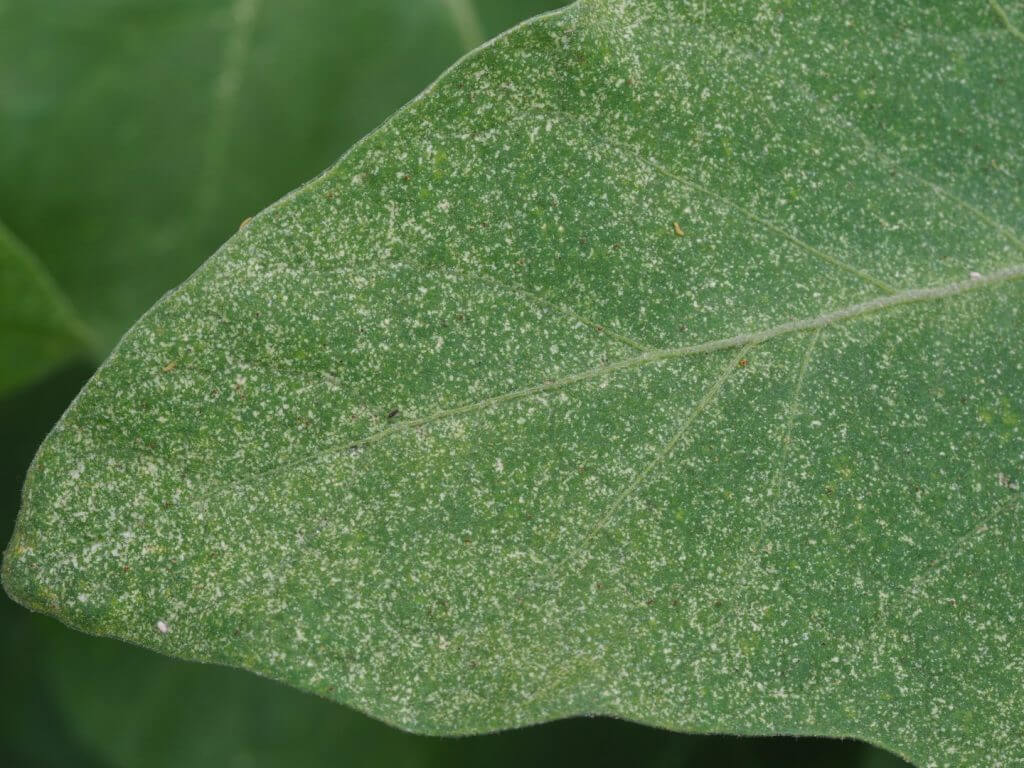
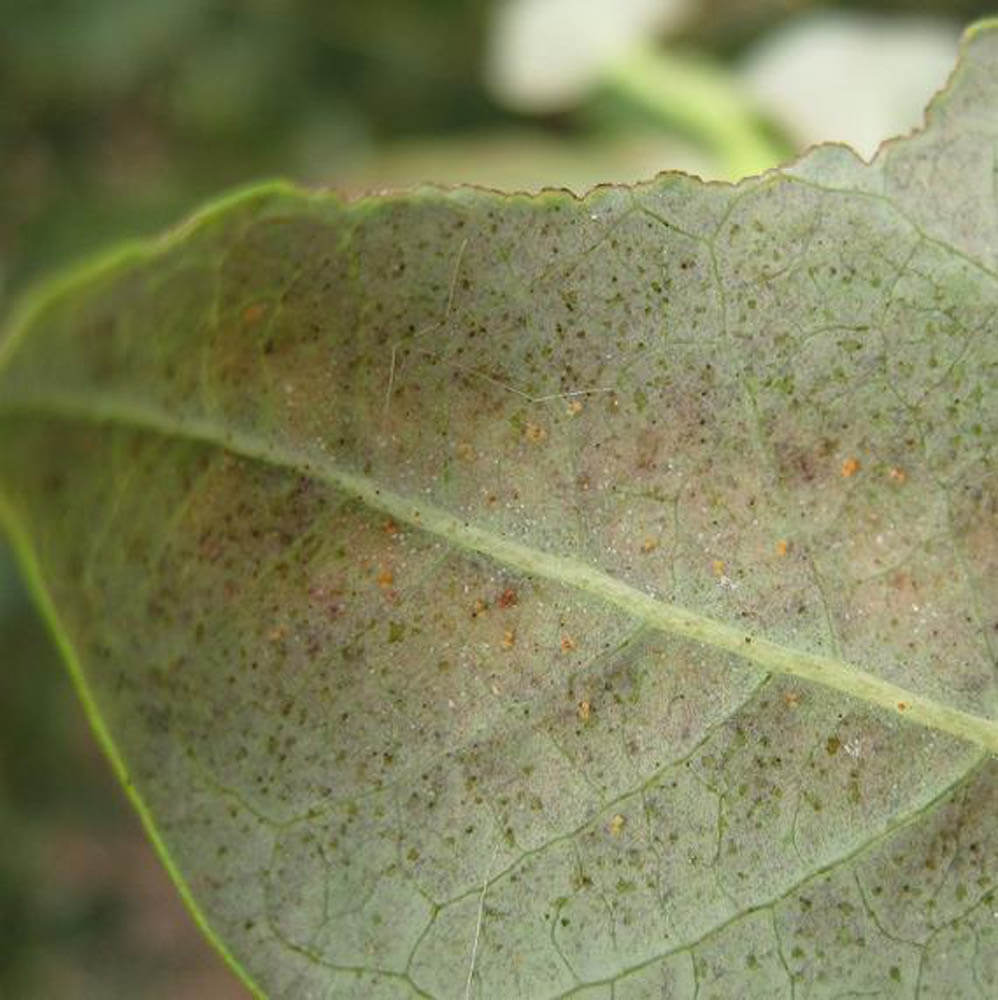
Tetranychus urticae, known as the red spider, is a phytophagous mite that seriously affects blueberry crops. This mite is tiny in size and is visible to the naked eye as small red or yellow dots. Reproduction of Tetranychus urticae is rapid and efficient, with females able to lay up to 100 eggs during their lifetime. The eggs, laid on the lower surface of the leaves, hatch in a few days depending on the temperature. The larvae go through several nymphal stages before becoming adults, a process that can be completed in as little as a week under optimal conditions. This high rate of reproduction allows the red spider to establish large populations in a short time, especially in hot, dry climates. Spider mites feed by piercing plant cells and sucking out the contents, resulting in significant damage to the plant.
SYMPTOMS
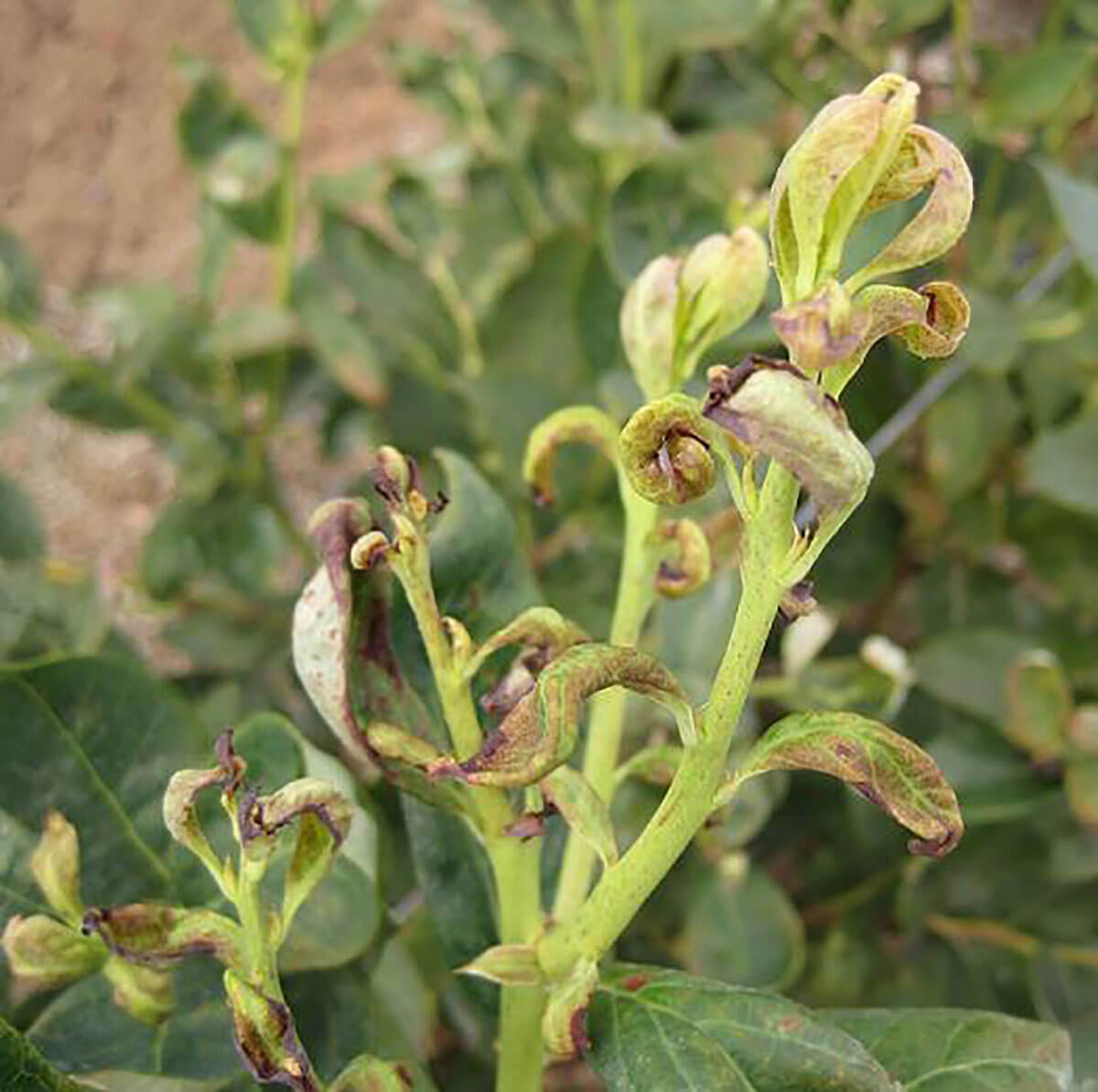
Spider mites cause a notable disease in blueberries, characterized by general weakening of the plant due to the mites' continuous feeding on the leaves. This feeding activity reduces the photosynthetic capacity of the plant, affecting its growth and fruit production. Damage can escalate rapidly in the presence of high mite populations.
- Leaves mottled and discolored.
- Yellowish or tanned fabrics.
- Dry and prematurely fallen leaves.
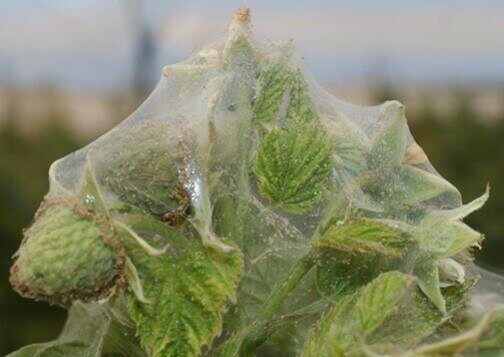
- Fine cobwebs on the lower surface of the leaves.
- Reduction in the size and quality of the fruits.
- General decrease in plant vigor.

TEMPERATURE AND HUMIDITY
20°C - 30°C
40% - 60%

HOW IS IT SPREAD?
Wind, contaminated gardening tools, movement of infested plants, direct contact between plants, workers' clothing and footwear

HOW TO REMOVE IT?
Home remedies
There are no home treatments
Chemical treatments
• RAPE OIL 1.53% [AL] P/V
• RAPE OIL 848.24 g/l [EC] P/V
• ORANGE OIL 60g/L [ME] P/S
• PARAFFIN OIL (CAS [8042-47-5]) 54.6% [EW] P/V
• PARAFFIN OIL (CAS [97862-82-3]) 80% [EC] P/V
• SULFUR 70% [SC] P/V
• SULFUR 80% [SC] P/V
• SULFUR 80% [WG] P/P
• MILBEMECTIN 0.93% [EC] P/V
Treatments allowed in organic farming
• RAPE OIL 1.53% [AL] P/V
• RAPE OIL 848.24 g/l [EC] P/V
• ORANGE OIL 60g/L [ME] P/S
• PARAFFIN OIL (CAS [8042-47-5]) 54.6% [EW] P/V
• PARAFFIN OIL (CAS [97862-82-3]) 80% [EC] P/V
• SULFUR 70% [SC] P/V
• SULFUR 80% [SC] P/V
• SULFUR 80% [WG] P/P
Insect allies
PREDATORY MITES
LADYBUGS
LACEWINGS
PARASITIC WASPS
HOVERFLIES OR PARASITIC FLIES
PREDATORY BUGS
There are no natural allies
Mycodiplosis oidii (predatory mosquito)
EFFECTIVE PRODUCTS TO ELIMINATE THIS DISEASE
Sponsored link

Sponsored link


Sponsored link
Sponsored link
Sponsored link


Sponsored link
Sponsored link
Effective against all types of fungi

Sponsored link


Sponsored link
Sponsored link

Sponsored link


Sponsored link
- Implement regular monitoring for early detection of infestations.
- Use horticultural oils and insecticidal soaps to reduce the mite population.
- Introduce natural enemies such as Phytoseiulus persimilis and Amblyseius californicus that prey on Tetranychus urticae.
- Maintain good field hygiene, eliminating plant residues and weeds that may harbor mites.
- Avoid excessive use of nitrogen fertilizers, as they can favor the growth of mite populations.
- Use anti-aphid meshes to prevent the entry of mites into the greenhouses.
- Carry out sanitary pruning to improve air circulation and reduce humidity favorable to mites.
- Apply treatments with specific acaricides following the recommendations for integrated pest management.
- Implement irrigation techniques that maintain an adequate humidity level without creating water stress conditions for plants.
- Rotate crops and avoid continuous planting of susceptible host plants to reduce pest pressure.
Recommendations

Enjoy idMicrobe TOTALLY FREE, with no trial periods.


