

Escamas
White scales or flakes: what they are, how they originate, and how to eliminate them effectively.
Pellets or scales or white louse
Aspidiotus nerii
Pathogen:
Insect
Type:
Risk to the plant:
HIGH
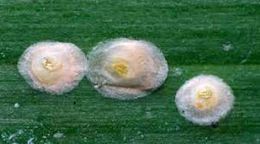


DESCRIPTION
WHO CAUSES IT?
Aspidiotus nerii is a hemipteran insect of the Diaspididae family, known as the white scale louse. It is a phytophagous that feeds on the sap of various host plants, including the banana tree. It presents a hemimetabolous development, that is, it goes through three main phases: egg, nymph and adult. Adult females are circular and flattened in shape, with a whitish or yellowish waxy shell that serves as protection. The males, on the other hand, are winged and much less visible. Eggs are laid under the female's protective shield, where the nymphs emerge and begin to move in search of a suitable place to feed. These nymphs, also called "crawlers", are the most mobile phase of the insect, since when they attach to the plant, they remain in one place for the rest of their development. Its biological cycle can be completed in a few weeks under optimal conditions, favoring a rapid increase in populations and making it difficult to control.
SYMPTOMS
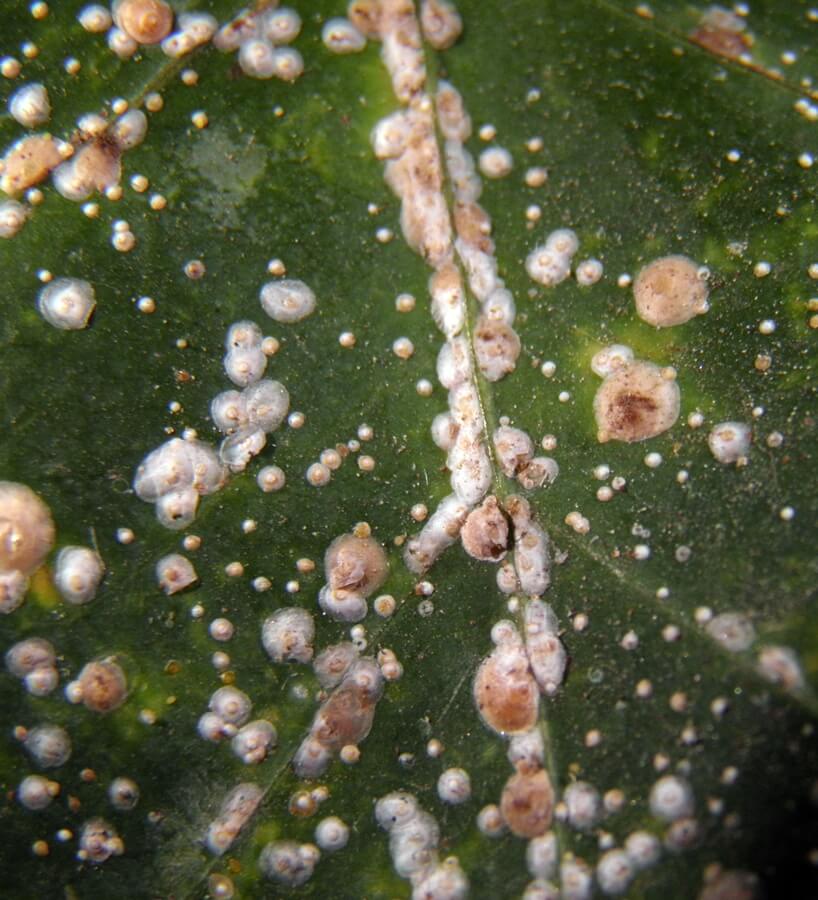
The infestation of Aspidiotus nerii in the banana tree generates a disease that affects the physiology of the plant, reducing its photosynthetic capacity and progressively weakening it. This damage is due to the suction of sap carried out by the nymphs and adults, which causes loss of vigor and deformation of leaves and fruits. Furthermore, the presence of the insect favors the development of sooty mold, a fungus that feeds on the sugary secretions produced by some sucking insects, further affecting the health of the crop.
- Presence of whitish or yellowish scales attached to the leaves, fruits and stems.
- Yellowing and progressive weakening of foliage.
- Reduction in plant growth and production.
- Appearance of sooty mold on the surface of leaves and fruits.
- Premature fall of affected leaves and fruits.
- Difficulty absorbing nutrients due to sap suction.


TEMPERATURE AND HUMIDITY
20°C - 30°C
60% - 80%

HOW IS IT SPREAD?
Wind, plant contact, contaminated tools, infested plant material

HOW TO REMOVE IT?
Home remedies
There are no home treatments
Chemical treatments
• HUILE D'ORANGE 60g/L [ME] P/S
• HUILE DE PARAFFINE (CAS [64742-46-7]) 79 % [EC] P/V
• HUILE DE PARAFFINE (CAS [8042-47-5]) 54,6 % [EW] P/V
• HUILE DE PARAFFINE (CAS [8042-47-5]) 79 % [EC] P/V
• HUILE DE PARAFFINE (CAS [97862-82-3]) 40 % [EW] P/V
• HUILE DE PARAFFINE (CAS [97862-82-3]) 80% [EC] P/V
• Huile de paraffine 65,4 % [EW] P/V
• HUILE DE PARAFFINE 81,7 % [CE] P/V
• HUILE DE PARAFFINE 83 % [EC] P/V
• ACÉTAMIPRID 20 % [SG] P/P
• MALTODEXTRINE 47,6% [SL] P/V
• SELS DE POTASSIUM D'ACIDES GRAS C14-C20 48% [EW] P/V
• SPIROTETRAMAT 10 % [SC] P/V
Treatments allowed in organic farming
• HUILE D'ORANGE 60g/L [ME] P/S
• HUILE DE PARAFFINE (CAS [64742-46-7]) 79 % [EC] P/V
• HUILE DE PARAFFINE (CAS [8042-47-5]) 54,6 % [EW] P/V
• HUILE DE PARAFFINE (CAS [8042-47-5]) 79 % [EC] P/V
• HUILE DE PARAFFINE (CAS [97862-82-3]) 40 % [EW] P/V
• HUILE DE PARAFFINE (CAS [97862-82-3]) 80% [EC] P/V
• Huile de paraffine 65,4 % [EW] P/V
• HUILE DE PARAFFINE 81,7 % [CE] P/V
• HUILE DE PARAFFINE 83 % [EC] P/V
• MALTODEXTRINE 47,6% [SL] P/V
• SELS DE POTASSIUM D'ACIDES GRAS C14-C20 48% [EW] P/V
Insect allies
PREDATORY MITES
LADYBUGS
LACEWINGS
PARASITIC WASPS
HOVERFLIES OR PARASITIC FLIES
PREDATORY BUGS
There are no natural allies
Mycodiplosis oidii (predatory mosquito)
EFFECTIVE PRODUCTS TO ELIMINATE THIS DISEASE
Sponsored link
Sponsored link


Sponsored link
Sponsored link
Sponsored link


Sponsored link
Sponsored link
Effective against all types of fungi

Sponsored link


Sponsored link
Sponsored link

Sponsored link


Sponsored link
- Carry out constant monitoring of the crop to detect the early presence of the insect and prevent its proliferation.
- Promote biodiversity in the growing area to enhance the presence of natural enemies such as coccinellids and parasitoids.
- Apply mineral oils or potassium soaps in the initial stages to reduce the population of nymphs without affecting beneficial organisms.
- Use yellow sticky traps to capture males and reduce insect reproduction.
- Avoid excessive use of broad-spectrum insecticides, as they can eliminate natural enemies and promote resistance to the white louse.
- Implement sanitary pruning in the most affected parts to eliminate sources of infestation and improve plant aeration.
- Apply biological products based on entomopathogenic fungi such as Beauveria bassiana to reduce the population of Aspidiotus nerii in a sustainable manner.
- Clean tools and avoid moving infested plants to healthy areas to avoid the spread of the insect.
- Ensure adequate management of the crop, avoiding conditions of water or nutritional stress that favor the susceptibility of the banana tree.
Recommendations

Enjoy idMicrobe TOTALLY FREE, with no trial periods.


