

Podredumbre gris
Gray Rot
Botrytis Cinerea
Pathogen:
Fungus
Type:
Risk to the plant:
HIGH
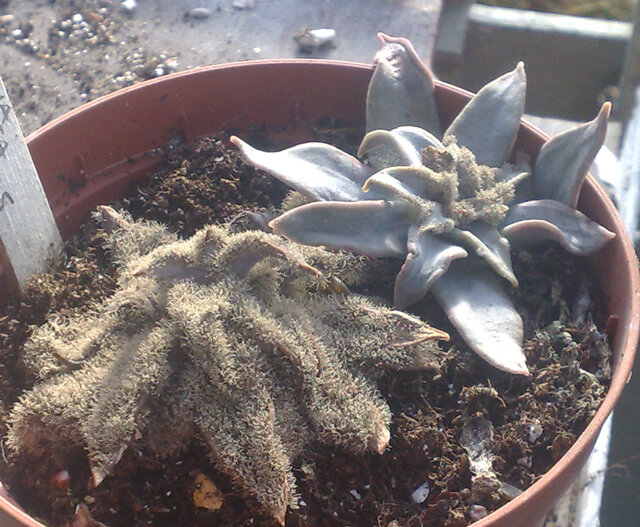
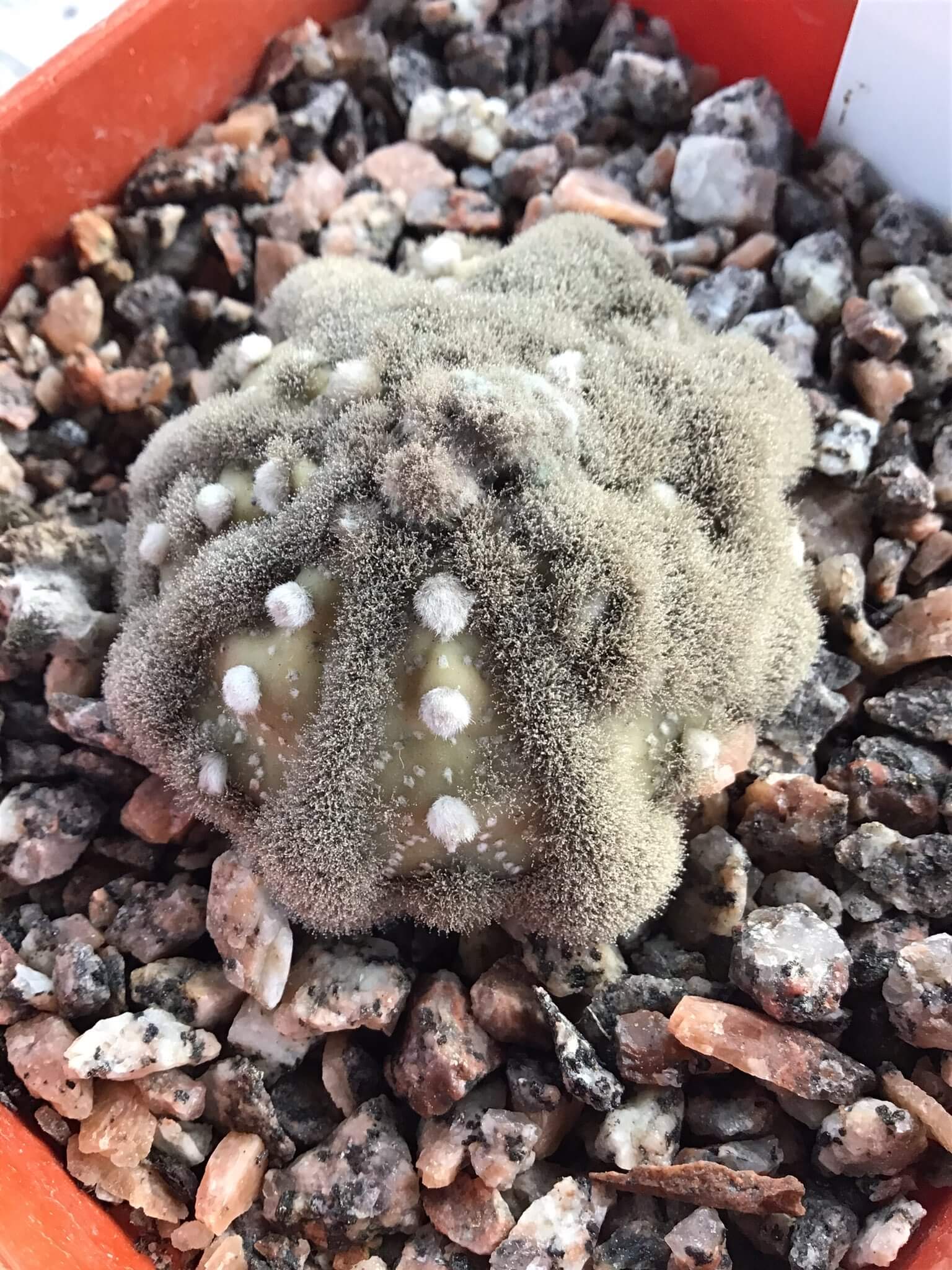

DESCRIPTION
WHO CAUSES IT?
Botrytis cinerea is a pathogenic fungus that causes gray rot in various plants, including cacti. This fungus produces asexual spores called conidia, which are dispersed through air and water. Under conditions of high humidity and moderate temperatures, conidia germinate and form mycelia that invade host plant tissues through wounds, stomata, and senescent surfaces. The fungus secretes enzymes that degrade the plant's cell walls, facilitating its penetration and spread. As the infection progresses, the fungus produces secondary sporulation in dead tissues, generating new spores that can disperse and continue the infectious cycle. This process is accelerated in humid and cold environments, where water condensation favors the germination of conidia and the growth of mycelium.
SYMPTOMS
Gray rot caused by Botrytis cinerea in cacti initially manifests as small watery Taches on the surface of the plant. These Taches quickly expand, becoming large, soft, grayish areas. The infection causes the decomposition of the cactus tissues, which develop a characteristic gray mold. Additionally, the disease can lead to the plant's loss of vigor and, in severe cases, its death.
- Watery Taches on the surface of the cactus.
- Soft and discolored areas.
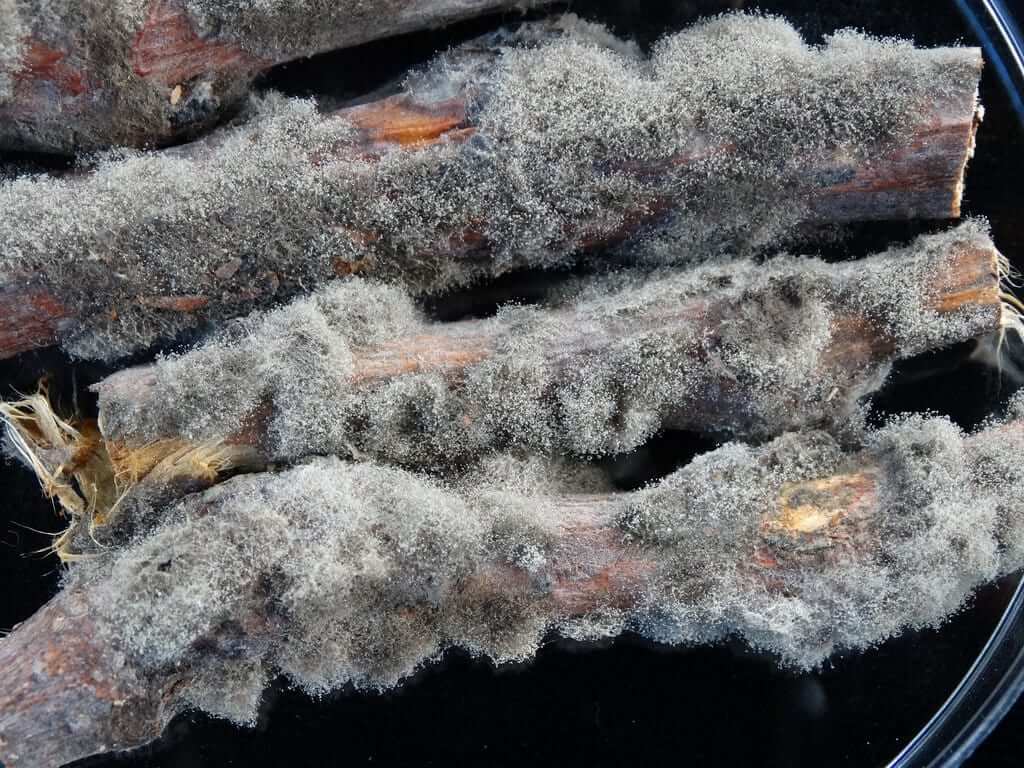
- Development of gray mold in infected tissues.
- Decomposition of plant tissues.
- Loss of plant vigor.
- Death of the plant in severe infections.


TEMPERATURE AND HUMIDITY
15°C a 25°C
85% a 100%

HOW IS IT SPREAD?
Air, Water, Contact with contaminated tools, Insect vectors, Infected plant remains

HOW TO REMOVE IT?
Home remedies
There are no home treatments
Chemical treatments
• AZOXISTROBIN 25% [SC] P/V
• CAPTAN 47.5% [SC] P/V
• DIFENOCONAZOLE 25% [EC] P/V
• PHENHEXAMIDE 50% [WG] P/P
• FOLPET 50% [SC] P/V
• FOLPET 80% [WG] P/P
• POTASSIUM HYDROGEN CARBONATE 0.425% [AL] P/V
• POTASSIUM HYDROGEN CARBONATE 85% [SP] P/P
• COPPER OXYCHLORIDE 35% (exp. in Cu) [WG] P/P
• COPPER OXYCHLORIDE 35% (EXPR. IN CU) [WG] P/P
• PIRACLOSTROBIN 6.7% + BOSCALIDE 26.7% (I) [WG] P/P
Treatments allowed in organic farming
• POTASSIUM HYDROGEN CARBONATE 0.425% [AL] P/V
• POTASSIUM HYDROGEN CARBONATE 85% [SP] P/P
• COPPER OXYCHLORIDE 35% (exp. in Cu) [WG] P/P
• COPPER OXYCHLORIDE 35% (EXPR. IN CU) [WG] P/P
Insect allies
PREDATORY MITES
LADYBUGS
LACEWINGS
PARASITIC WASPS
HOVERFLIES OR PARASITIC FLIES
PREDATORY BUGS
There are no natural allies
Mycodiplosis oidii (predatory mosquito)
EFFECTIVE PRODUCTS TO ELIMINATE THIS DISEASE
Sponsored link
Sponsored link


Sponsored link
Sponsored link
Sponsored link


Sponsored link
Sponsored link
Effective against all types of fungi

Sponsored link


Sponsored link
Sponsored link

Sponsored link


Sponsored link
- Maintain good ventilation in the growing area to reduce humidity.
- Avoid sprinkler irrigation and opt for irrigation methods that keep the cactus foliage dry.
- Regularly inspect cacti and remove any affected parts as soon as they are detected.
- Use specific fungicides for Botrytis cinerea following the manufacturer's instructions and alternate products to prevent resistance.
- Avoid wounds on cacti, as these are entry points for the fungus.
- Control the density of plants to ensure adequate space between them and improve air circulation.
- Remove and destroy remains of infected plants to reduce the source of inoculum.
- Carry out cultural practices that promote the health of the crop, such as cleaning tools and using sterile substrates.
- Monitor weather conditions and adjust management practices accordingly, especially in periods of high humidity.
Recommendations

Enjoy idMicrobe TOTALLY FREE, with no trial periods.


