

Cancros
Bacterial Canker
Pseudomonas Syringae Pv. Syringae
Pathogen:
Bacterium
Type:
Risk to the plant:
HIGH

DESCRIPTION
WHO CAUSES IT?
Pseudomonas syringae pv. syringae is a gram-negative bacterium that infects a wide variety of plants, including cherry. This bacteria is commonly found in soil and on plant surfaces as an epiphyte, where it can survive in a dormant state. Under favorable conditions, the bacteria penetrates plant tissues through natural wounds or wounds caused by agricultural practices, insects or abrasions. Once inside the plant, Pseudomonas syringae pv. syringae multiplies and secretes toxins and enzymes that degrade plant cell walls, causing necrosis and the development of canker. Rain and wind facilitate the dispersal of the bacteria, increasing its ability to infect new plants. During dormant periods, the bacteria can survive in the soil and in infected plant residues, ready to restart the infection process when conditions are conducive.
SYMPTOMS
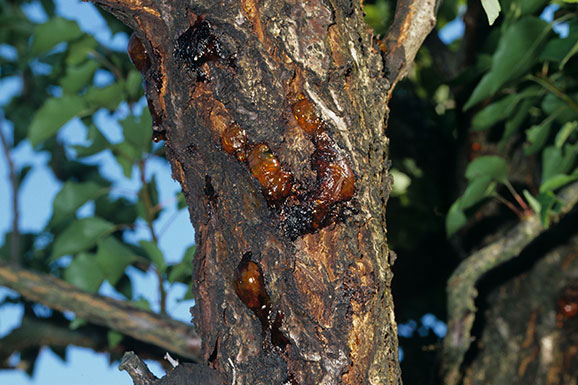
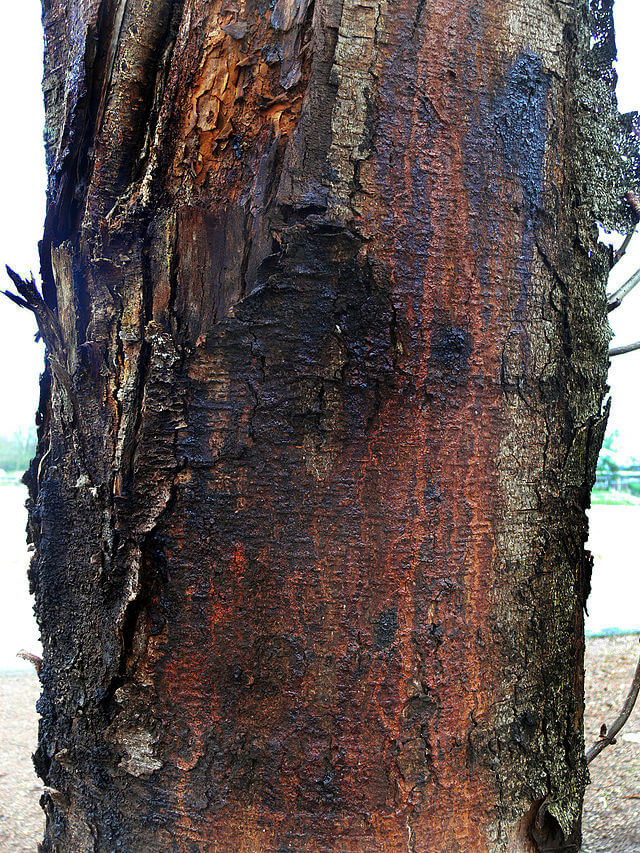
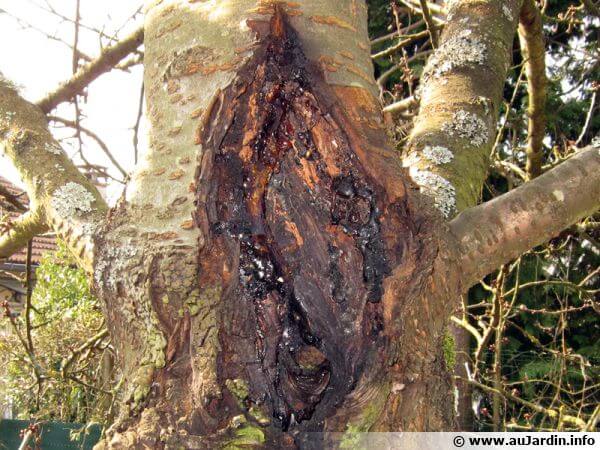
Bacterial canker caused by Pseudomonas syringae pv. syringae in the cherry tree manifests itself as necrotic lesions in the bark and internal tissues of the tree, affecting its health and productivity. The disease can lead to defoliation, reduced tree vigor and, in severe cases, the death of entire branches or the entire tree.
- Dark and sunken lesions in the bark of the trunk and branches.
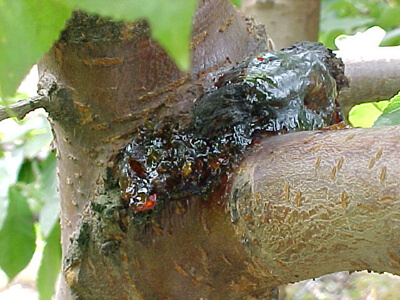
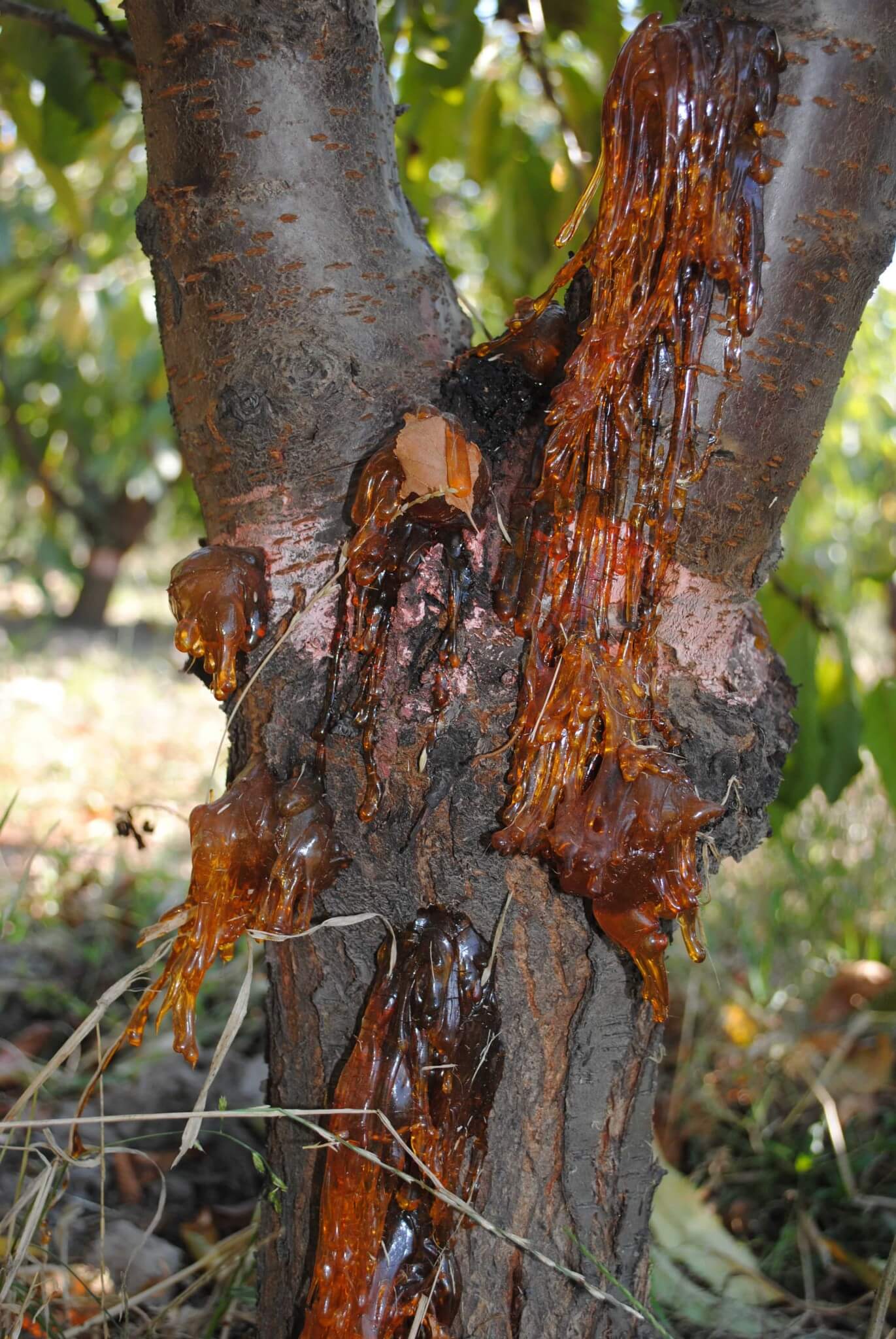
- Rubber exudation in the affected areas.
- Necrosis of young shoots and flowers.
- Premature loss of leaves.
- Reduction in the growth and development of branches.
- Regressive death of affected branches.
- Decrease in fruit production and quality.
- Increased susceptibility to other diseases and environmental stress.

TEMPERATURE AND HUMIDITY
18°C - 25°C
60% - 80%

HOW IS IT SPREAD?
Infected soil, Contaminated irrigation water, Contaminated tools, Infected plant material, Insect vectors, Rain, Wind

HOW TO REMOVE IT?
Home remedies
There are no home treatments
Chemical treatments
• CUPRIC HYDROXIDE 13.6% (EXPR. IN CU) + COPPER OXYCHLORIDE 13.6% (EXPR. IN CU) [SC] P/V
• CUPRIC HYDROXIDE 20% (EXPR. IN CU) [WG] P/P
• CUPRIC HYDROXIDE 25% (EXPR. IN CU) [WG] P/P
• CUPRIC HYDROXIDE 30% (EXPR. IN CU) [WG] P/P
• CUPRIC HYDROXIDE 35% (EXPR. IN CU) [WG] P/P
• CUPRIC HYDROXIDE 36% (EXPR. IN CU) [SC] P/V
• CUPRIC HYDROXIDE 40% (EXPR. IN CU) [WG] P/P
• CUPRIC HYDROXIDE 50% (EXPR. IN CU) [WP] P/P
• COPPER OXYCHLORIDE 25% (EXPR. IN CU) [WG] P/P
• COPPER OXYCHLORIDE 30% (EXPR. IN CU) [WP] P/P
• COPPER OXYCHLORIDE 35% (exp. in Cu) [WG] P/P
• COPPER OXYCHLORIDE 35% (EXPR. IN CU) [WG] P/P
• COPPER OXYCHLORIDE 37.5% (EXPR. IN CU) [WG] P/P
• COPPER OXYCHLORIDE 38% (EXPR. IN CU) [SC] P/V
• COPPER OXYCHLORIDE 50% (EXPR. IN CU) [WG] P/P
• COPPER OXYCHLORIDE 50% (EXPR. IN CU) [WP] P/P
• COPPER OXYCHLORIDE 52% (EXPR. IN CU) [SC] P/V
• COPPER OXYCHLORIDE 70% (EXPR. IN CU) [SC] P/V
• COPPER OXYCHLORIDE 70% [SC] P/V
• CUPROUS OXIDE 50% (EXPR. IN CU) [WP] P/P
• CUPROUS OXIDE 75% (EXPR. IN CU) [WG] P/P
• CUPROCALCIC SULFATE 12.4% (EXPR. IN CU) [SC] P/V
• CUPROCALCIC SULFATE 20% (EXPR. IN CU) [WG] P/P
• CUPROCALCIC SULFATE 20% (EXPR. IN CU) [WP] P/P
• CUPROCALCIC SULFATE 20% (EXPR. IN CU) [WG] P/P
• CUPROCALCIC SULFATE 20% [WP] P/P
• TRIBASIC COPPER SULFATE 40% (EXPR. IN CU) [WG] P/P
Treatments allowed in organic farming
• CUPRIC HYDROXIDE 13.6% (EXPR. IN CU) + COPPER OXYCHLORIDE 13.6% (EXPR. IN CU) [SC] P/V
• CUPRIC HYDROXIDE 20% (EXPR. IN CU) [WG] P/P
• CUPRIC HYDROXIDE 25% (EXPR. IN CU) [WG] P/P
• CUPRIC HYDROXIDE 30% (EXPR. IN CU) [WG] P/P
• CUPRIC HYDROXIDE 35% (EXPR. IN CU) [WG] P/P
• CUPRIC HYDROXIDE 36% (EXPR. IN CU) [SC] P/V
• CUPRIC HYDROXIDE 40% (EXPR. IN CU) [WG] P/P
• CUPRIC HYDROXIDE 50% (EXPR. IN CU) [WP] P/P
• COPPER OXYCHLORIDE 25% (EXPR. IN CU) [WG] P/P
• COPPER OXYCHLORIDE 30% (EXPR. IN CU) [WP] P/P
• COPPER OXYCHLORIDE 35% (exp. in Cu) [WG] P/P
• COPPER OXYCHLORIDE 35% (EXPR. IN CU) [WG] P/P
• COPPER OXYCHLORIDE 37.5% (EXPR. IN CU) [WG] P/P
• COPPER OXYCHLORIDE 38% (EXPR. IN CU) [SC] P/V
• COPPER OXYCHLORIDE 50% (EXPR. IN CU) [WG] P/P
• COPPER OXYCHLORIDE 50% (EXPR. IN CU) [WP] P/P
• COPPER OXYCHLORIDE 52% (EXPR. IN CU) [SC] P/V
• COPPER OXYCHLORIDE 70% (EXPR. IN CU) [SC] P/V
• COPPER OXYCHLORIDE 70% [SC] P/V
• CUPROUS OXIDE 50% (EXPR. IN CU) [WP] P/P
• CUPROUS OXIDE 75% (EXPR. IN CU) [WG] P/P
• CUPROCALCIC SULFATE 12.4% (EXPR. IN CU) [SC] P/V
• CUPROCALCIC SULFATE 20% (EXPR. IN CU) [WG] P/P
• CUPROCALCIC SULFATE 20% (EXPR. IN CU) [WP] P/P
• CUPROCALCIC SULFATE 20% (EXPR. IN CU) [WG] P/P
• CUPROCALCIC SULFATE 20% [WP] P/P
• TRIBASIC COPPER SULFATE 40% (EXPR. IN CU) [WG] P/P
Insect allies
PREDATORY MITES
LADYBUGS
LACEWINGS
PARASITIC WASPS
HOVERFLIES OR PARASITIC FLIES
PREDATORY BUGS
There are no natural allies
Mycodiplosis oidii (predatory mosquito)
EFFECTIVE PRODUCTS TO ELIMINATE THIS DISEASE
Sponsored link

Sponsored link


Sponsored link
Sponsored link
Sponsored link


Sponsored link
Sponsored link
Effective against all types of fungi

Sponsored link


Sponsored link
Sponsored link

Sponsored link


Sponsored link
- Plant cherry trees in well-drained soils with good water management to avoid excess humidity that favors infection.
- Select varieties of cherry trees resistant to Pseudomonas syringae pv. syringae when possible.
- Avoid mechanical damage to trees during pruning and cultivation work.
- Disinfect pruning tools and other agricultural equipment before use to prevent the spread of bacteria.
- Apply treatments with copper-based bactericides during periods of highest risk of infection.
- Implement management practices that promote good aeration and solar exposure in the orchard to reduce humidity in the foliage.
- Remove and destroy infected parts of the tree to reduce the source of bacterial inoculum.
- Carry out regular monitoring of the orchard to detect and manage any signs of disease early.
Recommendations

Enjoy idMicrobe TOTALLY FREE, with no trial periods.


