

Polillas
Carpocapsa
Cydia Pomonella
Pathogen:
Insect
Type:
Risk to the plant:
CRITICAL

DESCRIPTION
WHO CAUSES IT?
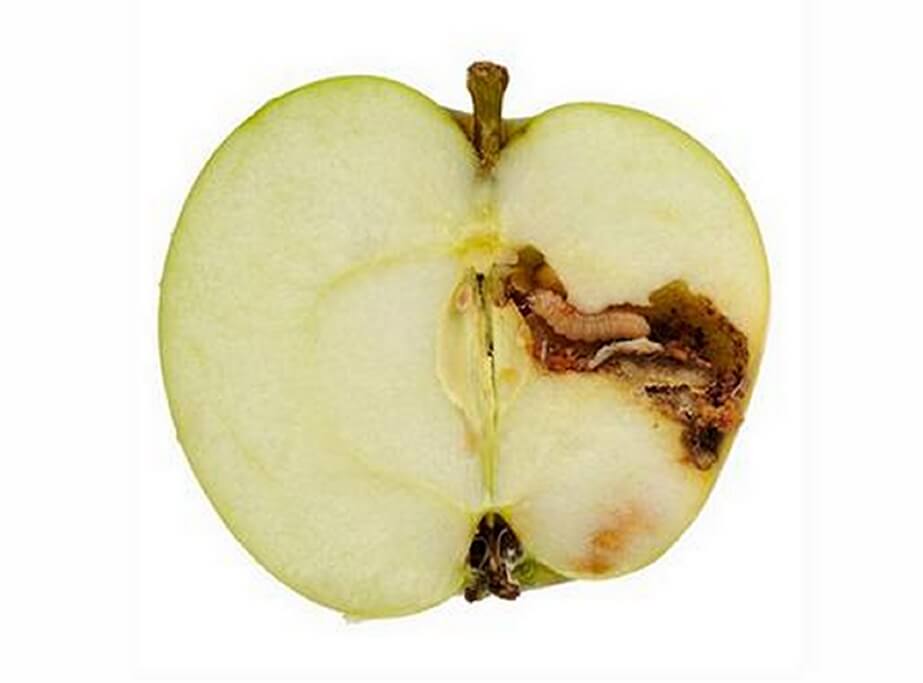
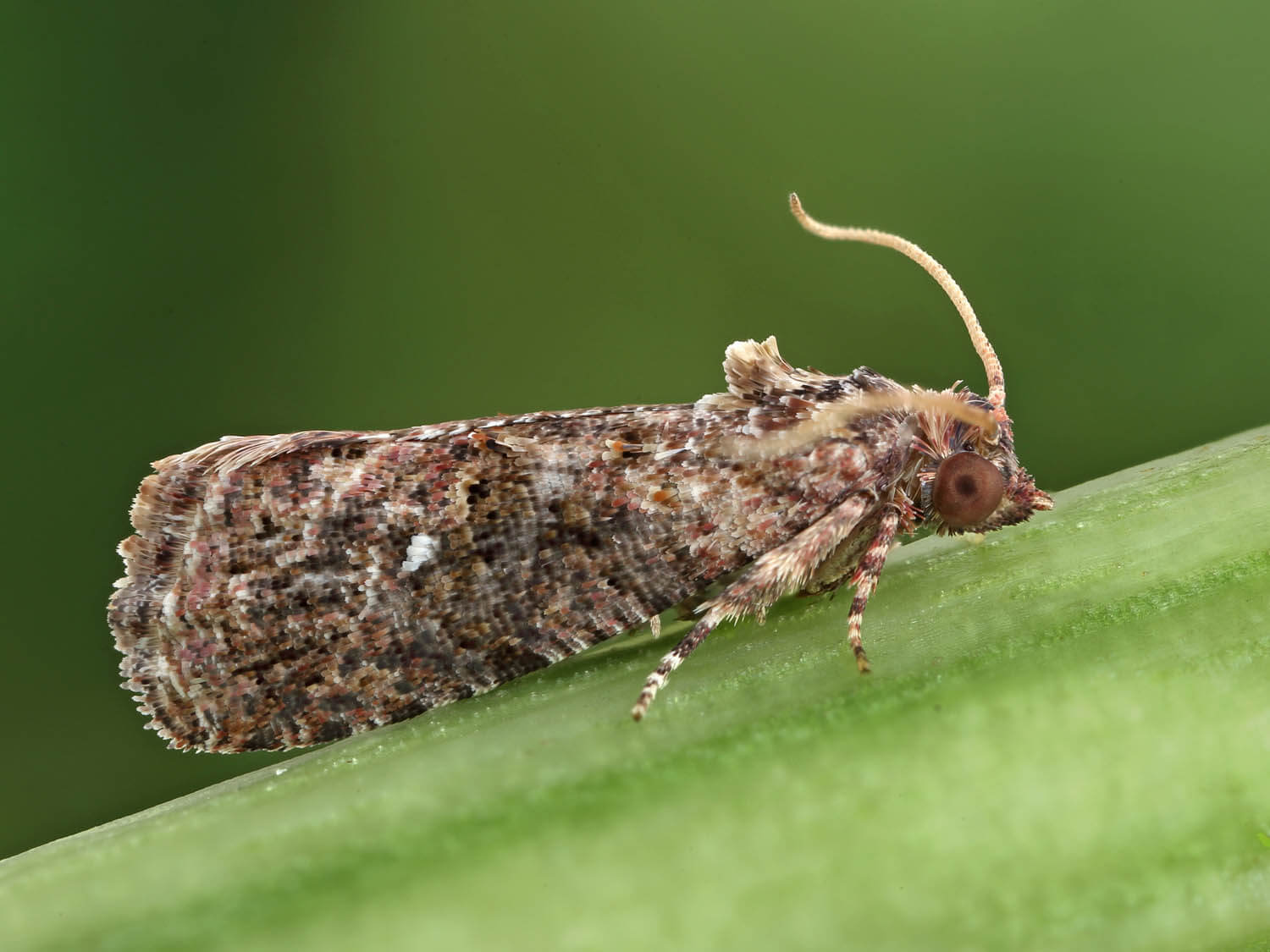
Cydia pomonella, commonly known as the codling moth, is an insect belonging to the Tortricidae family. Adults are small, with a wingspan of approximately 18 mm, and have dark gray forewings with lighter wavy lines and a dark brown spot. Females lay their eggs individually on fruits or leaves. The eggs are white and oval in shape, hatching in about 6 to 10 days. The larvae, pinkish white in color with a black head, quickly enter the fruits to feed on the pulp and seeds. The larva goes through five stages before leaving the fruit to pupate in the soil or in the bark of the tree. Pupation occurs in a silk cocoon, and depending on weather conditions, development from pupation to emergence of the adult can take several weeks. Cydia pomonella can have two to three generations per year in warm climates.
SYMPTOMS
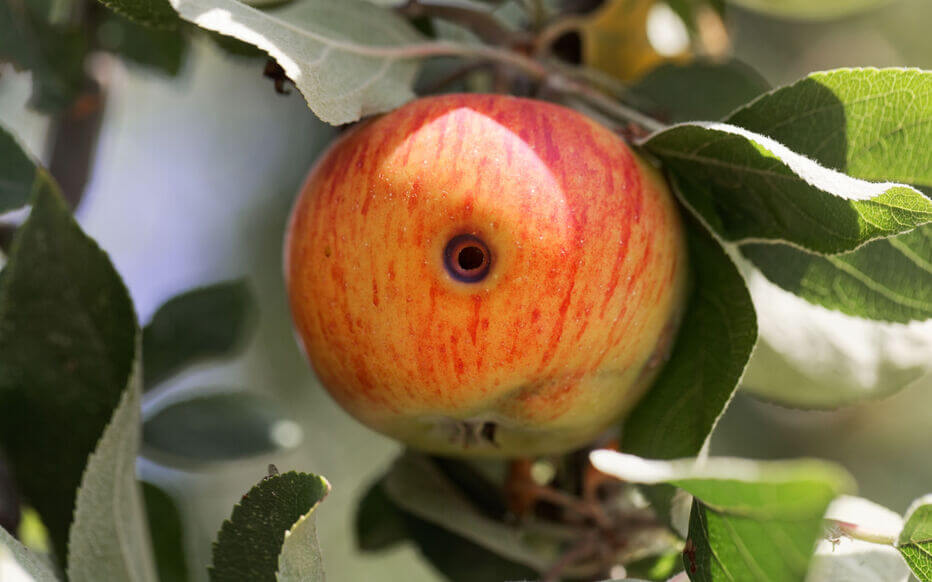
In the apple tree, codling moth causes significant damage that affects both the quality and yield of the crop. The larvae pierce the fruits to feed on the seeds and pulp, causing internal damage that reduces the commercial quality of the apples.
- Appearance of small holes on the surface of the apples.
- Presence of excrement and sawdust around the entrance holes.
- Internal damage to the fruits, with tunnels and cavities full of excrement.
- Premature fall of affected fruits.
- Reduction in the commercial value of apples.
- Increased susceptibility to secondary infections due to fungi and bacteria.


TEMPERATURE AND HUMIDITY
20-30°C
60-80%

HOW IS IT SPREAD?
Wind, movement of infected fruits, contaminated agricultural tools, nursery material, direct contact between plants

HOW TO REMOVE IT?
Home remedies
There are no home treatments
Chemical treatments
• (E,E)-8,10-DODECADIEN-1-OL 0.4g/diffuser + DODECAN-1-OL 0.2g/diffuser [VP] P/P
• (E,E)-8,10-DODECADIEN-1-OL 1100mg/diffuser [VP] P/P
• (E,E)-8,10-DODECADIEN-1-OL 14.18% (300mg/diffuser) [VP] P/P
• (E,E)-8,10-DODECADIEN-1-OL 18.05% [AE] P/P
• (E,E)-8,10-DODECEN-1-OL 18.05% + Mixture of: [(E)-8-DODECEN-1-YL ACETATE + (Z)-8-DODECEN-1-YL ACETATE+ (Z)-8-DODECEN-1-OL] 12.5% [AE] P/P
• (E,E)-8,10-DODECEN-1-OL 19.5% + (Z)-8-DODECEN-1-IL ACETATE 13.1% + (E)-8-DODECEN-1-IL ACETATE 0.75% + Z-8-DODECEN-1-OL 0.1% [AE] P/P
• (E,E)-8,10-DODECADIEN-1-OL 20.9% [AE] P/P
• (Z)-11 TETRADECEN-1-IL ACETATE 11.4% + (Z)-9- TETRADECEN-1-IL ACETATE 6.3% + (E,E)-8,10-DODECADIEN-1-OL 16 .9% [AE] P/P
• 1-TETRADECANOL 7.1% (31 MG S.A./DIFFUSOR) + DODECAN-1-OL 29.7% (132 MG S.A./DIFFUSOR) + E,E-8,10-DODECADIEN-1-OL 57.3% (254 MG S.A./DIFFUSER) [VP] P/P
• ACETAMIPRID 20% [SL] P/V
• CYPERMETHRIN 10% [EC] P/V
• CHLORANTRANILIPROL 20% [SC] P/V
• DELTAMETHRIN 1.5% [EW] P/V
• DELTAMETHRIN 1.57% [SC] P/V
• DELTAMETHRIN 10% [EC] P/V
• DELTAMETHRIN 2.5% [EC] P/V
• DELTAMETHRIN 2.5% [EW] P/V
• E,E-8,10-DODECADIEN-1-OL 0.798% (10.63 MG S.A./DIFFUSER) [VP] P/P
• E,E-8,10-DODECADIEN-1-OL 14% (3.35 X 10E-7 G I.A./CAPSULE) [CS] P/V
• E,E-8,10-DODECADIEN-1-OL 18.05% [AE] P/P
• E,E-8,10-DODECADIEN-1-OL 2.4% [VP] P/P
• E,E-8,10-DODECADIEN-1-OL 4.6% [VP] P/P
• E,E-8,10-DODECADIEN-1-OL 7.75% [VP] P/P
• E,E-8,10-DODECADIEN-1-OL 9.03% [AE] P/P
• EMAMECTIN BENZOATE 0.95% [WG] P/P
• ESFENVALERATE 2.5% [EC] P/V
• ESFENVALERATE 5% [EC] P/V
• ESFENVALERATO 5% [EW] P/V
• LAMBDA CYHALOTHRIN 1.5% [CS] P/V
• LAMBDA CYHALOTHRIN 10% [CS] P/V
• LAMBDA CYHALOTHRIN 2.5% [WG] P/P
• LAMBDA CYHALOTHRIN 5% [EG] P/P
• SPINETORAM 25% [WG] P/P
• SPINOSAD 48% [SC] P/V
• TEBUFENOCIDE 24% [SC] P/V
• CYDIA POMONELLA ATTRACTANT (Cairomonal attractant)
• Cydia pomonella (Pheromone)
Treatments allowed in organic farming
• (E,E)-8,10-DODECADIEN-1-OL 0.4g/diffuser + DODECAN-1-OL 0.2g/diffuser [VP] P/P
• (E,E)-8,10-DODECADIEN-1-OL 1100mg/diffuser [VP] P/P
• (E,E)-8,10-DODECADIEN-1-OL 14.18% (300mg/diffuser) [VP] P/P
• (E,E)-8,10-DODECADIEN-1-OL 18.05% [AE] P/P
• (E,E)-8,10-DODECEN-1-OL 18.05% + Mixture of: [(E)-8-DODECEN-1-YL ACETATE + (Z)-8-DODECEN-1-YL ACETATE+ (Z)-8-DODECEN-1-OL] 12.5% [AE] P/P
• (E,E)-8,10-DODECEN-1-OL 19.5% + (Z)-8-DODECEN-1-IL ACETATE 13.1% + (E)-8-DODECEN-1-IL ACETATE 0.75% + Z-8-DODECEN-1-OL 0.1% [AE] P/P
• (E,E)-8,10-DODECADIEN-1-OL 20.9% [AE] P/P
• (Z)-11 TETRADECEN-1-IL ACETATE 11.4% + (Z)-9- TETRADECEN-1-IL ACETATE 6.3% + (E,E)-8,10-DODECADIEN-1-OL 16 .9% [AE] P/P
• 1-TETRADECANOL 7.1% (31 MG S.A./DIFFUSOR) + DODECAN-1-OL 29.7% (132 MG S.A./DIFFUSOR) + E,E-8,10-DODECADIEN-1-OL 57.3% (254 MG S.A./DIFFUSER) [VP] P/P
• E,E-8,10-DODECADIEN-1-OL 0.798% (10.63 MG S.A./DIFFUSER) [VP] P/P
• E,E-8,10-DODECADIEN-1-OL 2.4% [VP] P/P
• E,E-8,10-DODECADIEN-1-OL 4.6% [VP] P/P
• LAMBDA CYHALOTHRIN 1.5% [CS] P/V
• LAMBDA CYHALOTHRIN 10% [CS] P/V
• LAMBDA CYHALOTHRIN 2.5% [WG] P/P
• LAMBDA CYHALOTHRIN 5% [EG] P/P
• SPINOSAD 48% [SC] P/V
• CYDIA POMONELLA ATTRACTANT (Cairomonal attractant)
• Cydia pomonella (Pheromone)
Insect allies
PREDATORY MITES
LADYBUGS
LACEWINGS
PARASITIC WASPS
HOVERFLIES OR PARASITIC FLIES
PREDATORY BUGS
There are no natural allies
Mycodiplosis oidii (predatory mosquito)
EFFECTIVE PRODUCTS TO ELIMINATE THIS DISEASE
Sponsored link
Sponsored link
Sponsored link


Sponsored link
Sponsored link
Effective against all types of fungi

Sponsored link


Sponsored link
Sponsored link

Sponsored link


Sponsored link
Sponsored link
Sponsored link


Sponsored link
- Monitor the crop regularly using pheromone traps to detect the presence of adults.
- Implement biological control through the release of natural enemies such as Trichogramma spp.
- Apply treatments with selective insecticides at critical moments of pest development.
- Maintain good hygiene in the field, eliminating and destroying fallen fruits and pruning remains.
- Use protective nets around trees to prevent oviposition.
- Promote the use of apple tree varieties that are resistant or less susceptible to infestation.
- Carry out a crop rotation to interrupt the life cycle of the pest.
- Apply sexual confusion treatments with pheromones to reduce moth mating.
- Promote a favorable environment for the natural predators of the codling moth by diversifying plants in the field.
- Avoid excessive use of insecticides so as not to affect the pest's natural enemies.
Recommendations

Enjoy idMicrobe TOTALLY FREE, with no trial periods.


