

Moscas de la fruta
Fruit Fly
Ceratitis Capitata
Pathogen:
Insect
Type:
Risk to the plant:
CRITICAL
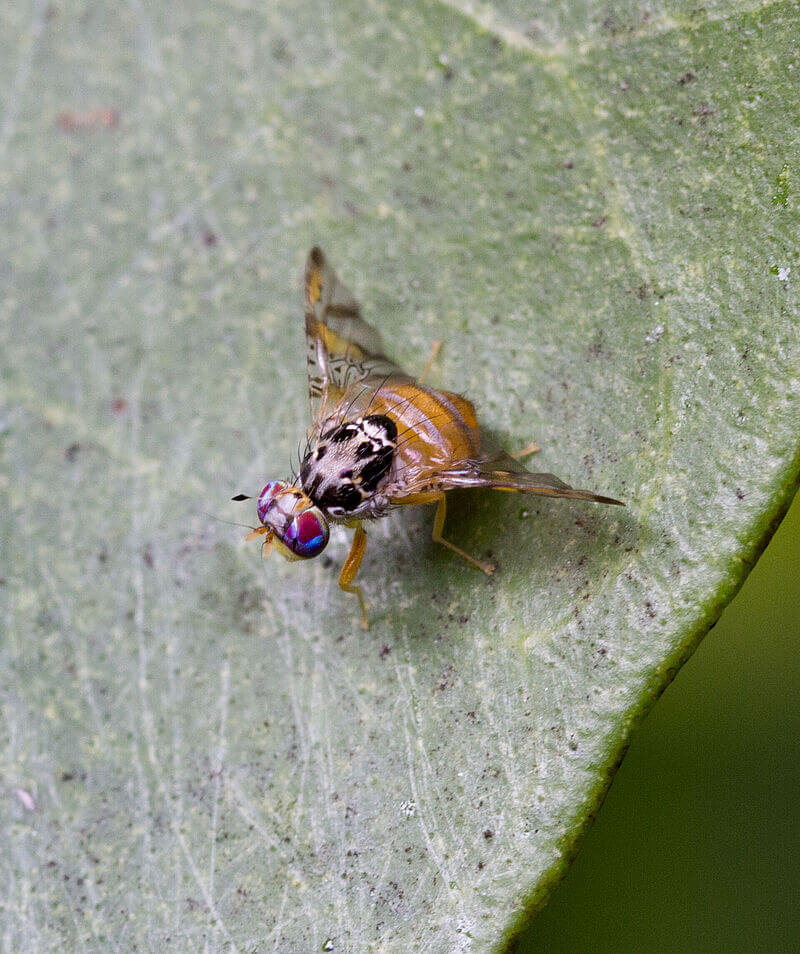
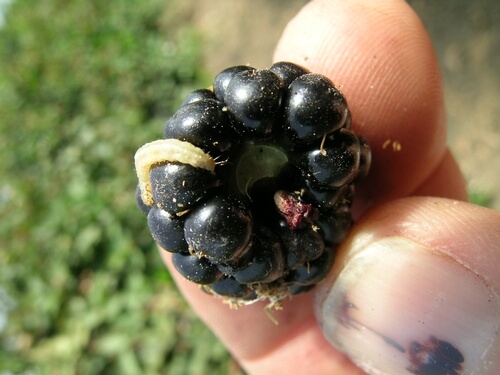

DESCRIPTION
WHO CAUSES IT?
Ceratitis capitata, known as the fruit fly, is a highly destructive insect for various fruit crops, including berries. Adult females lay their eggs inside the fruit, using their ovipositor to pierce the skin of the fruit. Each female can lay up to 300 eggs during her life. The eggs hatch into larvae that feed on the pulp of the fruit, causing significant damage. After completing their larval development, the larvae fall to the ground and transform into pupae, where they remain until emerging as adults. The complete cycle can last between 3 to 6 weeks, depending on environmental conditions. The adults, which have a lifespan of a few weeks, reproduce and perpetuate the infestation by searching for new fruits in which to lay their eggs. This insect is highly adaptable to various climates, which facilitates its spread.
SYMPTOMS
Fruit fly infestation in berries causes a disease that seriously affects the quality and quantity of production. The larvae feed on the inside of the fruits, leaving them soft and prone to secondary infections by fungi and bacteria.
- Presence of larvae inside the fruits.
- Soft and decomposed fruits.
- Dark Taches on the skin of the fruit due to oviposition.
- Premature fall of affected fruits.
- Loss of firmness and flavor in the fruits.
- Presence of small perforations on the surface of the fruit.
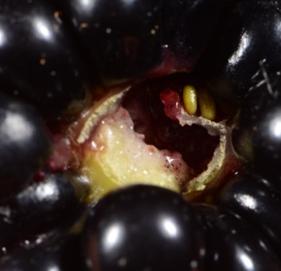
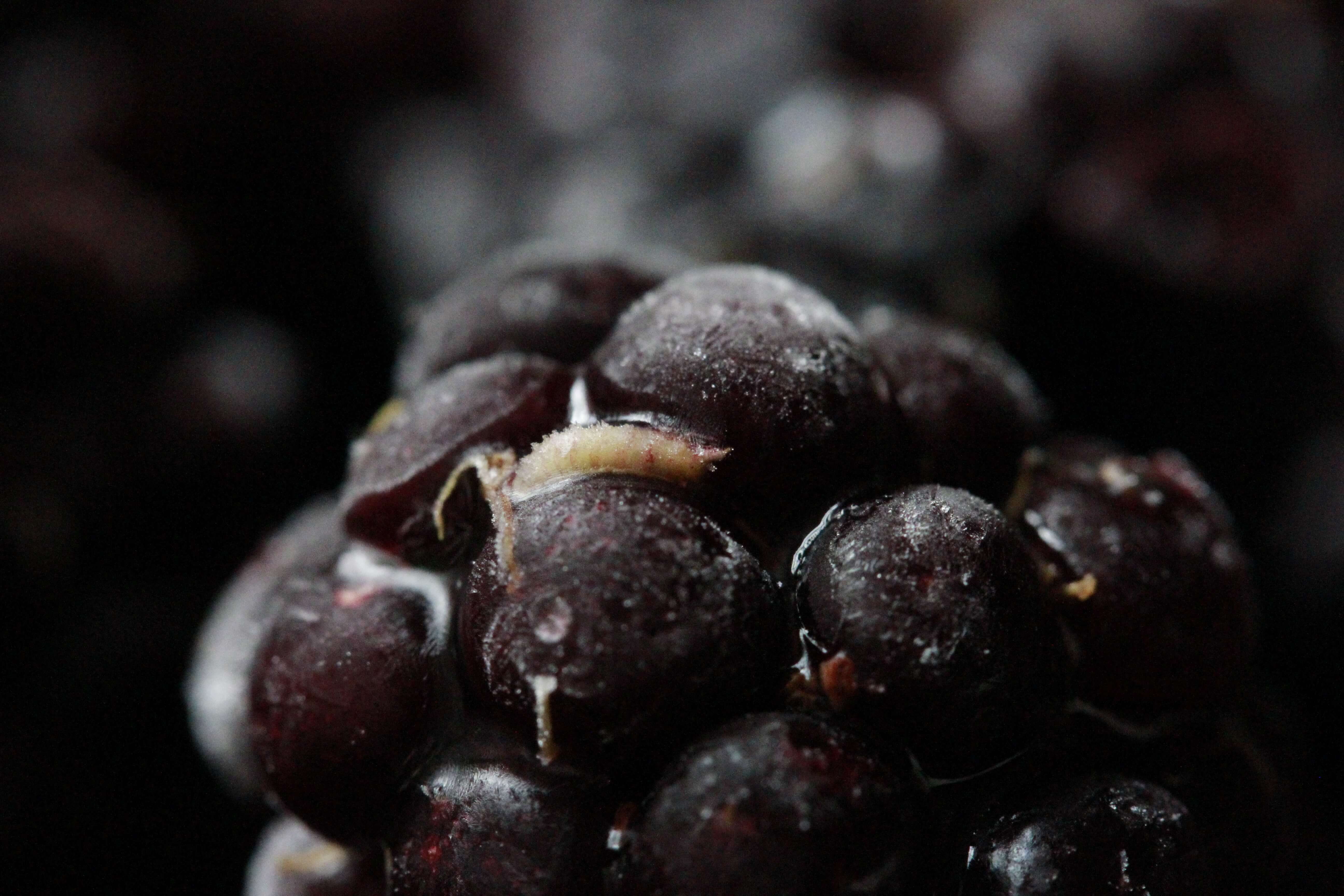

TEMPERATURE AND HUMIDITY
20°C - 30°C
60% - 80%

HOW IS IT SPREAD?
Movement of infected fruits, Transport of contaminated soil, Wind, Agricultural tools, Workers' clothing and footwear, Transporting animals

HOW TO REMOVE IT?
Home remedies
There are no home treatments
Chemical treatments
• AZADIRACTIN 1% (AS AZADIRACTIN A) [EC] P/V
• Azadirachtin 2.6% (AS AZADIRACTIN A) [EC] P/V
• Ceratitis capitata (Pheromone)
• DELTAMETHRIN 0.015g/trap [RB] P/P
• LAMBDA CYHALOTHRIN 1.5% [CS] P/V
• LAMBDA CYHALOTHRIN 10% [CS] P/V
• LAMBDA CYHALOTHRIN 2.5% [WG] P/P
• HYDROLYZED PROTEINS 30% [SL] P/V
• TRAPS
• TRAPS FOR DIPTERANS
• FRUIT FLY TRAPS
Treatments allowed in organic farming
• AZADIRACTIN 1% (AS AZADIRACTIN A) [EC] P/V
• Azadirachtin 2.6% (AS AZADIRACTIN A) [EC] P/V
• Ceratitis capitata (Pheromone)
• DELTAMETHRIN 0.015g/trap [RB] P/P
• LAMBDA CYHALOTHRIN 1.5% [CS] P/V
• LAMBDA CYHALOTHRIN 10% [CS] P/V
• LAMBDA CYHALOTHRIN 2.5% [WG] P/P
• HYDROLYZED PROTEINS 30% [SL] P/V
• TRAPS
• TRAPS FOR DIPTERANS
• FRUIT FLY TRAPS
Insect allies
PREDATORY MITES
LADYBUGS
LACEWINGS
PARASITIC WASPS
HOVERFLIES OR PARASITIC FLIES
PREDATORY BUGS
There are no natural allies
Mycodiplosis oidii (predatory mosquito)
EFFECTIVE PRODUCTS TO ELIMINATE THIS DISEASE
Sponsored link

Sponsored link


Sponsored link
Sponsored link
Sponsored link


Sponsored link
Sponsored link
Effective against all types of fungi

Sponsored link


Sponsored link
Sponsored link

Sponsored link


Sponsored link
- Regularly monitor crops with pheromone traps to detect the early presence of adults.
- Implement physical barriers such as mesh to prevent flies from reaching the fruits.
- Apply biological control treatments using parasitoids and natural fly predators.
- Carry out cultural practices such as collecting and destroying fallen and damaged fruits to reduce the larvae population.
- Use specific and authorized insecticides, following the recommendations for integrated pest management.
- Establish exclusion zones around the fields to minimize the entry of adult flies.
- Promote biodiversity in the surroundings of the crop to favor the presence of natural enemies.
- Rotate crops to reduce the accumulation of pests in the soil.
- Apply traps baited with food attractants and pheromones to capture adults.
- Maintain detailed records of pest populations and the effectiveness of control methods used.
Recommendations

Enjoy idMicrobe TOTALLY FREE, with no trial periods.


