

Trips
Banana red spot thrips: what it is, how it originates, and how to effectively eliminate it.
Banana red spot thrips
Chaetanaphothrips signipennis
Pathogen:
Insect
Type:
Risk to the plant:
HIGH
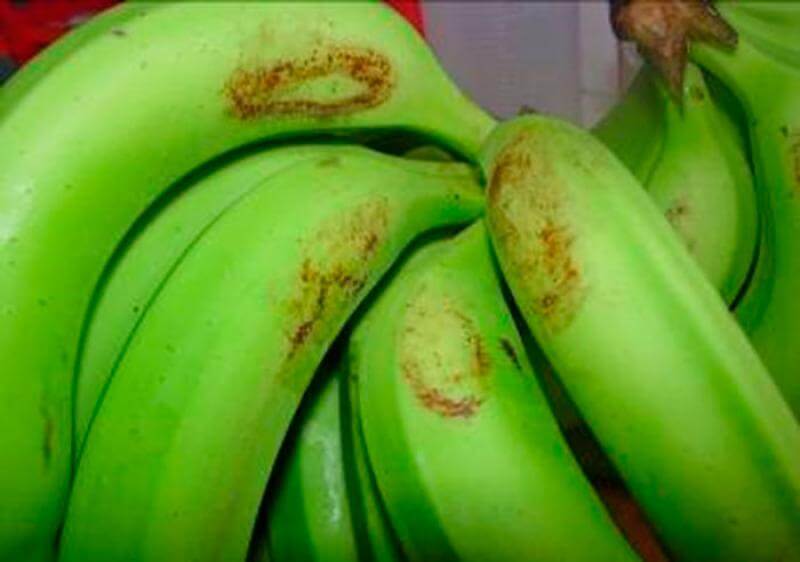
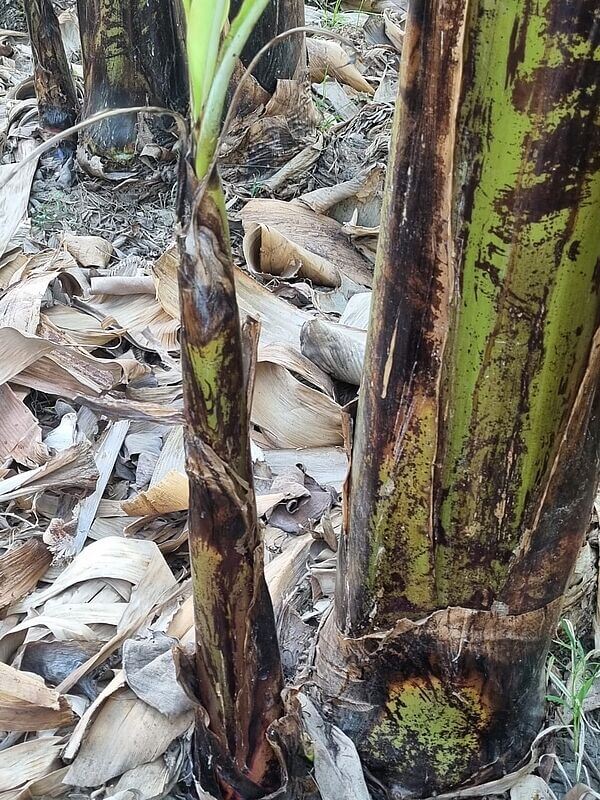

DESCRIPTION
WHO CAUSES IT?
Chaetanaphothrips signipennis is a tiny insect belonging to the order Thysanoptera and the family Thripidae. It is characterized by its elongated and segmented body, with colors that vary between dark brown and black, and narrow wings with characteristic fringes. Its development goes through several phases, from the egg to the adult phase, with intermediate larva and pupa stages. The female lays her eggs in the tissues of the banana tree, where the larvae emerge and begin to feed. These larvae go through two stages before entering the pupal phase, during which they cease feeding and seek refuge in the soil or plant structures. Subsequently, they emerge as adults and restart the reproductive process. Adult longevity can vary depending on environmental conditions, and females can produce several generations in a year, facilitating rapid proliferation of the pest.
SYMPTOMS
In banana trees, Chaetanaphothrips signipennis causes the disease known as banana red spot thrips. This insect feeds on plant tissues, piercing the epidermal cells and sucking their contents, which causes localized necrosis and alterations in the host's physiology. The damage is most evident in leaves and fruits, generating discolorations and lesions that affect the quality and yield of the crop.
- Appearance of reddish or brown spots on leaves and fruits.
- Necrosis in the affected tissues.
- Deformation of young leaves.
- Loss of shine and shriveled appearance on the leaf surface.
- Reduction in growth and general weakening of the plant.
- Damage to fruits that reduces their commercial value.
- Greater susceptibility to secondary infections.
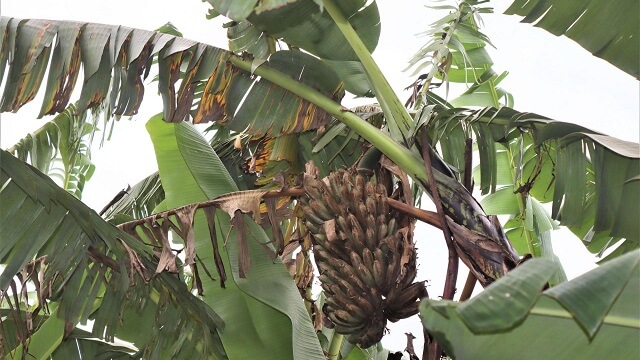


TEMPERATURE AND HUMIDITY
20-30°C
60-85%

HOW IS IT SPREAD?
Dispersion by wind, contact between infested plants, contaminated tools, presence in plant remains, movement of infected plant material, insect vectors

HOW TO REMOVE IT?
Home remedies
There are no home treatments
Chemical treatments
• HUILE D'ORANGE 6% [SL] P/V
• HUILE D'ORANGE 60g/L [ME] P/S
• HUILE DE PARAFFINE (CAS [64742-46-7]) 79 % [EC] P/V
• HUILE DE PARAFFINE (CAS [8042-47-5]) 54,6 % [EW] P/V
• LAMBDA CYHALOTHRINE 10 % [CS] P/V
• SELS DE POTASSIUM D'ACIDES GRAS C14-C20 48% [EW] P/V
• SPINOSAD 48 % [SC] P/V
• SPIROTETRAMAT 10 % [SC] P/V
• PIÈGE ADHÉSIF
• PIÈGE CHROMATIQUE
Treatments allowed in organic farming
• HUILE D'ORANGE 6% [SL] P/V
• HUILE D'ORANGE 60g/L [ME] P/S
• HUILE DE PARAFFINE (CAS [64742-46-7]) 79 % [EC] P/V
• HUILE DE PARAFFINE (CAS [8042-47-5]) 54,6 % [EW] P/V
• LAMBDA CYHALOTHRINE 10 % [CS] P/V
• SELS DE POTASSIUM D'ACIDES GRAS C14-C20 48% [EW] P/V
• SPINOSAD 48 % [SC] P/V
• PIÈGE ADHÉSIF
• PIÈGE CHROMATIQUE
Insect allies
PREDATORY MITES
LADYBUGS
LACEWINGS
PARASITIC WASPS
HOVERFLIES OR PARASITIC FLIES
PREDATORY BUGS
There are no natural allies
Mycodiplosis oidii (predatory mosquito)
EFFECTIVE PRODUCTS TO ELIMINATE THIS DISEASE
Sponsored link
Sponsored link


Sponsored link
Sponsored link
Sponsored link


Sponsored link
Sponsored link
Effective against all types of fungi

Sponsored link


Sponsored link
Sponsored link

Sponsored link


Sponsored link
- Use blue or yellow sticky traps to monitor the presence of the insect and reduce its population.
- Implement physical barriers, such as anti-insect mesh, to prevent colonization of the crop.
- Maintain adequate agronomic management, eliminating plant remains and weeds that may serve as shelter.
- Apply biological controls, such as the introduction of natural predators of thrips, such as phytoseiid mites and lacewings.
- Avoid excessive use of insecticides to reduce the likelihood of resistance development.
- Carry out crop rotations and avoid extensive monocultures to reduce pest pressure.
- Apply selective phytosanitary treatments when necessary, prioritizing products with low environmental impact.
- Improve ventilation conditions and reduce excess humidity in the crop to hinder the proliferation of the insect.
- Periodically check the banana tree and manually remove the most affected parts if possible.
Recommendations

Enjoy idMicrobe TOTALLY FREE, with no trial periods.


