

Orugas o gusanos
Measuring Larvae: What They Are, How They Occur, and How to Get Rid of Them Effectively
Measuring Larva
Rachiplusia Nu
Pathogen:
Insect
Type:
Risk to the plant:
HIGH

DESCRIPTION
WHO CAUSES IT?
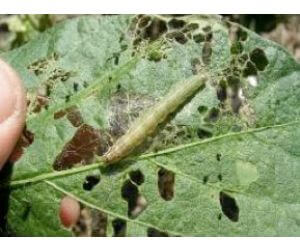
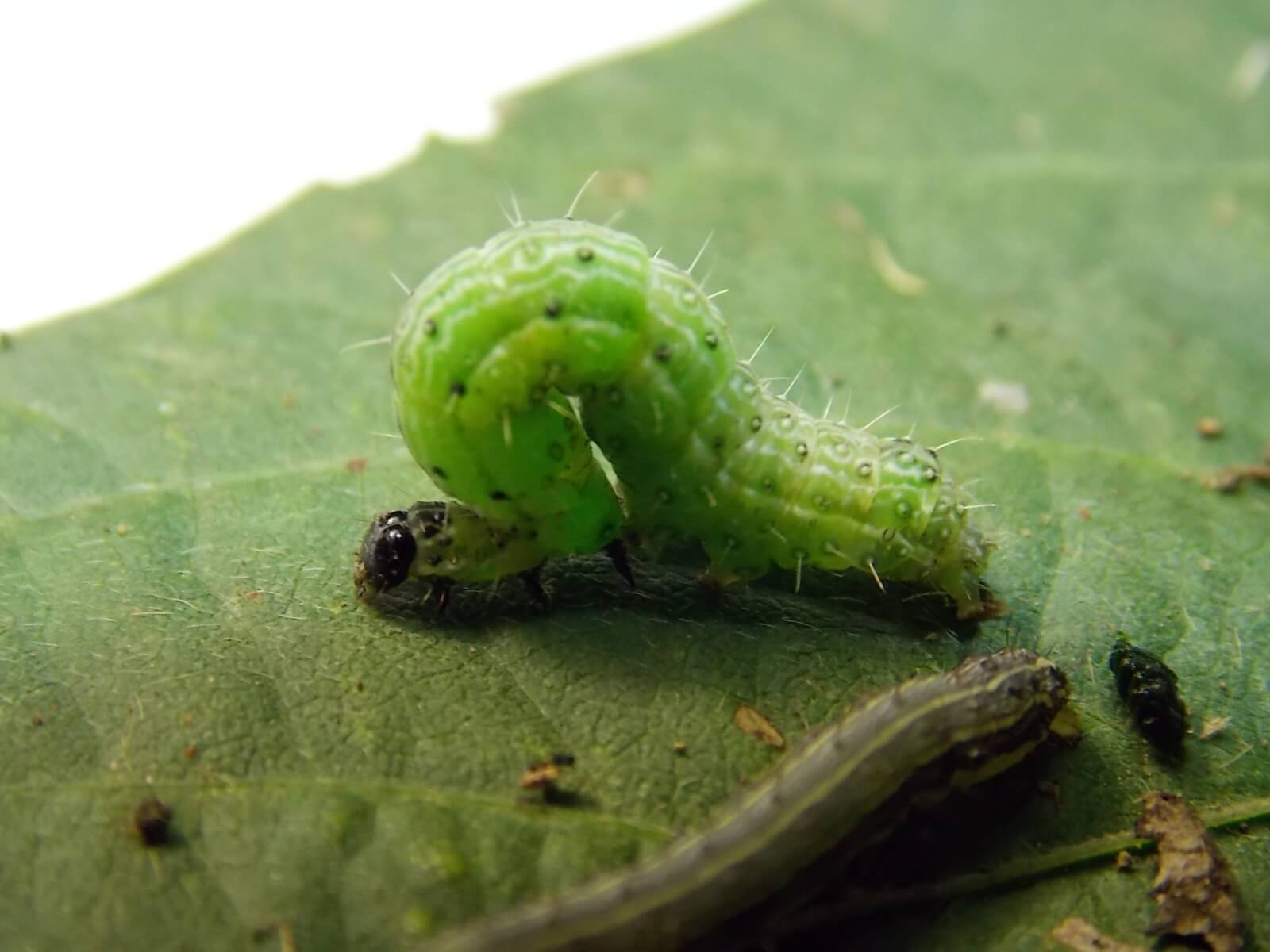
Rachiplusia nu, commonly known as the measuring larva, is a lepidopteran insect belonging to the family Noctuidae. This pathogen begins its cycle with the female laying eggs on the leaves of the host plants. These eggs hatch into larvae, which are responsible for the main damage. The larvae go through several stages of development, characterized by their distinctive "measuring" movement by arching their body. During this stage, they feed voraciously on the foliage, causing significant defoliation. Later, the larvae transform into pupae, usually in the soil or in the lower part of the plant. Eventually, they emerge as adult moths, ready to reproduce and restart the cycle.
SYMPTOMS
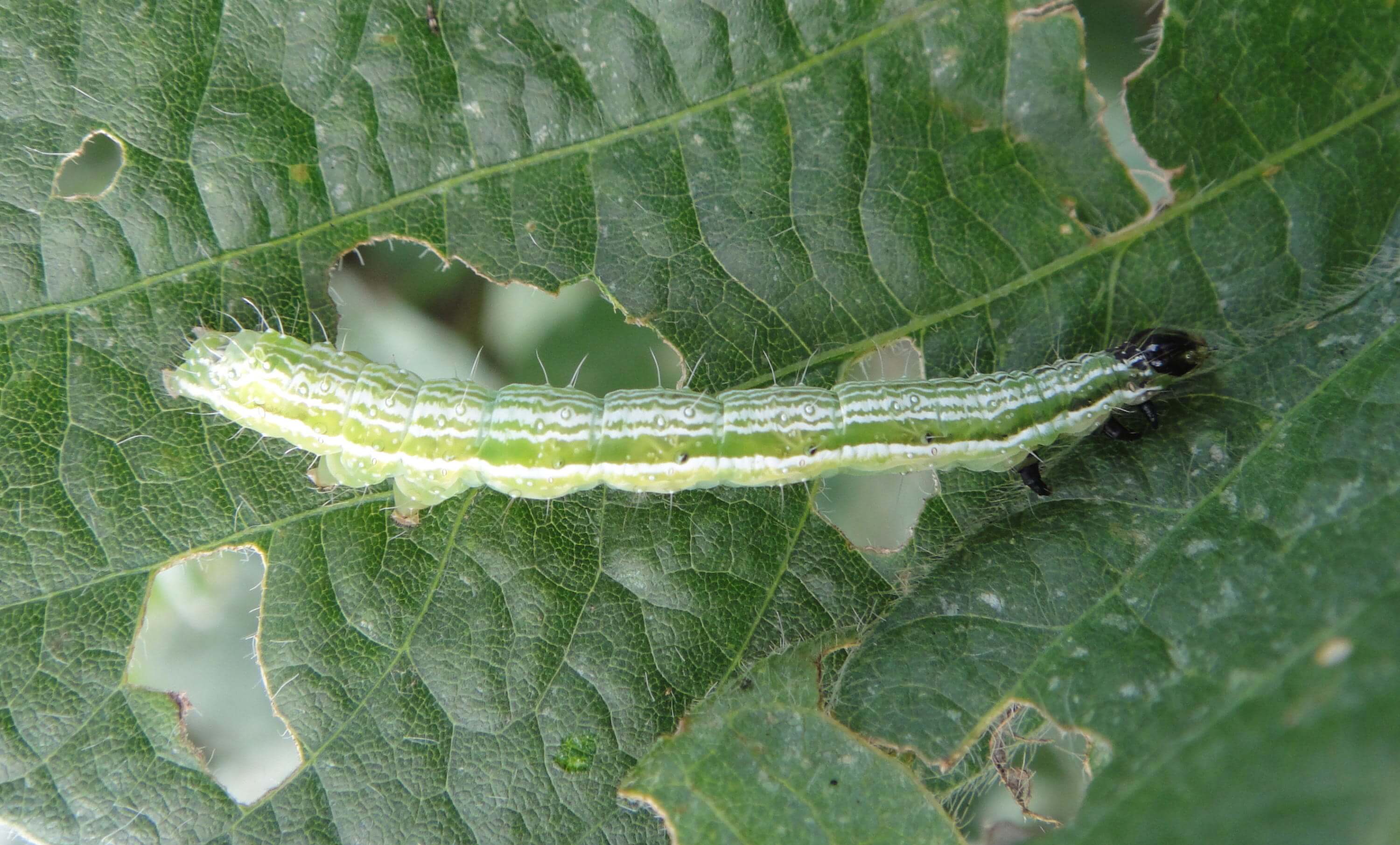
The disease known as measuring larva, caused by Rachiplusia nu, seriously affects quinoa, causing damage that can compromise the health and yield of the crop. The larvae feed on the leaves, leaving only the central veins in severe cases, which reduces the photosynthetic capacity of the plant. This foliar damage can lead to reduced growth and development, as well as decreased seed production.
- Significant defoliation of leaves.
- Irregular holes in the foliage.
- Reduction of the photosynthetic capacity of the plant.
- Less growth and development of the plant.
- Decrease in seed production.
- Presence of larval excrement on the leaves and soil.


TEMPERATURE AND HUMIDITY
20-30°C
60-80%

HOW IS IT SPREAD?
Movement of larvae, Wind, Contaminated tools, Remains of infected plants, Transport of infested plants

HOW TO REMOVE IT?
Home remedies
There are no home treatments
Chemical treatments
• PARAFFIN OIL (CAS [97862-82-3]) 40% [EW] P/V
• SULFUR 40% + CYPERMETHRIN 0.5% [DP] P/P
• CYPERMETHRIN 0.5% [DP] P/P
• CYPERMETHRIN 10% [EC] P/V
• CYPERMETHRIN 10% [EW] P/V
• CYPERMETHRIN 5% [EC] P/V
• CYPERMETHRIN 50% [EC] P/V
• DELTAMETHRIN 1.57% [SC] P/V
• DELTAMETHRIN 10% [EC] P/V
• DELTAMETHRIN 2.5% [EC] P/V
• DELTAMETHRIN 2.5% [EW] P/V
• ESFENVALERATE 2.5% [EC] P/V
• ESFENVALERATE 5% [EC] P/V
• ESFENVALERATO 5% [EW] P/V
• ALUMINUM PHOSPHIDE 56% [GE] P/P
• LAMBDA CYHALOTHRIN (0.0075 g s.a./trap) [RB] P/P
• LAMBDA CYHALOTHRIN 0.0015% [ME] P/V
• LAMBDA CYHALOTHRIN 0.4% [GR] P/P
• LAMBDA CYHALOTHRIN 1.5% [CS] P/V
• LAMBDA CYHALOTHRIN 10% [CS] P/V
• LAMBDA CYHALOTHRIN 10% [EC] P/V
• LAMBDA CYHALOTHRIN 2.5% [WG] P/P
• LAMBDA CYHALOTHRIN 5% [EG] P/P
• PYRETHRINS 0.12% [AE] P/P
• PYRETHRINS 1.9% [EC] P/V
• Pyrethrins 12.9 g/l [EC] P/V
• PYRETHRINS 2% (PYRETHRE EXTR.) [EC] P/V
• PYRETHRINS 2% [EC] P/V
• PYRETHRINS 4% (PYRETHHRINE EXTR.) [EC] P/V
• PYRETHRINS 4% [EC] P/V
• PYRETHRINS 5% [SC] P/V
• PYRIDABEN 10% [SC] P/V
• POTASSIUM SALTS OF FATTY ACIDS C14-C20 48% [EW] P/V
• SPINOSAD 0.024% [CB] P/V
• SPINOSAD 12% [SC] P/V
• SPINOSAD 2.4% [SC] P/V
• SPINOSAD 48% [SC] P/V
• TEFLUTRIN 0.5% [GR] P/P
• DIATOMAEAN EARTH 100% [CP] P/P
Treatments allowed in organic farming
• PARAFFIN OIL (CAS [97862-82-3]) 40% [EW] P/V
• SULFUR 60% + BACILLUS THURINGIENSIS KURSTAKI (STRAIN PB 54) (1x10E6 I.U./G) 0.5% [DP] P/P
• LAMBDA CYHALOTHRIN (0.0075 g s.a./trap) [RB] P/P
• LAMBDA CYHALOTHRIN 0.0015% [ME] P/V
• LAMBDA CYHALOTHRIN 0.4% [GR] P/P
• LAMBDA CYHALOTHRIN 1.5% [CS] P/V
• LAMBDA CYHALOTHRIN 10% [CS] P/V
• LAMBDA CYHALOTHRIN 10% [EC] P/V
• LAMBDA CYHALOTHRIN 2.5% [WG] P/P
• LAMBDA CYHALOTHRIN 5% [EG] P/P
• PYRETHRINS 0.12% [AE] P/P
• PYRETHRINS 1.9% [EC] P/V
• Pyrethrins 12.9 g/l [EC] P/V
• PYRETHRINS 2% (PYRETHRE EXTR.) [EC] P/V
• PYRETHRINS 2% [EC] P/V
• PYRETHRINS 4% (PYRETHHRINE EXTR.) [EC] P/V
• PYRETHRINS 4% [EC] P/V
• PYRETHRINS 5% [SC] P/V
• POTASSIUM SALTS OF FATTY ACIDS C14-C20 48% [EW] P/V
• SPINOSAD 0.024% [CB] P/V
• SPINOSAD 12% [SC] P/V
• SPINOSAD 2.4% [SC] P/V
• SPINOSAD 48% [SC] P/V
• DIATOMAEAN EARTH 100% [CP] P/P
Insect allies
PREDATORY MITES
LADYBUGS
LACEWINGS
PARASITIC WASPS
HOVERFLIES OR PARASITIC FLIES
PREDATORY BUGS
There are no natural allies
Mycodiplosis oidii (predatory mosquito)
EFFECTIVE PRODUCTS TO ELIMINATE THIS DISEASE
Sponsored link
Sponsored link


Sponsored link
Sponsored link
Sponsored link


Sponsored link
Sponsored link
Effective against all types of fungi

Sponsored link


Sponsored link
Sponsored link

Sponsored link


Sponsored link
- Regularly monitor crops to detect the presence of eggs and larvae in their early stages.
- Implement crop rotation to reduce the continued presence of the pathogen in the area.
- Use pheromone traps to monitor and control the population of adult moths.
- Promote biodiversity in cultivation to favor the presence of natural enemies, such as birds and parasitoids.
- Apply biological treatments, such as Bacillus thuringiensis, which are specific for lepidopteran larvae and less harmful to the environment.
- Avoid excessive and indiscriminate use of chemical insecticides to prevent the development of resistance.
- Maintain good field hygiene, removing and destroying the remains of affected plants and crop residues.
Recommendations

Enjoy idMicrobe TOTALLY FREE, with no trial periods.


