

Virus
Corn Eye Spot
Kabatiella Zeae / Aureobasidium Zeae
Pathogen:
Fungus
Type:
Risk to the plant:
INTERMEDIATE
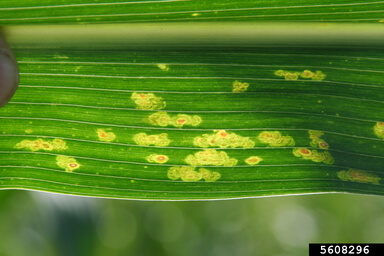
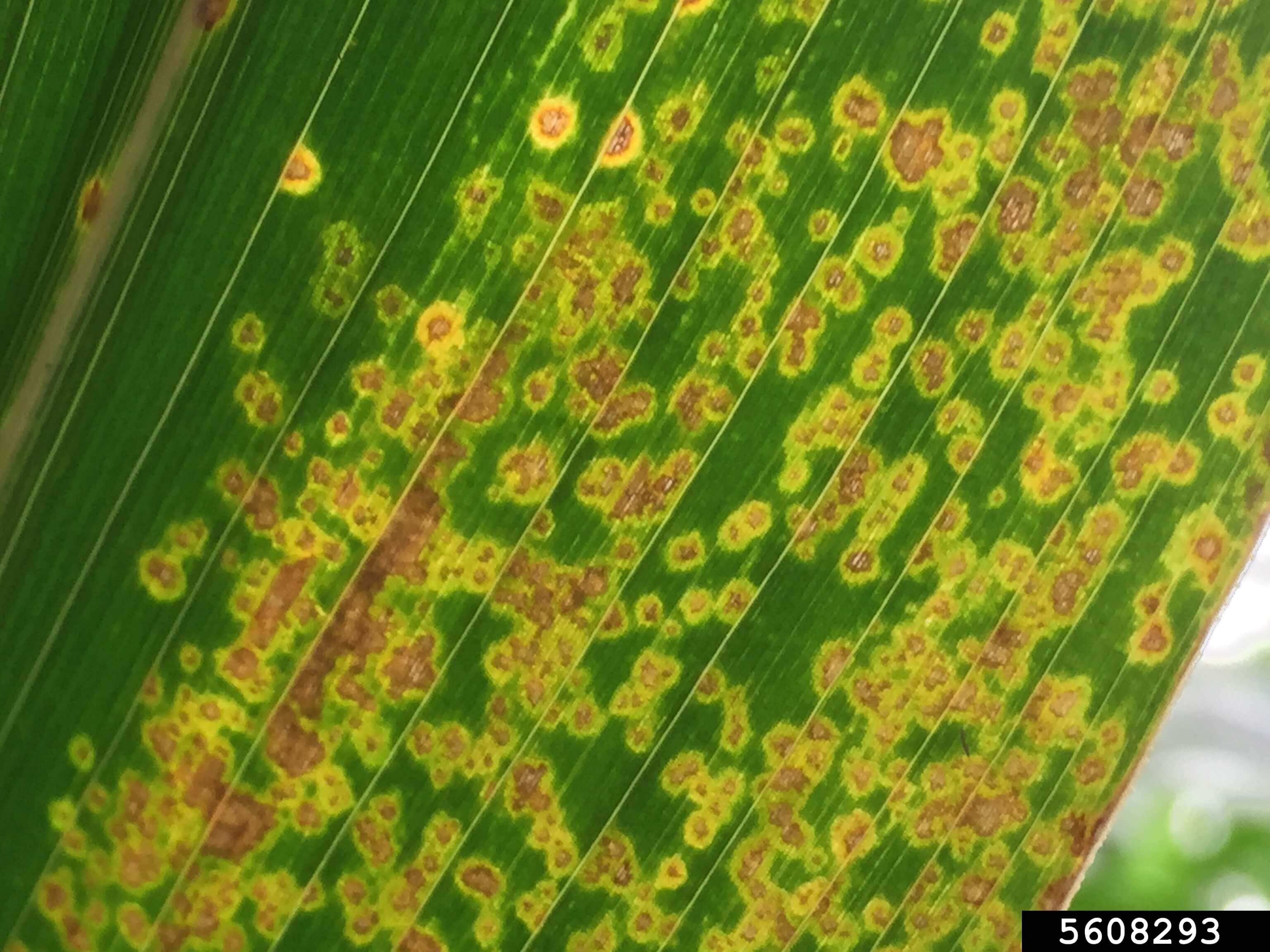

DESCRIPTION
WHO CAUSES IT?
Kabatiella zeae is a fungal pathogen responsible for the disease known as corn eyespot. This fungus survives mainly in the remains of infected crops and in the soil during the winter. With the onset of the corn growing season, the pathogen produces conidia that are dispersed by wind, rain, and water splashes. When conidia land on corn leaves, they germinate and penetrate through stomata or wounds, initiating infection. During active plant growth, the fungus develops within the leaf tissues, producing characteristic symptoms of the disease. Under favorable conditions of high humidity and moderate temperatures, Kabatiella zeae is able to sporulate profusely, generating new spores that facilitate the continued spread of the disease. The ability to survive in plant residues and soil makes the management of this pathogen challenging, requiring comprehensive management strategies.
SYMPTOMS
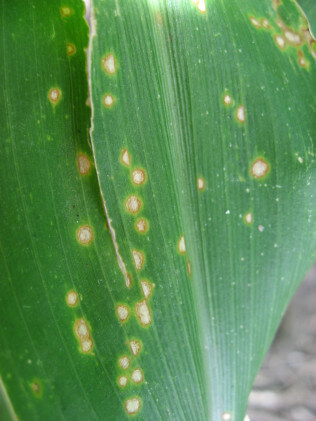
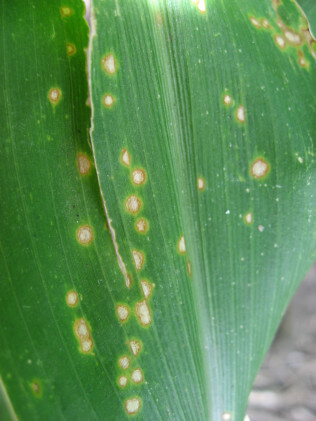
Corn eyespot is a disease that mainly affects the leaves of corn plants, reducing their photosynthetic capacity and, consequently, the crop yield. The first symptoms usually appear as small chlorotic Taches that expand and develop a dark brown center surrounded by a chlorotic halo, resembling an eye.
- Small, circular Taches on the leaves.
- Dark brown centers in the Taches, with chlorotic halos.
- Fusion of Taches in advanced stages, creating extensive necrotic areas.
- Reduction of the photosynthetic capacity of the plant.
- General weakening of the plant.
- Decrease in grain yield.


TEMPERATURE AND HUMIDITY
20°C - 25°C
80% - 100%

HOW IS IT SPREAD?
Wind spores, water splashes, infected crop residues, contaminated agricultural tools

HOW TO REMOVE IT?
Home remedies
There are no home treatments
Chemical treatments
The disease is controlled by preventing its early development. To do this, it is advisable to avoid repeating the cultivation of corn on soils where symptoms were observed the previous year and, in any case, bury the remains of the harvest through deep work. Although there are large differences in sensitivity between commercial hybrids currently on the market, there is no variety that is completely resistant to the disease.
Treatments allowed in organic farming
The disease is controlled by preventing its early development. To do this, it is advisable to avoid repeating the cultivation of corn on soils where symptoms were observed the previous year and, in any case, bury the remains of the harvest through deep work. Although there are large differences in sensitivity between commercial hybrids currently on the market, there is no variety that is completely resistant to the disease.
Insect allies
PREDATORY MITES
LADYBUGS
LACEWINGS
PARASITIC WASPS
HOVERFLIES OR PARASITIC FLIES
PREDATORY BUGS
There are no natural allies
Mycodiplosis oidii (predatory mosquito)
EFFECTIVE PRODUCTS TO ELIMINATE THIS DISEASE
Sponsored link
Sponsored link


Sponsored link
Sponsored link
Sponsored link


Sponsored link
Sponsored link
Effective against all types of fungi

Sponsored link


Sponsored link
Sponsored link

Sponsored link


Sponsored link
- Crop rotation to reduce the accumulation of inoculum in the soil.
- Elimination and destruction of infected crop residues to reduce the source of spores.
- Use of corn varieties resistant to Kabatiella zeae when available.
- Implementation of deep tillage practices to bury infected waste.
- Regular monitoring of the field to detect early symptoms of the disease.
- Application of protective and curative fungicides following technical recommendations.
- Maintain good drainage in the fields to reduce excessive humidity.
- Avoid overhead irrigation during periods of high humidity to minimize spore dispersal.
- Train agricultural personnel in the identification and management of corn eyespot.
Recommendations

Enjoy idMicrobe TOTALLY FREE, with no trial periods.


