

Bacteriosis
Moko or maduraviche: what it is, how it originates, and how to eliminate it effectively.
Moko or madaviche
Ralstonia solanacearum
Pathogen:
Bacterium
Type:
Risk to the plant:
CRITICAL

DESCRIPTION
WHO CAUSES IT?
Ralstonia solanacearum is a phytopathogenic bacterium of great agricultural importance due to its ability to cause bacterial wilt in a wide range of crops. It is a soil organism that persists in plant remains, rhizosphere and contaminated water sources. Its penetration into the plant occurs mainly through wounds in roots or through natural openings, such as stomata and lenticels. Once in the vascular system, it colonizes the xylem and multiplies, clogging the vessels and triggering wilting symptoms. It produces exopolysaccharides that contribute to the occlusion of vascular tissues, preventing the flow of water and nutrients. Its dispersion within the host occurs by the upward movement of the sap, allowing it to reach stems and leaves. Furthermore, this bacterium presents great genetic variability, with multiple races and biovars adapted to different environmental conditions and hosts. Its persistence in the soil can extend for several years in the absence of cultivation, thanks to its ability to survive in weed roots and in biofilms within water sources.
SYMPTOMS
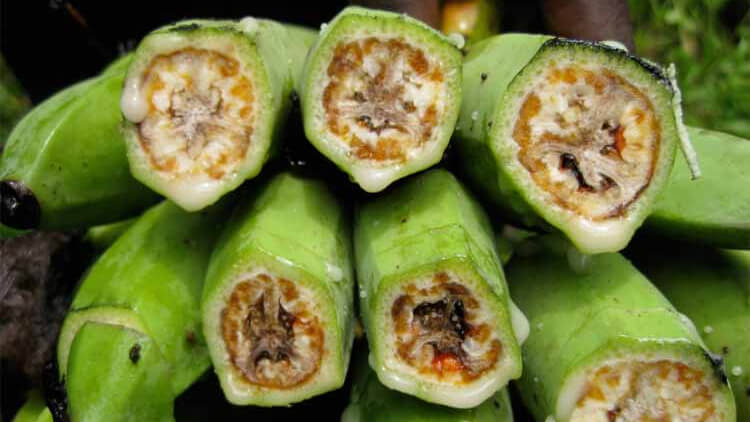
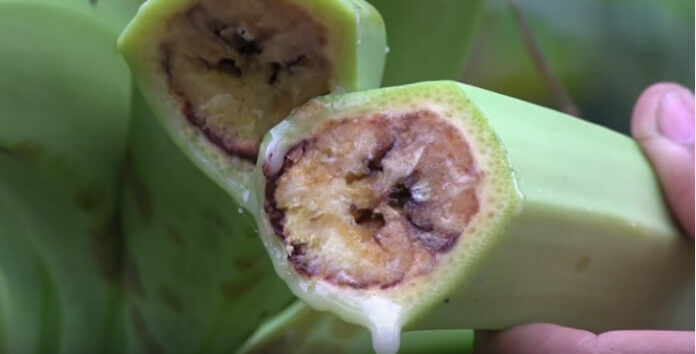
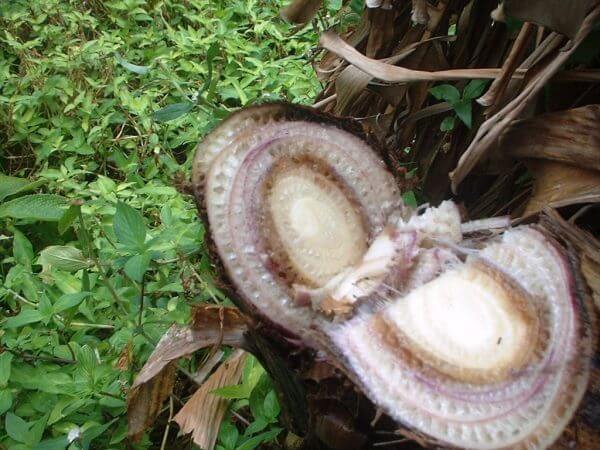
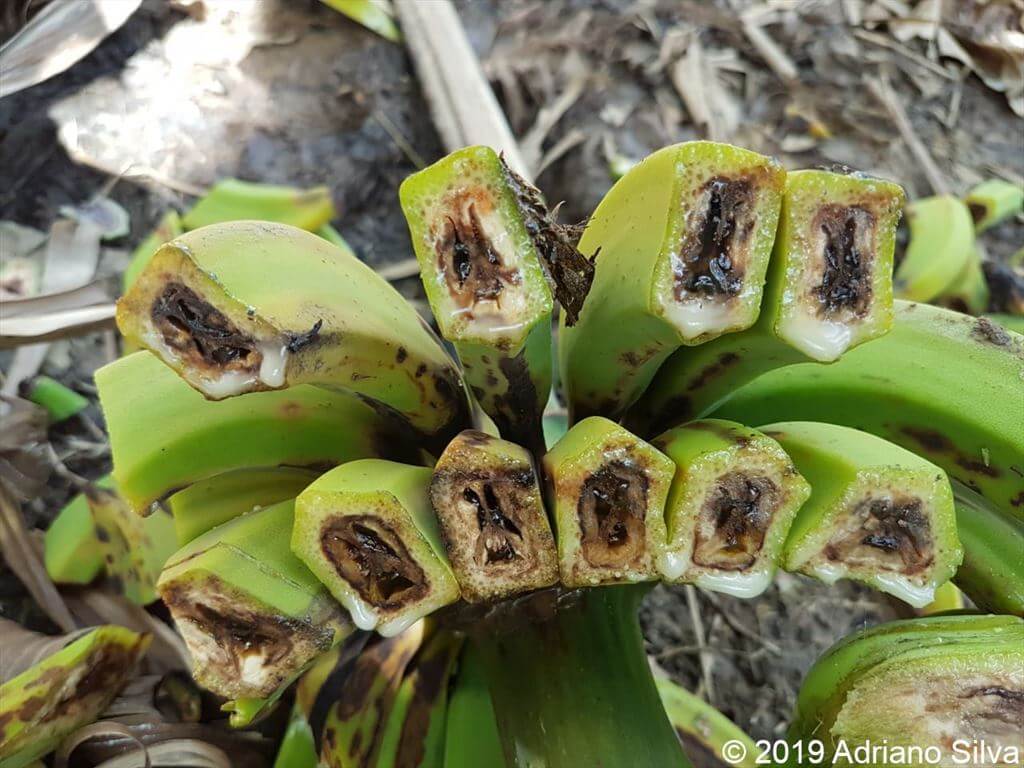
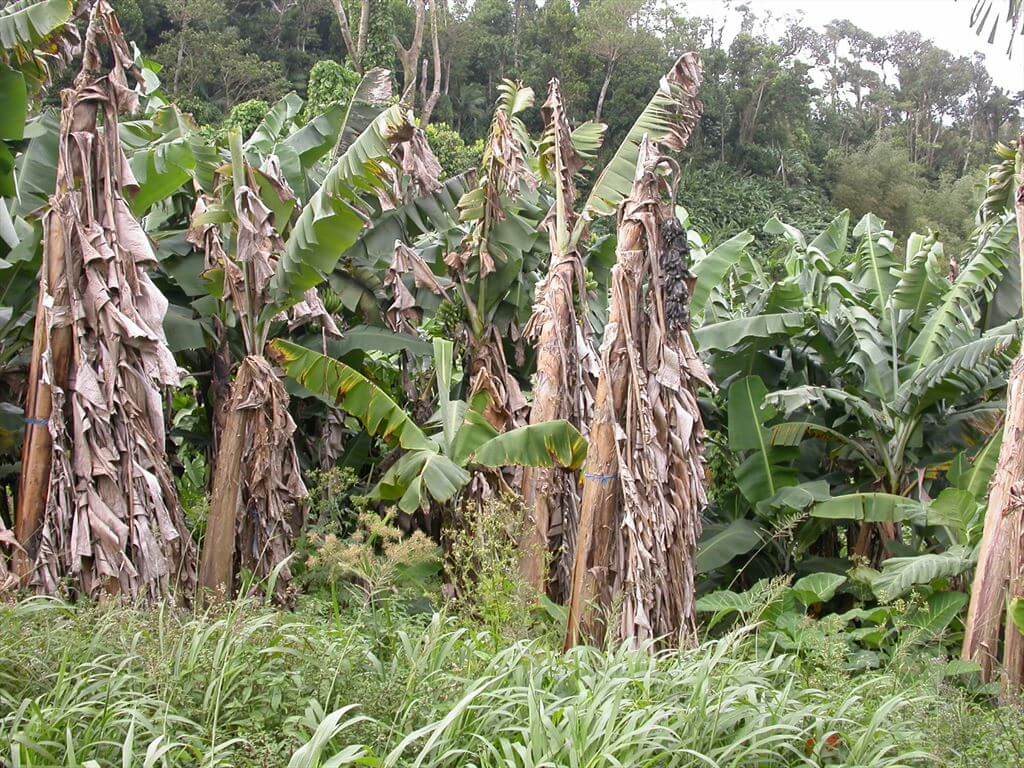
In banana trees, Ralstonia solanacearum causes the disease known as moko or matureviche, one of the most devastating for this crop. The infection begins in the roots and spreads rapidly through the vascular system, affecting the flow of water and nutrients. Diseased plants show progressive wilting that begins in the lower leaves and extends to the upper part, accompanied by necrosis in the petioles and bacterial exudates in the conducting vessels. As the disease progresses, internal and external changes are observed in the plant, which seriously compromises the production and quality of the fruit.
- Irreversible wilting of the leaves, which begins at the margins and advances towards the center.
- Yellowing of the lower leaves, followed by their collapse.
- Necrotic lesions on the petioles and pseudostem.
- Bacterial exudates in the cuts of the affected tissues.
- Easy detachment of leaves due to internal destruction of tissues.
- In fruits, appearance of dark spots and pulp with a watery appearance.
- Foul smell in the affected area when making cuts on the plant.

TEMPERATURE AND HUMIDITY
25°C - 35°C
80% - 100%

HOW IS IT SPREAD?
Contaminated irrigation water, infected soil, agricultural tools, insect vectors, infected planting material, diseased plant residues, contact with roots of affected plants

HOW TO REMOVE IT?
Home remedies
There are no home treatments
Chemical treatments
• OXYCHLORURE DE CUIVRE 37,5% (EXPR. EN CU) [WG] P/P
• OXYCHLORURE DE CUIVRE 38% (EXPR. EN CU) [SC] P/V
Treatments allowed in organic farming
• OXYCHLORURE DE CUIVRE 37,5% (EXPR. EN CU) [WG] P/P
• OXYCHLORURE DE CUIVRE 38% (EXPR. EN CU) [SC] P/V
Insect allies
PREDATORY MITES
LADYBUGS
LACEWINGS
PARASITIC WASPS
HOVERFLIES OR PARASITIC FLIES
PREDATORY BUGS
There are no natural allies
Mycodiplosis oidii (predatory mosquito)
EFFECTIVE PRODUCTS TO ELIMINATE THIS DISEASE
Sponsored link

Sponsored link


Sponsored link
Sponsored link
Sponsored link


Sponsored link
Sponsored link
Effective against all types of fungi

Sponsored link


Sponsored link
Sponsored link

Sponsored link


Sponsored link
- Use certified planting material free of the bacteria to avoid the introduction of the pathogen in new plantations.
- Implement crop rotation with non-susceptible species to reduce the bacterial load in the soil.
- Avoid the movement of contaminated tools, machinery and footwear, as they can act as vectors of the disease.
- Apply strict hygiene measures, such as disinfection of tools and proper management of plant waste.
- Control the humidity of the soil and avoid waterlogging, since the bacteria spread more easily in conditions of high humidity.
- Carry out constant monitoring of crops for early detection of symptoms and elimination of affected plants.
- Implement physical barriers and isolation of infected crops to prevent spread to new areas.
- Use traps and measures to control insect vectors that can transmit the bacteria from plant to plant.
- Apply biological treatments with R. solanacearum antagonists to reduce its presence in the soil.
- Avoid reusing contaminated substrates and water for irrigation.
- In severe cases, consider eradicating severely affected plantations to prevent the spread of the disease.
Recommendations

Enjoy idMicrobe TOTALLY FREE, with no trial periods.


