

Monilia
Monilia
Monilia sp.
Pathogen:
Fungus
Type:
Risk to the plant:
HIGH

DESCRIPTION
WHO CAUSES IT?
Monilia sp., also known as Monilinia spp., is a phytopathogenic fungus that mainly affects stone fruit trees such as peach, cherry, apricot and almond. This fungus produces reproductive structures called apothecia in mummified fruits that have fallen to the ground and remain covered by leaf litter. These structures release spores that, carried by wind or water, infect developing flowers and fruits. During spring, conditions of high humidity and mild temperatures favor the germination of spores and infection of plant tissues. The fungus can penetrate fruits through wounds caused by insects, hail or mechanical damage. Once inside, it develops rapidly, causing the decomposition of plant tissue and the formation of new spores that perpetuate the infectious cycle. Infected fruits that are not properly removed can become sources of inoculum for the following season. citeturn0search4turn0search13
SYMPTOMS
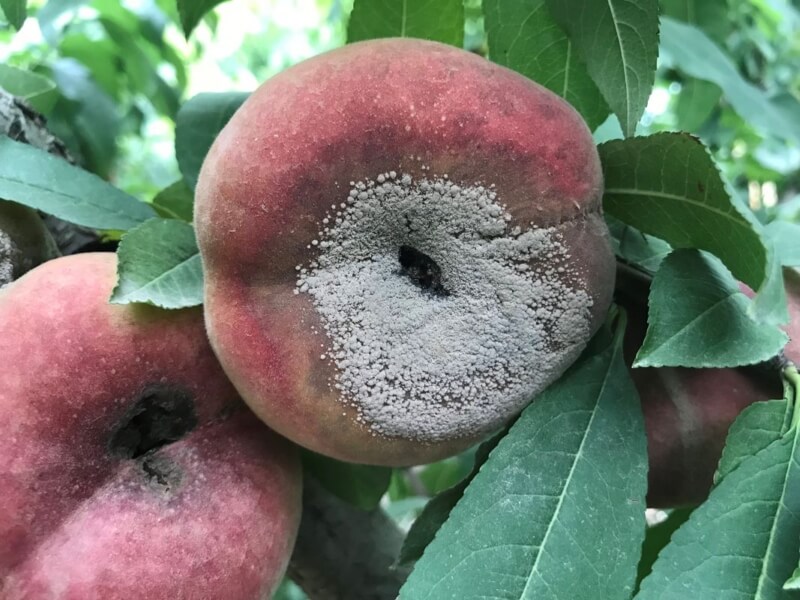
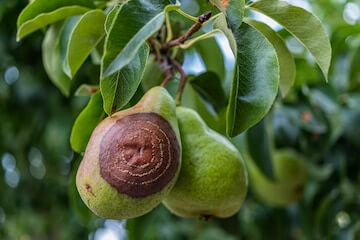
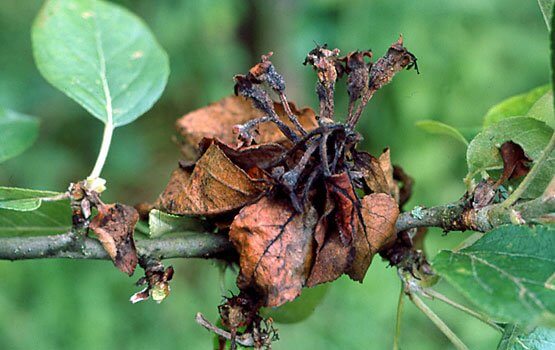
The disease caused by Monilia sp., known as moniliosis or brown rot, affects plants, especially stone fruit trees. Symptoms appear on flowers, buds and fruits, starting with brown spots on the flowers that cause them to wither and fall prematurely. On the shoots, cankers and rubbery exudations are observed that can extend to the branches. The fruits develop areas of soft, watery rot, covered by a grayish or whitish mold, and eventually mummify, remaining attached to the tree or falling to the ground. These mummified fruits act as reservoirs for the fungus, facilitating new infections in the following season.
- Brown spots on flowers and buds.
- Cankers on branches and rubbery exudations.
- Soft and watery rot in fruits.
- Presence of grayish or whitish mold on fruits.
- Mummified fruits attached to the tree or on the ground.
- Withering and premature fall of flowers.
- Reduction in the quality and quantity of the harvest.
- Loss of vigor in affected plants.
- Increased susceptibility to other diseases.
- Decrease in the useful life of post-harvest fruits.


TEMPERATURE AND HUMIDITY
20°C - 25°C
85% - 100%

HOW IS IT SPREAD?
Spores carried by wind, rainwater, splashes, insects, contaminated tools, contact between infected and healthy fruits

HOW TO REMOVE IT?
Home remedies
There are no home treatments
Chemical treatments
• CAPTAN 47.5% [SC] P/V
• CIPRODINIL 37.5% + FLUDIOXONIL 25% [WG] P/P
• DIFENOCONAZOLE 1.67% [EC] P/V
• PHENHEXAMIDE 50% [SC] P/V
• PHENHEXAMIDE 50% [WG] P/P
• POTASSIUM HYDROGEN CARBONATE 0.425% [AL] P/V
• POTASSIUM HYDROGEN CARBONATE 85% [SP] P/P
• CUPRIC HYDROXIDE 25% (EXPR. IN CU) [WG] P/P
• CUPRIC HYDROXIDE 50% (EXPR. IN CU) [WP] P/P
• METIRAM 70% [WG] P/P
• COPPER OXYCHLORIDE 30% (EXPR. IN CU) [WP] P/P
• COPPER OXYCHLORIDE 35% (exp. in Cu) [WG] P/P
• COPPER OXYCHLORIDE 35% (EXPR. IN CU) [WG] P/P
• COPPER OXYCHLORIDE 38% (EXPR. IN CU) [SC] P/V
• COPPER OXYCHLORIDE 50% (EXPR. IN CU) [WP] P/P
• COPPER OXYCHLORIDE 52% (EXPR. IN CU) [SC] P/V
• CUPROUS OXIDE 50% (EXPR. IN CU) [WP] P/P
• PIRACLOSTROBIN 6.7% + BOSCALIDE 26.7% ( ) [WG] P/P
• PIRACLOSTROBIN 6.7% + BOSCALIDE 26.7% (I) [WG] P/P
• CUPROCALCIC SULFATE 20% (EXPR. IN CU) [WG] P/P
• CUPROCALCIC SULFATE 20% (EXPR. IN CU) [WP] P/P
Treatments allowed in organic farming
• POTASSIUM HYDROGEN CARBONATE 0.425% [AL] P/V
• POTASSIUM HYDROGEN CARBONATE 85% [SP] P/P
• CUPRIC HYDROXIDE 25% (EXPR. IN CU) [WG] P/P
• CUPRIC HYDROXIDE 50% (EXPR. IN CU) [WP] P/P
• COPPER OXYCHLORIDE 30% (EXPR. IN CU) [WP] P/P
• COPPER OXYCHLORIDE 35% (exp. in Cu) [WG] P/P
• COPPER OXYCHLORIDE 35% (EXPR. IN CU) [WG] P/P
• COPPER OXYCHLORIDE 38% (EXPR. IN CU) [SC] P/V
• COPPER OXYCHLORIDE 50% (EXPR. IN CU) [WP] P/P
• COPPER OXYCHLORIDE 52% (EXPR. IN CU) [SC] P/V
• CUPROUS OXIDE 50% (EXPR. IN CU) [WP] P/P
• CUPROCALCIC SULFATE 20% (EXPR. IN CU) [WG] P/P
• CUPROCALCIC SULFATE 20% (EXPR. IN CU) [WP] P/P
Insect allies
PREDATORY MITES
LADYBUGS
LACEWINGS
PARASITIC WASPS
HOVERFLIES OR PARASITIC FLIES
PREDATORY BUGS
There are no natural allies
Mycodiplosis oidii (predatory mosquito)
EFFECTIVE PRODUCTS TO ELIMINATE THIS DISEASE
Sponsored link
Sponsored link


Sponsored link
Sponsored link
Sponsored link


Sponsored link
Sponsored link
Effective against all types of fungi

Sponsored link


Sponsored link
Sponsored link

Sponsored link


Sponsored link
- Carry out sanitary pruning by eliminating infected branches and shoots to reduce sources of inoculum.
- Collect and destroy mummified fruits that have fallen to the ground to prevent the spread of the fungus.
- Apply preventive fungicides at critical moments in the development of the crop, such as flowering and fruit setting.
- Avoid wounds on the fruits during cultural work to reduce entry points for the pathogen.
- Maintain adequate ventilation in the crop through pruning that promotes air circulation.
- Control weeds and keep the soil clean to reduce humidity and the presence of spores.
- Implement a regular monitoring program to detect early symptoms of the disease.
- Use plant varieties less susceptible to moniliosis when possible.
- Ensure adequate soil drainage to avoid high humidity conditions.
- Disinfect pruning tools to prevent the transmission of the fungus between plants.
Recommendations

Enjoy idMicrobe TOTALLY FREE, with no trial periods.


