

Mosca blanca
White Fly
Bemisia Tabaci
Pathogen:
Insect
Type:
Risk to the plant:
MILD

DESCRIPTION
WHO CAUSES IT?
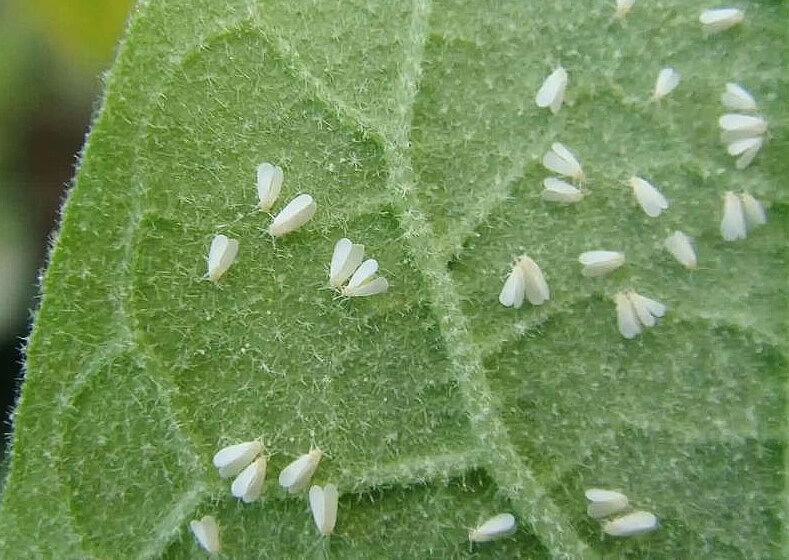
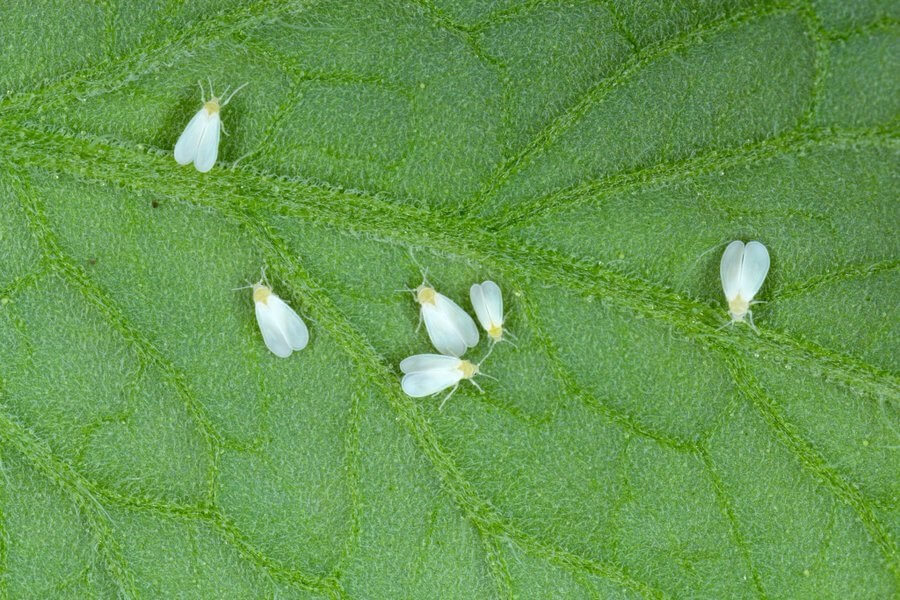
Bemisia tabaci, known as the whitefly, is a hemipteran insect of the Aleyrodidae family that affects numerous crops, including chard. This pest has several biotypes, the most common being B and Q. The whitefly goes through several stages of development: egg, four nymphal stages and adult. The yellowish eggs are laid on the underside of the leaves. The nymphs emerge from the eggs and attach themselves to the leaf, where they remain motionless while feeding on plant sap. During the nymphal stages, whiteflies excrete a sugary substance known as honeydew, which promotes the growth of sooty mold fungi. Adults are winged, white and small, allowing them to easily disperse to other plants. Reproduction is rapid and can occur year-round under favorable conditions, making this pest difficult to control.
SYMPTOMS
In chard, whitefly causes a disease that manifests itself with several symptoms that affect both the aesthetics and health of the plant. The damage is caused mainly by the feeding of the nymphs and adults, which suck the sap, weakening the plant and reducing its vigor. The excreted honeydew can cover the leaves, favoring the growth of sooty mold fungi, which interfere with photosynthesis and deteriorate the quality of the crop. In addition, Bemisia tabaci is a vector of various phytopathogenic viruses that can cause additional diseases.
• Presence of adult whiteflies on the underside of the leaves.
• Chlorotic Taches on the leaves.
• Discoloration and wilting of leaves.
• Reduced growth and general weakening of the plant.
• Presence of sticky honeydew on the leaves.
• Development of sooty mold fungi on the surface of the leaves.
• Transmission of phytopathogenic viruses.


TEMPERATURE AND HUMIDITY
20ºC - 30ºC
50% - 70%

HOW IS IT SPREAD?
Wind, contact between plants, gardening tools, infested plants.

HOW TO REMOVE IT?
Home remedies
There are no home treatments
Chemical treatments
• ORANGE OIL 6% [SL] P/V
• ORANGE OIL 60g/L [ME] P/S
• PARAFFIN OIL (CAS [64742-46-7]) 79% [EC] P/V
• PARAFFIN OIL (CAS [8042-47-5]) 54.6% [EW] P/V
• Azadirachtin 2.6% (AS AZADIRACTIN A) [EC] P/V
• DELTAMETHRIN 2.5% [EW] P/V
• LAMBDA CYHALOTHRIN 10% [CS] P/V
• MALTODEXTRIN 47.6% [SL] P/V
• PYRETHRINS 2% (PYRETHRE EXTR.) [EC] P/V
• PYRETHRINS 4% [EC] P/V
• ADHESIVE TRAPS
• CHROMATIC TRAPS
Treatments allowed in organic farming
• ORANGE OIL 6% [SL] P/V
• ORANGE OIL 60g/L [ME] P/S
• PARAFFIN OIL (CAS [64742-46-7]) 79% [EC] P/V
• PARAFFIN OIL (CAS [8042-47-5]) 54.6% [EW] P/V
• Azadirachtin 2.6% (AS AZADIRACTIN A) [EC] P/V
• LAMBDA CYHALOTHRIN 10% [CS] P/V
• PYRETHRINS 2% (PYRETHRE EXTR.) [EC] P/V
• PYRETHRINS 4% [EC] P/V
• ADHESIVE TRAPS
• CHROMATIC TRAPS
Insect allies
PREDATORY MITES
LADYBUGS
LACEWINGS
PARASITIC WASPS
HOVERFLIES OR PARASITIC FLIES
PREDATORY BUGS
There are no natural allies
Mycodiplosis oidii (predatory mosquito)
EFFECTIVE PRODUCTS TO ELIMINATE THIS DISEASE
Sponsored link
Sponsored link


Sponsored link
Sponsored link
Sponsored link


Sponsored link
Sponsored link
Effective against all types of fungi

Sponsored link


Sponsored link
Sponsored link

Sponsored link


Sponsored link
• Carry out frequent monitoring to detect the early presence of the pest.
• Use yellow sticky traps to capture adults and reduce their population.
• Implement cultural practices such as crop rotation and elimination of weeds that can serve as alternative hosts.
• Maintain adequate ventilation and spacing between plants to reduce humidity and the density of the whitefly population.
• Introduce and encourage natural enemies such as parasitoid wasps (Encarsia spp. and Eretmocerus spp.) and predators (ladybugs and lacewings).
• Apply insecticidal soaps and horticultural oils to suffocate nymphs and adults.
• Use chemical insecticides on a rotational basis to avoid the development of resistance, always following local recommendations and good agricultural practices.
• Implement physical barriers such as anti-insect mesh to protect young and vulnerable plants.
Recommendations

Enjoy idMicrobe TOTALLY FREE, with no trial periods.


