

Mosca blanca
White Fly
Bemisia Tabaci
Pathogen:
Insect
Type:
Risk to the plant:
HIGH


DESCRIPTION
WHO CAUSES IT?
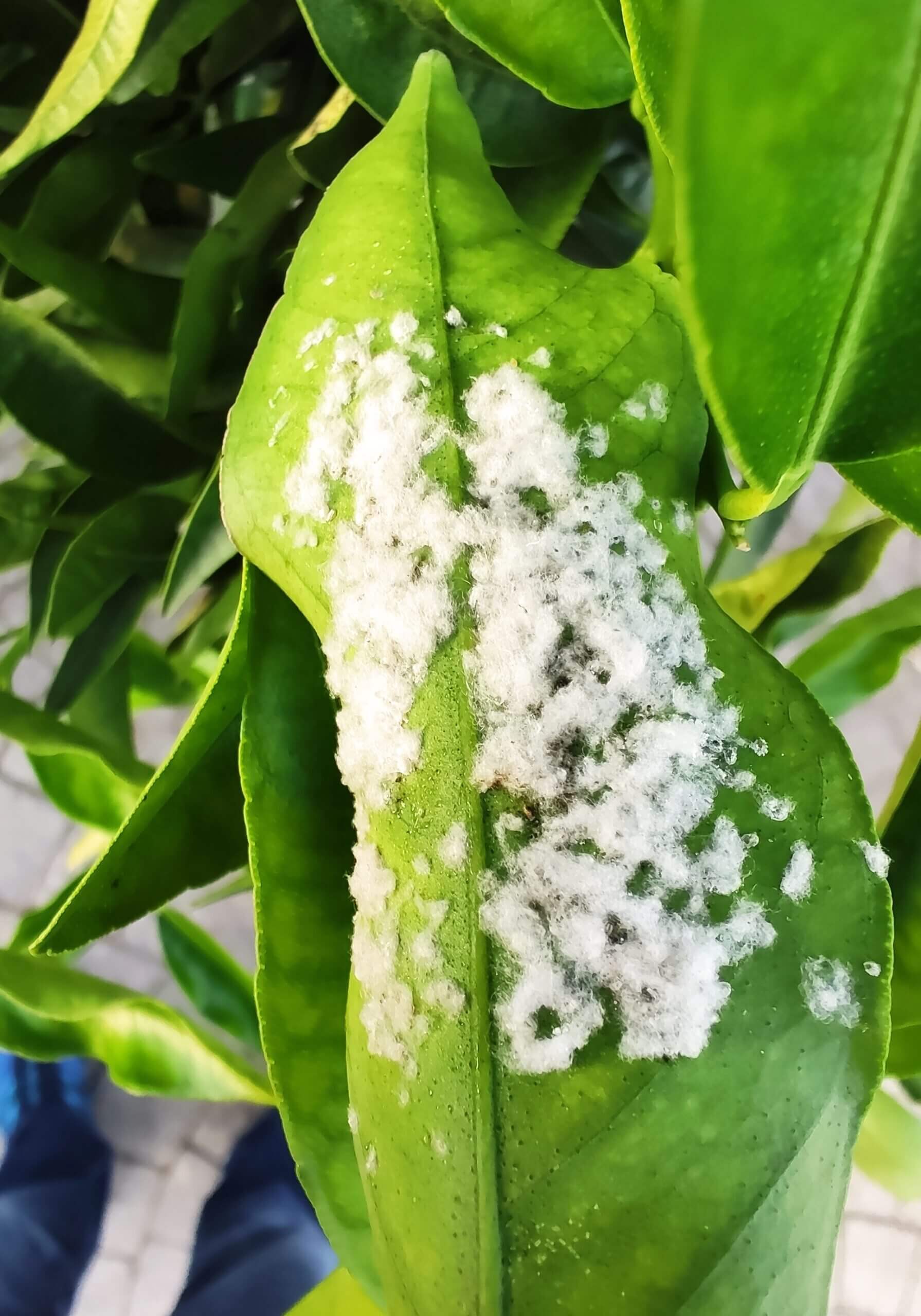
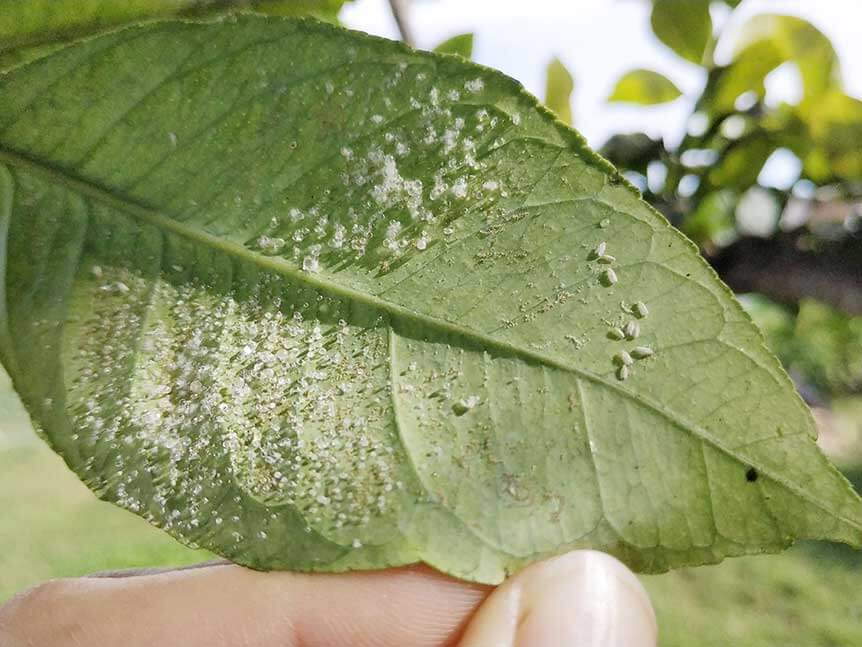
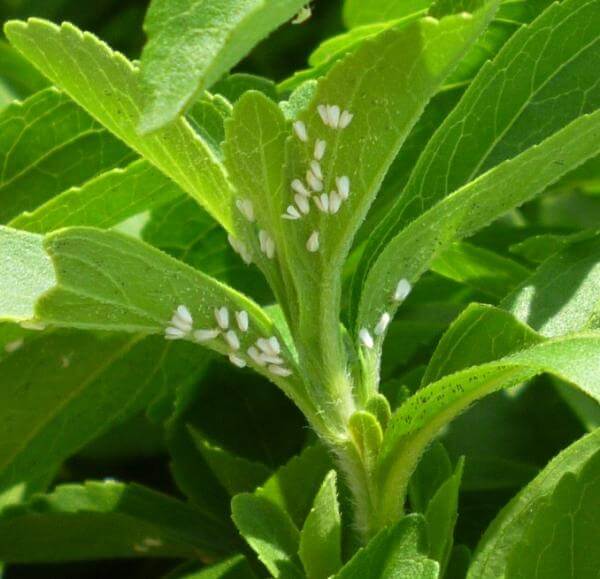
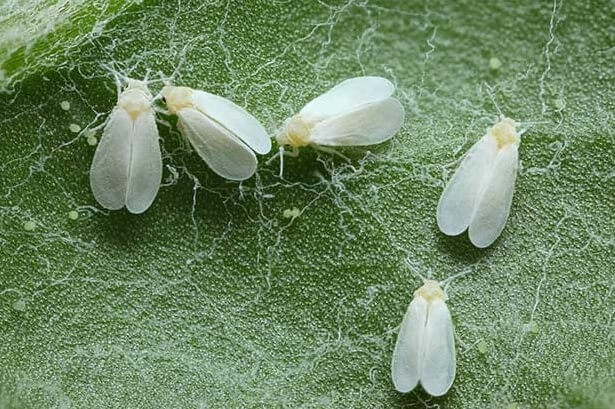
Bemisia tabaci, commonly known as whitefly, is a small insect approximately 1-2 mm in length. Adult females lay their eggs on the underside of leaves, preferring areas with a high density of young, tender leaves. Each female can lay between 100 and 300 eggs during her lifetime. The eggs hatch into nymphs that go through four instars before becoming adults. The nymphs attach to leaves and feed on plant sap, injecting toxic saliva that causes damage to plant tissues. Adults emerge from the pupae and begin to reproduce rapidly, especially in warm, humid conditions. Bemisia tabaci has a high reproductive capacity and a rapid development rate, allowing it to establish and proliferate quickly in crops.
SYMPTOMS
Whitefly produces a disease in plants that manifests itself through various symptoms that significantly affect the health and productivity of plants.
- Yellowing of leaves.
- Development of sooty mold on the leaves due to the secretion of honeydew.
- Reduction in plant growth and vigor.
- Withering and premature leaf fall.
- Deformation of shoots and new leaves.
- Appearance of chlorotic Taches on the leaves.
- Decrease in fruit production.
- Transmission of phytopathogenic viruses that aggravate the condition of the plant.

TEMPERATURE AND HUMIDITY
20°C a 30°C
60% a 80%

HOW IS IT SPREAD?
Direct contact, Wind, Infested plants, Contaminated tools, Irrigation with infected water, Movement of infected plant material

HOW TO REMOVE IT?
Home remedies
There are no home treatments
Chemical treatments
• ABAMECTIN 0.0015% + PYRETHRINS 0.02% [AL] P/V
• RAPESEAL OIL 0.825% + PYRETHRINS 0.018% [AL] P/V
• RAPE OIL 1.53% [AL] P/V
• RAPE OIL 1.69% ( ) [AL] P/V
• RAPE OIL 77.7% [EC] P/V
• RAPE OIL 82.53% + PYRETHRINS 0.459% [EC] P/V
• RAPE OIL 848.24 g/l [EC] P/V
• ORANGE OIL 6% [SL] P/V
• ORANGE OIL 60g/L [ME] P/S
• ACETAMIPRID 0.005% [AL] P/V
• ACETAMIPRID 20% [SG] P/P
• ACETAMIPRID 20% [SP] P/P
• AZADIRACTIN 1% (AS AZADIRACTIN A) [EC] P/V
• Azadirachtin 2.6% (AS AZADIRACTIN A) [EC] P/V
• SULFUR 0.4% + POTASSIUM SALTS OF UNSATURATED FATTY ACIDS C7-C18 & C18 (CAS [67701-09-1] 1% [AL] P/V
• BUPROFEZIN 25% [SC] P/V
• CYPERMETHRIN 10% [EC] P/V
• CYPERMETHRIN 10% [EW] P/V
• CYPERMETHRIN 5% [EC] P/V
• CYPERMETHRIN 50% [EC] P/V
• DELTAMETHRIN 1.5% [EW] P/V
• DELTAMETHRIN 1.57% [SC] P/V
• DELTAMETHRIN 10% [EC] P/V
• DELTAMETHRIN 2.5% [EC] P/V
• DELTAMETHRIN 2.5% [EW] P/V
• PHENPIROXIMATE 5.12% [SC] P/V
• FLUPIRADIFURONE 0.008% [AL] P/V
• FLUPYRADIFURONE 20% [SL] P/V
• LAMBDA CYHALOTHRIN 0.0015% [ME] P/V
• LAMBDA CYHALOTHRIN 1.5% [CS] P/V
• LAMBDA CYHALOTHRIN 10% [CS] P/V
• LAMBDA CYHALOTHRIN 2.5% [WG] P/P
• LAMBDA CYHALOTHRIN 5% [EG] P/P
• PYRETHRINS 1.9% [EC] P/V
• PYRETHRINS 4.65% (as pyrethrum extract) [EC] P/V
• PYRETHRINS 4% (PYRETHHRINE EXTR.) [EC] P/V
• PYRIDABEN 10% [SC] P/V
• PYRIPROXIFEN 10% [EC] P/V
• POTASSIUM SALTS OF UNSATURATED FATTY ACIDS C7-C18 & C18 (CAS [67701-09-1] 515g/L [SL] P/V
• POTASSIUM SALTS OF UNSATURATED FATTY ACIDS C7-C18 & C18 10.2g/L [AL] P/V
• POTASSIUM SALTS OF FATTY ACIDS C14-C20 48% [EW] P/V
• POTASSIUM SALTS OF VEGETABLE FATTY ACIDS 13.04% [SL] P/V
• SPIROMESIFEN 24% [SC] P/V
• SULFOXAFLOR 12% [SC] P/V
• ADHESIVE TRAPS
• CHROMATIC TRAPS
Treatments allowed in organic farming
• RAPESEAL OIL 0.825% + PYRETHRINS 0.018% [AL] P/V
• RAPE OIL 1.53% [AL] P/V
• RAPE OIL 1.69% ( ) [AL] P/V
• RAPE OIL 77.7% [EC] P/V
• RAPE OIL 82.53% + PYRETHRINS 0.459% [EC] P/V
• RAPE OIL 848.24 g/l [EC] P/V
• ORANGE OIL 6% [SL] P/V
• ORANGE OIL 60g/L [ME] P/S
• AZADIRACTIN 1% (AS AZADIRACTIN A) [EC] P/V
• Azadirachtin 2.6% (AS AZADIRACTIN A) [EC] P/V
• SULFUR 0.4% + POTASSIUM SALTS OF UNSATURATED FATTY ACIDS C7-C18 & C18 (CAS [67701-09-1] 1% [AL] P/V
• LAMBDA CYHALOTHRIN 0.0015% [ME] P/V
• LAMBDA CYHALOTHRIN 1.5% [CS] P/V
• LAMBDA CYHALOTHRIN 10% [CS] P/V
• LAMBDA CYHALOTHRIN 2.5% [WG] P/P
• LAMBDA CYHALOTHRIN 5% [EG] P/P
• PYRETHRINS 1.9% [EC] P/V
• PYRETHRINS 4.65% (as pyrethrum extract) [EC] P/V
• PYRETHRINS 4% (PYRETHHRINE EXTR.) [EC] P/V
• POTASSIUM SALTS OF UNSATURATED FATTY ACIDS C7-C18 & C18 (CAS [67701-09-1] 515g/L [SL] P/V
• POTASSIUM SALTS OF UNSATURATED FATTY ACIDS C7-C18 & C18 10.2g/L [AL] P/V
• POTASSIUM SALTS OF FATTY ACIDS C14-C20 48% [EW] P/V
• POTASSIUM SALTS OF VEGETABLE FATTY ACIDS 13.04% [SL] P/V
• ADHESIVE TRAPS
• CHROMATIC TRAPS
Insect allies
PREDATORY MITES
LADYBUGS
LACEWINGS
PARASITIC WASPS
HOVERFLIES OR PARASITIC FLIES
PREDATORY BUGS
There are no natural allies
Mycodiplosis oidii (predatory mosquito)
EFFECTIVE PRODUCTS TO ELIMINATE THIS DISEASE
Sponsored link

Sponsored link


Sponsored link
Sponsored link
Sponsored link


Sponsored link
Sponsored link
Effective against all types of fungi

Sponsored link


Sponsored link
Sponsored link

Sponsored link


Sponsored link
- Carry out regular monitoring to detect the presence of whiteflies in crops.
- Implement physical barriers such as anti-insect meshes in greenhouses and open fields.
- Introduce natural enemies such as parasitoids and specific whitefly predators.
- Apply potassium soap or mineral oils to reduce the population of nymphs and adults.
- Maintain an adequate crop rotation to interrupt the life cycle of the pathogen.
- Use yellow chromatic traps to attract and capture adults.
- Avoid excessive use of nitrogen fertilizers that promote the growth of tender tissues.
- Implement chemical treatments with specific insecticides, following the recommendations for integrated pest management.
- Promote crop diversity to reduce the susceptibility of the plantation to infestation.
Recommendations

Enjoy idMicrobe TOTALLY FREE, with no trial periods.


