

Mosca blanca
White Fly
Bemisia Tabaci
Pathogen:
Insect
Type:
Risk to the plant:
HIGH

DESCRIPTION
WHO CAUSES IT?
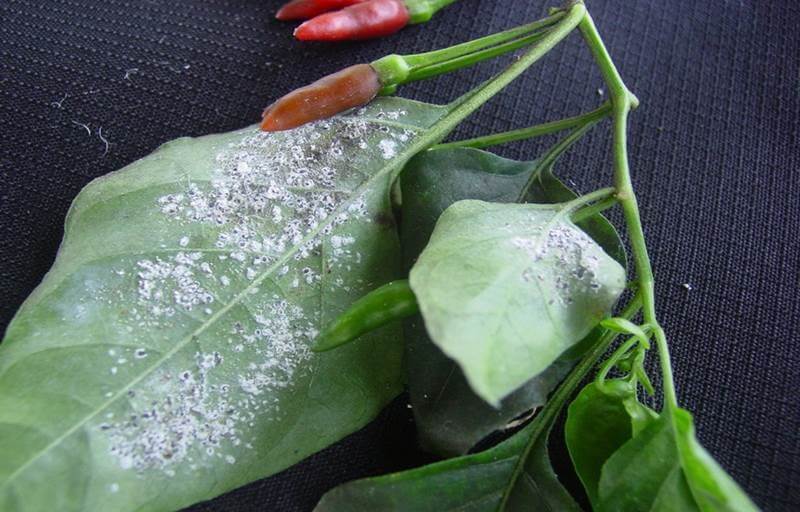
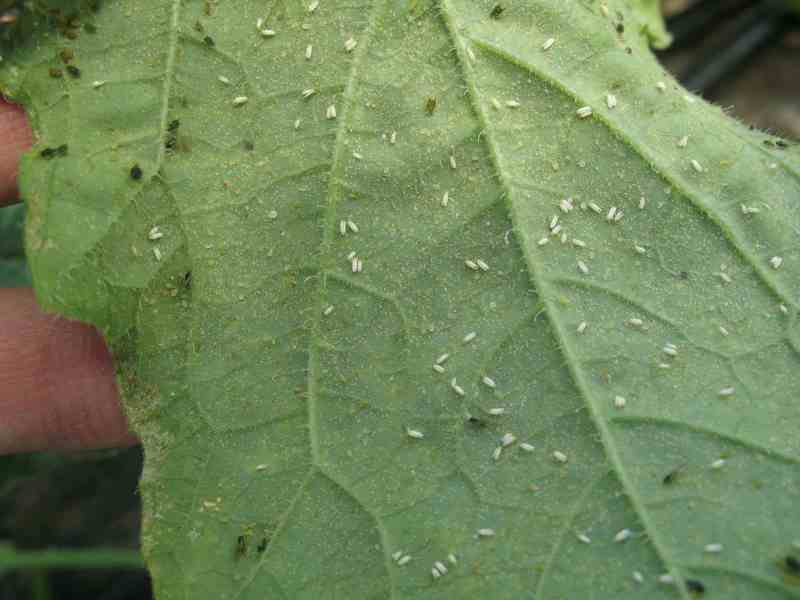
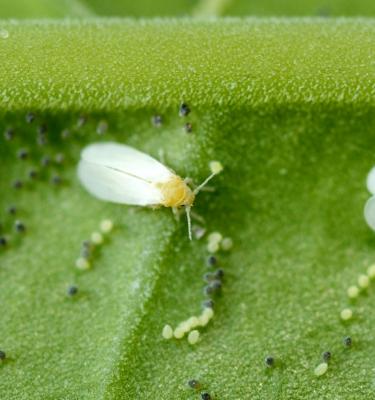
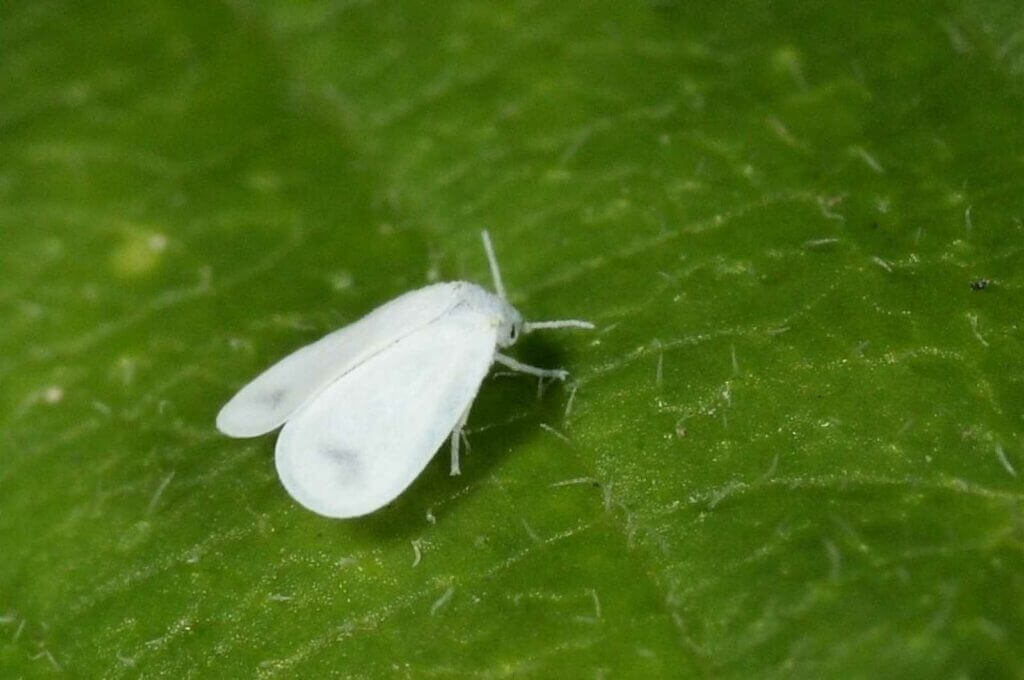
Bemisia tabaci, known as the whitefly, is a small hemipteran insect approximately 1 mm in length. Its development begins with the laying of eggs on the lower surface of the leaves of the host plants. The eggs are small and light yellow, hatching after a few days into first instar nymphs that attach to the leaf and begin feeding. These nymphs go through four stages before becoming winged adults, a process that can last between 20 and 30 days, depending on environmental conditions. Adults are highly mobile and congregate on the underside of leaves, where they also feed on plant sap. During her life, each female can lay between 150 and 300 eggs, facilitating rapid population expansion. Bemisia tabaci is capable of surviving and reproducing throughout the year in warm climates, which contributes to its persistence and the problems it causes in crops.
SYMPTOMS
In pepper, Bemisia tabaci causes a disease known as whitefly, which has significant adverse effects. This insect feeds by sucking the sap from the leaves, which causes general weakening of the plant and reduction in growth and fruit production. Additionally, whiteflies excrete a sugary substance known as honeydew, which promotes the growth of black fungi (sooty mold) that interfere with photosynthesis and further reduce plant vitality.
Yellowing of leaves
General weakening of the plant
Reduced growth and fruit production
Presence of honeydew on the leaves
Development of sooty mold (black fungus)
Transmission of plant viruses


TEMPERATURE AND HUMIDITY
20°C - 30°C
60% - 80%

HOW IS IT SPREAD?
Wind, Direct contact with infected plants, Contaminated cultivation tools, Infected seedlings, Movement of people and animals

HOW TO REMOVE IT?
Home remedies
There are no home treatments
Chemical treatments
• ORANGE OIL 6% [SL] P/V
• ORANGE OIL 60g/L [ME] P/S
• PARAFFIN OIL (CAS [8042-47-5]) 54.6% [EW] P/V
• ACETAMIPRID 0.5% [SL] P/V
• ACETAMIPRID 20% [SG] P/P
• ACETAMIPRID 20% [SL] P/V
• ACETAMIPRID 20% [SP] P/P
• AZADIRACTIN 1% (AS AZADIRACTIN A) [EC] P/V
• Azadirachtin 2.6% (AS AZADIRACTIN A) [EC] P/V
• CYANTRANILIPROL 10% + ACIBENZOLAR-S-METHYL 1.25% [SC] P/V
• DELTAMETHRIN 1.5% [EW] P/V
• DELTAMETHRIN 1.57% [SC] P/V
• DELTAMETHRIN 10% [EC] P/V
• DELTAMETHRIN 2.5% [EC] P/V
• DELTAMETHRIN 2.5% [EW] P/V
• PHENPIROXIMATE 5.12% [SC] P/V
• FLUPIRADIFURONE 0.008% [AL] P/V
• FLUPYRADIFURONE 20% [SL] P/V
• LAMBDA CYHALOTHRIN 0.0015% [ME] P/V
• LAMBDA CYHALOTHRIN 1.5% [CS] P/V
• LAMBDA CYHALOTHRIN 10% [CS] P/V
• PYRETHRINS 1.9% [EC] P/V
• Pyrethrins 12.9 g/l [EC] P/V
• PYRETHRINS 2% (PYRETHRE EXTR.) [EC] P/V
• PYRETHRINS 2% [EC] P/V
• PYRETHRINS 4.65% (as pyrethrum extract) [EC] P/V
• PYRETHRINS 4% (PYRETHHRINE EXTR.) [EC] P/V
• PYRETHRINS 4% [EC] P/V
• PYRIPROXIFEN 10% [EC] P/V
• POTASSIUM SALTS OF FATTY ACIDS C14-C20 48% [EW] P/V
• POTASSIUM SALTS OF VEGETABLE FATTY ACIDS 13.04% [SL] P/V
• POTASSIUM SALTS OF VEGETABLE FATTY ACIDS 15% [SL] P/V
• SPIROMESIFEN 24% [SC] P/V
• SPIROTETRAMAT 15% [OD] P/V
• SULFOXAFLOR 12% [SC] P/V
• ADHESIVE TRAPS
• CHROMATIC TRAPS
Treatments allowed in organic farming
• ORANGE OIL 6% [SL] P/V
• ORANGE OIL 60g/L [ME] P/S
• PARAFFIN OIL (CAS [8042-47-5]) 54.6% [EW] P/V
• AZADIRACTIN 1% (AS AZADIRACTIN A) [EC] P/V
• Azadirachtin 2.6% (AS AZADIRACTIN A) [EC] P/V
• LAMBDA CYHALOTHRIN 0.0015% [ME] P/V
• LAMBDA CYHALOTHRIN 1.5% [CS] P/V
• LAMBDA CYHALOTHRIN 10% [CS] P/V
• PYRETHRINS 1.9% [EC] P/V
• Pyrethrins 12.9 g/l [EC] P/V
• PYRETHRINS 2% (PYRETHRE EXTR.) [EC] P/V
• PYRETHRINS 2% [EC] P/V
• PYRETHRINS 4.65% (as pyrethrum extract) [EC] P/V
• PYRETHRINS 4% (PYRETHHRINE EXTR.) [EC] P/V
• PYRETHRINS 4% [EC] P/V
• POTASSIUM SALTS OF FATTY ACIDS C14-C20 48% [EW] P/V
• POTASSIUM SALTS OF VEGETABLE FATTY ACIDS 13.04% [SL] P/V
• POTASSIUM SALTS OF VEGETABLE FATTY ACIDS 15% [SL] P/V
• ADHESIVE TRAPS
• CHROMATIC TRAPS
Insect allies
PREDATORY MITES
LADYBUGS
LACEWINGS
PARASITIC WASPS
HOVERFLIES OR PARASITIC FLIES
PREDATORY BUGS
There are no natural allies
Mycodiplosis oidii (predatory mosquito)
EFFECTIVE PRODUCTS TO ELIMINATE THIS DISEASE
Sponsored link
Sponsored link


Sponsored link
Sponsored link
Sponsored link


Sponsored link
Sponsored link
Effective against all types of fungi

Sponsored link


Sponsored link
Sponsored link

Sponsored link


Sponsored link
Use physical barriers such as anti-insect mesh to prevent whiteflies from entering crops.
Implement crop rotation to interrupt the pest's life cycle.
Maintain rigorous crop hygiene, eliminating plant debris and weeds that could serve as a refuge for whiteflies.
Introduce natural enemies, such as parasitoid wasps and ladybugs, that feed on whiteflies.
Use yellow sticky traps to monitor and reduce adult populations.
Apply horticultural oils and insecticidal soaps as preventive measures.
Carry out treatments with specific insecticides, rotating the chemicals to avoid resistance.
Constantly monitor the crop to detect the presence of whiteflies early and act quickly.
Recommendations

Enjoy idMicrobe TOTALLY FREE, with no trial periods.


