

Nematodos
Nematodes
Nematodes
Pathogen:
Nematode
Type:
Risk to the plant:
CRITICAL
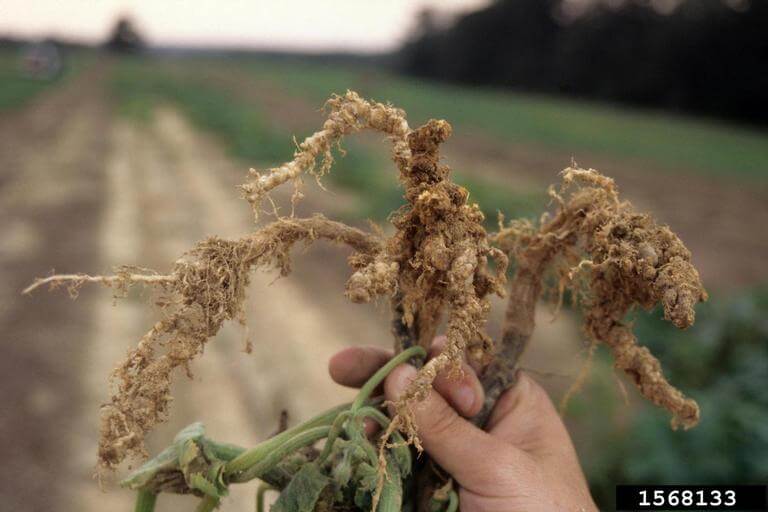
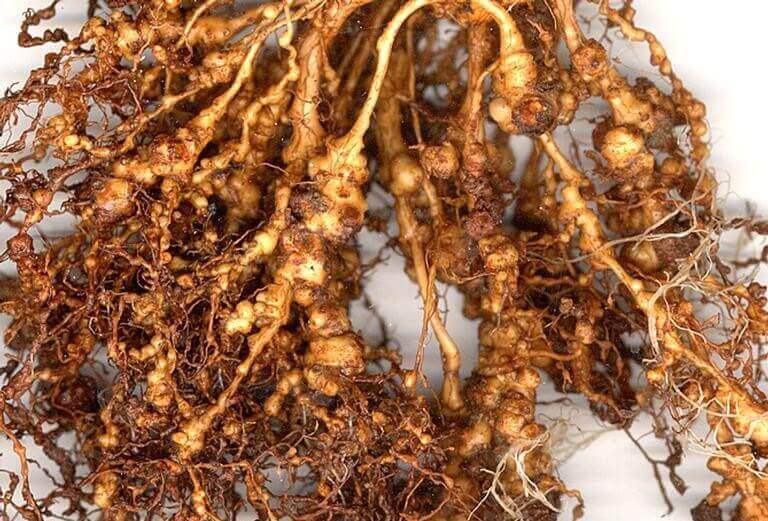

DESCRIPTION
WHO CAUSES IT?
Plant parasitic nematodes are microscopic, worm-shaped organisms that live mainly in the soil. They belong to the phylum Nematoda and among the most harmful species for plants are Meloidogyne spp., Pratylenchus spp. and Heterodera spp. They begin their development from eggs deposited in the soil or in root tissues. The second stage larvae (J2) emerge from the egg and are the ones that actively infect the roots, penetrating the plant tissue to feed and continue their development. Some species form specialized structures such as nodules or giant cells in the roots, while others migrate freely between the cells. After several molts, they reach the adult stage, where the males generally stop feeding and the females remain inside or on the surface of the roots, laying eggs that are protected by a gelatinous matrix. This process can be repeated several times a year, especially under favorable temperature and humidity conditions, allowing rapid accumulation of harmful populations in the soil.
SYMPTOMS
The disease caused by nematodes affects Plants in their root system, compromising the absorption of water and nutrients, which results in poor growth, lower yield and greater susceptibility to other diseases. The presence of these organisms may go unnoticed at first, but as the population grows, the effects intensify.
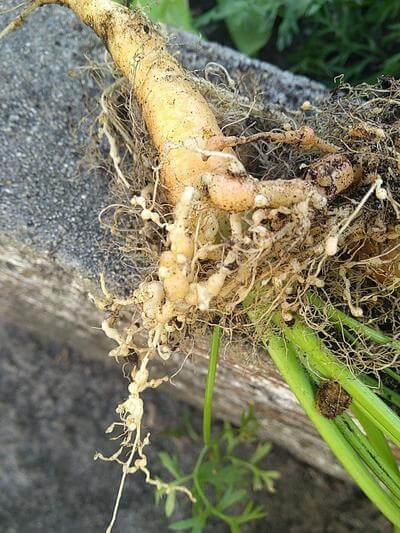
- Roots with galls, deformations or thickening
- General decline of the plant without apparent cause
- Chlorosis and yellowing of foliage
- Decreased vegetative development
- Less production of flowers, fruits or seeds
- Irregular appearance of symptoms in the field, forming affected stands
- Root necrosis or rot in combination with other soil pathogens


TEMPERATURE AND HUMIDITY
20 °C – 30 °C
60 % – 90 %

HOW IS IT SPREAD?
Contaminated soil, Irrigation water, Agricultural tools, Infected seedlings, Footwear or machinery, Plant material, Wind with soil particles

HOW TO REMOVE IT?
Home remedies
There are no home treatments
Chemical treatments
• AZADIRACTIN 1% (AS AZADIRACTIN A) [EC] P/V
• Azadirachtin 2.6% (AS AZADIRACTIN A) [EC] P/V
• METAM SODIUM 51% [SL] P/S
Treatments allowed in organic farming
• AZADIRACTIN 1% (AS AZADIRACTIN A) [EC] P/V
• Azadirachtin 2.6% (AS AZADIRACTIN A) [EC] P/V
Insect allies
PREDATORY MITES
LADYBUGS
LACEWINGS
PARASITIC WASPS
HOVERFLIES OR PARASITIC FLIES
PREDATORY BUGS
There are no natural allies
Mycodiplosis oidii (predatory mosquito)
EFFECTIVE PRODUCTS TO ELIMINATE THIS DISEASE
Sponsored link
Sponsored link


Sponsored link
Sponsored link
Sponsored link


Sponsored link
Sponsored link
Effective against all types of fungi

Sponsored link


Sponsored link
Sponsored link

Sponsored link


Sponsored link
- Perform soil analysis prior to cultivation to detect nematode populations.
- Use crop rotation with non-host species or species with a natural nematicidal effect.
- Apply organic matter and well decomposed compost that favors the antagonistic nematode fauna.
- Incorporate trap crops or plants with nematicidal properties such as Tagetes spp. or mustard.
- Maintain good health in agricultural tools and machinery to avoid dispersion between plots.
- Use resistant or tolerant plant varieties when available.
- Apply treatments with chemical or biological nematicides under technical prescription and following sustainability criteria.
- Avoid excessive irrigation that favors the movement of larvae along the soil profile.
- Implement plant covers or green fertilizers that interrupt the nematode cycle.
- Carry out solar disinfection of the soil in warm times through prolonged solarization.
Recommendations

Enjoy idMicrobe TOTALLY FREE, with no trial periods.


