

Oídio
Powdery Mildew
Erysiphe Betae
Pathogen:
Fungus
Type:
Risk to the plant:
INTERMEDIATE

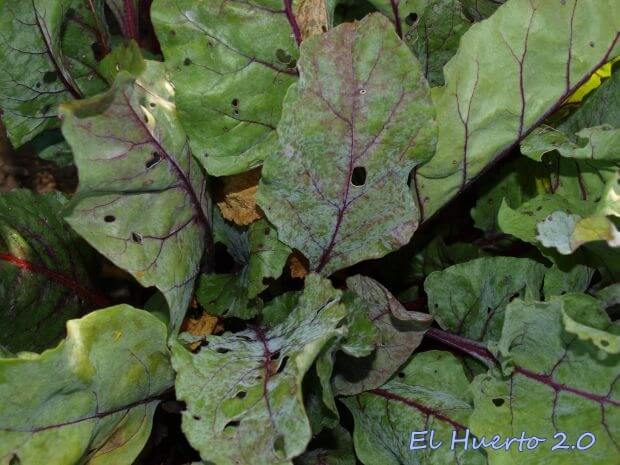

DESCRIPTION
WHO CAUSES IT?
Erysiphe betae is a fungus that belongs to the Erysiphaceae family, known to cause powdery mildew in sugar beets. This pathogen is characterized by the production of conidia in long, visible chains, which are easily dispersed by the wind. The development of the fungus begins when the conidia land on the leaf surface of the host plant and germinate under favorable conditions of temperature and humidity. As the fungus grows, it forms a network of surface mycelium and develops specialized structures called haustoria, which penetrate the plant's epidermal cells to absorb nutrients. Sexual reproduction occurs through the formation of cleistothecia, which are black spherical structures containing ascospores. These ascospores are released and can survive on infected plant remains, ensuring the perpetuation of the fungus from one season to the next. The ability of Erysiphe betae to thrive in a wide range of environmental conditions and its efficient dispersal mechanism make it a highly adaptable and difficult to eradicate pathogen.
SYMPTOMS
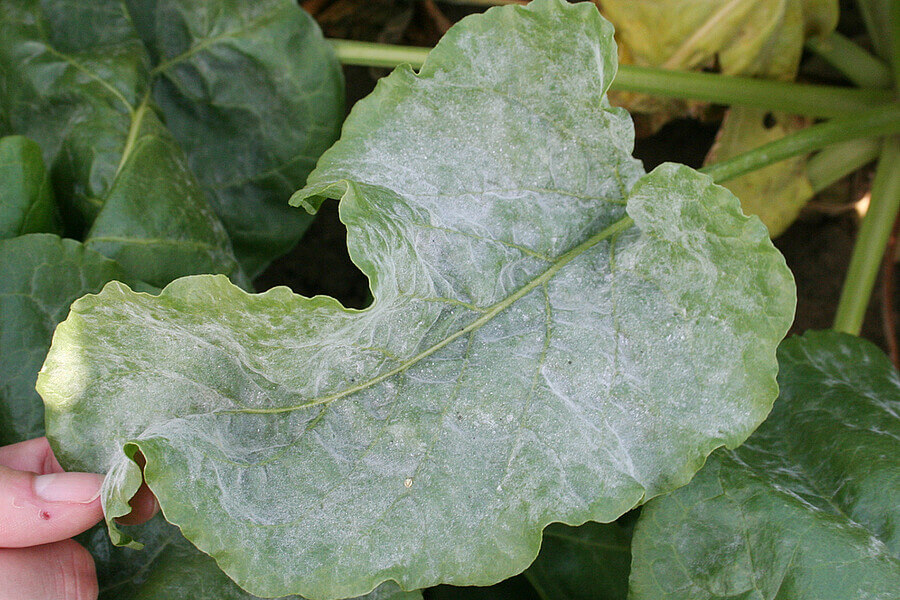
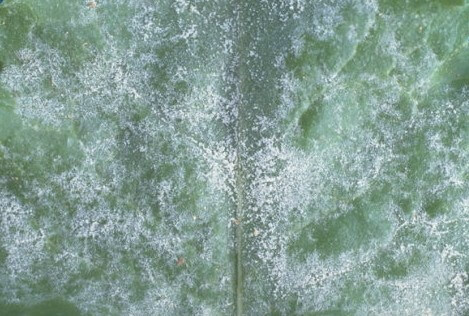
Powdery mildew caused by Erysiphe betae significantly affects sugar beet, interfering with photosynthesis and reducing crop yield. The disease manifests itself on the leaves, where whitish Taches develop that can spread rapidly under favorable conditions.
- Appearance of white, powdery Taches on the surface of the leaves.
- The Taches may merge, covering large areas of the leaf.
- Chlorosis in affected areas, with leaves turning yellow and then brown.
- Desiccation and premature death of severely infected leaves.
- Reduction of the photosynthetic capacity and, therefore, the vigor of the plant.
- In severe cases, decrease in the size and quality of the roots.
- The plant may show stunted growth and increased susceptibility to other diseases.


TEMPERATURE AND HUMIDITY
15-25°C
40-70%

HOW IS IT SPREAD?
Wind, plant debris, agricultural tools, infected seeds

HOW TO REMOVE IT?
Home remedies
There are no home treatments
Chemical treatments
• AZOXISTROBIN 20% + TEBUCONAZOLE 20% [SC] P/V
• SULFUR 70% [SC] P/V
• SULFUR 72% [SC] P/V
• SULFUR 80% [SC] P/V
• SULFUR 80% [WG] P/P
• SULFUR 80% [WP] P/P
• SULFUR 82.5% [SC] P/V
• COS-OGA 1.25% [SL] P/V
• DIFENOCONAZOLE 10% + FENPROPIDIN 37.5% [EC] P/V
• DIFENOCONAZOLE 25% [EC] P/V
• TETRACONAZOLE 10% [EC] P/V
• TETRACONAZOLE 12.5% [ME] P/V
• TETRACONAZOLE 4% [ME] P/V
Treatments allowed in organic farming
• SULFUR 70% [SC] P/V
• SULFUR 72% [SC] P/V
• SULFUR 80% [SC] P/V
• SULFUR 80% [WG] P/P
• SULFUR 80% [WP] P/P
• SULFUR 82.5% [SC] P/V
• COS-OGA 1.25% [SL] P/V
Insect allies
PREDATORY MITES
LADYBUGS
LACEWINGS
PARASITIC WASPS
HOVERFLIES OR PARASITIC FLIES
PREDATORY BUGS
There are no natural allies
Mycodiplosis oidii (predatory mosquito)
EFFECTIVE PRODUCTS TO ELIMINATE THIS DISEASE
Sponsored link

Sponsored link
Sponsored link


Sponsored link
Sponsored link
Sponsored link
Sponsored link


Sponsored link
Sponsored link
Effective against all types of fungi

Sponsored link
Sponsored link


Sponsored link
Sponsored link

Sponsored link
Sponsored link


Sponsored link
- Use powdery mildew resistant sugar beet varieties.
- Implement crop rotation practices to reduce inoculum pressure on the soil.
- Apply preventive and curative fungicides appropriately, following technical recommendations.
- Maintain an adequate planting density to improve air circulation and reduce leaf humidity.
- Eliminate and destroy the remains of infected crops to minimize sources of inoculum.
- Regularly monitor crops to detect the first signs of the disease and act quickly.
- Avoid sprinkler irrigation in the afternoon to reduce humidity on the surface of the leaves.
- Promote the general health of the crop through balanced fertilization and proper irrigation management.
- Use biological and cultural methods, such as the introduction of antagonistic organisms and weed control.
Recommendations

Enjoy idMicrobe TOTALLY FREE, with no trial periods.


