

Oídio
Powdery Mildew
Podosphaera Aphanis
Pathogen:
Fungus
Type:
Risk to the plant:
INTERMEDIATE

DESCRIPTION
WHO CAUSES IT?
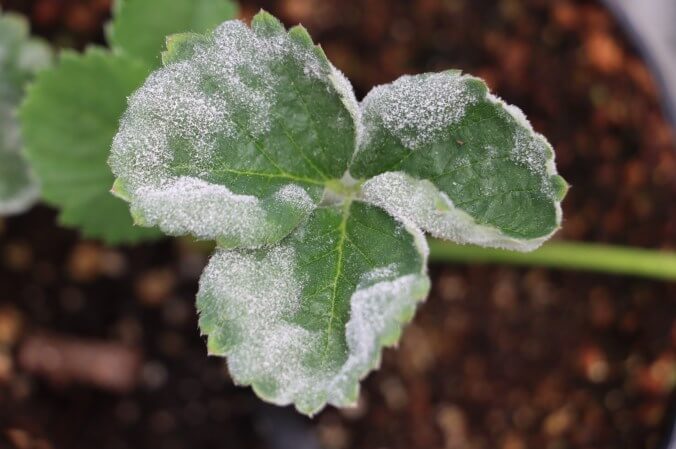
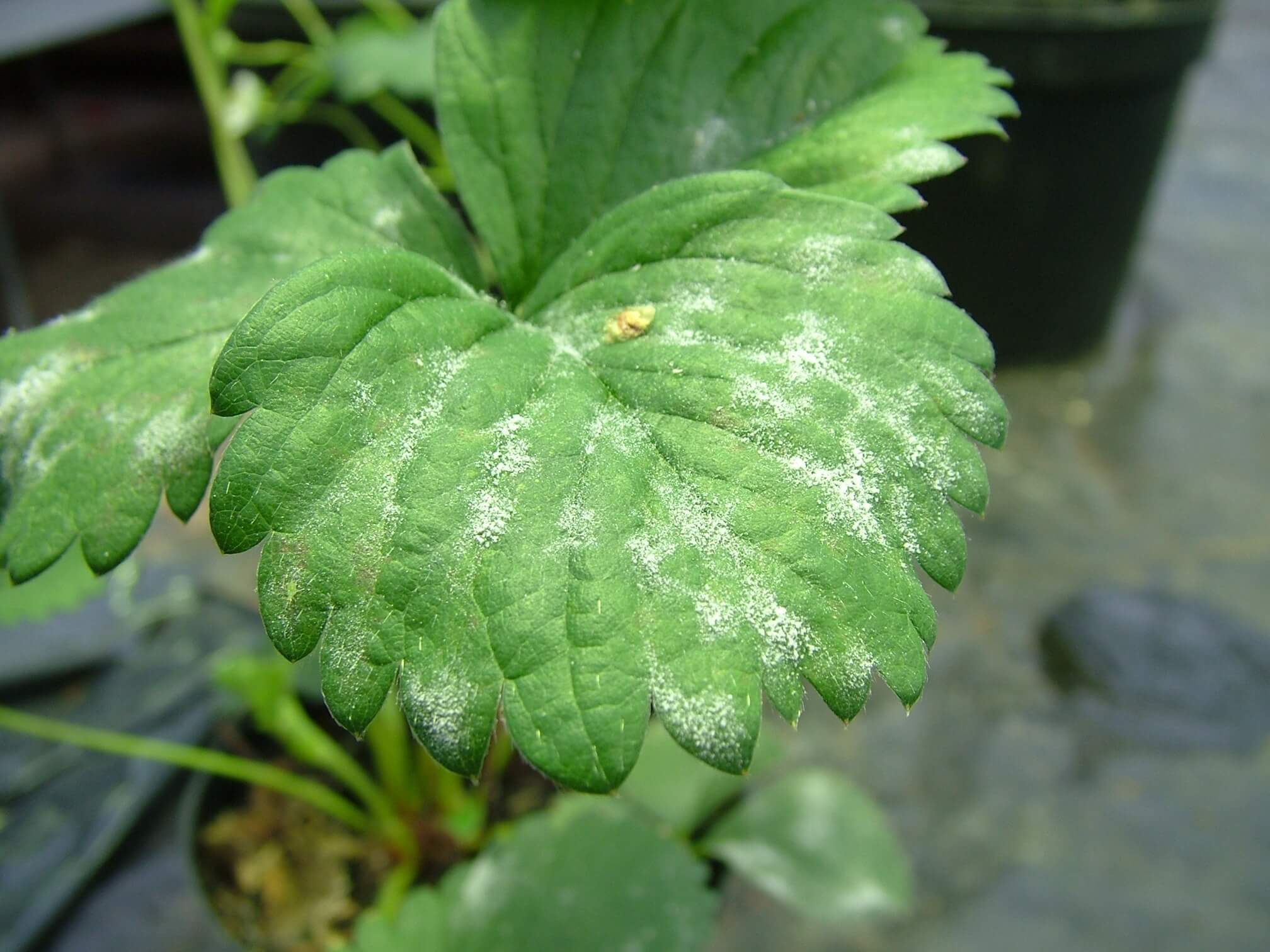
Podosphaera aphanis, commonly known as powdery mildew, is a pathogenic fungus that affects various plants, including strawberry (Fragaria x ananassa). This fungus occurs in the form of spores that can be easily dispersed by wind and irrigation water. Podosphaera aphanis is especially active in conditions of high humidity and moderate temperatures, where it finds an environment conducive to its development and propagation.
SYMPTOMS
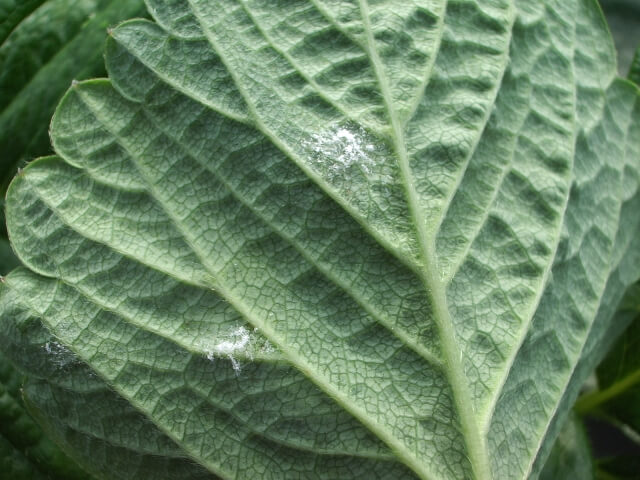
The disease caused by powdery mildew in strawberries is characterized by the presence of a white or grayish powder on the leaves, stems and fruits of the plant. This powder consists of the fungal structures of the fungus and is most noticeable on the underside of the leaves. In addition to dust, symptoms include curling and deformation of leaves, as well as reduction in fruit size and quality. In severe cases, powdery mildew can cause defoliation and weakening of the plant.


TEMPERATURE AND HUMIDITY
15°C - 25°C
70% - 90%

HOW IS IT SPREAD?
Wind, irrigation water, direct contact between plants, cultivation equipment.ç

HOW TO REMOVE IT?
Home remedies
There are no home treatments
Chemical treatments
• ORANGE OIL 6% [SL] P/V
• ORANGE OIL 60g/L [ME] P/S
• AZOXISTROBIN 20% + DIFENOCONAZOLE 12.5% [SC] P/V
• AZOXISTROBIN 25% [SC] P/V
• SULFUR 70% [SC] P/V
• SULFUR 72% [SC] P/V
• SULFUR 80% [DP] P/P
• SULFUR 80% [SC] P/V
• SULFUR 80% [WG] P/P
• SULFUR 80% [WP] P/P
• SULFUR 82.5% [SC] P/V
• SULFUR 90% [DP] P/P
• SULFUR 98.5% [DP] P/P
• BUPIRIMATE 25% [EC] P/V
• CAPTAIN 80% [WG] P/P
• CIFLUFENAMID 10% [SC] P/V
• COS-OGA 1.25% [SL] P/V
• DIFENOCONAZOLE 12.5% + CYFLUFENAMIDE 1.5% [DC] P/V
• DIFENOCONAZOLE 25% [EC] P/V
• EUGENOL 3.3% + GERANIOL 6.6% + THYMOL 6.6% [CS] P/V
• FLUOPYRAM 40% [SC] P/V
• FLUXAPYROXAD 7.5% + DIFENOCONAZOLE 5% [SC] P/V
• POTASSIUM HYDROGEN CARBONATE 0.425% [AL] P/V
• POTASSIUM HYDROGEN CARBONATE 85% [SP] P/P
• CUPRIC HYDROXIDE 13.6% (EXPR. IN CU) + COPPER OXYCHLORIDE 13.6% (EXPR. IN CU) [SC] P/V
• KRESOXIM-METHYL 50% [WG] P/P
• LAMINARIN 4.5% [SL] P/S
• MEPTYLDINOCAP 35% [EC] P/V
• Penconazole 10% [EC] P/V
• PENCONAZOLE 20% [EW] P/V
• PIRACLOSTROBIN 6.7% + BOSCALIDE 26.7% (I) [WG] P/P
• TETRACONAZOLE 10% [EC] P/V
• TETRACONAZOLE 12.5% [ME] P/V
• TETRACONAZOLE 4% [ME] P/V
Treatments allowed in organic farming
• ORANGE OIL 6% [SL] P/V
• ORANGE OIL 60g/L [ME] P/S
• SULFUR 70% [SC] P/V
• SULFUR 72% [SC] P/V
• SULFUR 80% [DP] P/P
• SULFUR 80% [SC] P/V
• SULFUR 80% [WG] P/P
• SULFUR 80% [WP] P/P
• SULFUR 82.5% [SC] P/V
• SULFUR 90% [DP] P/P
• SULFUR 98.5% [DP] P/P
• COS-OGA 1.25% [SL] P/V
• EUGENOL 3.3% + GERANIOL 6.6% + THYMOL 6.6% [CS] P/V
• POTASSIUM HYDROGEN CARBONATE 0.425% [AL] P/V
• POTASSIUM HYDROGEN CARBONATE 85% [SP] P/P
• CUPRIC HYDROXIDE 13.6% (EXPR. IN CU) + COPPER OXYCHLORIDE 13.6% (EXPR. IN CU) [SC] P/V
• LAMINARIN 4.5% [SL] P/S
Insect allies
PREDATORY MITES
LADYBUGS
LACEWINGS
PARASITIC WASPS
HOVERFLIES OR PARASITIC FLIES
PREDATORY BUGS
There are no natural allies
Mycodiplosis oidii (predatory mosquito)
EFFECTIVE PRODUCTS TO ELIMINATE THIS DISEASE
Sponsored link
Sponsored link


Sponsored link
Sponsored link
Sponsored link


Sponsored link
Sponsored link
Effective against all types of fungi

Sponsored link


Sponsored link
Sponsored link

Sponsored link


Sponsored link
To prevent and control the spread of powdery mildew in strawberry crops, it is important to implement integrated pest management practices. This includes removing infected plant debris, using watering practices that avoid wetting leaves and fruits, applying preventative fungicides, and encouraging air circulation around the plants.
Recommendations

Enjoy idMicrobe TOTALLY FREE, with no trial periods.


