

Mildiu
Mildew
Plasmopara Viticola
Pathogen:
Oomycete
Type:
Risk to the plant:
HIGH

DESCRIPTION
WHO CAUSES IT?
Plasmopara viticola is an oomycete pathogen that mainly affects grapevines, causing a devastating disease under favorable climatic conditions. This organism overwinters in the form of hardy oospores found in the remains of infected plants, such as fallen leaves on the ground. With the arrival of spring and adequate humidity, the oospores germinate producing sporangia that release motile zoospores. These zoospores swim in the water and reach the young tissues of the plant, where they penetrate through the stomata and form structures called haustoria within the plant cells to extract nutrients. Subsequently, the fungus develops sporangiophores that emerge from the stomata and produce new sporangia, which are dispersed by wind and rain, initiating new infections. This cycle can repeat several times during the season, especially under hot and humid conditions, allowing rapid spread of the disease.
SYMPTOMS
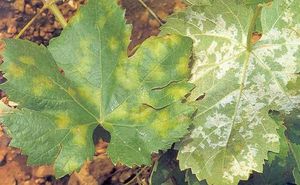
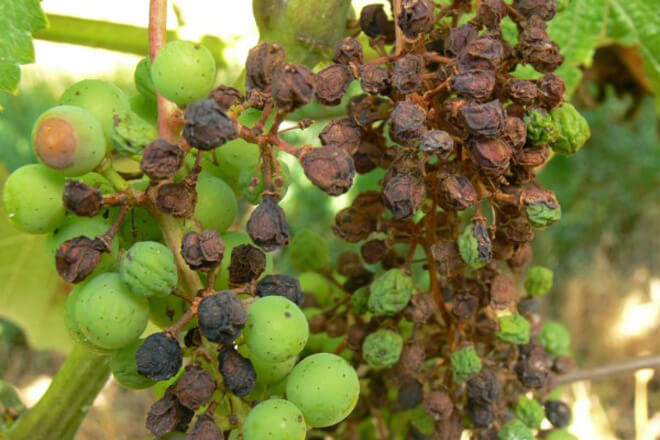
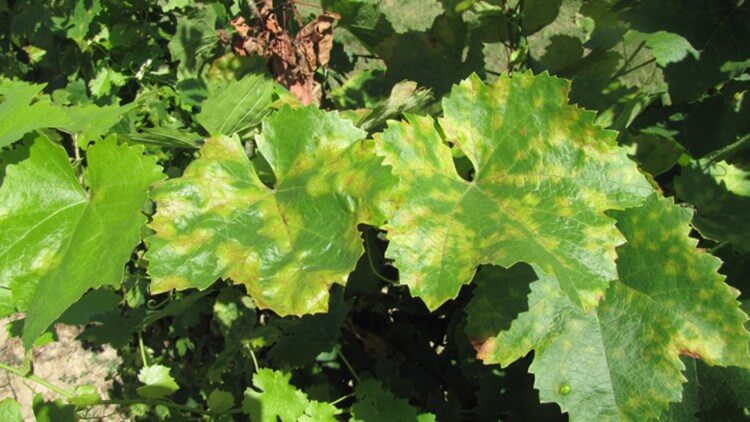
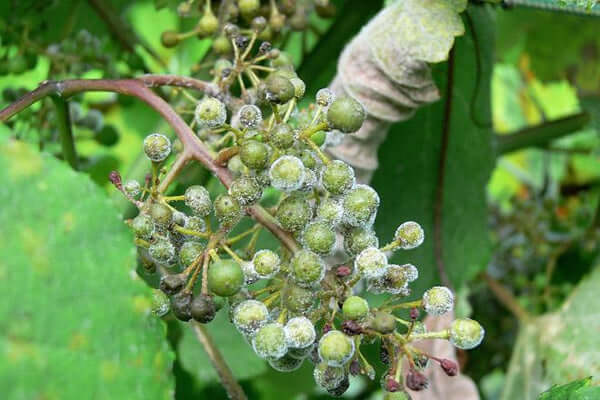
Downy mildew caused by Plasmopara viticola causes significant damage to the vine, especially to young shoots, leaves and bunches of grapes. Infections begin with the appearance of oily Taches on the surface of the leaves, which eventually turn yellow and brown, causing necrosis. If left uncontrolled, the disease can seriously compromise grape production, reducing both the quality and quantity of the harvest.
- Yellowish Taches on the leaves, known as oil Taches.
- Necrosis on the leaves that spreads rapidly, causing them to fall prematurely.
- Deformation and wilting of young shoots.
- Affectation of grape clusters, which can rot before ripening.
- Formation of a whitish powder on the underside of the leaves, composed of sporangia.
- Loss of vigor in the affected plant and general decrease in production.


TEMPERATURE AND HUMIDITY
10°C - 27°C
80% - 100%

HOW IS IT SPREAD?
Sporangia transported by wind, rainwater, irrigation splashes, contact with contaminated tools, infected plant remains in the soil

HOW TO REMOVE IT?
Home remedies
There are no home treatments
Chemical treatments
• ABE-IT 56 (lysate components of Saccharomyces cerevisiae strain DDSF623) 32.56% [SC] P/V
• ORANGE OIL 6% [SL] P/V
• ORANGE OIL 60g/L [ME] P/S
• AMETOCTRADIN 20% [SC] P/V
• AMISULBROM 20% [SC] P/V
• AZOXISTROBIN 25% [SC] P/V
• AZOXISTROBIN 9.35% + FOLPET 50% [SC] P/V
• BENALAXIL-M 5% + COPPER OXYCHLORIDE 15% (exp. in Cu) + CUPRIC HYDROXIDE 15% (exp. in Cu) [WG] P/P
• CIAZOFAMIDE 10% [SC] P/V
• CYMOXANIL 33% + ZOXAMIDE 33% [WG] P/P
• CYMOXANIL 4% + FOLPET 33.4% [SC] P/V
• CYMOXANIL 45% [WG] P/P
• CYMOXANILE 8% + FOLPET 66% [WG] P/P
• COS-OGA 1.25% [SL] P/V
• FLUOPICOLIDE 4.44% + FOSETIL-AL 66.67% [WG] P/P
• FOLPET 40% + MANDIPROPAMID 5% [WG] P/P
• FOLPET 40% + METALAXIL 10% [WP] P/P
• FOLPET 40% + METALAXIL-M 4.8% [WG] P/P
• FOLPET 40% + METALAXIL-M 5% [WG] P/P
• FOLPET 48% + VALIFENALATE 6% [WG] P/P
• FOLPET 50% [SC] P/V
• FOLPET 50% + OXATIAPIPROLIN 1% [SC] P/V
• FOLPET 80% [WG] P/P
• FOSETIL-AL 50% + FOLPET 25% + CYMOXANIL 4% [WP] P/P
• FOSETIL-AL 80% [WG] P/P
• FOSETIL-AL 80% [WP] P/P
• DISODIUM PHOSPHONATE 50% [SL] P/V
• POTASSIUM PHOSPHONATES 25.5% (Exp. as phosphorous acid) + AZOXYSTROBIN 6.25% [SC] P/V
• POTASSIUM PHOSPHONATES 50.4% (exp. as phosphorous acid) [SL] P/V
• POTASSIUM PHOSPHONATES 51% (Exp. as phosphorous acid) [SL] P/V
• CUPRIC HYDROXIDE 13.6% (EXPR. IN CU) + COPPER OXYCHLORIDE 13.6% (EXPR. IN CU) [SC] P/V
• CUPRIC HYDROXIDE 20% (EXPR. IN CU) [WG] P/P
• CUPRIC HYDROXIDE 25% (EXPR. IN CU) [WG] P/P
• CUPRIC HYDROXIDE 40% (EXPR. IN CU) [WG] P/P
• CUPRIC HYDROXIDE 50% (EXPR. IN CU) [WP] P/P
• LAMINARIN 4.5% [SL] P/S
• MANDIPROPAMID 25% [SC] P/V
• MANDIPROPAMID 25% + OXATIAPIPROLIN 3% [SC] P/V
• Mandipropamide 25% + ZOXAMIDE 24% [WG] P/P
• METALAXIL 25% [WP] P/P
• OXATIAPIPROLIN 10% [OD] P/V
• OXATIAPIPROLIN 4% + ZOXAMIDE 30% [SE] P/V
• COPPER OXYCHLORIDE 13.95% (EXPR. IN CU) + MANDIPROPAMID 2.5% [WG] P/P
• COPPER OXYCHLORIDE 14% (exp. in Cu) + CUPRIC HYDROXIDE 14% (exp. in Cu) [WG] P/P
• COPPER OXYCHLORIDE 25% (EXPR. IN CU) [WG] P/P
• COPPER OXYCHLORIDE 30% (EXPR. IN CU) [WP] P/P
• COPPER OXYCHLORIDE 35% (exp. in Cu) [WG] P/P
• COPPER OXYCHLORIDE 35% (exp. in Cu) [WP] P/P
• COPPER OXYCHLORIDE 38% (EXPR. IN CU) [SC] P/V
• COPPER OXYCHLORIDE 50% (EXPR. IN CU) [WP] P/P
• COPPER OXYCHLORIDE 52% (EXPR. IN CU) [SC] P/V
• COPPER OXYCHLORIDE 70% (EXPR. IN CU) [SC] P/V
• COPPER OXYCHLORIDE 70% [SC] P/V
• CUPROSUS OXIDE 45% (exp. in Cu) [WG] P/P
• CUPROUS OXIDE 50% (EXPR. IN CU) [WP] P/P
• CUPROUS OXIDE 75% (EXPR. IN CU) [WG] P/P
• CUPROCALCIC SULFATE 12.4% (EXPR. IN CU) [SC] P/V
• CUPROCALCIC SULFATE 20% (EXPR. IN CU) [WG] P/P
• CUPROCALCIC SULFATE 20% (EXPR. IN CU) [WP] P/P
• TRIBASIC COPPER SULFATE 8% (expressed in copper) + SULFUR 64% [SC] P/V
• ZOXAMIDE 3.6% + FOSETIL-AL 35% + CYMOXANIL 2.8% [WG] P/P
Treatments allowed in organic farming
• ORANGE OIL 6% [SL] P/V
• ORANGE OIL 60g/L [ME] P/S
• COS-OGA 1.25% [SL] P/V
• DISODIUM PHOSPHONATE 50% [SL] P/V
• CUPRIC HYDROXIDE 13.6% (EXPR. IN CU) + COPPER OXYCHLORIDE 13.6% (EXPR. IN CU) [SC] P/V
• CUPRIC HYDROXIDE 20% (EXPR. IN CU) [WG] P/P
• CUPRIC HYDROXIDE 25% (EXPR. IN CU) [WG] P/P
• CUPRIC HYDROXIDE 40% (EXPR. IN CU) [WG] P/P
• CUPRIC HYDROXIDE 50% (EXPR. IN CU) [WP] P/P
• LAMINARIN 4.5% [SL] P/S
• COPPER OXYCHLORIDE 14% (exp. in Cu) + CUPRIC HYDROXIDE 14% (exp. in Cu) [WG] P/P
• COPPER OXYCHLORIDE 25% (EXPR. IN CU) [WG] P/P
• COPPER OXYCHLORIDE 30% (EXPR. IN CU) [WP] P/P
• COPPER OXYCHLORIDE 35% (exp. in Cu) [WG] P/P
• COPPER OXYCHLORIDE 35% (exp. in Cu) [WP] P/P
• COPPER OXYCHLORIDE 38% (EXPR. IN CU) [SC] P/V
• COPPER OXYCHLORIDE 50% (EXPR. IN CU) [WP] P/P
• COPPER OXYCHLORIDE 52% (EXPR. IN CU) [SC] P/V
• COPPER OXYCHLORIDE 70% (EXPR. IN CU) [SC] P/V
• COPPER OXYCHLORIDE 70% [SC] P/V
• CUPROSUS OXIDE 45% (exp. in Cu) [WG] P/P
• CUPROUS OXIDE 50% (EXPR. IN CU) [WP] P/P
• CUPROUS OXIDE 75% (EXPR. IN CU) [WG] P/P
• CUPROCALCIC SULFATE 12.4% (EXPR. IN CU) [SC] P/V
• CUPROCALCIC SULFATE 20% (EXPR. IN CU) [WG] P/P
• CUPROCALCIC SULFATE 20% (EXPR. IN CU) [WP] P/P
• TRIBASIC COPPER SULFATE 8% (expressed in copper) + SULFUR 64% [SC] P/V
Insect allies
PREDATORY MITES
LADYBUGS
LACEWINGS
PARASITIC WASPS
HOVERFLIES OR PARASITIC FLIES
PREDATORY BUGS
There are no natural allies
Mycodiplosis oidii (predatory mosquito)
EFFECTIVE PRODUCTS TO ELIMINATE THIS DISEASE
Sponsored link
Sponsored link


Sponsored link
Sponsored link
Sponsored link


Sponsored link
Sponsored link
Effective against all types of fungi

Sponsored link


Sponsored link
Sponsored link

Sponsored link


Sponsored link
- Implement good soil management, removing and eliminating fallen leaves and infected plant residues to reduce the amount of inoculum available.
- Use appropriate pruning techniques to increase air circulation between plants and reduce humidity in the foliage.
- Apply preventive treatments with specific fungicides during the most vulnerable phases of the vine cycle, especially when high humidity is expected.
- Monitor the climate and conditions of the vineyard to foresee the ideal conditions for the development of mildew and carry out preventive applications of fungicides before the appearance of symptoms.
- Promote the planting of mildew-resistant vine varieties in areas with a high incidence of the disease.
- Avoid sprinkler irrigation, especially late in the day, to reduce the duration of moisture on the leaves.
- Carry out rotations in the use of fungicides to prevent the development of resistance by the pathogen.
Recommendations

Enjoy idMicrobe TOTALLY FREE, with no trial periods.


