

Micosis/Hongos
White Rot
Sclerotinia Sclerotiorum
Pathogen:
Fungus
Type:
Risk to the plant:
HIGH

DESCRIPTION
WHO CAUSES IT?
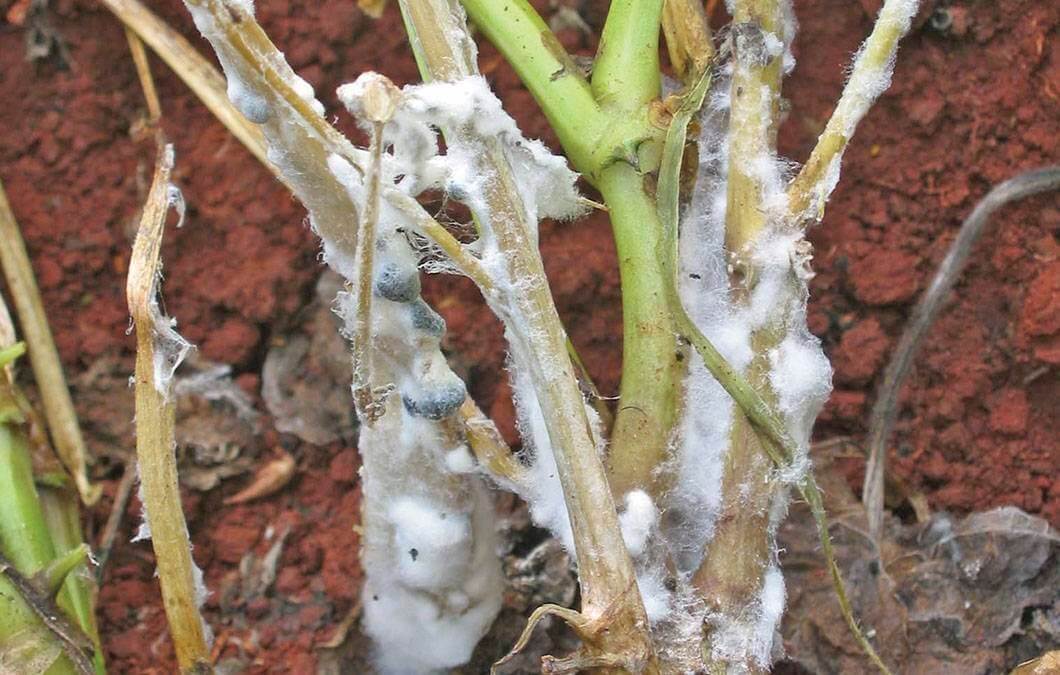
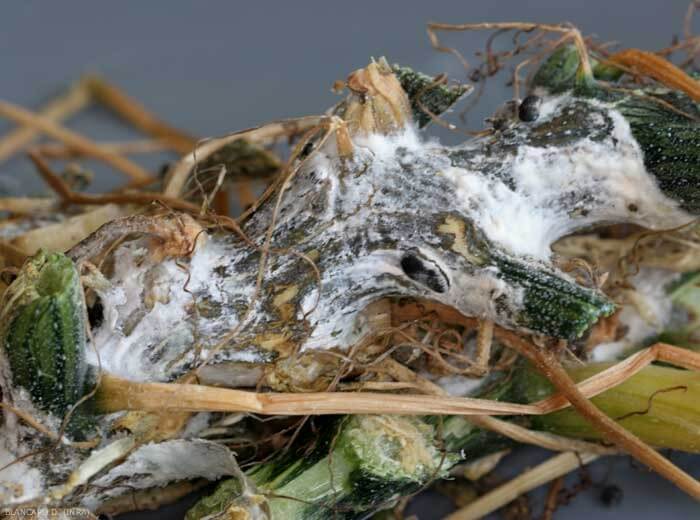
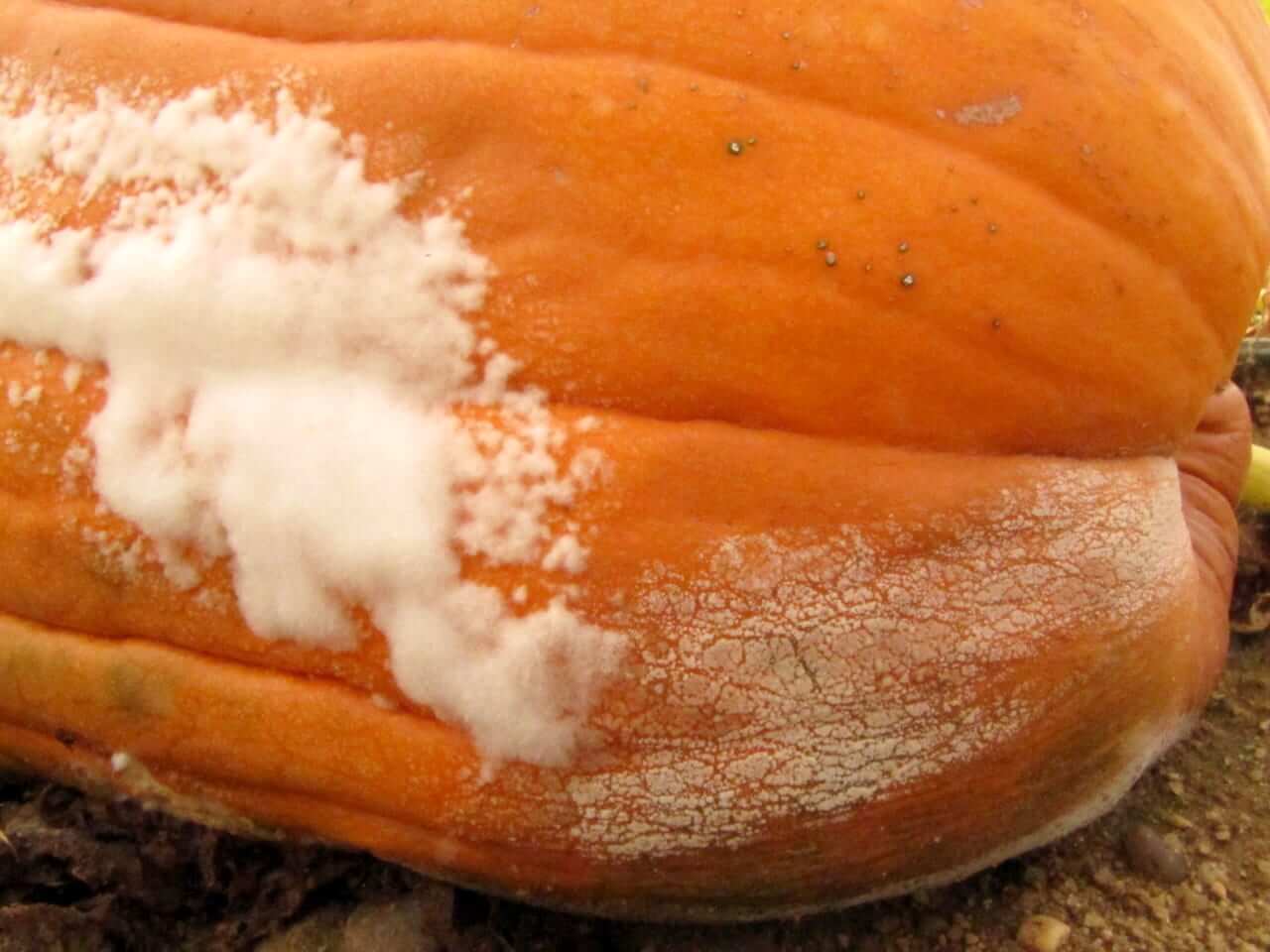
Sclerotinia sclerotiorum is a phytopathogenic fungus that causes the disease known as white rot in pumpkin plants. This pathogen has a complex life cycle that begins with the germination of resistance structures called sclerotia in the soil. These sclerotia can survive in the soil for several years, waiting for suitable environmental conditions to germinate and produce mycelial structures that infect host plants. Once inside the plant, the fungus produces cottony white mycelium and sclerotia, which are survival structures that can infect other nearby plants.
SYMPTOMS
White rot causes a number of general symptoms in squash plants, including:
- Sudden wilting of leaves and stems.
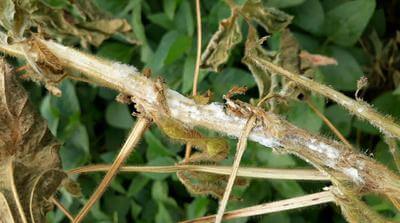
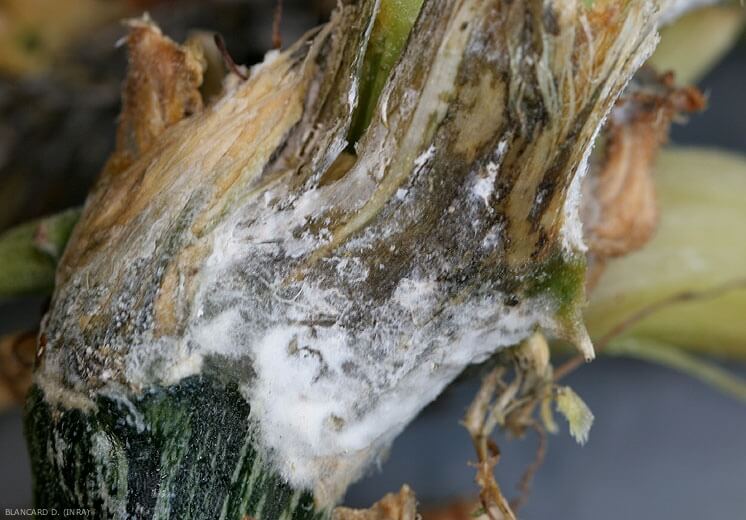
- Appearance of a cottony white mycelium on the surface of the lesions.
- Wet rot of plant tissues.
- Production of sclerotia in infected areas.
- Plant collapse in advanced stages of the disease.

TEMPERATURE AND HUMIDITY
15°C - 25°C
70% - 80%

HOW IS IT SPREAD?
Sclerotia in the soil, crop remains, contaminated irrigation water

HOW TO REMOVE IT?
Home remedies
There are no home treatments
Chemical treatments
• AZOXISTROBIN 20% + DIFENOCONAZOLE 12.5% [SC] P/V
• AZOXISTROBIN 25% [SC] P/V
• EUGENOL 3.3% + GERANIOL 6.6% + THYMOL 6.6% [CS] P/V
• FLUXAPYROXAD 7.5% + DIFENOCONAZOLE 5% [SC] P/V
• TEBUCONAZOLE 20% [EW] P/V
• TEBUCONAZOLE 25% [EC] P/V
• TEBUCONAZOLE 25% [EW] P/V
• TEBUCONAZOLE 25% [WG] P/P
Treatments allowed in organic farming
• EUGENOL 3.3% + GERANIOL 6.6% + THYMOL 6.6% [CS] P/V
Insect allies
PREDATORY MITES
LADYBUGS
LACEWINGS
PARASITIC WASPS
HOVERFLIES OR PARASITIC FLIES
PREDATORY BUGS
There are no natural allies
Mycodiplosis oidii (predatory mosquito)
EFFECTIVE PRODUCTS TO ELIMINATE THIS DISEASE
Sponsored link

Sponsored link


Sponsored link
Sponsored link
Sponsored link


Sponsored link
Sponsored link
Effective against all types of fungi

Sponsored link


Sponsored link
Sponsored link

Sponsored link


Sponsored link
- Practice crop rotation to reduce the presence of sclerotia in the soil.
- Use healthy seedlings free of infections to avoid the introduction of the pathogen into the crop.
- Avoid excess moisture in the soil and promote good aeration.
- Carry out sanitary pruning to eliminate infected tissues and reduce the spread of the fungus.
- Apply preventive fungicides at critical moments in crop development.
- Use biological control techniques, such as the use of antagonist fungi, to reduce the population of Sclerotinia sclerotiorum.
Recommendations

Enjoy idMicrobe TOTALLY FREE, with no trial periods.


