

Phytophthora
Neck And Root Rot
Phytophthora Sp.
Pathogen:
Oomycete
Type:
Risk to the plant:
HIGH
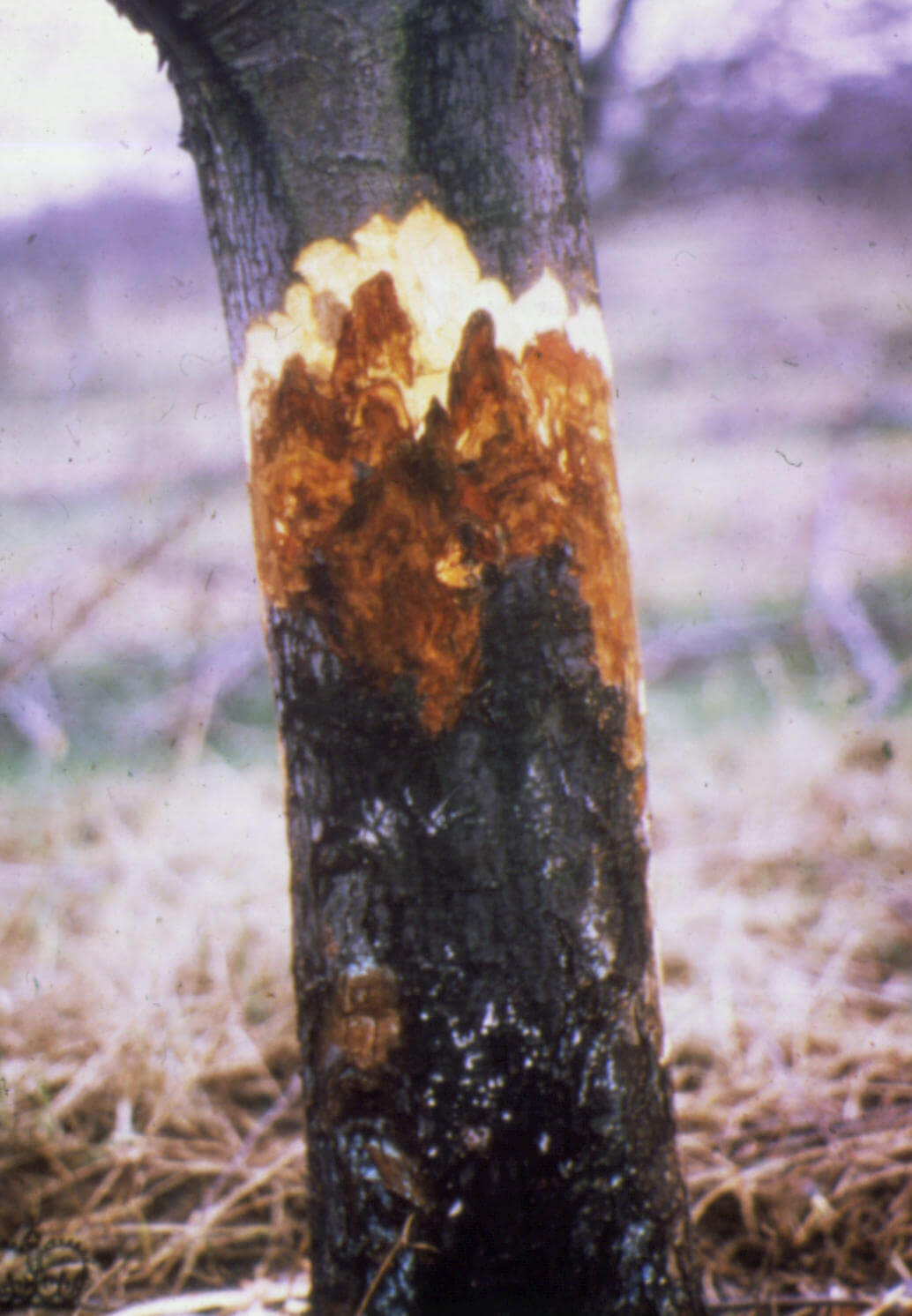
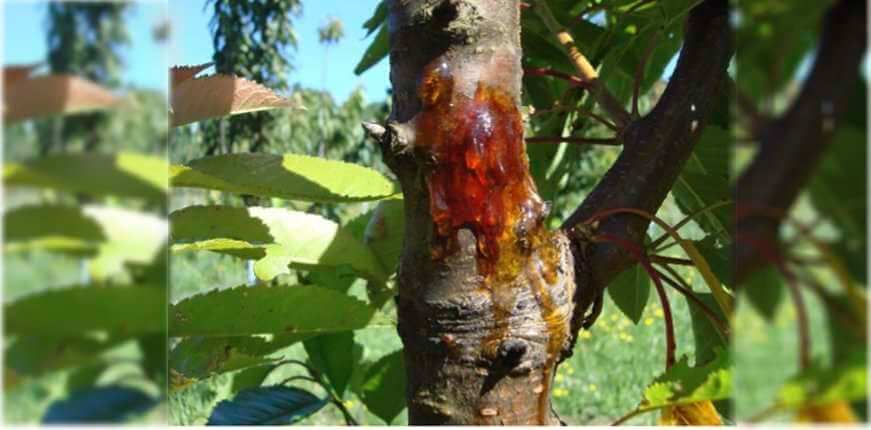

DESCRIPTION
WHO CAUSES IT?
Phytophthora sp. is a group of pathogenic oomycetes that affect a wide variety of plants, including the cherry tree. These organisms are commonly found in soil and water, where they produce asexual spores (zoospores) that are mobile in water. Zoospores swim to the roots of host plants and penetrate tissues through wounds or natural openings. Once inside, they form infectious structures called haustoria, which allow the absorption of nutrients from the host plant. Phytophthora infections can progress rapidly in warm, moist conditions, with sporangia developing in infected tissues that release new zoospores, spreading the infection through irrigation water and soil. During unfavorable periods, Phytophthora can form resistance structures such as oospores and chlamydospores, which can survive in the soil for several years, waiting for favorable conditions to germinate and restart the infectious cycle.
SYMPTOMS
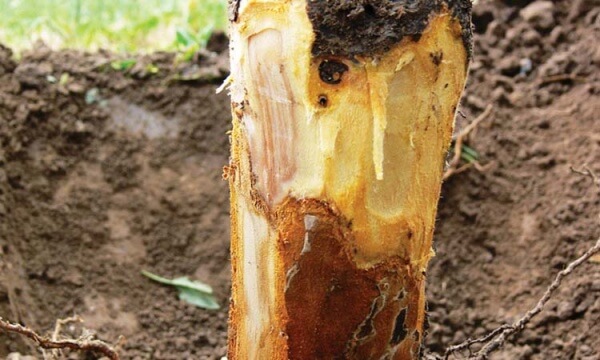
Neck and root rot caused by Phytophthora sp. In the cherry tree it manifests itself mainly as a decomposition of the root tissues and the neck of the plant. This severely affects the tree's ability to absorb water and nutrients, weakening its overall structure and vigor, and can lead to the death of the tree if not properly controlled.
- Wilting and chlorosis of the leaves.
- General decay of the tree, with loss of vigor.
- Dark, moist lesions on the neck and roots.
- Rotten and discolored roots.
- Detachment of the bark at the base of the trunk.
- Gum exudation in affected areas.
- Reduction in growth and fruit production.
- Regressive death of branches and, in severe cases, of the entire tree.


TEMPERATURE AND HUMIDITY
15°C - 25°C
70% - 90%

HOW IS IT SPREAD?
Contaminated soil, Infected irrigation water, Contaminated tools, Infected plant material, Rain, Wind

HOW TO REMOVE IT?
Home remedies
There are no home treatments
Chemical treatments
• CAPTAN 47.5% [SC] P/V
• CAPTAIN 80% [WG] P/P
• CUPRIC HYDROXIDE 50% (EXPR. IN CU) [WP] P/P
• COPPER OXYCHLORIDE 14% (exp. in Cu) + CUPRIC HYDROXIDE 14% (exp. in Cu) [WG] P/P
• COPPER OXYCHLORIDE 25% (EXPR. IN CU) [WG] P/P
• COPPER OXYCHLORIDE 30% (EXPR. IN CU) [WP] P/P
• COPPER OXYCHLORIDE 35% (exp. in Cu) [WG] P/P
• COPPER OXYCHLORIDE 35% (EXPR. IN CU) [WG] P/P
• COPPER OXYCHLORIDE 38% (EXPR. IN CU) [SC] P/V
• COPPER OXYCHLORIDE 50% (EXPR. IN CU) [WG] P/P
• COPPER OXYCHLORIDE 50% (EXPR. IN CU) [WP] P/P
• COPPER OXYCHLORIDE 52% (EXPR. IN CU) [SC] P/V
• CUPROUS OXIDE 50% (EXPR. IN CU) [WP] P/P
• CUPROCALCIC SULFATE 12.4% (EXPR. IN CU) [SC] P/V
• CUPROCALCIC SULFATE 20% (EXPR. IN CU) [WG] P/P
• CUPROCALCIC SULFATE 20% (EXPR. IN CU) [WP] P/P
Treatments allowed in organic farming
• CUPRIC HYDROXIDE 50% (EXPR. IN CU) [WP] P/P
• COPPER OXYCHLORIDE 14% (exp. in Cu) + CUPRIC HYDROXIDE 14% (exp. in Cu) [WG] P/P
• COPPER OXYCHLORIDE 25% (EXPR. IN CU) [WG] P/P
• COPPER OXYCHLORIDE 30% (EXPR. IN CU) [WP] P/P
• COPPER OXYCHLORIDE 35% (exp. in Cu) [WG] P/P
• COPPER OXYCHLORIDE 35% (EXPR. IN CU) [WG] P/P
• COPPER OXYCHLORIDE 38% (EXPR. IN CU) [SC] P/V
• COPPER OXYCHLORIDE 50% (EXPR. IN CU) [WG] P/P
• COPPER OXYCHLORIDE 50% (EXPR. IN CU) [WP] P/P
• COPPER OXYCHLORIDE 52% (EXPR. IN CU) [SC] P/V
• CUPROUS OXIDE 50% (EXPR. IN CU) [WP] P/P
• CUPROCALCIC SULFATE 12.4% (EXPR. IN CU) [SC] P/V
• CUPROCALCIC SULFATE 20% (EXPR. IN CU) [WG] P/P
• CUPROCALCIC SULFATE 20% (EXPR. IN CU) [WP] P/P
Insect allies
PREDATORY MITES
LADYBUGS
LACEWINGS
PARASITIC WASPS
HOVERFLIES OR PARASITIC FLIES
PREDATORY BUGS
There are no natural allies
Mycodiplosis oidii (predatory mosquito)
EFFECTIVE PRODUCTS TO ELIMINATE THIS DISEASE
Sponsored link
Sponsored link


Sponsored link
Sponsored link
Sponsored link


Sponsored link
Sponsored link
Effective against all types of fungi

Sponsored link


Sponsored link
Sponsored link

Sponsored link


Sponsored link
- Select varieties of cherry trees resistant to Phytophthora sp. when possible.
- Plant cherry trees in well-drained soils and avoid areas with waterlogging problems.
- Implement an adequate irrigation system that minimizes excessive moisture around the neck and roots of the tree.
- Disinfect pruning tools and other agricultural equipment before use to prevent the spread of the pathogen.
- Apply preventive fungicides based on phosphites or specific products for Phytophthora on the roots and soil.
- Promote good aeration and soil structure through management practices such as mulching and proper tillage.
- Remove and destroy severely infected plants or plant parts to reduce the source of inoculum.
- Carry out regular monitoring of the orchard to detect any signs of infection early and take timely control measures.
Recommendations

Enjoy idMicrobe TOTALLY FREE, with no trial periods.


