

Micosis/Hongos
Yellow Sigatoka
Mycosphaerella musicola
Pathogen:
Fungus
Type:
Risk to the plant:
HIGH

DESCRIPTION
WHO CAUSES IT?
Mycosphaerella musicola is a phytopathogenic ascomycete fungus that affects banana trees, causing significant losses in production. This fungus spreads through spores that are carried by wind and water, settling on the surface of the leaves. Under favorable humidity and temperature conditions, the spores germinate and penetrate the leaf tissue through the stomata. Once inside the leaf, the fungus develops in the intercellular space, damaging the tissues and reducing the photosynthetic capacity of the plant. Its growth is relatively slow compared to other similar pathogens, allowing the disease to manifest gradually. The infection begins with the production of reproductive structures, which generate new spores and facilitate their dispersal, perpetuating the problem in the crop. This pathogen can persist in the remains of infected leaves, favoring new infections in subsequent seasons.
SYMPTOMS
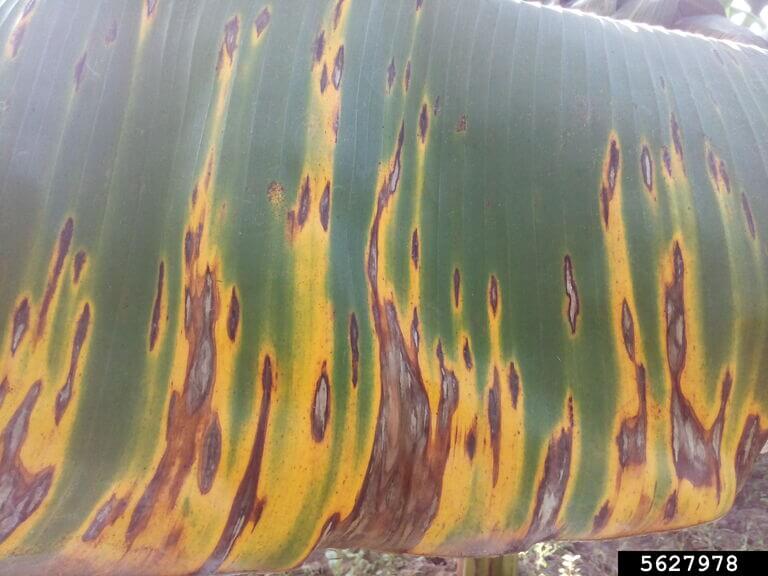
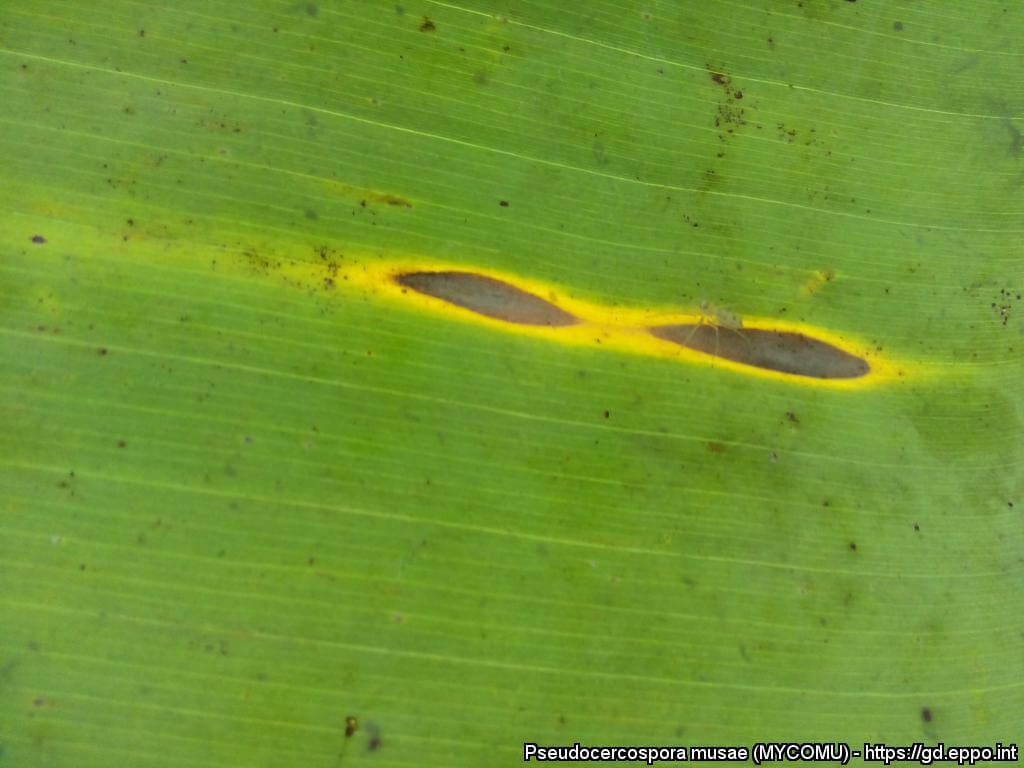
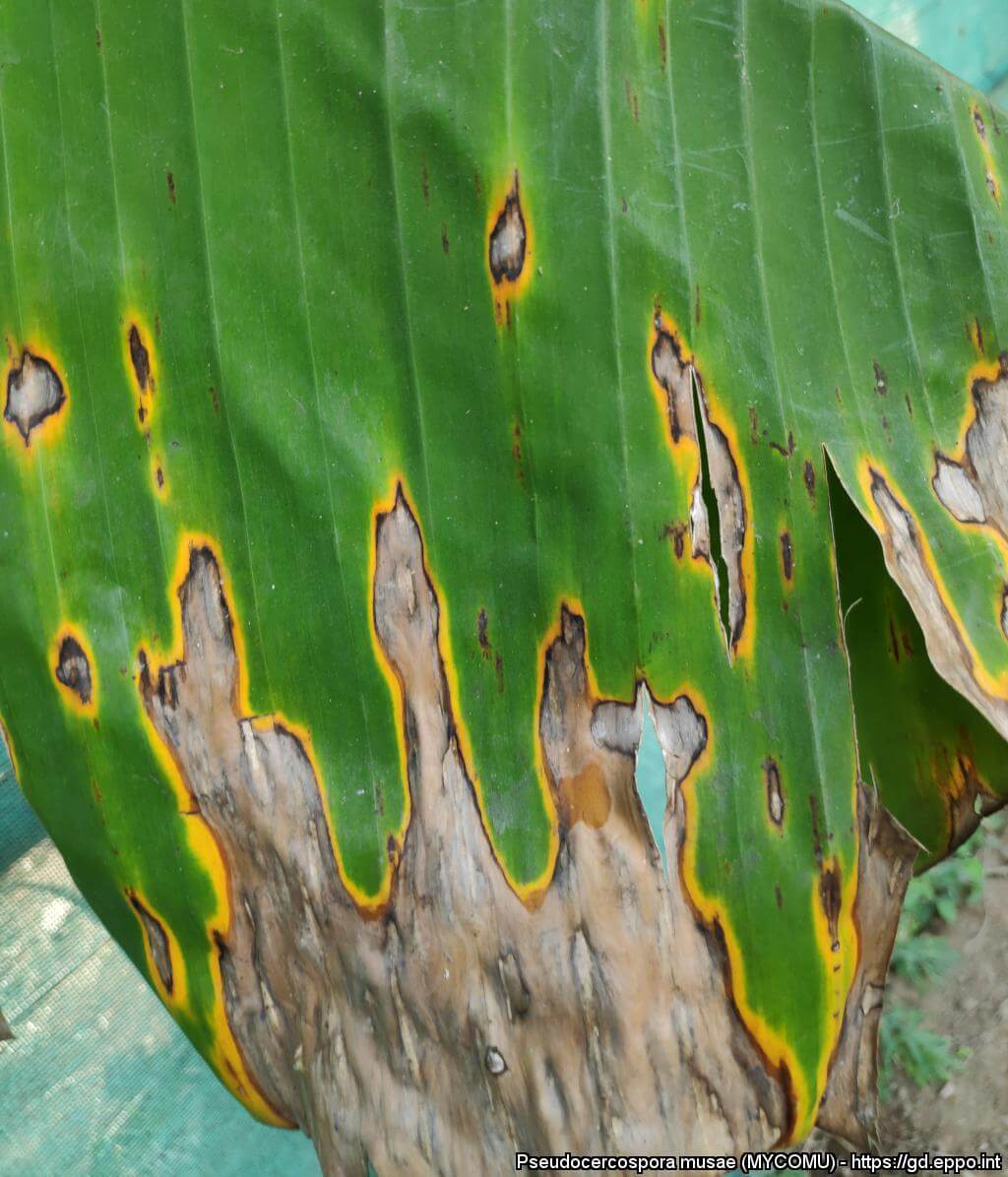
Yellow Sigatoka mainly affects the foliage of the banana tree, reducing its photosynthetic area and weakening its development. Young leaves are the most vulnerable to infection, initially showing small chlorotic spots that evolve into larger, necrotic lesions. Over time, affected leaves lose vitality, which reduces crop yield and affects fruit quality.
- Appearance of small chlorotic spots on young leaves.
- Spots that evolve into light brown stretch marks with yellowish edges.
- Formation of necrotic areas on the leaves.
- Progressive weakening of foliage.
- Reduction in plant growth and vigor.
- Decrease in yield and quality of fruits.
- Premature defoliation in severe cases.


TEMPERATURE AND HUMIDITY
20°C - 28°C
80% - 100%

HOW IS IT SPREAD?
Wind, rainwater, irrigation splashes, contaminated pruning tools, infected leaf debris, infected propagation material

HOW TO REMOVE IT?
Home remedies
There are no home treatments
Chemical treatments
-
Treatments allowed in organic farming
-
Insect allies
PREDATORY MITES
LADYBUGS
LACEWINGS
PARASITIC WASPS
HOVERFLIES OR PARASITIC FLIES
PREDATORY BUGS
There are no natural allies
Mycodiplosis oidii (predatory mosquito)
EFFECTIVE PRODUCTS TO ELIMINATE THIS DISEASE
Sponsored link
Sponsored link


Sponsored link
Sponsored link
Sponsored link


Sponsored link
Sponsored link
Effective against all types of fungi

Sponsored link


Sponsored link
Sponsored link

Sponsored link


Sponsored link
- Use resistant banana varieties to reduce the incidence of the disease.
- Carry out sanitary pruning to eliminate infected leaves and prevent the spread of the fungus.
- Maintain adequate spacing between plants to improve air circulation and reduce leaf humidity.
- Avoid sprinkler irrigation, as it favors the dispersion of fungal spores.
- Apply fungicides preventively and alternate modes of action to reduce the risk of resistance.
- Constantly monitor the crop to detect early symptoms and take timely measures.
- Properly manage infected plant residues, eliminating them or incorporating them into the soil in a controlled manner.
- Implement good agricultural practices such as balanced fertilization and weed control to strengthen plant resistance.
Recommendations

Enjoy idMicrobe TOTALLY FREE, with no trial periods.


