

Orugas o gusanos
Fall Armyworm
Spodoptera Frugiperda
Pathogen:
Insect
Type:
Risk to the plant:
CRITICAL

DESCRIPTION
WHO CAUSES IT?
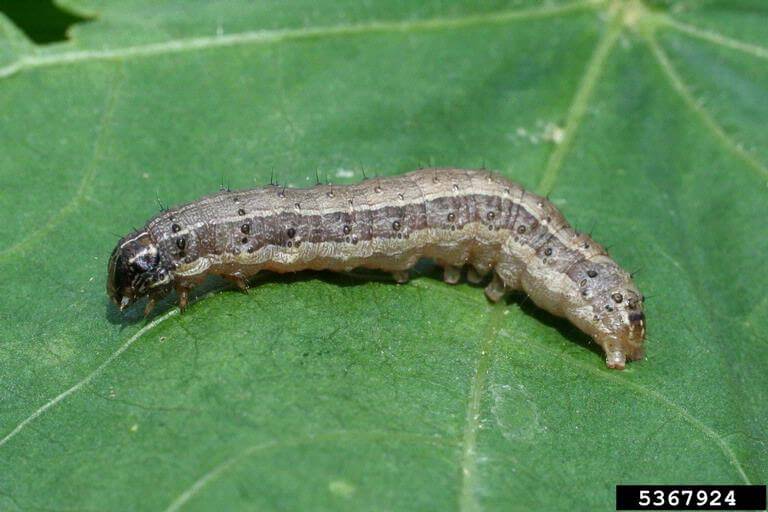
Spodoptera frugiperda, commonly known as the fall armyworm, is a species of lepidopteran that belongs to the family Noctuidae. This insect is highly polyphagous, attacking a wide range of crops, especially grasses, but it also affects crops such as lettuce. Adults are dark brown moths with distinctive patterns on their wings. Adult females deposit eggs in masses on the upper side of leaves. After hatching, the larvae go through six instars, characterized by a striped pattern along their body and an inverted "Y"-shaped head on the forehead. These larvae are highly voracious and prefer to feed on the buds of plants. Once larval development is complete, the caterpillars pupate in the soil, where they remain for 7 to 14 days before emerging as adults and continuing the cycle. Spodoptera frugiperda can complete its development in a period of 30 to 40 days under optimal conditions, which allows the rapid proliferation of the pest in crops.
SYMPTOMS
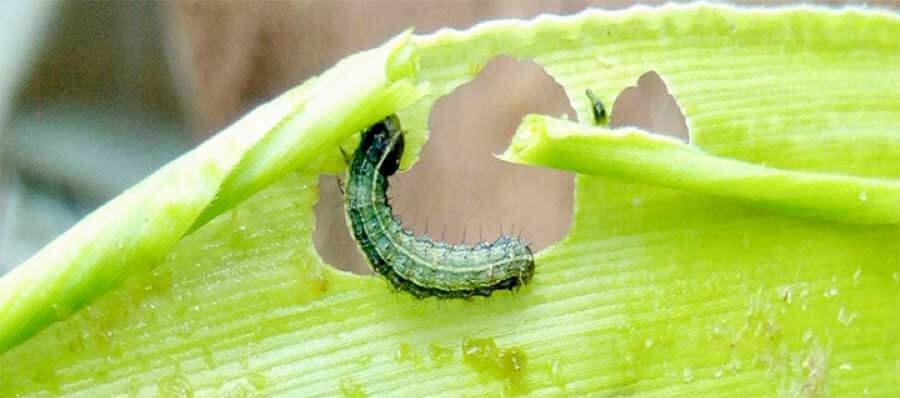
In crops such as lettuce and similar crops, Spodoptera frugiperda causes fall armyworm, a disease that can devastate the plant, especially in its initial growth phase. The larvae enter the bud and feed on the tender tissues, causing perforations and destroying the meristem, which prevents proper growth of the plant. Additionally, damage to the bud makes it easier for secondary pathogens to enter, aggravating the overall damage. In severe cases, plants may not recover, considerably affecting the production and quality of the crop.
- Perforations in the youngest leaves.
- Destruction of the bud in advanced stages of the infestation.
- Stopping plant growth.
- Appearance of excrement on the bud and surrounding leaves.
- Facilitates the entry of secondary infections.
- Total loss of the plant in serious infestations.


TEMPERATURE AND HUMIDITY
20-35°C
60-90%

HOW IS IT SPREAD?
Wind, Movement of infested plants, Direct contact with contaminated tools, Migration of flying adults

HOW TO REMOVE IT?
Home remedies
There are no home treatments
Chemical treatments
• DELTAMETHRIN 1.5% [EW] P/V
• DELTAMETHRIN 1.57% [SC] P/V
• DELTAMETHRIN 10% [EC] P/V
• DELTAMETHRIN 2.5% [EC] P/V
• DELTAMETHRIN 2.5% [EW] P/V
• LAMBDA CYHALOTHRIN 0.15% [GR] P/P
• LAMBDA CYHALOTHRIN 0.24% [GR] P/P
• LAMBDA CYHALOTHRIN 0.4% [GR] P/P
• LAMBDA CYHALOTHRIN 10% [CS] P/V
• TEFLUTRIN 0.5% [GR] P/P
Treatments allowed in organic farming
• LAMBDA CYHALOTHRIN 0.15% [GR] P/P
• LAMBDA CYHALOTHRIN 0.24% [GR] P/P
• LAMBDA CYHALOTHRIN 0.4% [GR] P/P
• LAMBDA CYHALOTHRIN 10% [CS] P/V
Insect allies
PREDATORY MITES
LADYBUGS
LACEWINGS
PARASITIC WASPS
HOVERFLIES OR PARASITIC FLIES
PREDATORY BUGS
There are no natural allies
Mycodiplosis oidii (predatory mosquito)
EFFECTIVE PRODUCTS TO ELIMINATE THIS DISEASE
Sponsored link
Sponsored link


Sponsored link
Sponsored link
Sponsored link


Sponsored link
Sponsored link
Effective against all types of fungi

Sponsored link


Sponsored link
Sponsored link

Sponsored link


Sponsored link
- Implement monitoring with pheromone traps to detect the presence of adults in the crop and establish the level of infestation.
- Use physical barriers such as protective mesh to prevent moths from oviposition on plants.
- Apply biological insecticides such as Bacillus thuringiensis and Spinosad, which are specific for lepidopteran larvae and less harmful to the environment and beneficial insects.
- Maintain proper crop rotation to reduce larval populations in the soil and prevent reinfestation.
- Promote biodiversity and the presence of natural enemies such as parasitoids and predators that can control larval populations biologically.
- Manually remove larvae when infestations are low to prevent them from spreading to other plants.
- Avoid excessive application of chemical insecticides to prevent the development of resistance in the pest.
- Encourage the use of trap crops that attract adult moths away from main growing areas.
Recommendations

Enjoy idMicrobe TOTALLY FREE, with no trial periods.


