

Thrips
Frankliniella Occidentalis
Pathogen:
Type:
Insect
Risk:
HIGH
Calabaza
Trips

WHO CAUSES IT?
Frankliniella occidentalis, known as the western flower thrips, is a small insect about 1 mm in length that belongs to the family Thripidae. This insect is highly polyphagous and attacks a wide range of agricultural, ornamental and vegetable crops. Females lay their eggs in plant tissue, usually in leaves, flowers or fruits. The eggs hatch in a few days, giving rise to larvae that feed on plant cells, causing direct damage and the transmission of viruses. After two larval stages, the larvae fall to the ground to pupate. Adults emerge after a pupal period of several days, completing their development in a rapid cycle that can be as short as two weeks in optimal conditions. Thrips are highly mobile and can be carried by the wind, which facilitates their rapid dispersal.
.png)
SYMPTOMS
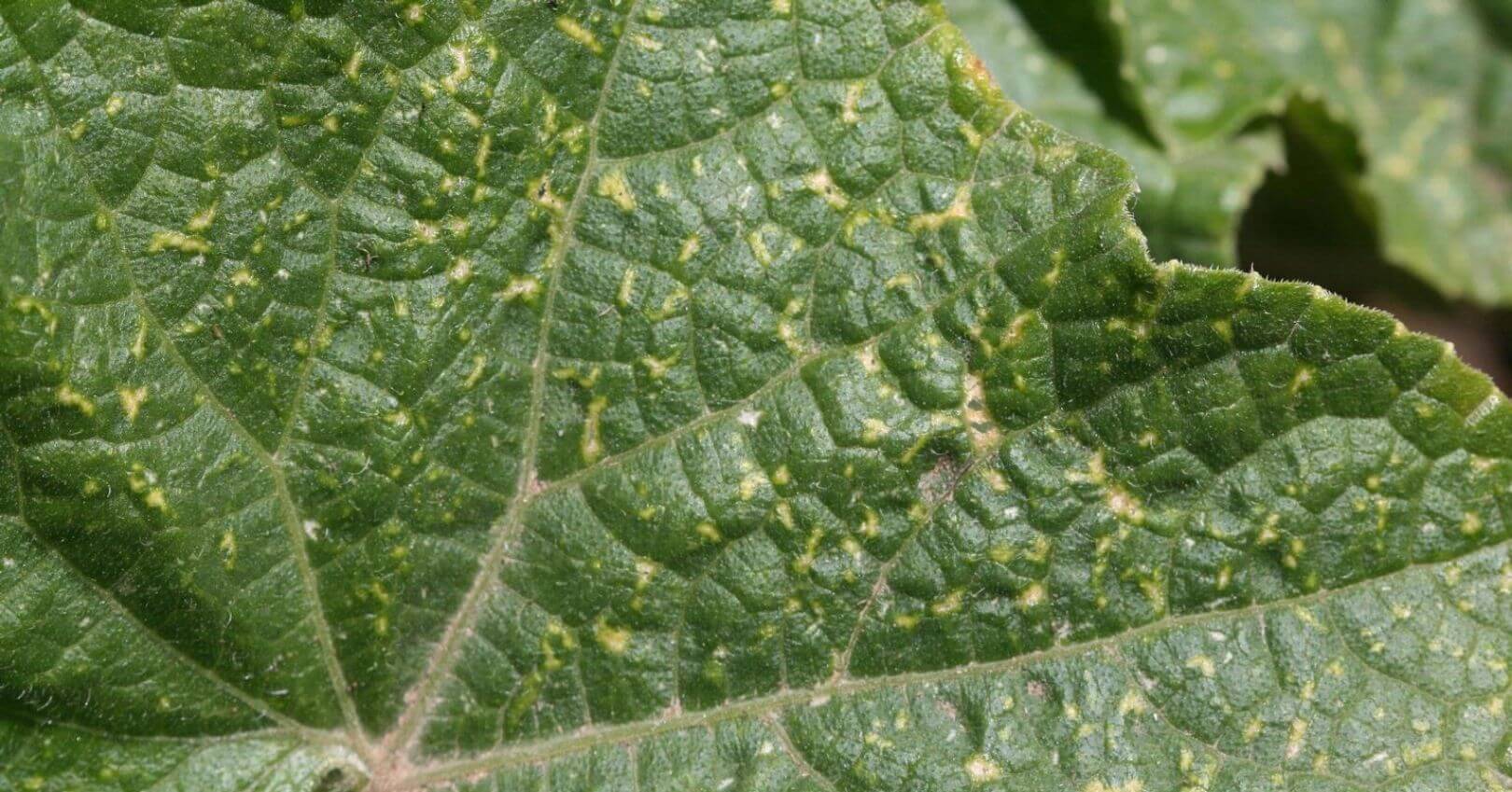
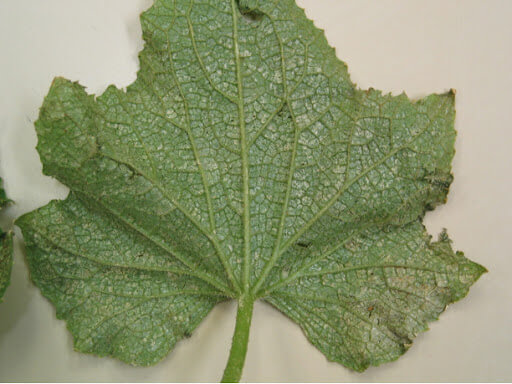
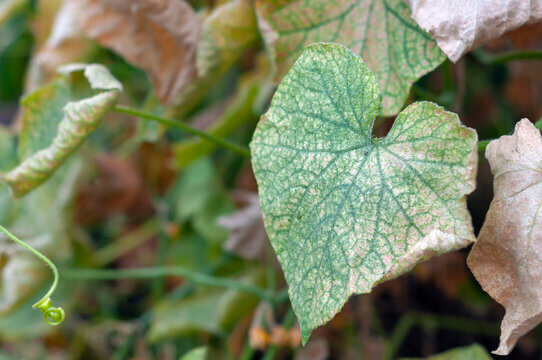
In pumpkins, thrips cause the disease known as thrips, which manifests itself through various symptoms that affect both the appearance and health of the plant. Thrips suck the cellular contents of leaves, flowers and fruits, resulting in extensive damage and the possible transmission of phytopathogenic viruses. Feeding by thrips causes silver or tan Taches to appear on the leaves, which eventually become necrotic. Fruits may also show scarring and deformation due to thrips feeding, reducing their commercial value.
- Silver or tan Taches on leaves
- Leaf necrosis
- Scars on the fruits
- Deformations in the fruits
- Loss of vitality in young plants
- Delay in plant growth


TEMPERATURE AND HUMIDITY
20-30°C
50-80%

TRANSMISSION ROUTES
Wind, Agricultural tools, Infested plants, Contaminated propagation material
Do you want to remove this disease? Choose how you want to treat it.

TREATMENTS
Chemical treatments
• ORANGE OIL 6% [SL] P/V
• ORANGE OIL 60g/L [ME] P/S
• PARAFFIN OIL (CAS [8042-47-5]) 54.6% [EW] P/V
• AZADIRACTIN 1% (AS AZADIRACTIN A) [EC] P/V
• Azadirachtin 2.6% (AS AZADIRACTIN A) [EC] P/V
• CYPERMETHRIN 10% [EC] P/V
• CYPERMETHRIN 5% [EC] P/V
• CYANTRANILIPROL 20% [SC] P/V
• DELTAMETHRIN 1.5% [EW] P/V
• DELTAMETHRIN 1.57% [SC] P/V
• DELTAMETHRIN 2.5% [EC] P/V
• DELTAMETHRIN 2.5% [EW] P/V
• FORMETANATE 50% [SP] P/P
• LAMBDA CYHALOTHRIN 0.0015% [ME] P/V
• LAMBDA CYHALOTHRIN 10% [CS] P/V
• TERPENOID MIXTURE QRD 460 15.23% [EC] P/V
• PYRETHRINS 1.9% [EC] P/V
• PYRETHRINS 4.65% (as pyrethrum extract) [EC] P/V
• PYRETHRINS 4% (PYRETHHRINE EXTR.) [EC] P/V
• PYRETHRINS 5% [SC] P/V
• POTASSIUM SALTS OF FATTY ACIDS C14-C20 48% [EW] P/V
• SPINETORAM 2.5% [SC] P/V
• SPINOSAD 2.4% [SC] P/V
• SPINOSAD 48% [SC] P/V
Authorized treatments in organic farming
• ORANGE OIL 6% [SL] P/V
• ORANGE OIL 60g/L [ME] P/S
• PARAFFIN OIL (CAS [8042-47-5]) 54.6% [EW] P/V
• AZADIRACTIN 1% (AS AZADIRACTIN A) [EC] P/V
• Azadirachtin 2.6% (AS AZADIRACTIN A) [EC] P/V
• LAMBDA CYHALOTHRIN 0.0015% [ME] P/V
• LAMBDA CYHALOTHRIN 10% [CS] P/V
• PYRETHRINS 1.9% [EC] P/V
• PYRETHRINS 4.65% (as pyrethrum extract) [EC] P/V
• PYRETHRINS 4% (PYRETHHRINE EXTR.) [EC] P/V
• PYRETHRINS 5% [SC] P/V
• POTASSIUM SALTS OF FATTY ACIDS C14-C20 48% [EW] P/V
• SPINOSAD 2.4% [SC] P/V
• SPINOSAD 48% [SC] P/V
Biological control
• AMBLYDROMALUS LIMONICUS (Parasitoid and predatory mites)
• AMBLYSEIUS SWIRSKII (Parasitoid and predatory mites)
• BEAUVERIA BASSIANA (STRAIN ATCC 74040) 2.3% (2.3X10E7 VIABLE SPORES/ML) [OD] P/V
• BEAUVERIA BASSIANA (GHA STRAIN) 22% (4.4 x 10E10 CONIDIAS/G) [WP] P/P
• BEAUVERIA BASSIANA strain PPRI 5339 8% (8 X 10E12 CFU/L) [OD] P/P
• CHRYSOPERLA CARNEA (Parasitoid and predatory insects)
• HETERORHABDITIS BACTERIOPHORA (Parasitoid and predatory nematodes)
• MACROCHELES ROBUSTULUS (Parasitoid and predatory mites)
• MACROLOPHUS PYGMAEUS (Parasitoid and predatory insects)
• METARHIZIUM BRUNNEUM strain Ma 43 10.5% [OD] P/V
• NEOSEIULUS CUCUMERIS (Parasitoid and predatory mites)
• ORIUS LAEVIGATUS (Parasitoid and predatory insects)
• PAECILOMYCES FUMOSOROSEUS (STRAIN FE 9901) 18% (2 X 10 E9 CFU/G) [WP] P/P
• STEINERNEMA FELTIAE (Parasitoid and predatory nematodes)
• TRANSEIUS MONTDORIENSIS (Parasitoid and predatory mites)
Recommendations
- Use blue sticky traps to monitor and reduce thrips populations.
- Implement physical barriers such as anti-insect meshes in greenhouses and tunnels.
- Promote the presence of natural enemies such as predatory mites and parasitoid wasps.
- Apply chemical treatments with specific insecticides for thrips, following a rotating program to avoid resistance.
- Maintain good hygiene in the crop, eliminating and destroying infested plant remains.
- Carry out regular and early inspections of plants to detect the presence of thrips.
- Avoid excessive use of nitrogen fertilizers that can favor the multiplication of thrips.
- Implement crop rotations to interrupt the life cycle of thrips.
Sponsored link
Sponsored link


Sponsored link
Sponsored link
Sponsored link


Sponsored link
Sponsored link
Effective against all types of fungi

Sponsored link


Sponsored link
Sponsored link

Sponsored link


Sponsored link
*The recommended treatments are recommendations based on the authorities' databases and do not replace in any way the guidelines established by the legislation of each country.
*Products shown are recommendations and not our own products. As Amazon Associates, we earn revenue from purchases of recommended products.

TREATMENTS
Homemade remedies
There are no home treatments
Natural allies
Chemical treatments
There are no treatments for this disease. Treatments are directed at the insect vectors that transmit it. See insect treatments.

RECOMMENDATIONS

REPELLENT PLANTS
EFFECTIVE PRODUCTS TO ELIMINATE THIS DISEASE
Sponsored link
Sponsored link
Sponsored link
Sponsored link
Sponsored link
Sponsored link
Sponsored link
Effective against all types of fungi
Sponsored link
Sponsored link
Sponsored link
Sponsored link
Sponsored link
*The recommended treatments are recommendations based on the authorities' databases and do not replace in any way the guidelines established by the legislation of each country.
*Products shown are recommendations and not our own products. As Amazon Associates, we earn revenue from purchases of recommended products.

Enjoy idMicrobe TOTALLY FREE, with no trial periods.


