

Thrips
Frankliniella Occidentalis
Pathogen:
Type:
Insect
Risk:
HIGH
Lechuga
Trips

WHO CAUSES IT?
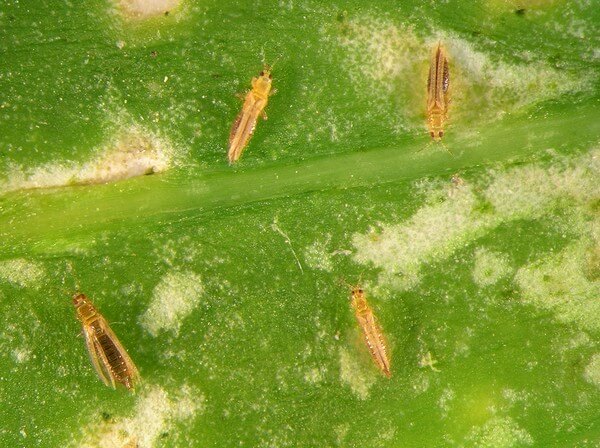
Frankliniella occidentalis, commonly known as western flower thrips, is a small insect belonging to the order Thysanoptera. Its life cycle includes several stages: egg, two larval stages, pre-pupa, pupa and adult. Eggs are deposited within plant tissues by adult females using their ovipositor. The larvae emerge from the eggs and feed on plant tissues, causing significant damage. During the pre-pupal period, thrips larvae usually drop to the ground to pupate, before emerging as adults. The total life cycle length can vary depending on environmental conditions, but generally ranges between 2 and 4 weeks.
.png)
SYMPTOMS
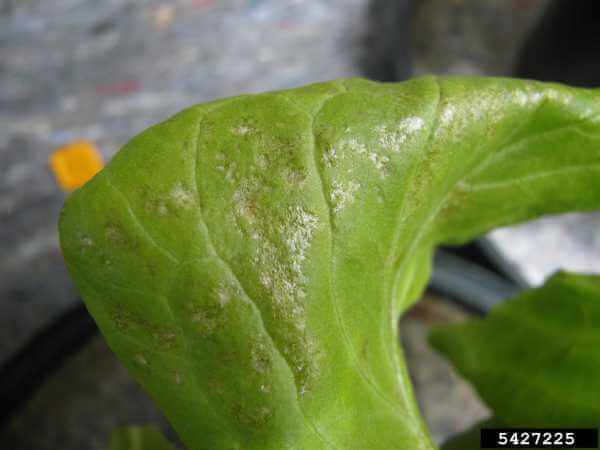
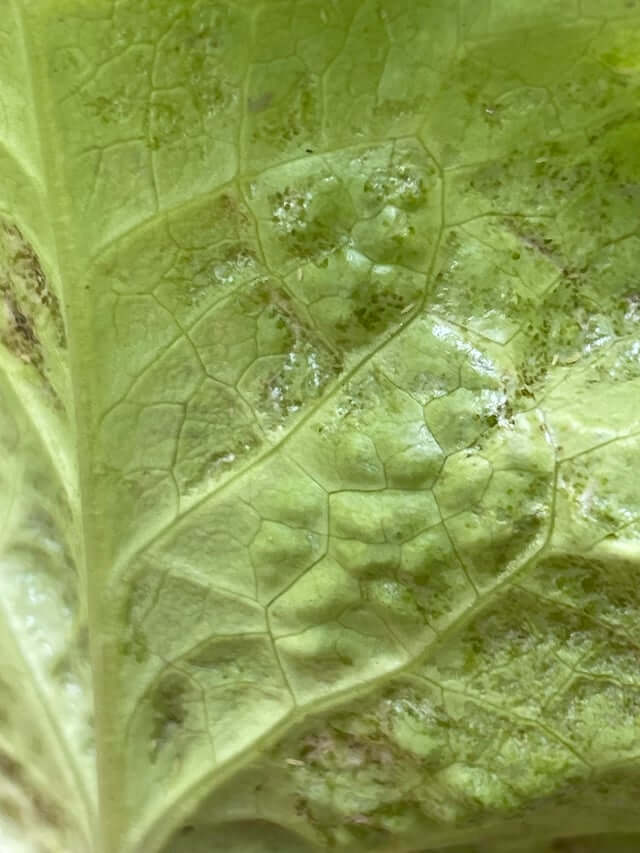
Thrips cause significant damage to lettuce plants, especially during the early stages of growth. General symptoms include the presence of silvery or whitish Taches on the leaves, which are caused by feeding by thrips larvae. These insects can also transmit viruses, further aggravating damage to lettuce plants.
- Silver or whitish Taches on the leaves.
- Deformation of the leaves.
- Presence of black excrements (exuviae) on the leaves.
- Decrease in yield and quality of the harvest.
- Transmission of viruses that can cause additional diseases.


TEMPERATURE AND HUMIDITY
20-30°C
60-80%

TRANSMISSION ROUTES
Wind, passive transport, movement of infested plants, direct contact between plants
Do you want to remove this disease? Choose how you want to treat it.

TREATMENTS
Chemical treatments
• ABAMECTIN 0.0015% + PYRETHRINS 0.02% [AL] P/V
• RAPE OIL 1.53% [AL] P/V
• RAPE OIL 848.24 g/l [EC] P/V
• ORANGE OIL 6% [SL] P/V
• ORANGE OIL 60g/L [ME] P/S
• AZADIRACTIN 1% (AS AZADIRACTIN A) [EC] P/V
• Azadirachtin 2.6% (AS AZADIRACTIN A) [EC] P/V
• CYANTRANILIPROL 10% + ACIBENZOLAR-S-METHYL 1.25% [SC] P/V
• CYANTRANILIPROL 20% [SC] P/V
• DELTAMETHRIN 1.5% [EW] P/V
• DELTAMETHRIN 1.57% [SC] P/V
• DELTAMETHRIN 10% [EC] P/V
• DELTAMETHRIN 2.5% [EC] P/V
• DELTAMETHRIN 2.5% [EW] P/V
• FORMETANATE 50% [SP] P/P
• LAMBDA CYHALOTHRIN 0.0015% [ME] P/V
• LAMBDA CYHALOTHRIN 1.5% [CS] P/V
• LAMBDA CYHALOTHRIN 10% [CS] P/V
• PYRETHRINS 4% (PYRETHHRINE EXTR.) [EC] P/V
• POTASSIUM SALTS OF FATTY ACIDS C14-C20 48% [EW] P/V
• SPINETORAM 2.5% [SC] P/V
• SPINOSAD 2.4% [SC] P/V
• SPINOSAD 48% [SC] P/V
• SPIROTETRAMAT 10% [SC] P/V
• SPIROTETRAMAT 15% [OD] P/V
• TAU-FLUVALINATE 24% [EW] P/V
Authorized treatments in organic farming
• RAPE OIL 1.53% [AL] P/V
• RAPE OIL 848.24 g/l [EC] P/V
• ORANGE OIL 6% [SL] P/V
• ORANGE OIL 60g/L [ME] P/S
• AZADIRACTIN 1% (AS AZADIRACTIN A) [EC] P/V
• Azadirachtin 2.6% (AS AZADIRACTIN A) [EC] P/V
• LAMBDA CYHALOTHRIN 0.0015% [ME] P/V
• LAMBDA CYHALOTHRIN 1.5% [CS] P/V
• LAMBDA CYHALOTHRIN 10% [CS] P/V
• PYRETHRINS 4% (PYRETHHRINE EXTR.) [EC] P/V
• POTASSIUM SALTS OF FATTY ACIDS C14-C20 48% [EW] P/V
• SPINOSAD 2.4% [SC] P/V
• SPINOSAD 48% [SC] P/V
Biological control
• AMBLYDROMALUS LIMONICUS (Parasitoid and predatory mites)
• AMBLYSEIUS SWIRSKII (Parasitoid and predatory mites)
• BEAUVERIA BASSIANA (STRAIN ATCC 74040) 2.3% (2.3X10E7 VIABLE SPORES/ML) [OD] P/V
• BEAUVERIA BASSIANA (GHA STRAIN) 22% (4.4 x 10E10 CONIDIAS/G) [WP] P/P
• BEAUVERIA BASSIANA strain PPRI 5339 8% (8 X 10E12 CFU/L) [OD] P/P
• CHRYSOPERLA CARNEA (Parasitoid and predatory insects)
• HETERORHABDITIS BACTERIOPHORA (Parasitoid and predatory nematodes)
• MACROCHELES ROBUSTULUS (Parasitoid and predatory mites)
• MACROLOPHUS PYGMAEUS (Parasitoid and predatory insects)
• METARHIZIUM BRUNNEUM strain Ma 43 10.5% [OD] P/V
• NEOSEIULUS CUCUMERIS (Parasitoid and predatory mites)
• ORIUS LAEVIGATUS (Parasitoid and predatory insects)
• PAECILOMYCES FUMOSOROSEUS (STRAIN FE 9901) 18% (2 X 10 E9 CFU/G) [WP] P/P
• STEINERNEMA FELTIAE (Parasitoid and predatory nematodes)
• TRANSEIUS MONTDORIENSIS (Parasitoid and predatory mites)
Recommendations
- Employ integrated pest management practices, including the introduction of natural enemies such as predatory mites and thrips parasitoids.
- Use blue or yellow traps to monitor and reduce the population of adult thrips.
- Apply vegetable oils or potassium soap to control thrips populations in early stages.
- Implement crop rotations to interrupt the life cycle of thrips and reduce the presence of alternative hosts.
- Avoid excess nitrogen fertilization, as it can increase the susceptibility of lettuce plants to thrips attack.
- Maintain good drainage in crops to reduce humidity, which favors the proliferation of thrips.
Sponsored link
Sponsored link


Sponsored link
Sponsored link
Sponsored link


Sponsored link
Sponsored link
Effective against all types of fungi

Sponsored link


Sponsored link
Sponsored link

Sponsored link


Sponsored link
*The recommended treatments are recommendations based on the authorities' databases and do not replace in any way the guidelines established by the legislation of each country.
*Products shown are recommendations and not our own products. As Amazon Associates, we earn revenue from purchases of recommended products.

TREATMENTS
Homemade remedies
There are no home treatments
Natural allies
Chemical treatments
There are no treatments for this disease. Treatments are directed at the insect vectors that transmit it. See insect treatments.

RECOMMENDATIONS

REPELLENT PLANTS
EFFECTIVE PRODUCTS TO ELIMINATE THIS DISEASE
Sponsored link
Sponsored link
Sponsored link
Sponsored link
Sponsored link
Sponsored link
Sponsored link
Effective against all types of fungi
Sponsored link
Sponsored link
Sponsored link
Sponsored link
Sponsored link
*The recommended treatments are recommendations based on the authorities' databases and do not replace in any way the guidelines established by the legislation of each country.
*Products shown are recommendations and not our own products. As Amazon Associates, we earn revenue from purchases of recommended products.

Enjoy idMicrobe TOTALLY FREE, with no trial periods.


